
2027 BMW iX3 vs Volvo EX60 Comparison Test + Video
 Dan Ilika
The electric vehicle (EV) market is changing fast.
It feels like only yesterday that Tesla was lightyears ahead of most other automakers in terms of battery technology and outright range, yet here we are. There isn’t a model in that brand’s aging lineup that comes close to the 2027 BMW iX3 in terms of how far it can travel on a full charge, with an official rating near 700 km. (No, that’s not a typo.)
The same is true of the equally new 2027 Volvo EX60 — at least for now. That’s because European demand for the long-range version is keeping it from Canadian customers for the time being. The resulting range is more closely aligned with the likes of the similarly sized Tesla Model Y, although that’s hardly bad company to keep. And there happens to be even more to like about the EX60, including a vastly improved interface.
User-Friendliness


We’re not ready to give Volvo a passing grade on its user experience just yet, with plenty of problems that date back to the launch of the much smaller EX30 — many of which still exist today. Slowly but surely, however, the evolution is underway, with the EX60 representing the best execution of the brand’s EV interface to date.
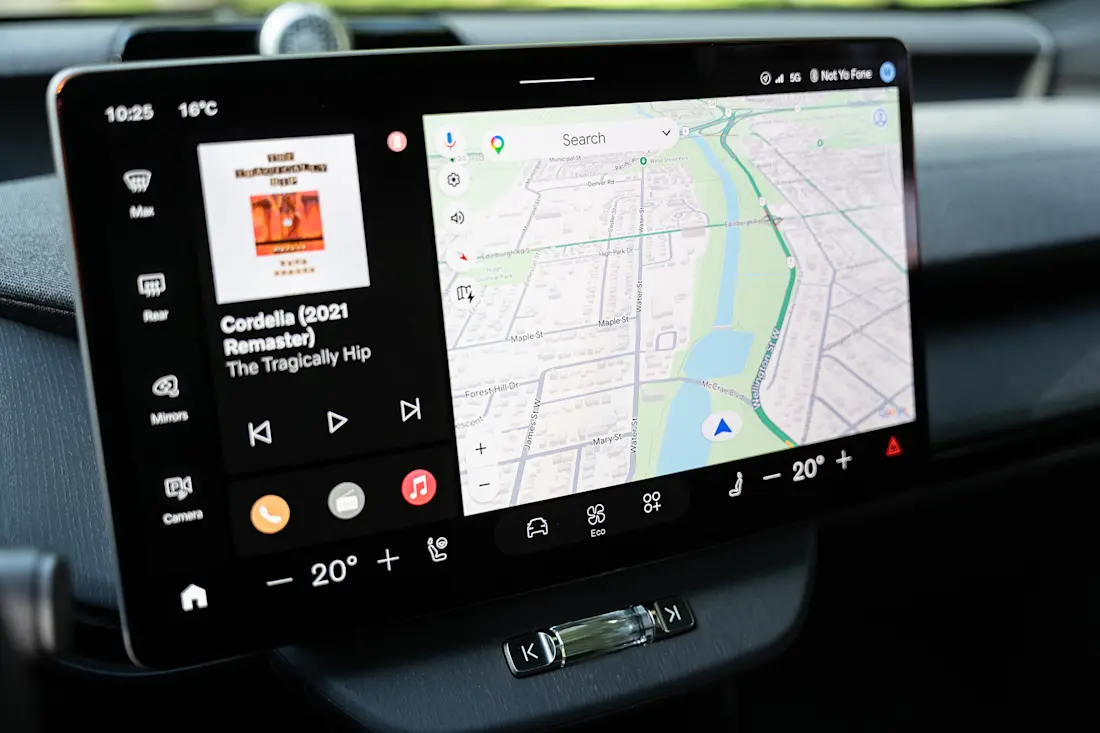
While its keycard technology remains imperfect — it’s a finicky system that requires tapping a credit card-like device on a sensor to unlock the doors, then another hidden in a console cubby to start the vehicle — previous experience with the EX60’s phone-as-key functionality proved much more dependable. It also benefits from a simple Google-based infotainment setup and, unlike the EX30, a dedicated instrument display.
But then just like the EX30 (and the three-row EX90 that’s no longer available in Canada), the door mirrors can only be adjusted by first navigating through the touchscreen and then using a controller on the right side of the steering wheel. While it’s true that this is a sort of set-it-and-forget-it process, it’s far more annoying than it needs to be — not to mention more annoying than traditional controls would make it otherwise.
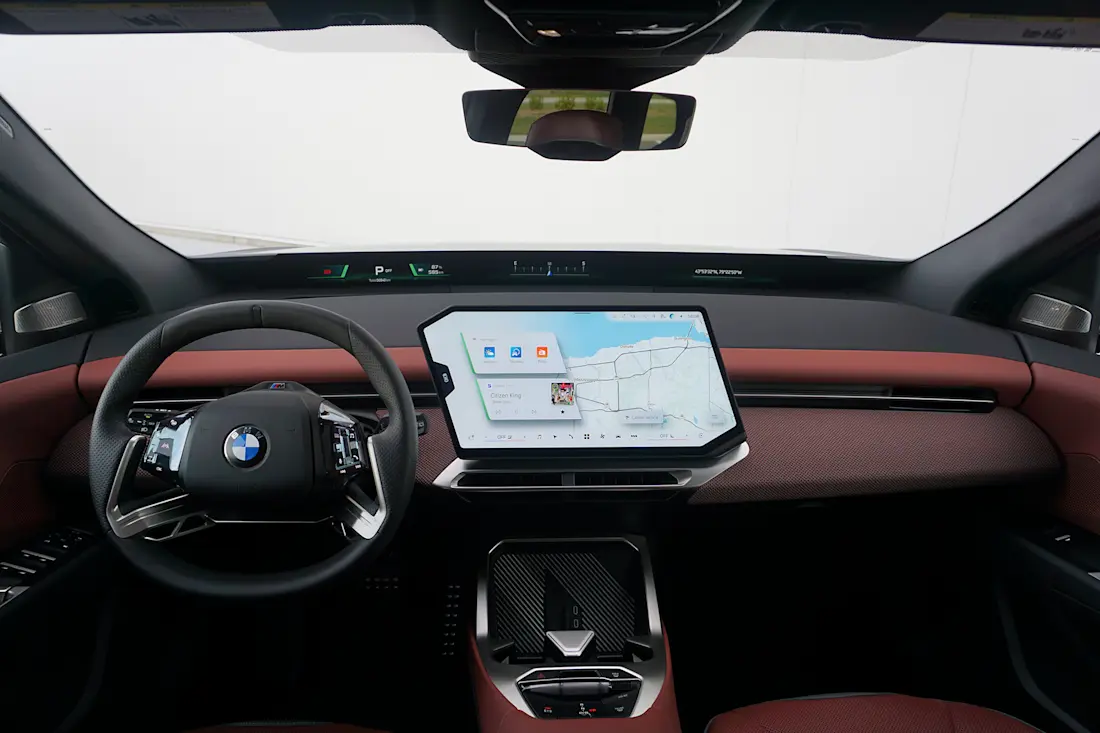
The BMW iX3 isn’t blessed with such a straightforward infotainment system, although the assortment of screens inside has its merits. For starters, the pillar-to-pillar display that spans the base of the windshield is easily the best around, putting relevant information at a short glance from the road ahead. And while its voice assistant isn’t as robust as the one in the EX60 that uses artificial intelligence (AI), there aren’t any major foils or foibles to report.
BMW iX3: 8/10; Volvo EX60: 7/10
Everyday Usability
Both crossovers use electronic locks as part of safe-exit assist systems that prevent their doors from being opened into oncoming traffic. However, neither is foolproof, with the BMW’s flush-mounted handles consistently requiring an extra squeeze before the actuators release the doors. But then the Volvo’s little winglets aren’t much better, representing unnecessary reinvention that can’t have much actual impact on range compared to conventional handles.
While similar in size, the iX3 gets the slight edge when it comes to outright practicality for its use of space. It isn’t just the room for people — although its back seat feels a bit more generous and easier to climb in and out of — but the small-item storage, too. While the EX60 has some novel solutions, like a centrally mounted glovebox, it lacks the essentials inside the iX3 like a covered console bin and fixed cup holders.
BMW iX3: 8/10; Volvo EX60: 7/10

Powertrain
Perhaps most surprising is how much more stout the EX60 feels, with its dual electric motors producing 503 hp and 524 lb-ft of torque. The iX3 makes more than enough output on its own at 463 hp and 476 lb-ft of torque, but it lacks the Volvo’s extra sense of shove. (Then again, there’s bound to be more performance-oriented variations of the BMW in the future.)
It’s not as if either of them lacks might, although the iX3 in particular feels like it’s part of a new era of EVs that’s more restrained in the punch it packs. The proof is in the numbers: the iX3 50 xDrive available at launch has a quoted zero-to-100 km/h acceleration time of 4.9 seconds — slightly slower than the EX60 at 4.6 seconds, which is more closely aligned with the likes of the gas-powered BMW X3 M50.
BMW iX3: 9/10; Volvo EX60: 9.5/10
Efficiency
The iX3 comes with a sizable 112.2-kWh battery pack, and it’s been optimized compared to the one in the iX it effectively replaces in BMW’s lineup. As it happens, that’s also significantly more capacity than the EX60 P10’s pack, which measures 92 kWh. (The upcoming P12 version will be fitted with a 117-kWh battery.)
It should come as no surprise, then, that the iX3 offers significantly more range — as much as 698 km on a full charge, according to Natural Resources Canada (NRCan). However, that’s for an example equipped with 20-inch wheels wrapped in performance tires; opting for all-seasons sees that number drop to 616 km, while this particular tester was good for 641 km on a full charge.
With its smaller battery, the EX60 offers 531 km of range, according to NRCan; but this tester was equipped with optional 22-inch wheels ($1,500) that sank its official number to just 502 km. But then to do better in either EV was easy, with the EX60 offering an effective range of about 525 km, and this particular iX3 nearing 660 km on a full charge.
Both are built on 800-volt architectures that allow DC fast-charging speeds of 400 kW in ideal conditions — assuming you can find a compatible station, of course. Those are still few and far between these days. Get lucky and you can expect to make the 10-to-80 per cent charge in 20 minutes or so in either EV.
BMW iX3: 9/10; Volvo EX60: 7/10
Driving Feel
While the EX60 has an extra sense of urgency with a heavy foot on the throttle, the iX3’s slightly more demure power delivery is at odds with its driving dynamics. Indeed, it feels like BMW leaned a little too much into an athletic feel from behind the wheel, with a sense of sportiness that doesn’t have the same universal appeal as the EX60’s more relaxed manners.
On the other hand, the iX3’s steering is among the best modern systems out there, with genuine feedback you’ll feel in your hands — rare these days, especially in EVs like this. The EX60’s setup offers a stark contrast, with no doubt that it’s an electric system, although it’s certainly smooth. Meanwhile, both offer adjustable regenerative braking and one-pedal driving capability.
BMW iX3: 8/10; Volvo EX60: 9/10
Comfort
The story is the same when it comes to on-road comfort, with the EX60 fitted with adaptive dampers that can be cycled through a trio of settings. While the stiffest of them is probably a little too firm, the softest one gives it exceptional grace (and just a bit of body roll to contend with). This being a modern Volvo, the seats are supremely supportive, although even the priciest Ultra trim tested here goes without the massaging seats offered in its rival.
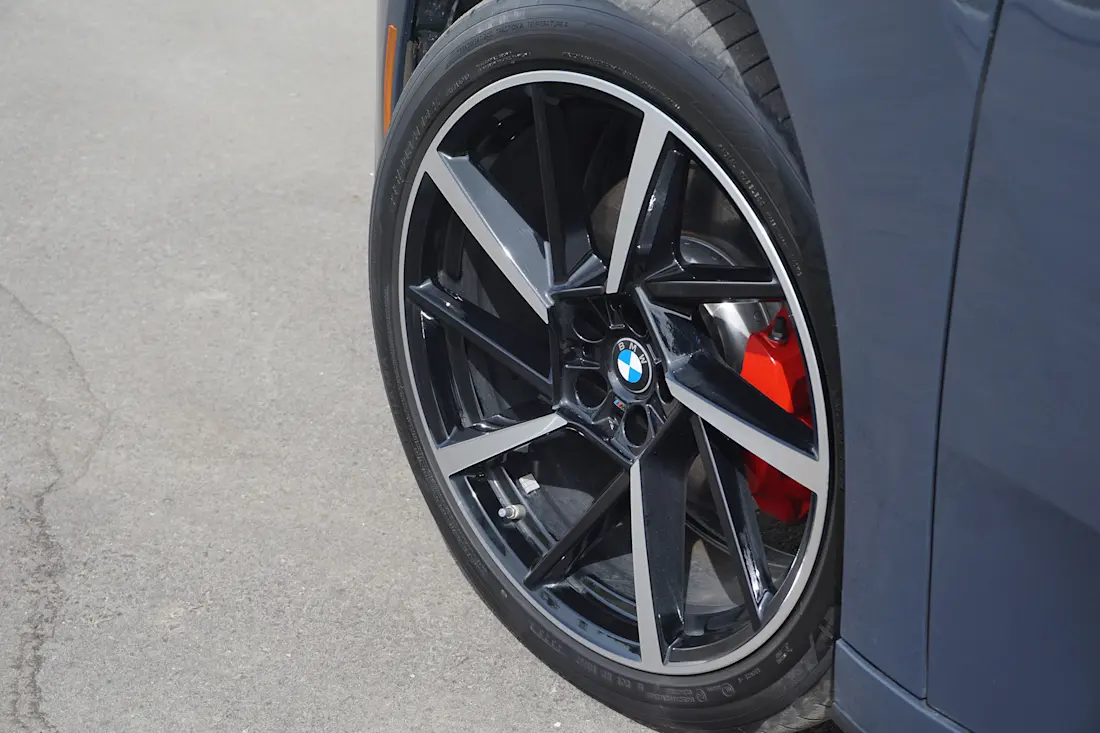
But then the EX60’s front seats can be had both heated and ventilated, the latter of which isn’t offered in the iX3 at all — not even with the $4,900 Premium package fitted to this tester. And its conventional suspension isn’t nearly as compliant as the Volvo’s, while the 21-inch wheels pictured here that were wrapped in low-profile tires (another $500 upgrade) certainly don’t help.
BMW iX3: 7/10; Volvo EX60: 9/10
Design
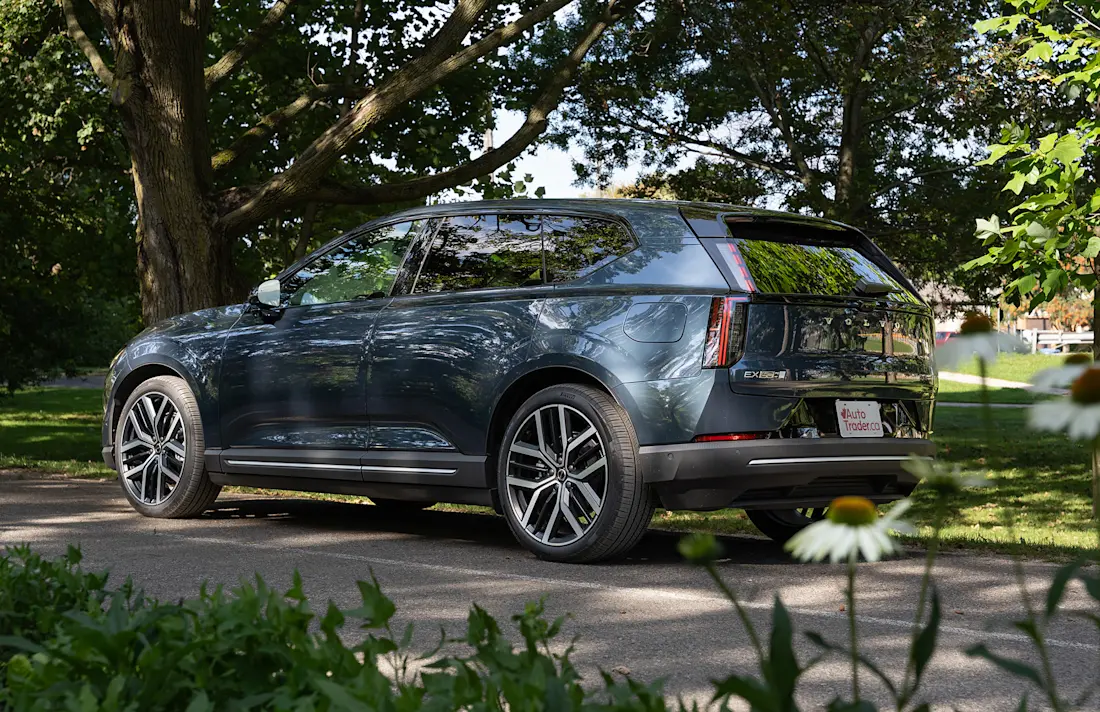
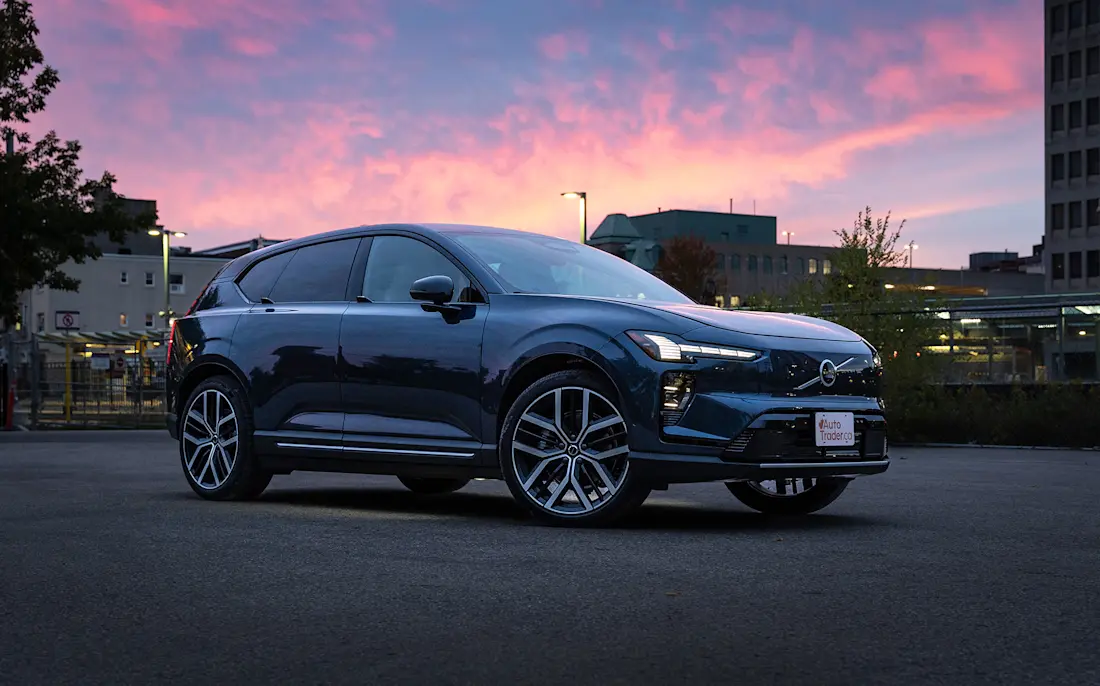
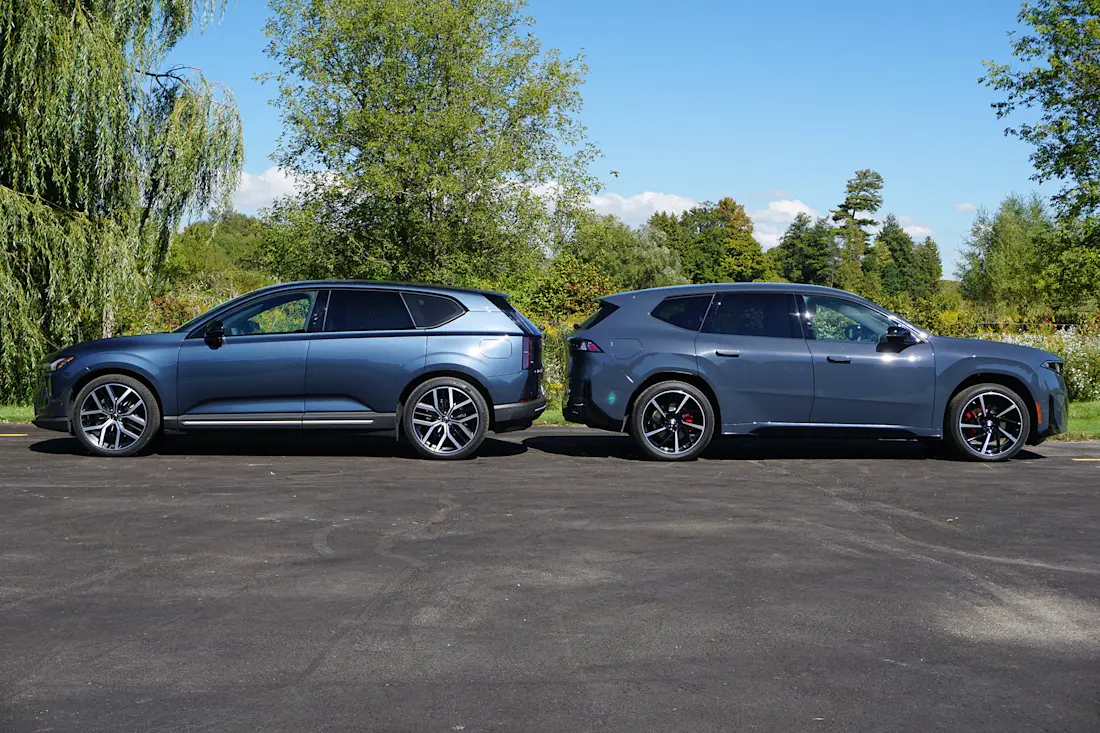
There’s no mistaking the EX60 for anything other than a Volvo, with the same timeless styling it’s been using for years, just with an electrified flourish. Smoother lines are the easiest way to tell this crossover apart from the similarly sized XC60, which still has a conventional grille up front to cool its powertrain (including the available plug-in hybrid system).
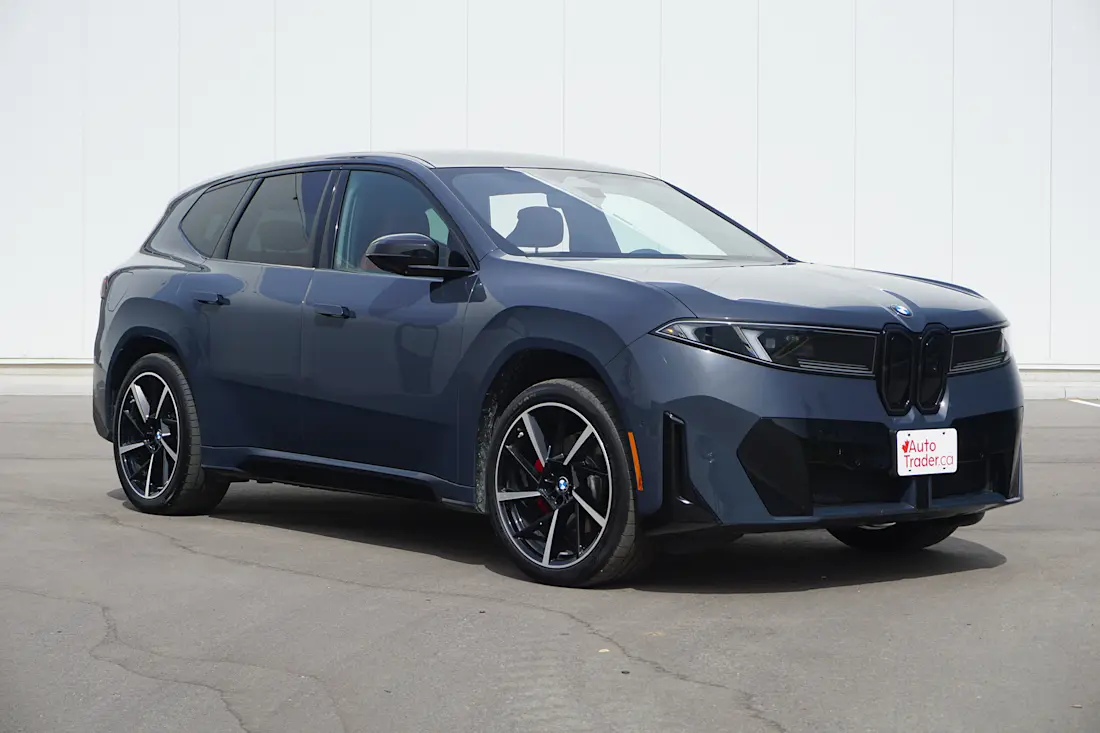
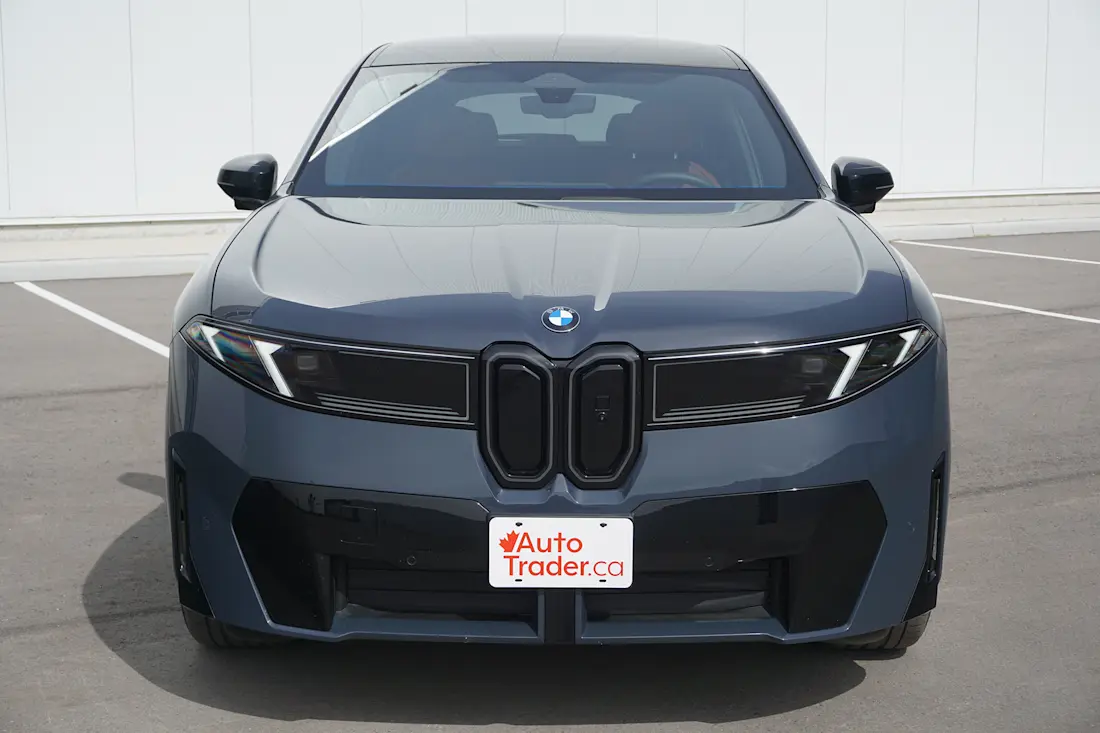
The iX3 is certainly less polarizing than the iX that came before it, although it’s not nearly as simple and stylish as the EX60. It ushers in a so-called Neue Klasse design language for the brand that trades big buck teeth for tiny chicklets, plus a flowing set of headlights that suits the shapes and proportions spread across the rest of the exterior. Meanwhile, the cabin is a perfect pairing — as is the Volvo’s.
BMW iX3: 7/10; Volvo EX60: 10/10
Equipment
The Volvo EX60 is offered in the choice of Plus or Ultra trims, the former of which comes with a 15-inch touchscreen, integrated Google Maps, an AI assistant, wireless Android Auto and Apple CarPlay compatibility, heated front and rear seats, a heated steering wheel, tri-zone automatic climate control, and more. Highlights of the Ultra trim include ventilated front seats, Napa leather upholstery, and a 28-speaker stereo.
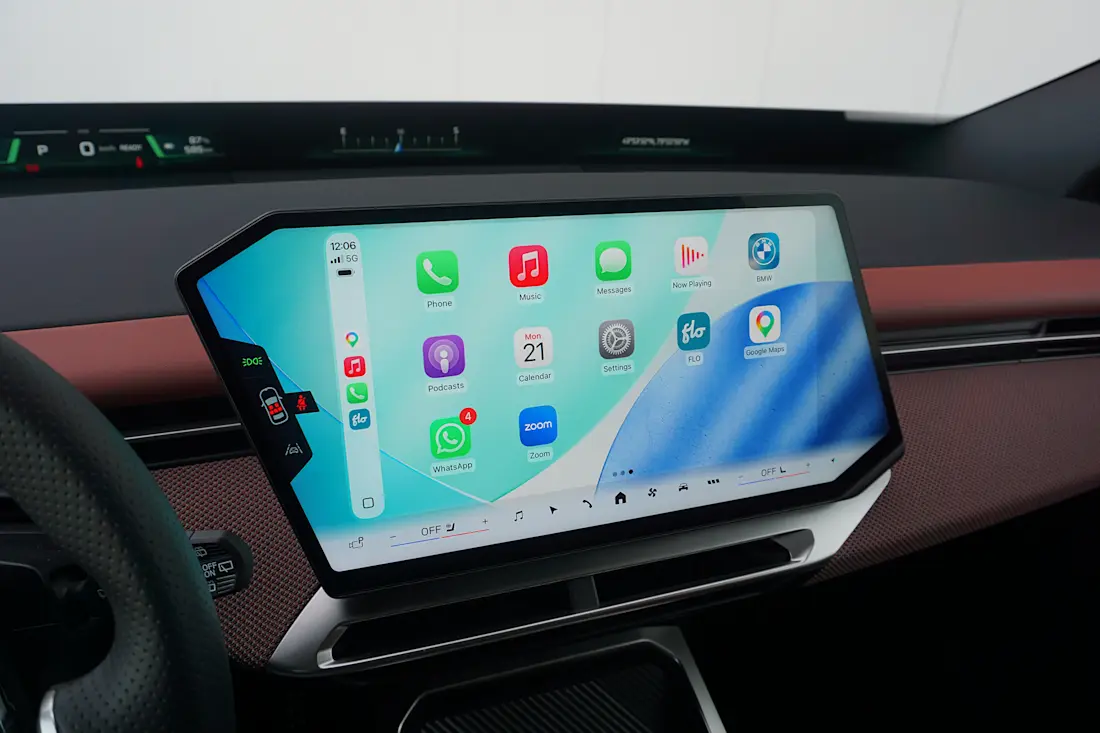
At launch, the iX3 comes in a single 50 xDrive trim that has a panoramic display across the top of the dash, a massive 17.9-inch touchscreen, the same wireless smartphone capability as the EX60, and a heated steering wheel and front seats, amongst other items. But to get massaging front seats requires the pricey Premium package, while even an extra climate zone for the rear seats is an add-on.
BMW iX3: 8/10; Volvo EX60: 9/10
Safety
Similarly, the EX60 has standard surround-view cameras and sensors, lane departure warning and keeping, forward collision warning and avoidance, blind-spot monitoring, a self-parking system, and adaptive cruise control — although it’s the hands-on variety. Conversely, the iX3 is offered with a hands-free system, but it’s a $1,500 upgrade over the standard hands-on setup. (It happens to work rather well.)
BMW iX3: 9/10; Volvo EX60: 9/10
Value for Money
The iX3’s undoing is its runaway pricing, although it’s possible to keep some of it in check. Skipping the 3D head-up display, for example, is a quick way to save $750, while even the $4,000 M Sport Pro package isn’t the near-necessity the Premium pack is. That would help keep it closer to its starting price of $75,900 before freight ($2,955) and taxes compared to this tester’s sticker price of $92,655.
Meanwhile, the Volvo EX60 can be had for as little as $77,500 before extras, freight ($3,100), and taxes. The Ultra trim tested here is more at $84,000, although options are limited to dark exterior accents and the larger wheels that are unnecessary and eat into range, plus some other interior and exterior accessories. That doesn’t make it a bargain, but it’s priced well next to a rival like the Cadillac Lyriq.
BMW iX3: 6/10; Volvo EX60: 7/10
The Verdict
Where the 2027 Volvo EX60 feels elegant, the 2027 BMW iX3 leans perhaps a little too far into an athletic disposition that lets it down as a classic luxury vehicle. Its stiff ride is also at odds with this first version’s relatively restrained powertrain. That also leaves it on something of an island, where the average shopper might find it too rigid and rough while leaving those looking for a sporty experience feeling short-changed in terms of acceleration.
What’s impossible to argue with, however, is its outstanding range, which manages to eclipse most other crossovers like it with ease. Still, the EX60 has its place as a properly premium EV with ample range of its own — and even more on its way when the P12 version and its bigger battery pack eventually arrives. But that does little for anyone looking to buy one today, which is enough to give the iX3 the edge in this head-to-head, at least for now.

2027 BMW iX3 50 xDrive
Base Price
$75,900
Options
$13,800 — Premium package, $4,900; M Sport Pro package, $4,000; Driving Assistant Plus w/Highway Assist, $1,500; Polarized Grey Metallic paint, $900; 3-D head-up display, $750; Parking Assistant Pro, $500; 21-inch star-spoke wheels, $500; BMW Digital Premium, $500; Tri-zone climate control, $250
A/C Tax
$100
Destination
$2,955
Price As Tested
$92,755
Engine Displacement
345 kW
Cylinders/Configuration
Dual electric motors
Max Horsepower
463 hp
Max Torque
476 lb-ft
Fuel Economy
2.1 / 2.4 / 2.2 Le/100 km cty/hwy/cmb, 18.7 / 21.3 / 19.9 kWh/100 km; 641 km est. range
Cargo Capacity
520 / 1,750 L seats up/down
2027 Volvo EX60 P10 Ultra AWD
Base Price
$84,000
Options
$1,500 — 22-inch wheels, $1,500
A/C Tax
$100
Destination
$3,100
Price as Tested
$88,700
Displacement
375 kW
Cylinder Count/Configuration
Dual electric motors
Horsepower
503 hp
Torque
524 lb-ft
Fuel Economy
2.2 / 2.4 / 2.3 Le/100 km cty/hwy/cmb, 19.2 / 21.4 / 20.2 kWh/100 km; 502 km est. range
Cargo Space
523 / 1,647 L seats up/down

All Articles
See all
Hyundai Venue vs. Kona: Size, Price and Which SUV Fits You
Let's say you've walked onto a Hyundai lot looking for something small, high-riding and cheap to run, and two subcompact SUVs keep catching your eye.

Lexus NX vs. RX: Size, Hybrid Options, Price and Which SUV Fits You
Shopping for a Lexus SUV and stuck on NX vs. RX? The Lexus NX is the compact luxury SUV: it costs less, holds as much cargo with the seats folded and burns less fuel as a hybrid.

Best AWD Minivans in Canada for 2026: Space, Winter Traction and Value
For 2026, only two models qualify as an AWD minivan in Canada: the Toyota Sienna and the Chrysler Pacifica.