
2026 Mazda MX-5 RF vs 2026 Subaru BRZ Comparison Test
 Jeff Wilson


These days, everything is divisive.
We’ve become an argumentative society of black and white thinking — especially when hidden safely behind our keyboards. That applies to sports cars, too.
Subaru’s BRZ (and its Toyota GR86 twin) has been pitted against Mazda’s venerable MX-5 — still affectionately known as the Miata, even though the badge hasn’t been used in years — since the former arrived some 15 years ago, and the armchair experts have picked their sides for good versus evil. But the reality is that these two cars are warriors on the same side of the battle.
While feature-laden crossovers and SUVs dominate the market, folks who love driving for driving’s sake are left with a dwindling collection of legitimately fun cars. The 2026 Mazda MX-5 RF and 2026 Subaru BRZ tS are among them.
They exist for impractical fun, firmly spitting raspberries at chubby crossovers, so rather than making them contentious adversaries, we as drivers ought to be celebrating them both. And that’s what we’re here to do — although we’ve still managed to pick a favourite.
Everyday Usability
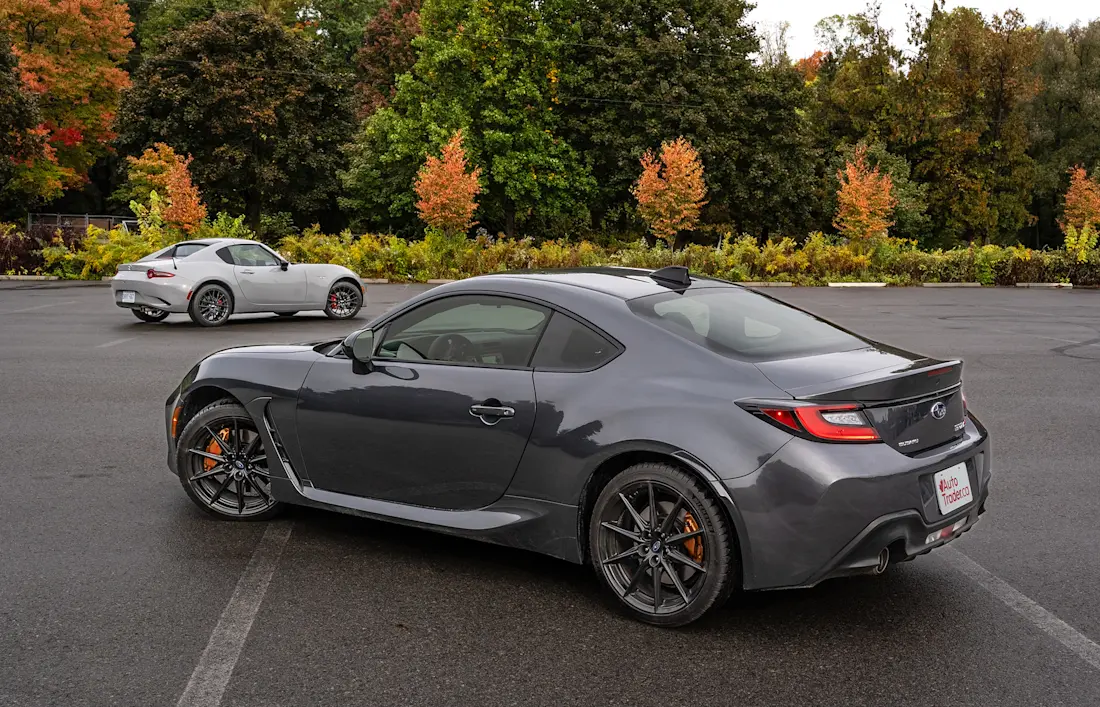
A buyer who has committed to a fun-first sports car should understand that there are going to be concessions. If hauling people or stuff are priorities, then move along — there are plenty of utility vehicles that are better suited to those tasks. These cars are for those who accept that size and space add bulk, which reduces fun, so a cramped cockpit is a worthwhile trade-off.
Getting in and out of either of these cars can be challenging the older you get. They’re low and the doors are relatively long, so practicing yoga can be helpful with ingress and egress. Once inside, the Mazda has (limited) room only for two. Fans of the Subaru will hop up and down with excitement that the BRZ has a backseat. That’s true in a very technical sense in that there is a padded shelf with some seatbelts, but it’s only suitable for a couple of corgis or garden gnomes.
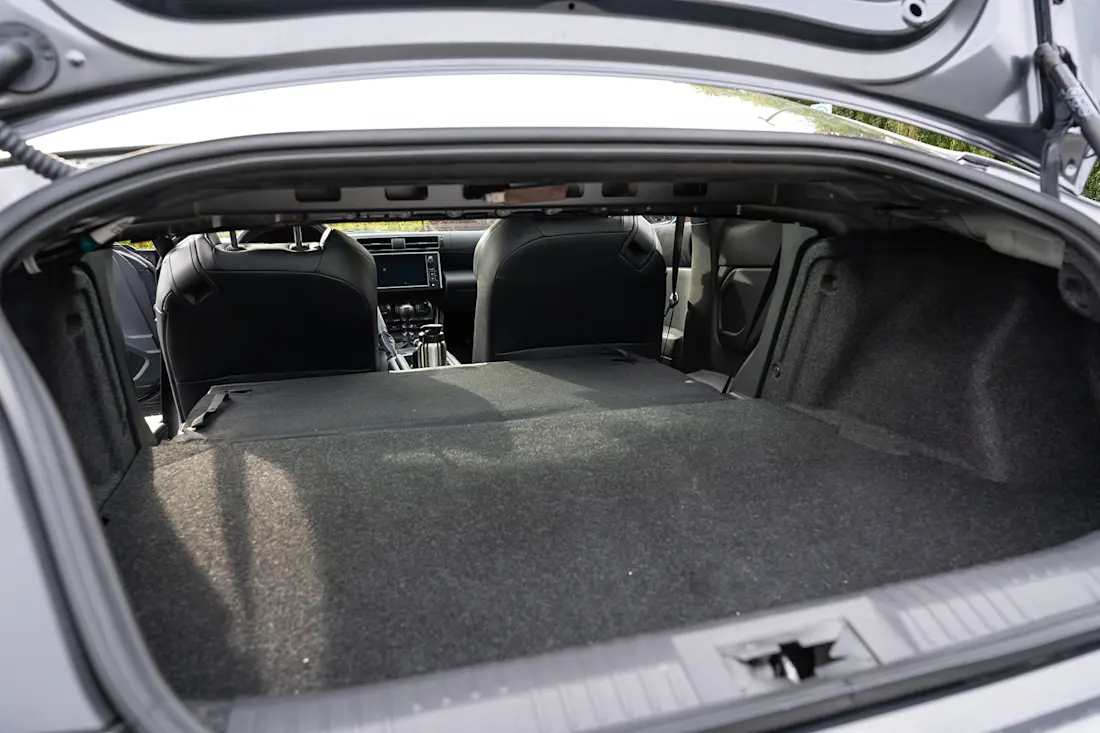
Of course, it can also be folded to open up the trunk to the BRZ fans’ other bragging point: that there’s enough space for a set of wheels and tires for a day at the track. Presumably one could transport other items in the BRZ’s diminutive 178-litre trunk (compared to the MX-5’s 130-litre capacity), but both are severely limited by their openings anyway.
Mazda MX-5 RF: 5/10; Subaru BRZ: 6/10
Comfort
Once a lucky driver has contorted into the pilot’s seat, it’s a pretty great place to be — unless said driver is of better-than-average dimensions. The BRZ offers a bit more width and space, but even still, it’s a confining cabin.
Making matters worse, the Mazda’s passenger footwell has an unfortunate hump that forces legs to the right. The seat itself — a Recaro-branded perch wrapped in faux-suede, in the case of this tester — is quite narrow and offers both firmer padding and more boisterous bolsters than the BRZ’s still-great sport seats. For my svelte 5-foot-9 frame, the driving position is absolute perfection in the MX-5, with the pedals, wheel, shifter, and switchgear all exactly where they need to be.
Both cars offer surprisingly decent ride quality, owed in part to not being fitted with ridiculously oversized wheels. The suspensions offer just enough compliance to soften all but the nastiest of potholes, though the Subaru is a little firmer, with a soft suspension tune long characteristic of the MX-5.
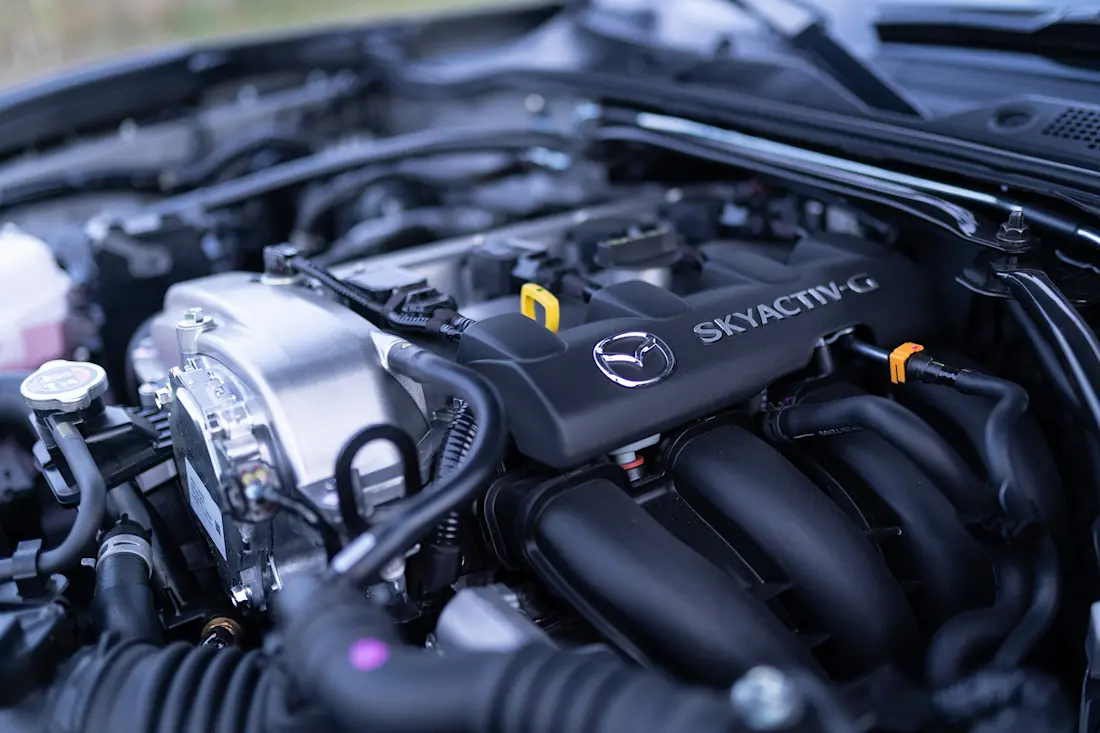
Buyers wanting a quiet cockpit should go electric vehicle (EV) shopping. These machines make a ruckus in terms of road- and engine noise. For the Subaru, that’s exacerbated by a comically fabricated engine sound piped through the stereo that doesn’t really resemble the gruff and agricultural sound the flat four-cylinder engine makes anyway.
The MX-5’s engine noise builds to a cacophony of perturbed hornets at higher revs. Neither are sonorous nor snarly, but at least the Mazda’s is genuinely mechanical. Of course, with the top retracted on the MX-5 RF, there’s little to be heard except the wind buffeting off the b-pillars and buttresses directly behind the driver’s left ear anyway.
Mazda MX-5 RF: 7/10; Subaru BRZ: 7/10
Equipment
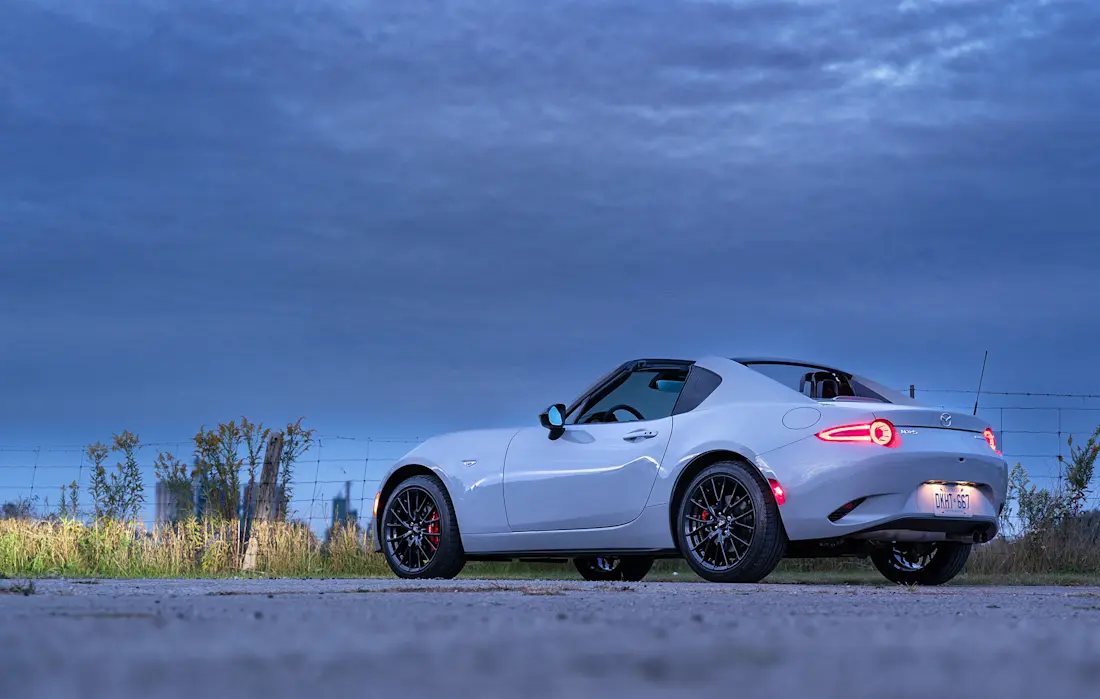
Features in the contemporary sense are minimal for these two. There are heated seats in each, but no heated steering wheels. The audio systems are mediocre, but Mazda incorporates speakers into the seatbacks to help overcome some of the top-down wind noise. The BRZ has digital climate control versus this MX-5’s old-school manual switches, but the Mazda offers a trick power-retracting roof panel in RF guise. (The conventional convertible still uses a soft top.)
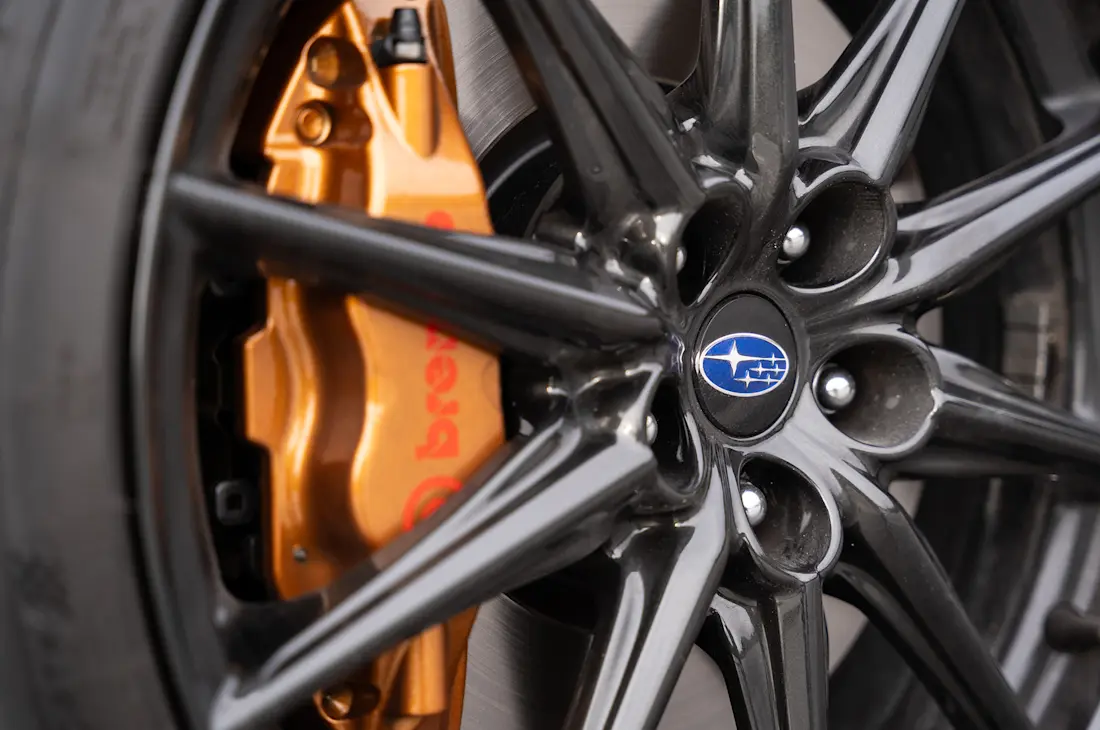
Both of these test cars were fitted with Brembo-branded brake calipers (front-only for the MX-5), and limited-slip differential. Being the sporty tS trim, the BRZ also had upgraded dampers.
Mazda MX-5 RF: 7/10; Subaru BRZ: 7/10
User-Friendliness
For years, Mazda’s dial-controlled infotainment system was derided, but the screen is wide, crisp, and bright, and allows for touch control with Apple CarPlay and Android Auto, both of which are wireless. It worked without a hiccup during this test, too.
Subaru’s infotainment system — which is technically Toyota’s, in the case of the BRZ — was glitch-free, too, but required smartphones to be connected via cable for mirroring functionality. The screen itself is laughably dull and low-resolution, matching the abysmal quality of the back-up camera.
The rest of the switchgear in both cars is like a breath of old-school fresh air, with hard buttons galore. They’re also relatively easy to get in, set up to your liking, and enjoy without needing an engineering degree to figure out how to change the mirror position. Outward visibility is notably better in the Subaru since the Mazda’s thick b-pillars and buttresses create sizable blind-spots. [Solution: skip the RF and get the MX-5 convertible, then drive with the top down exactly all the time. You’re welcome.–Ed.]
Mazda MX-5 RF: 8/10; Subaru BRZ: 7/10
Safety
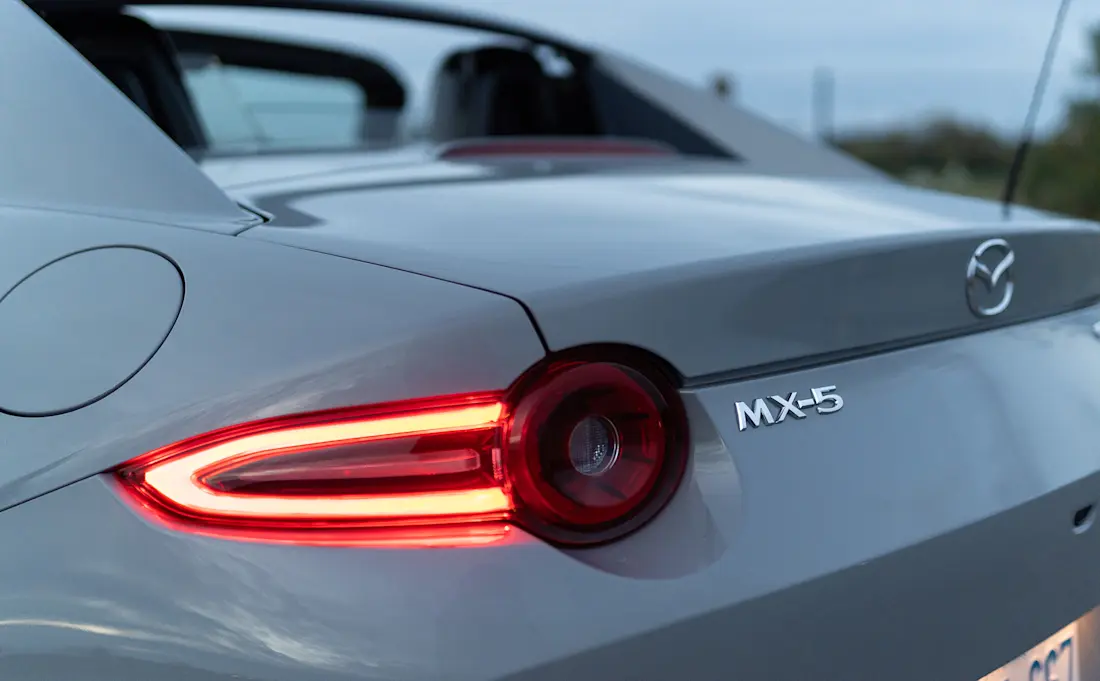
Despite being small, simple cars, safety is still a concern for each manufacturer. While some of the latest automated safety features haven’t yet found their way into these machines, the MX-5 and BRZ both provide blind-spot monitoring with rear cross-traffic alert, adaptive cruise control, and automatic emergency braking.
Mazda MX-5 RF: 7/10; Subaru BRZ: 7/10
Driving Feel
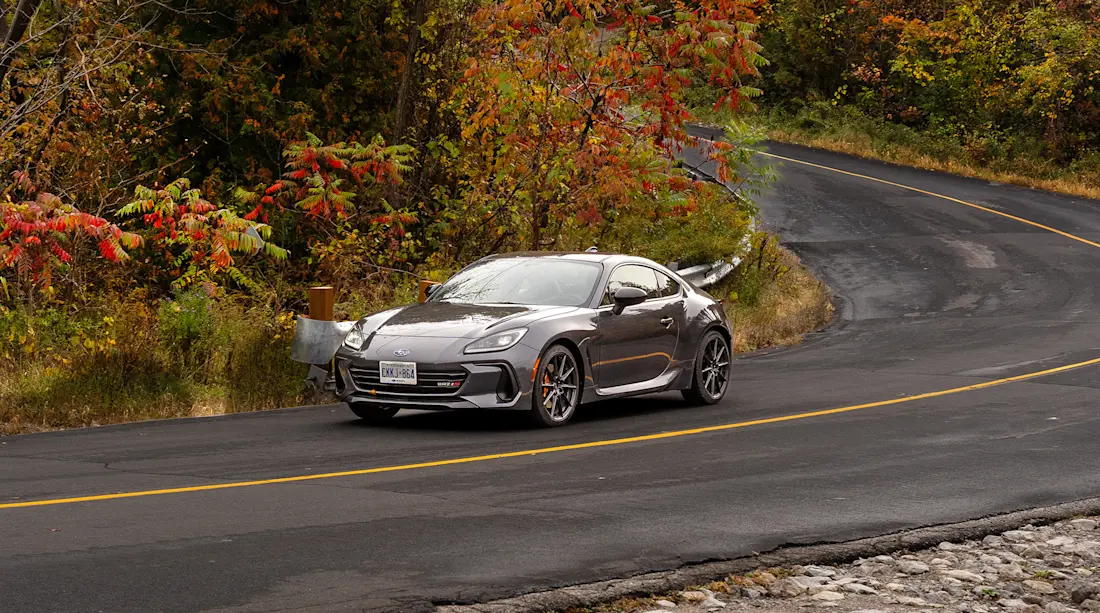
All that stuff is important when considering a car purchase, but let’s get real: the main reason someone is going to buy either of these cars is how they drive. These are machines that reward those who embrace the art of driving. Either one can be purchased with an automatic transmission, but they’re at their best when the driver is fully engaged in the way the clutch-throttle-shifter trinity responds to the driver’s will.
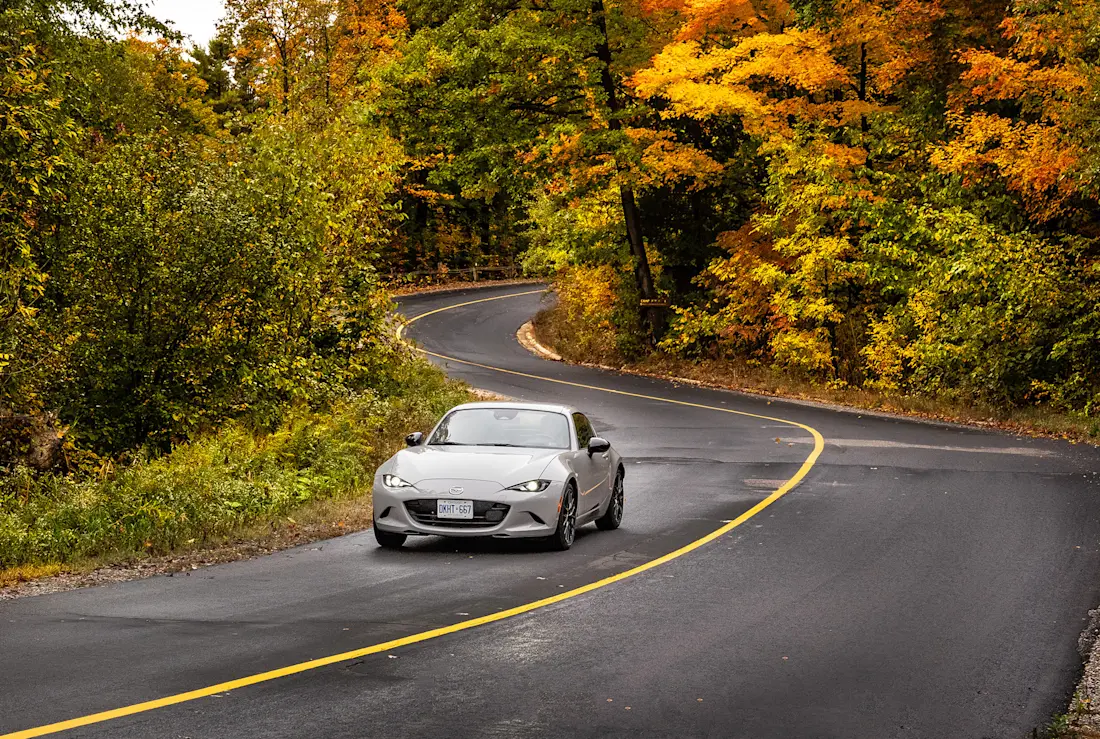
Both cars are excellent at encouraging rev-matched downshifts (neither of which do it for you). They’re forgiving enough to help a novice grow confident in short order, but they’re also precision instruments that celebrate a skilled driver who can snap off a heel-and-toe downshift, and balance the car’s attitude with the amount of throttle application. If there’s one criticism it’s that the Subaru’s engine hangs on to revs a split-second between shifts, which makes the experience slightly less fun than the Mazda’s.
The steering, too, reminds drivers how communicative cars used to be before the computers took over. At first it almost feels as if there’s something wrong. “Why is this steering wheel vibrating? Is it a wheel imbalance?” Not at all. That’s good steering feedback sharing what’s happening where the rubber actually meets the road. Both cars have very quick steering with no numbness or dead spot on centre, which means inputs happen almost telepathically with the slightest of movements.
The BRZ feels like the more serious car. Its suspension is set up to corner flatter than the playful little MX-5, and if the goal is to go out and do lapping days with a bone-stock car, the Subaru will handle it better; its wider tires help to provide more grip, too.
Mazda MX-5 RF: 10/10; Subaru BRZ: 10/10
Powertrain
Unfortunate souls who’ve never driven a current-generation BRZ or MX-5 will squawk about the lack of power in these cars. On one hand, the brain-scrambling acceleration of EVs means soccer parents in electric SUVs can beat these cars across an intersection while sipping a mochaccino and yelling at the kids.
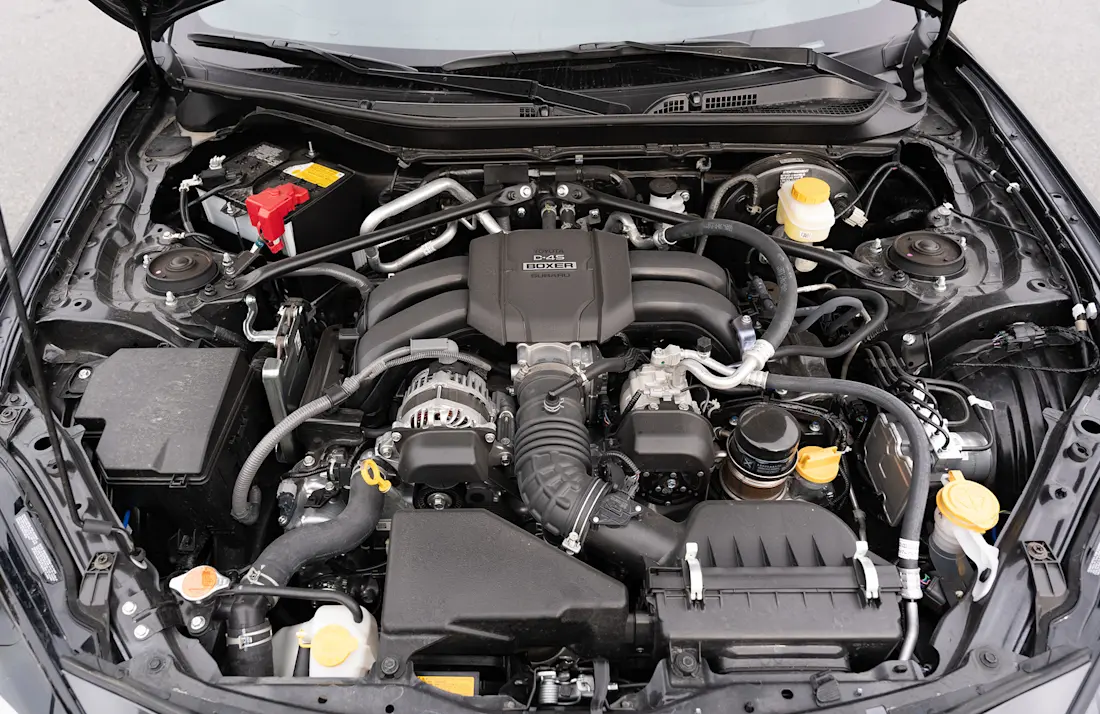
On the other hand, Car and Driver has published a zero-to-96 km/h times of 5.5 seconds for both the BRZ tS and the MX-5 RF — quick enough to keep up with the heavy-hitters from my youth like the Chevrolet Corvette, Mazda RX-7, and Nissan 300ZX. Those cars had much bigger engines — and often turbochargers — to achieve those speeds, whereas the BRZ does it with 228 hp, and just 181 hp in the case of the MX-5.
A driver needs to earn their speed in these cars. There’s no electrified cheating, no turbo kick — just a linear, normally-aspirated progression as the revs climb up toward their respective redlines that sit beyond 7,000 rpm. These are honest, balanced, and fun cars. Anyone can make a powerful car go quick in a straight line.
Mazda MX-5 RF: 7/10; Subaru BRZ: 7.5/10
Efficiency
The Subaru’s 2.4L four-cylinder gets greedy with fuel when it’s revved. During this test, it showed an average of 8.8 L/100 km, which isn’t bad considering that’s what it’s supposed to achieve on the highway.
The Mazda’s combined efficiency rating is 8.1 L/100 km, but given its performance during this week-long test, it would only achieve that if dragging an anchor. During the early half of the week, there was a lot more urban driving (with no shortage of opportunities to rev the little 2.0L engine), and it sipped gas at an indicated rate of 6.7 L/100 km. After a lot more highway driving, that dropped to 6.5 as the overall average for the week. Both cars call for premium-grade gas.
Mazda MX-5 RF: 9/10; Subaru BRZ: 7/10
Design
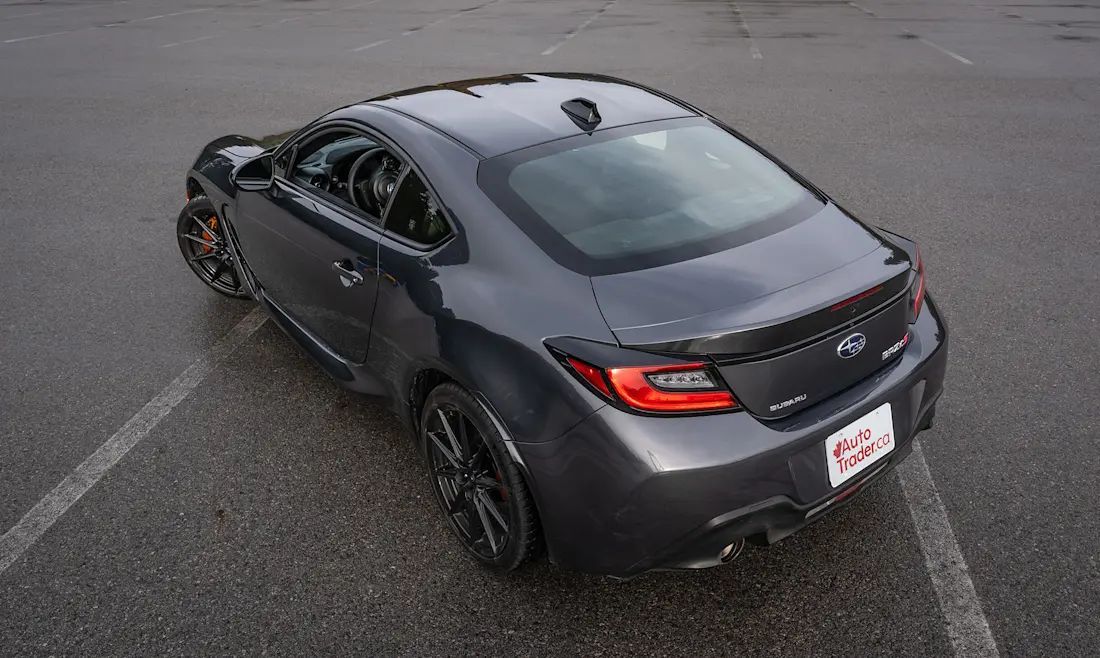
For the most part, these two trade off pros and cons to make choosing between them more about personal whims than objective numbers. Subjectivity aside, the BRZ is longer, lower, and more aggressively proportioned, presenting as the more serious sports car.
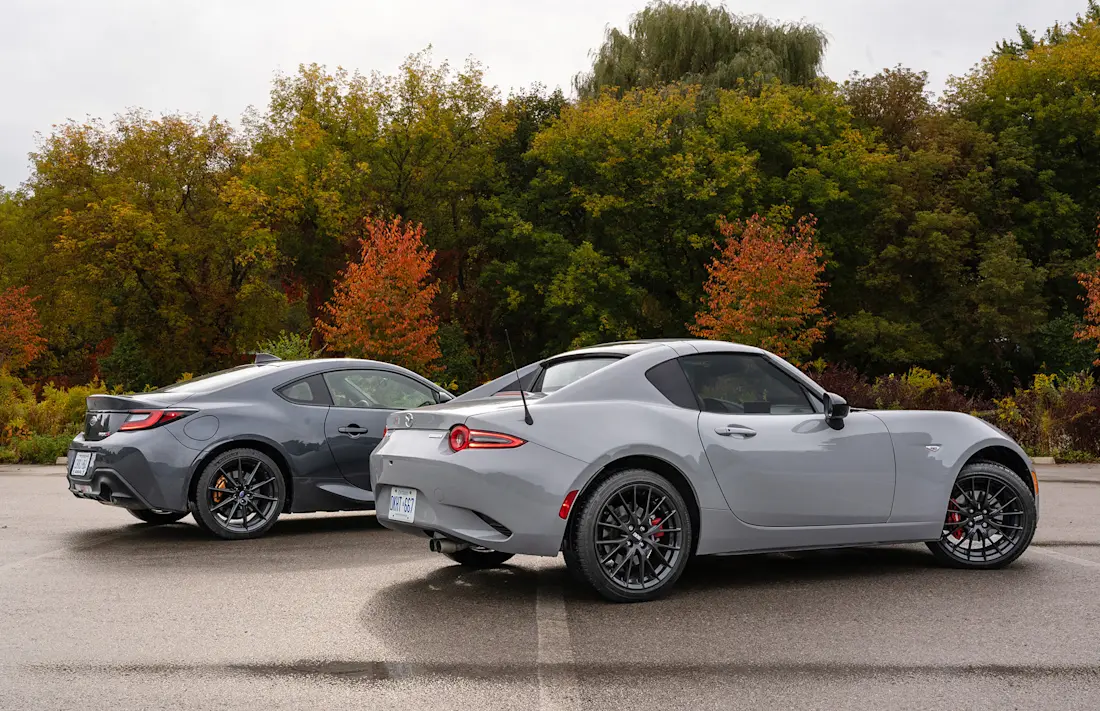
The MX-5 has aged well despite being a design that’s been on sale for a decade now. It’s simple, clean, and looks as aggressive as such a diminutive car can. But while a coupe version of the MX-5 could be a knock-out, the car just looks better in its soft top format. The buttresses look good, but the car’s ratio of greenhouse above the beltline versus metal below isn’t quite as sleek as the Subaru it’s up against here.
(An important side note: painting these two cars in the dullest shades available is an absolute travesty, as such fun machines deserve bright, fun colours.)
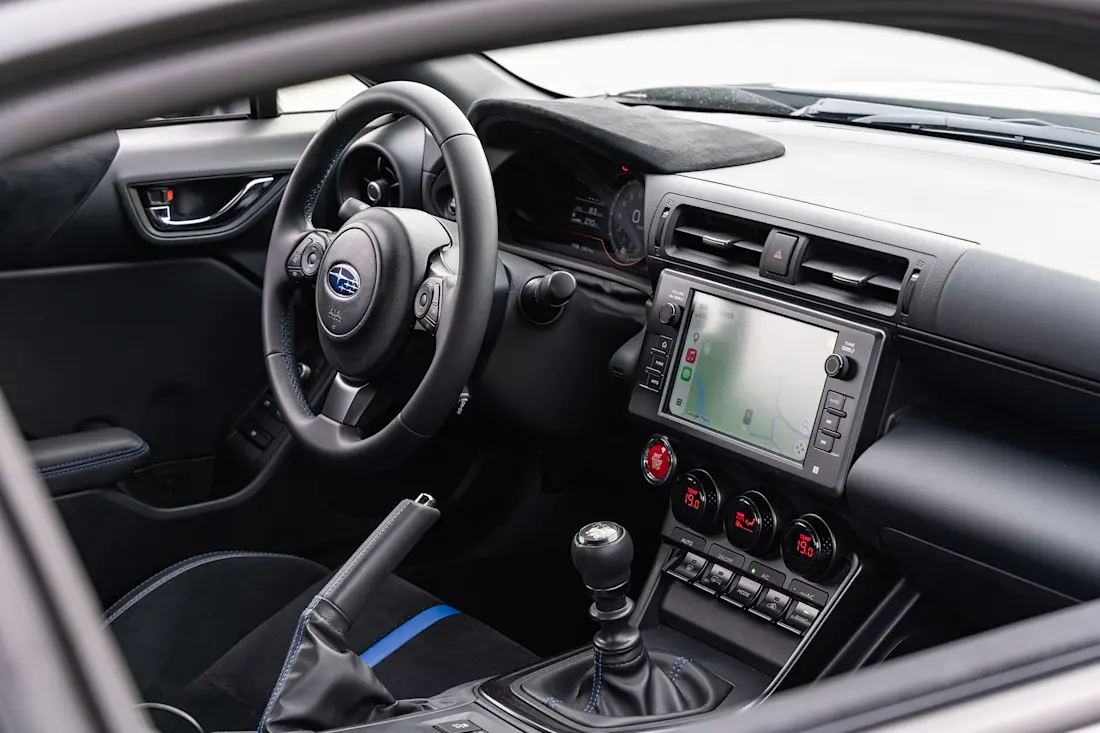
The MX-5’s interior is the more stylish of the two, with surfaces covered in faux-suede and soft-touch materials (plus door panels painted the colour of the body). The BRZ’s dull, black interior features more cheap-feeling panels and offers some blue stitching and trim in this tS version to spruce up what’s otherwise a pretty drab cockpit.
Mazda MX-5 RF: 7/10; Subaru BRZ: 8/10
Value for Money
In their most basic trims, these two are very close in price. The MX-5 GS with a soft top’s MSRP is $35,700, while the base BRZ is $33,395. The retractable hard top and a performance package option boost our Mazda tester to $49,495 after the required freight charge but before taxes are tallied. The BRZ tS, at $40,090, undercuts the MX-5 by enough to make it a truly stand-out value. In either case, when the average new vehicle transaction price in Canada is $63,000, these cars over-index on value.
Mazda MX-5 RF: 7/10; Subaru BRZ: 9/10
The Verdict
Fighting over which is best misses the point. Given how few joyful, engaging driver’s cars are left at any price should be enough to make us shout endless praise to both Subaru and Mazda for having the guts to still produce cars like these.
However, the 2026 Mazda MX-5 RF is the car that never fails to put a smile on any driver’s face no matter how mundane the route. When foregoing the practicality of a crossover, one should choose the most joyful means of four-wheeled transportation, and that remains Mazda’s little two-door.

2026 Mazda MX-5
Trim Tested
2026 Mazda MX-5 RF GS-P
Engine Displacement
2.0L
Cylinder Count/Configuration
I4
Horsepower
181 hp @ 7,000 rpm
Torque
151 lb-ft @ 4,000 rpm
Fuel Economy
9.0 / 6.7 / 8.0 L/100 km cty/hwy/cmb
Cargo Space
127 L
Base Price
$42,700
Options
$4,700 — Aero Grey Metallic paint, $300; Sport package, $4,400
A/C Tax
$100
Destination
$2,095
Price as Tested
$49,595
2026 Subaru BRZ
Trim Tested
2026 Subaru BRZ tS
Engine Displacement
2.4L
Cylinder Count/Configuration
H4
Horsepower
228 hp @ 7,000 rpm
Torque
181 lb-ft @ 3,700 rpm
Fuel Economy
12.0 / 8.8 / 10.5 L/100 km cty/hwy/cmb
Cargo Space
178 L
Base Price
$37,895
Options
None
A/C Tax
$100
Destination
$2,195
Price as Tested
$40,190

All Articles
See all
Most Reliable Car Brands in Canada for 2026: Long-Term Value and Ownership Costs
No Canadian authority publishes reliability rankings for car brands, so we checked four things you can verify yourself: Canadians' trust vote, AutoTrader Awards wins, Transport Canada recall records and warranty terms.

Safest Cars in Canada for 2026: Crash-Test Ratings and Safety Features
The safest cars in Canada for 2026 include the Kia K4 sedan, Toyota Camry, Hyundai Kona, Subaru Forester, Mazda CX-90 and Hyundai Ioniq 5.

10 Fastest Electric Cars You Can Buy in Canada in 2026
What is the fastest electric car you can buy in Canada?