
2026 Hyundai Palisade vs Jeep Grand Cherokee L Comparison Test
 Kyle Patrick


The line between mainstream and premium brands is getting blurrier every year.
If you need any proof, look no further than the 2026 Hyundai Palisade. The second-generation version arrived with seriously upmarket looks, while the loaded Ultimate Calligraphy trim tested here comes with a cabin bursting with supple leather surfaces and plenty of power-adjustable features, plus its available hybrid powertrain adds more power and better fuel economy.
Jeep arguably kicked off the upmarket climb of the humble SUV with the original Grand Cherokee of the 1990s. Its successor has been brushed up with tweaks of its own along with a high-power four-cylinder engine, while the 2026 Jeep Cherokee L has three rows of seating to give it the same sort of accommodations as the Hyundai it’s up against here.
Design
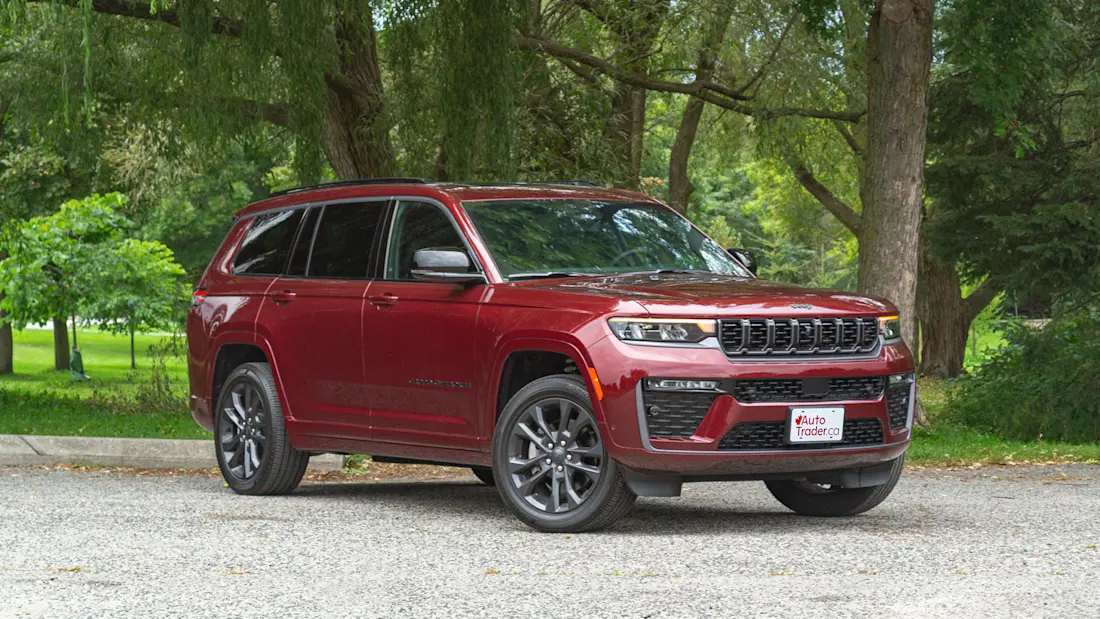
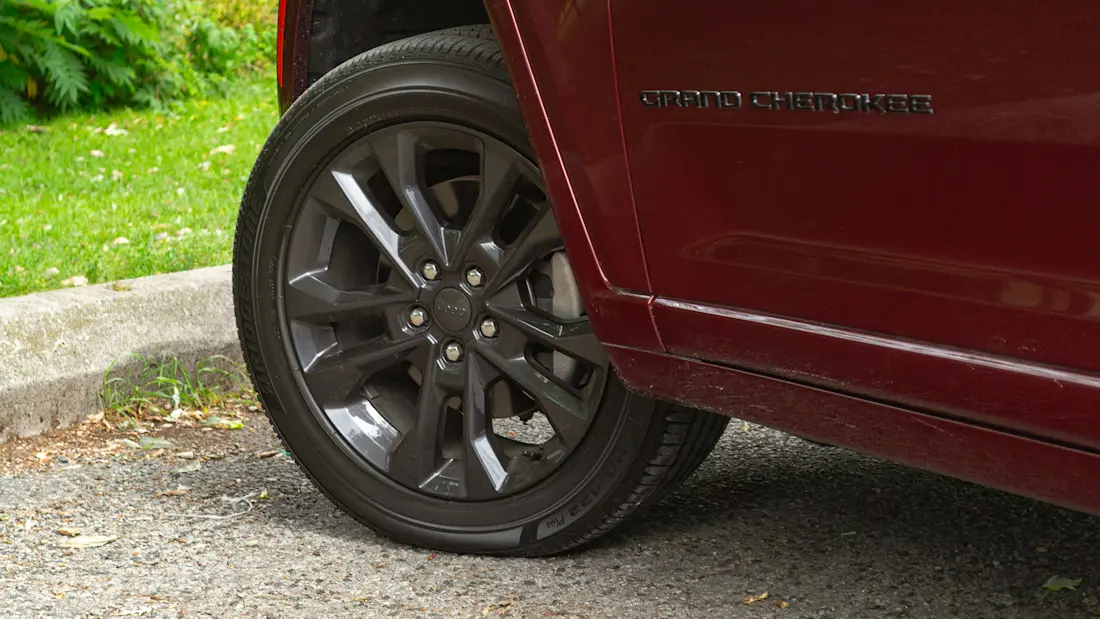
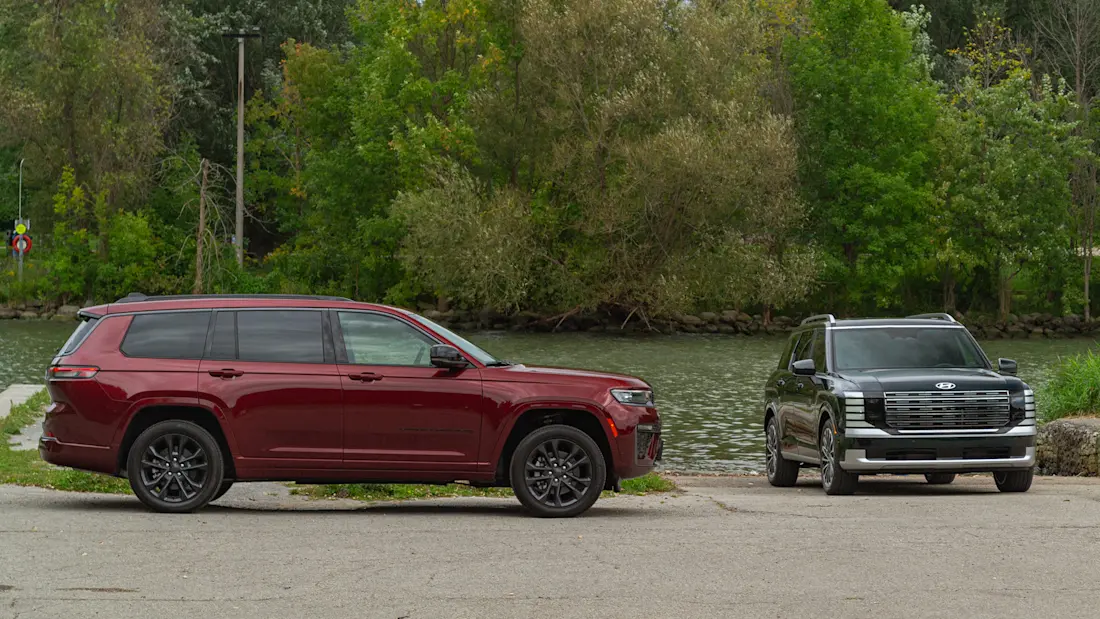
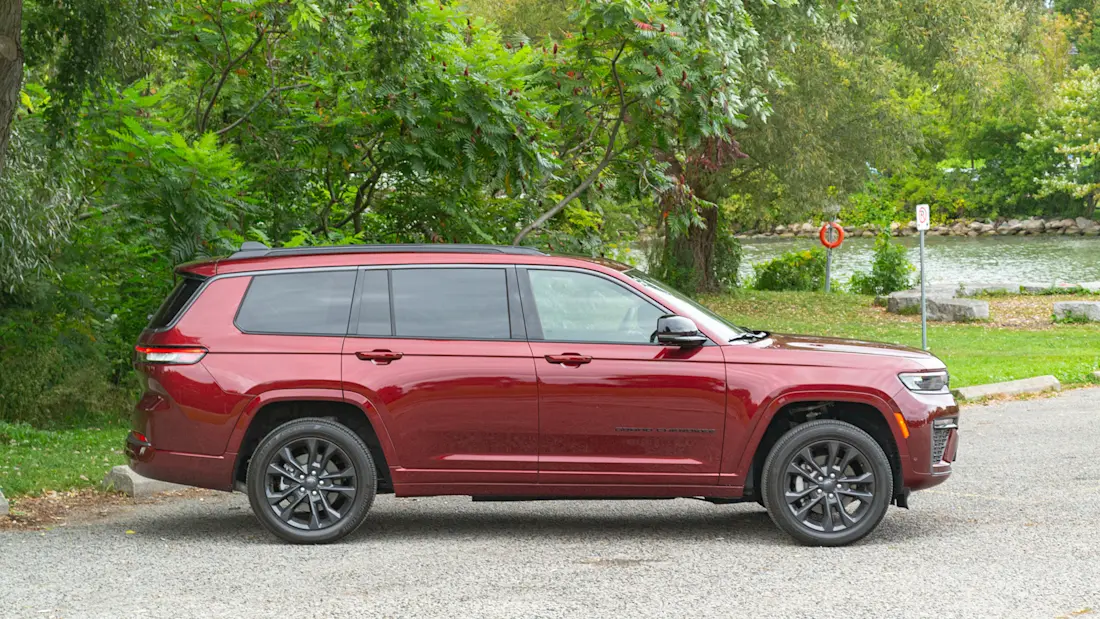
Jeep left well enough alone with the Grand Cherokee’s updated styling, with only the subtlest changes to the headlight design and iconic seven-slot grille. New bumpers front and back round out the changes. The Limited Reserve trim tested here is handsome and, well, reserved, with dark-painted 20-inch aluminum wheels and optional red paint ($495) providing a splash of colour.
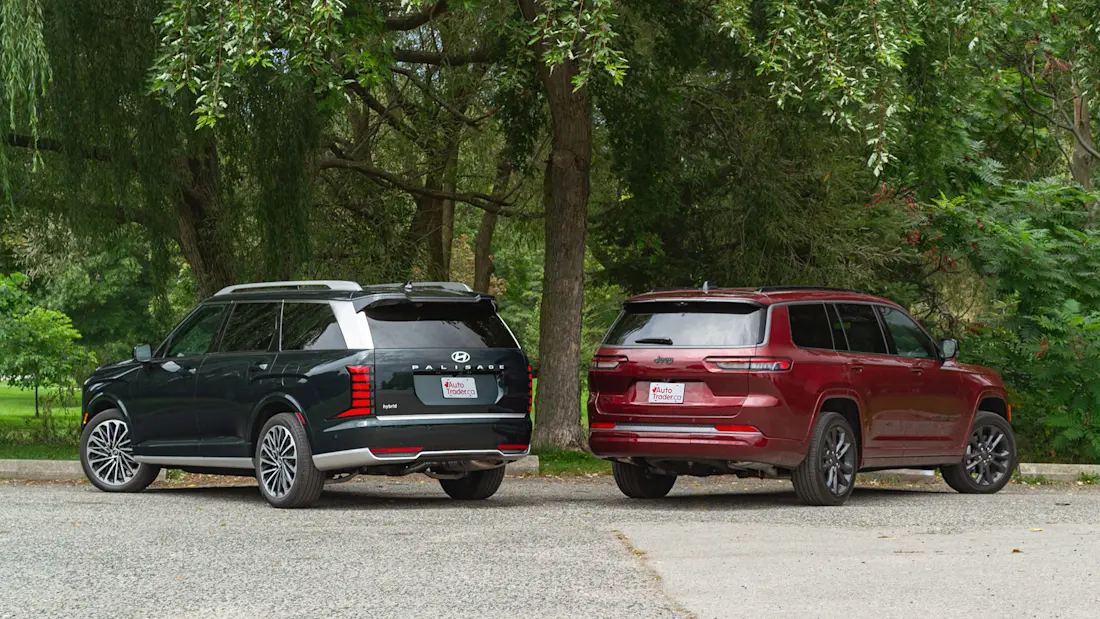
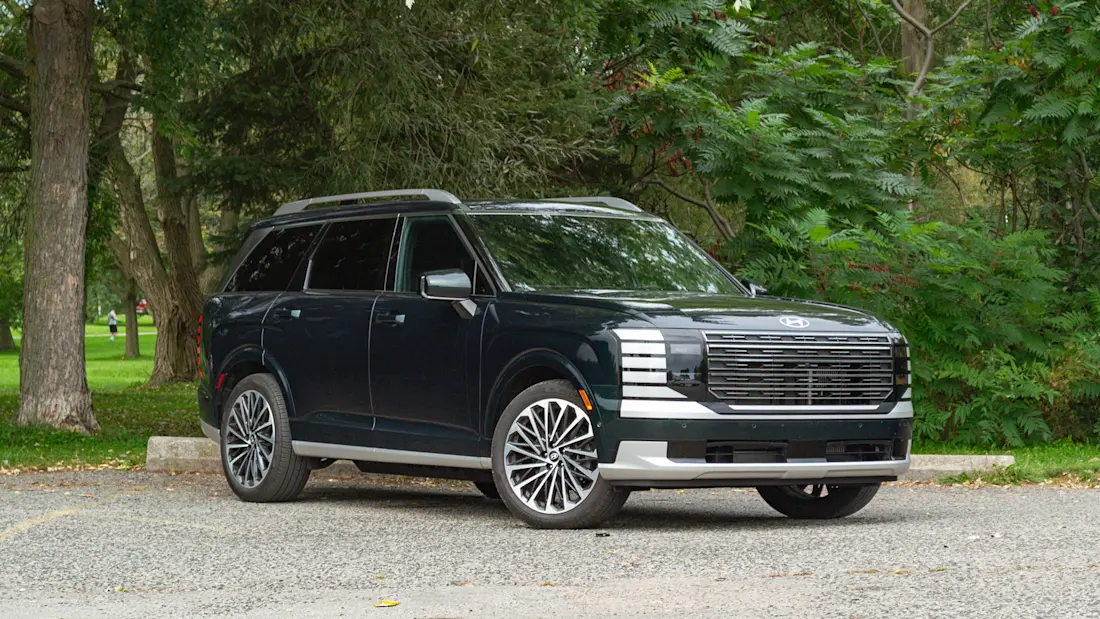
There have been more than a few comparisons to a certain British SUV brand with the latest Palisade, but that’s a sign of just how upmarket Hyundai’s latest has climbed. This tester might be its best iteration, too: a dark green paint and big, multi-spoke 21-inch alloys give it serious presence. There are clever design touches too, such as the way the metallic D-pillar aligns with the rear roof rack support.
Both cabins are predominantly black, drowning out some of the more interesting design flourishes, although the Palisade is offered in brown and grey, too. (A tan interior is limited to the Grand Cherokee’s most expensive Summit trim.) The Jeep plays it safer with a clean dashboard design and a more restrained use of metal accents, with concave wooden trim along the upper door panels for a more spacious feel.
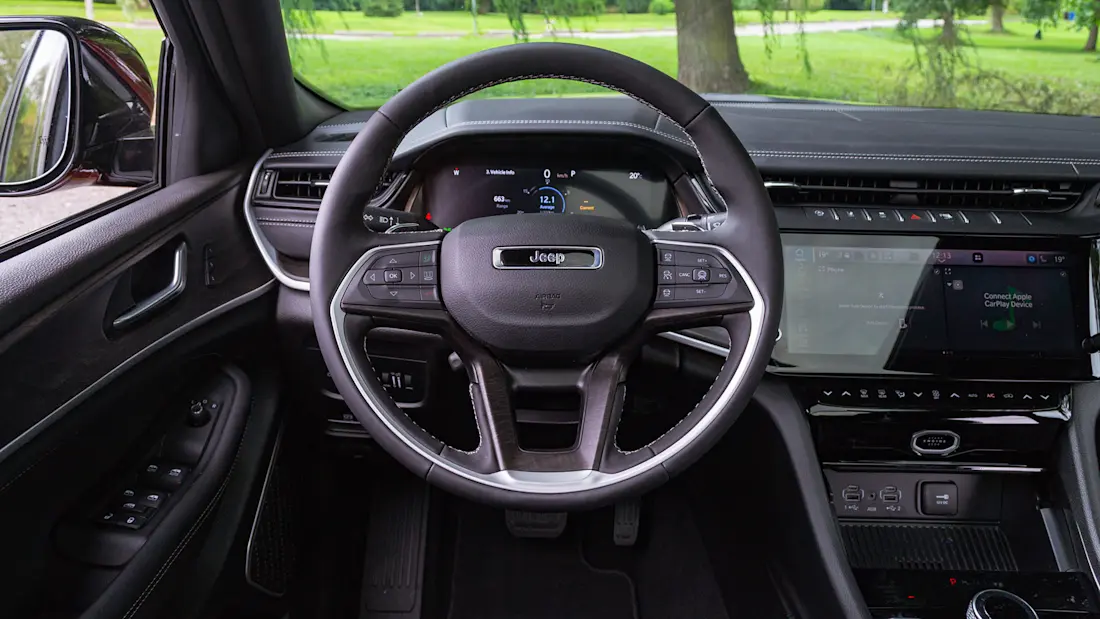
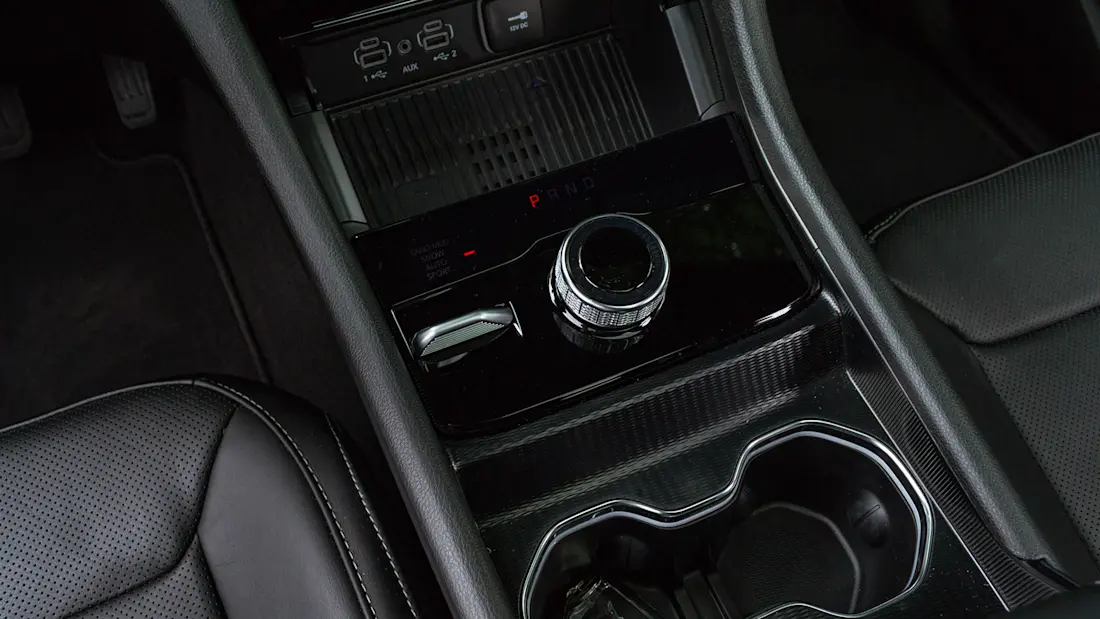
Gloss-black plastic is kept to the centre console, where it allows the pretty knurled controls to shine. The low-mounted, angled infotainment screen is a refreshing change from the glued-on-tablet look found in most modern vehicles.
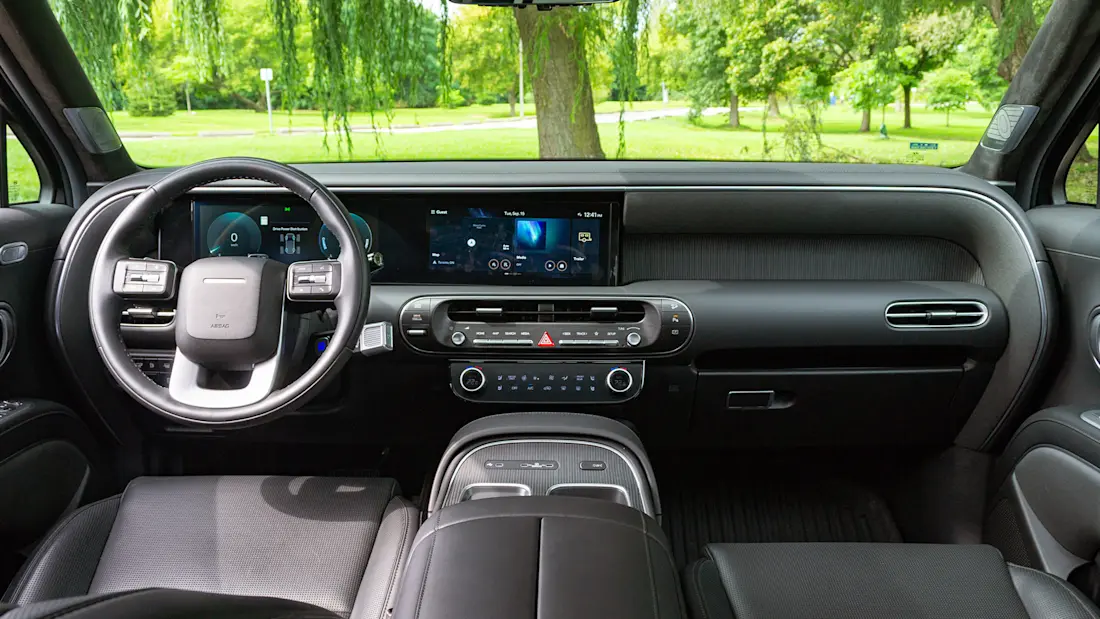
To be fair, the Palisade essentially skips that trend, too, with its twin-screen setup mounted low enough to not impact the view ahead. It also gives the dashboard design breathing room — a gloriously rounded setup with plenty of negative space with serious mid-century modern vibes. A semi-floating centre console ensures there’s plenty of storage space for items big and small, and there are high-end niceties like Nappa leather upholstery and suede A-pillars.
Hyundai Palisade: 9/10; Jeep Grand Cherokee L: 8.5/10
Everyday Usability
While the three-row Grand Cherokee L is 139 mm (5.5 in) longer than the Palisade, most interior measures are similar, and some even skew in favour of Hyundai’s largest product. Crucially, that includes second-row legroom, with 1,092 mm (43.0 in) of it versus the Jeep’s 1,001 mm (39.4 in). And third-row legroom is better, too, at 815 mm (32.1 in) compared to 770 mm (30.3 in).
It’s that latter measurement that leaves us confused, though: in practice, the Jeep’s third-row is more comfortable, at least on short journeys. Credit the higher lower cushions or the larger windows that make it feel more spacious. Or maybe it’s the three-abreast setup in the Hyundai, which is admittedly its own sort of advantage compared to the pair of rearmost seats in the Grand Cherokee L.
It isn’t just people — the Hyundai carries more of their stuff, too. The Palisade has a useful 540 L of space with its third row upright against 487 L in the Jeep. Fold down both rows of seats and the advantage remains, with 2,455 L in the Palisade and 2,396 L in the Grand Cherokee L.
But then Jeep’s rugged reputation pays off in useful ways. In Limited Reserve trim, the Grand Cherokee L boasts a Hyundai-beating 215 mm (8.5 in) of ground clearance, whereas the Palisade manages just 187 mm (7.4 in). It also has selectable high- and low-range gearing for its four-wheel-drive system, whereas the Palisade offers a fully automatic all-wheel-drive setup.
Towing capacity also favours the Jeep, which can pull 2,812 kg (6,200 lb) when properly equipped, while the Palisade tops out at just 1,814 kg (4,000 lb).
Hyundai Palisade: 9/10; Jeep Grand Cherokee L: 8.5/10
Equipment
Hyundai loads the Palisade up with more goodies than you’ll find in some actual premium three-row SUVs. Heated and ventilated seats are generally pretty standard fare up front at this point — the Grand Cherokee L has ‘em, too — and the same goes for toasty buns in the second row. Yet this Ultimate Calligraphy tester also adds second-row ventilation and third-row heated seats, the latter of which is available in very few vehicles on the market at any price.
Then there are the useful bits, like a standard wireless charger in every trim (yes, even the base), rain-sensing wipers, driver’s seat memory settings, and a head-up display. A 14-speaker sound system is satisfying, too. Two surprising (and welcome) features include the UV-C sterilization cubby (because, yes, our phones are probably filthy), and the two-way drive recorder feature. The latter captures footage inside and outside the vehicle, eliminating the need for a fiddly third-party dashcam.
Against the kitchen-sink approach of the Hyundai, the Jeep comes up short. That doesn’t mean it isn’t also well-equipped; its heated seats and steering wheel are very effective, for example. The surround-view cameras are high-resolution and have great framerates, as does the digital rearview mirror. This tester misses out on the 19-speaker audio system of the top trim, however, and there’s no way to get second-row ventilation in any Grand Cherokee L. Nor is there an option for a built-in dashcam. There are available massaging seats in the Summit trim, mind you.
The Jeep’s ace up its sleeve is night vision. This feature gives drivers a crisp view of the surroundings ahead via the instrument display, picking up details that simply aren’t visible to the naked eye. The added confidence on a pitch-black country road is measurable.
Hyundai Palisade: 9.5/10; Jeep Grand Cherokee L: 8.5/10
User-Friendliness
Both of these SUVs find a good balance between a breadth of touch-based functions and the easy reliability of physical controls. Both have dedicated areas below their screens for climate controls, while the Jeep also positions the seat and wheel controls alongside the screen (the Hyundai locates these on the door panel). The Palisade gets a slight advantage by using familiar rotary dials for temperature instead of the arrows found in the Grand Cherokee L.
Jeep has long had user-friendly infotainment setups. The layout in the Grand Cherokee is no different, with a useful (and customizable) main screen, an always-there menu along the left, and snappy responses. Folks can pair two phones simultaneously, download third-party apps directly to the system, and connect wirelessly via Apple CarPlay and Android Auto.
All of those last features apply to the Hyundai’s large infotainment setup, too. Its tile-based menu can be easier to operate on the move than the Jeep’s smaller icons, though there are a few settings that require quite a lot of menu-digging to alter. Like the Jeep, the Hyundai has a pair of USB-C ports in each row, ensuring everybody’s devices are full of juice.
Both vehicles feature unique takes on the traditional gear selector that nonetheless are easy to use. In the Palisade, it’s a column-mounted stalk that you twist forward or back for drive or reverse, respectively, while the Grand Cherokee uses a dial on the centre console.
Hyundai Palisade: 8/10; Jeep Grand Cherokee L: 8/10
Comfort
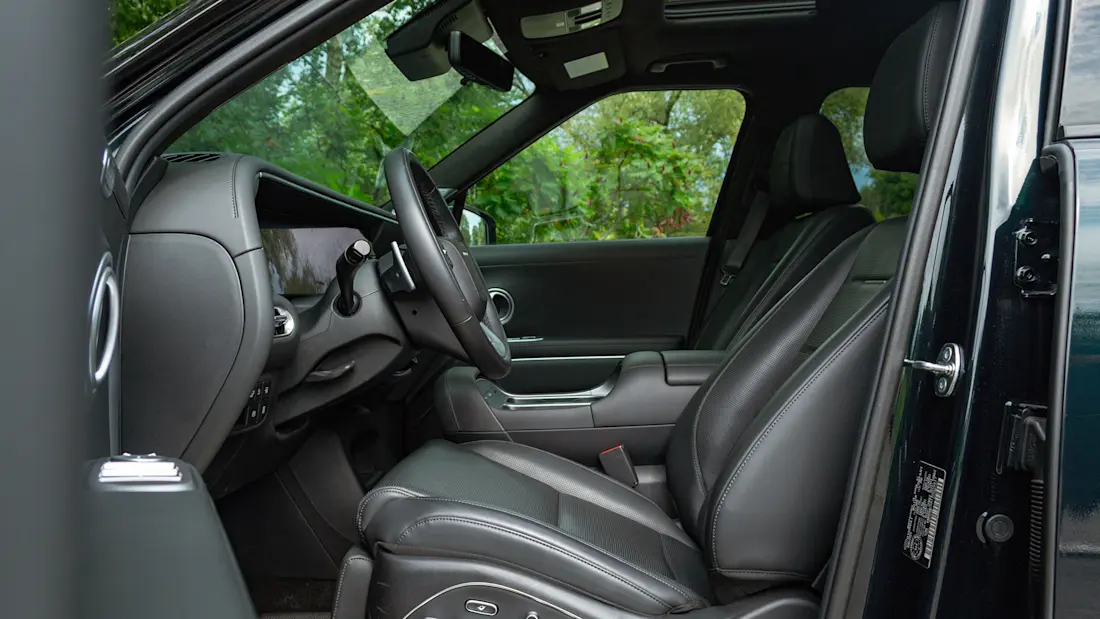
Hyundai’s Nappa leather seating surfaces look and feel great, and the suede headliner adds another layer of luxury. The front seats offer a wide range of adjustment, plus Hyundai’s fatigue-battling Ergo Motion function. Need a power nap? The reclining Relaxation Comfort seats provide a better setup for it. The second-row captain’s chairs aren’t quite so cushy but still plenty comfortable.
The Jeep’s front thrones — which are also wrapped in Nappa leather — may lack the features found in the Hyundai, but they make up for it with excellent lateral- and lower-back support. Unfortunately the second-row seats are quite flat. Both vehicles have passable third-rows with good storage, but low cushion heights. The Hyundai also squeaks ahead with a quieter ride, doing a better job of keeping road and tire noise at bay.
Hyundai Palisade: 9/10; Jeep Grand Cherokee L: 8.5/10
Driving Feel
It might be the smaller of the two, but the Palisade doesn’t feel that way from behind the wheel. There’s a deliberateness to it that makes the Hyundai’s sheer size clear. That doesn’t mean it’s unwieldy, because the Palisade is still easy to place on the road thanks to clear sightlines — it just isn’t the sort of vehicle that shrinks around its driver. This trim comes with big 21-inch alloy wheels, but the ride is impressively smooth; to that end, the Palisade is noticeably softer all around, leaning more through corners. It also sails over bumps nicely but can take longer to settle after particularly rough ones.
Unsurprisingly, the Jeep feels more truck-like to drive. That’s only comparatively. mind you: it’s quite well-mannered over all terrain, with tighter body control that quickly builds driver confidence. You’re keenly aware of its length, too, but like the Hyundai the views outside make it easy to place. The steering has noticeably more weight to it than the Hyundai helm; whether that’s a positive for you or not depends on tastes. While both vehicles offer a multitude of driving modes for both on- and off-road driving, it’s safe to say we would trust the Jeep more should the trail get challenging.
Hyundai Palisade: 7.5/10; Jeep Grand Cherokee L: 8.5/10
Powertrain
The Palisade is the first Hyundai to feature the brand’s newest hybrid powertrain, pairing a familiar turbocharged 2.5L four-cylinder with an electric motor, a six-speed automatic transmission, and standard all-wheel drive. It’s a solid performer with plenty of easy-access torque (a peak of 339 lb-ft of it), helping the big Palisade quickly scoot up to highway and passing speeds. It’s also offered with a traditional V6 engine, for those who would prefer it that way.
The Hyundai just barely has the horsepower advantage (329 hp versus 324), but its seamless delivery actually makes it feel less powerful. The transmission works well most of the time, but there are the occasional stutters in low-speed situations like stop-and-go traffic as it is forced to switch between propulsion sources.
Jeep has cut the familiar Pentastar V6 from all but the base Grand Cherokee, instead installing a very powerful turbocharged 2.0L engine. It routes its 324 hp and 332 lb-ft of torque through an eight-speed automatic transmission and one of three available four-wheel-drive systems. The new engine is strong, with a slightly rattly idle giving way to a muscly mid-range that pushes this chunky three-row down the road with authority. While there’s little turbo lag to talk about, there’s still a distinct step in performance right around 3,000 rpm, giving the Jeep a more visceral drive. The eight-speed automatic, sourced from German brand ZF, is as smooth here as it is everywhere else, cleanly and correctly selecting gears and responding well should the driver decide to conduct.
Hyundai Palisade: 8/10; Jeep Grand Cherokee L: 8/10
Efficiency
Surprise, surprise: the hybrid is better on gas. In related news, water is still wet.
Operating costs still matter, and the Hyundai’s 8.1 L/100 km combined fuel economy rating from Natural Resources Canada (NRCan) substantially undercuts the Jeep’s combined figure of 10.7. On the highway, there isn’t much between them: the Palisade pulls off 7.9 while the Jeep scores 9.4, and in the real world, the gap is even smaller. Nonetheless, it’s city driving that truly hits the Grand Cherokee L hard.
Hyundai Palisade: 8.5/10; Jeep Grand Cherokee L: 7.5/10
Safety
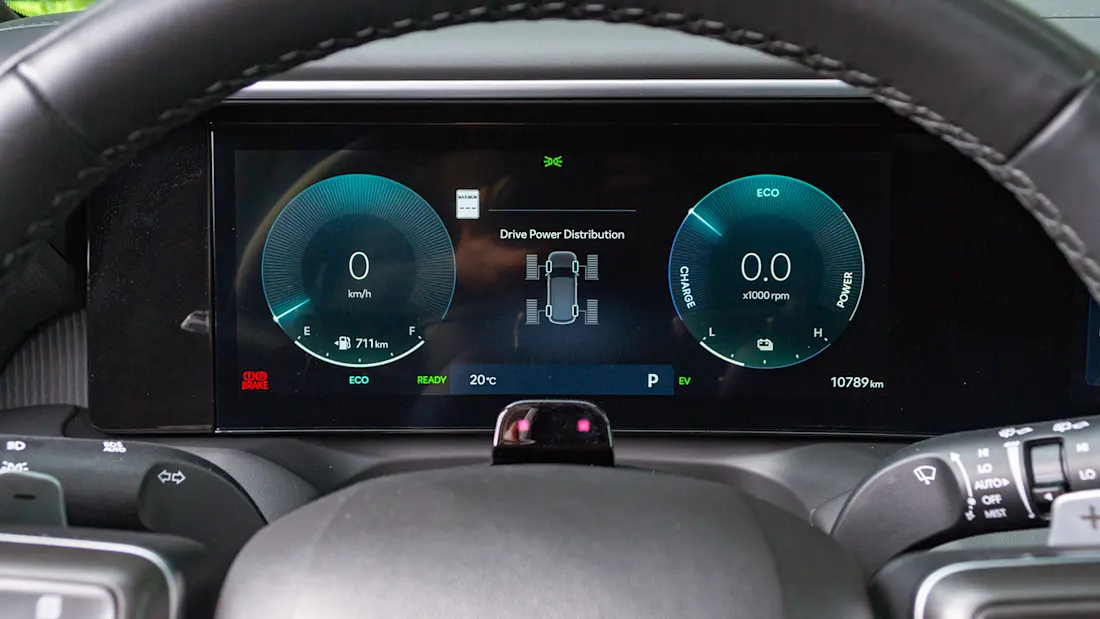
Both of these three-row SUVs have a long list of driver assists that work very well, from full-range adaptive cruise control (including stop-and-go functionality), blind-spot monitoring with rear-cross traffic alert, automated emergency braking, and more. Both vehicles have different parking assists as well: the Hyundai allows drivers to remotely move the Palisade forward and backward, while the Jeep has an automated parking feature from behind the wheel. They both have surround-view cameras and multiple selectable angles as well. Hyundai’s blind-spot view monitor remains a huge helping hand in the city, with camera-based looks at either side of the vehicle in the instrument display.
Hyundai Palisade: 9/10; Jeep Grand Cherokee L: 8.5/10
Value for Money
Planning this comparison, we had a vague suspicion the Jeep was going to be pricier, because the brand has moved some of its models (namely the Grand Cherokee and Grand Wagoneer) into the space between mainstream and premium. We were right, but we underestimated just how much of a gap there would be.
Including the mandatory $2,400 delivery fee, the Hyundai rings up at $68,449 with its optional shade of paint. The Grand Cherokee L Limited Reserve already blows past that figure at $78,790 (including $2,295 destination). Add the options and you’re looking at about $82,000 before taxes. Ouch.
Hyundai Palisade: 9.5/10; Jeep Grand Cherokee L: 8/10
The Verdict
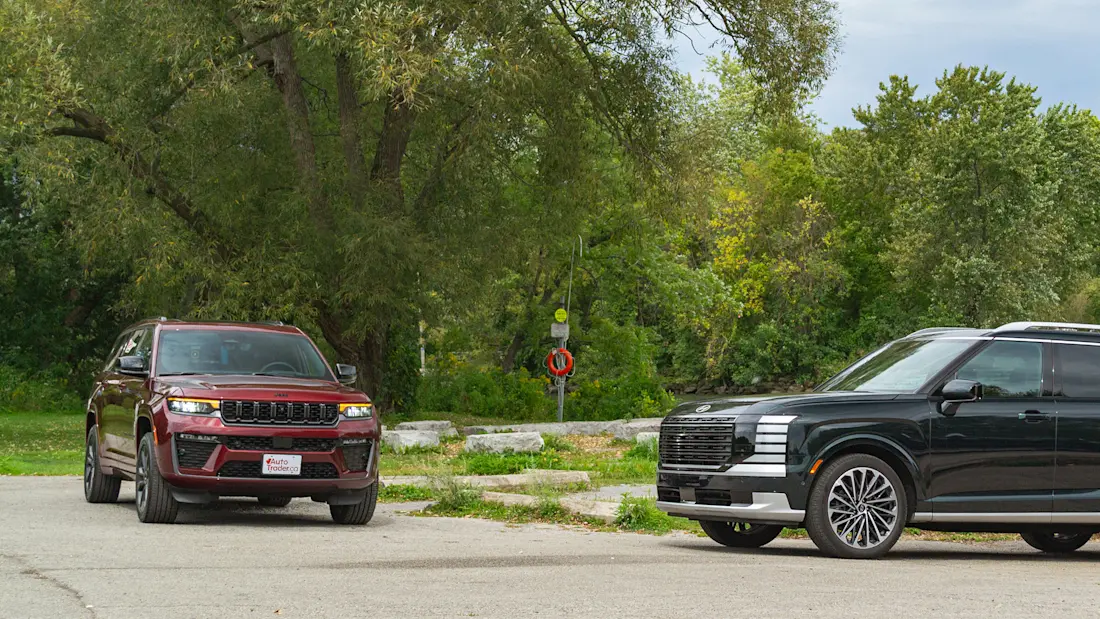
There’s no doubt about it: the 2026 Hyundai Palisade leads in nearly every category, making it the clear winner of this face off. While Jeep has successfully bridged the gap between mainstream and premium brands, many others have caught up and even surpassed it in recent years. In its fully loaded Ultimate Calligraphy form, the Palisade is the three-row SUV to beat.

2026 Jeep Grand Cherokee
Trim Tested
2026 Jeep Grand Cherokee L Limited Reserve
Engine Displacement
2.0L
Cylinder Count/Configuration
Turbo I4
Horsepower
324 hp @ 6,000 rpm
Torque
332 lb-ft @ 3,000-4,500 rpm
Fuel Economy
11.7 / 9.4 / 10.7 L/100 km cty/hwy/cmb
Cargo Space
487 / 2,395 L seats up/down
Base Price
$76,495
Options
$3,185 — Premium package, $1,995; Trailer Tow package, $695; Velvet Red Pearl paint, $495
A/C Tax
$100
Destination
$2,295
Price as Tested
$82,075
2026 Hyundai Palisade
Trim Tested
2026 Hyundai Palisade Ultimate Calligraphy Hybrid
Engine Displacement
2.5L
Cylinder Count/Configuration
Turbo I4 hybrid
Horsepower
329 hp @ 5,800 rpm
Torque
339 lb-ft @ 1,800-4,500 rpm
Fuel Economy
8.3 / 7.9 / 8.1 L/100 km cty/hwy/cmb
Cargo Space
540 / 2,455 L seats up/down
Base Price
$65,699
Options
$350 — Robust Emerald paint, $350
A/C Tax
$100
Destination
$2,400
Price as Tested
$68,549

All Articles
See all
Safest Cars in Canada for 2026: Crash-Test Ratings and Safety Features
The safest cars in Canada for 2026 include the Kia K4 sedan, Toyota Camry, Hyundai Kona, Subaru Forester, Mazda CX-90 and Hyundai Ioniq 5.

10 Fastest Electric Cars You Can Buy in Canada in 2026
What is the fastest electric car you can buy in Canada?

Hyundai Venue vs. Kona: Size, Price and Which SUV Fits You
Let's say you've walked onto a Hyundai lot looking for something small, high-riding and cheap to run, and two subcompact SUVs keep catching your eye.