
All in the Family: How Kia’s Design is Evolving Into a Unified Look
 Dan Ilika

Kia’s lineup used to look — well, weird.
Make no mistake: Kia has built some stylish cars and crossovers over the years, but very few of them looked like they were related. It was an odd choice for a company still in its relative infancy in Canada, having only established operations here in 1999.
Brand identity being what it is, especially for an automaker like Kia, some semblance of familial styling simply makes sense. It’s the reason sister brand Genesis uses a two-line lighting signature across its lineup, as well as the same shield-shaped grille.
Across the auto mall, there typically hasn’t been much beyond their badges to tell if any two Kia models were sold by the same brand, which was enough to leave its showroom looking a little disjointed. But the tide has turned rather noticeably in recent years, with the automaker’s design language applying equally to small cars and large crossovers alike.
“Definitely, we want a Kia language, but we don’t want to be too confining,” said Kurt Kahl, chief designer at the brand’s studio in Irvine, Calif., southeast of Los Angeles.
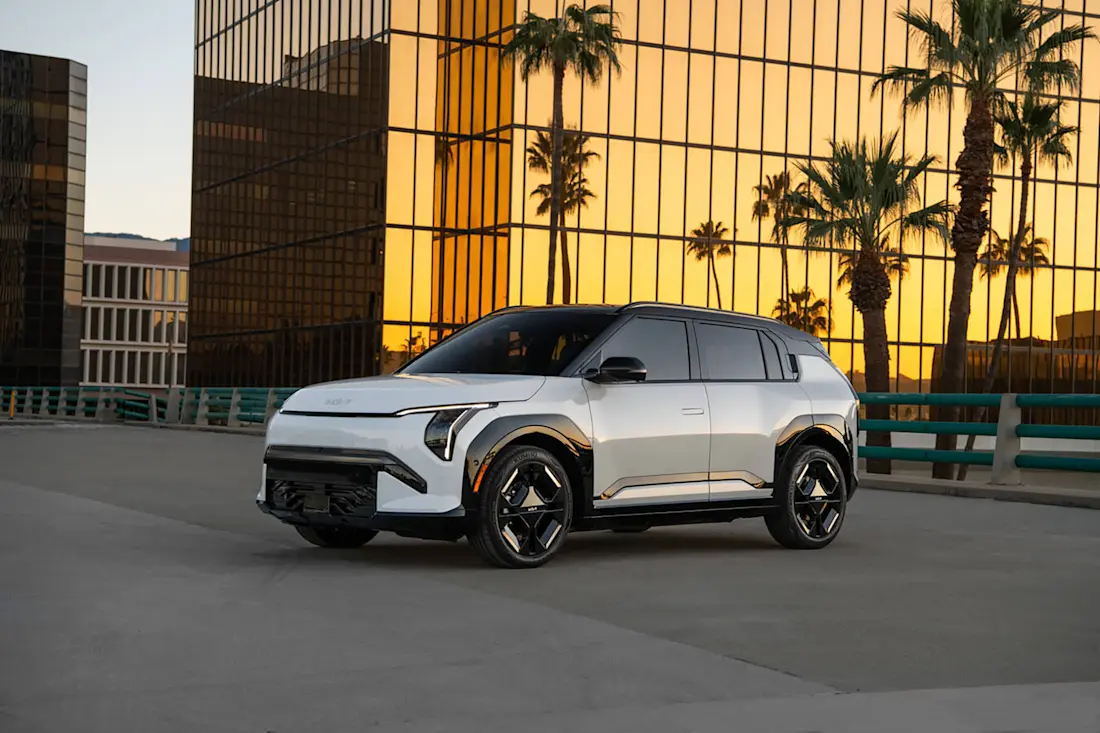
Kahl credited Kia’s global design boss, Karim Habib, for the “very intentional” shift towards more cohesive styling across a growing lineup that includes an increasing number of electric vehicles (EVs). Among them is the EV3 that will join the North American range alongside a redesigned (and similarly sized) Seltos.
“When he joined the company, he brought this philosophy of ‘Opposites United,’” Kahl said of Habib. “At first it may seem a little ambiguous, but I think it’s allowed (our) designers to have the freedom to come up with new solutions, but also have this kind of trend line and this general formula.”
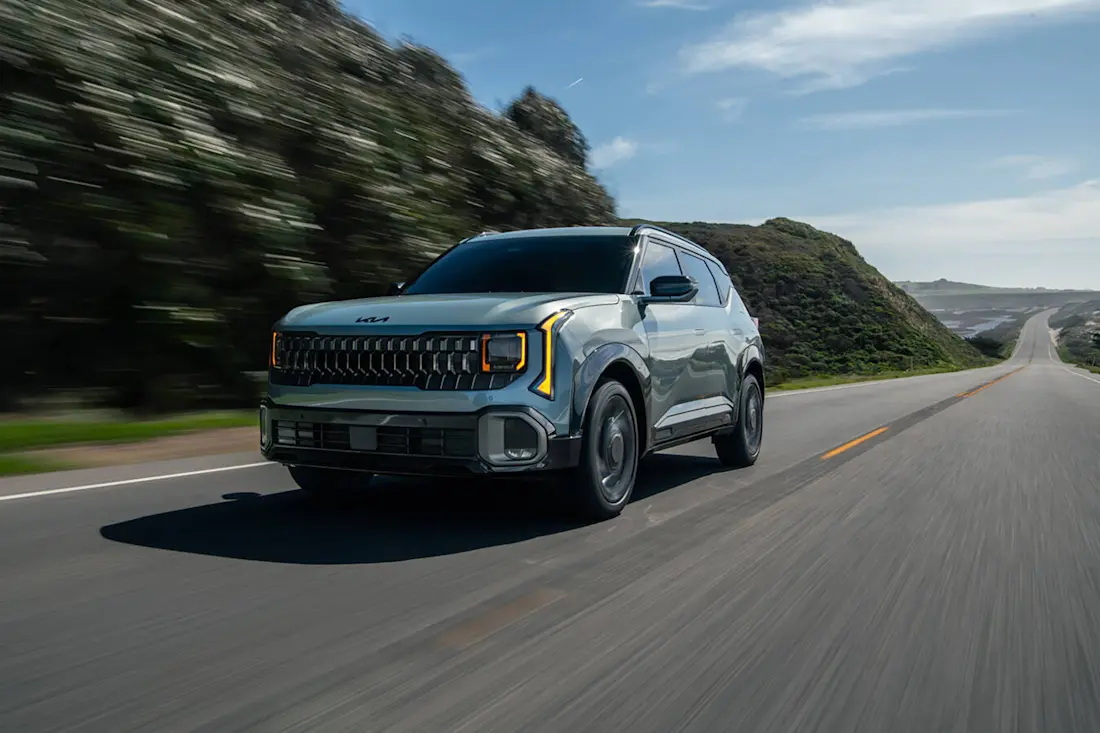
Kahl points to the vertical lighting that’s used on many — although not all — of Kia’s vehicles as one of the elements that, while signalling their relationship to one another, allows each of them to have their own identity. Further differentiating the way the lighting elements are used is their colour: they’re amber on gas-powered vehicles, while electric ones use bright white instead.
“We kind of have two branches,” he said of the approaches to designing EVs and gas-powered models, “but I think even between those ... you’ll see some family similarities.”
According to Kahl, it was one particular three-row SUV that kicked off the current look that’s permeating the lineup, while yet another is modernizing it even further.
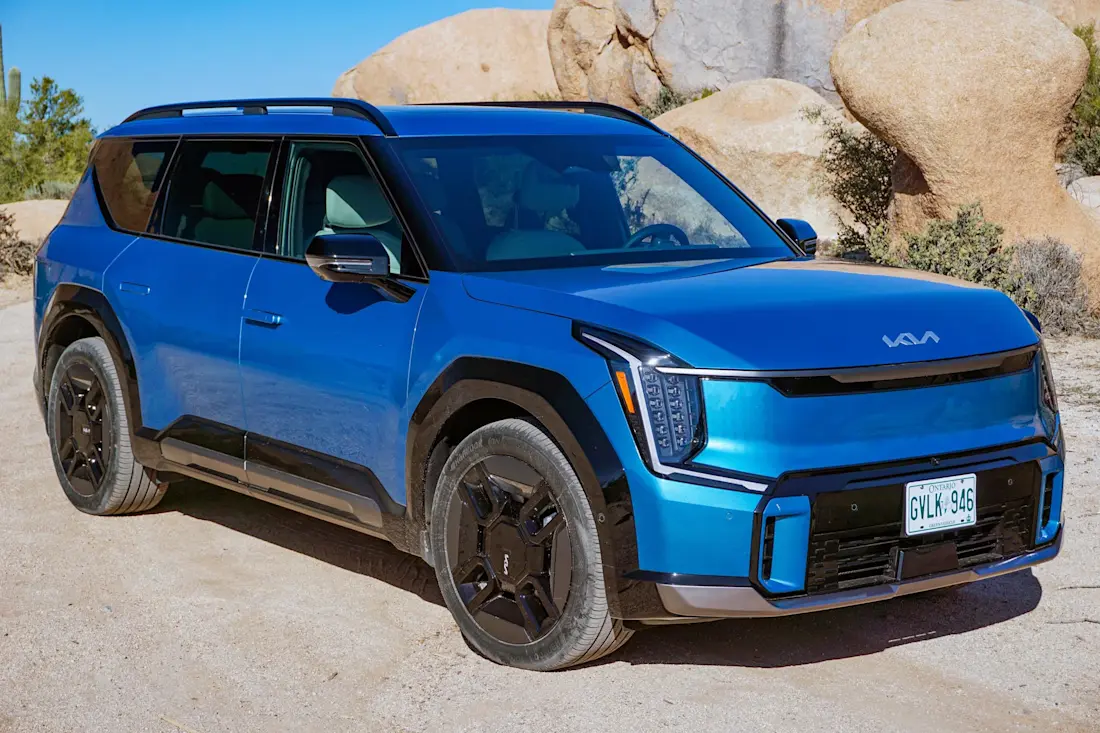
“(The) EV9 kind of set us up early on for our new design language,” he said. “It really showcased ‘Opposites United,’ I think, with the sharp-edge fenders, the really smooth body, and the sculpture in between. (The) Telluride took it to the next generation of an interpretation of a real tough, kind of rugged SUV.”
The upcoming Seltos relies on its larger sibling, the Telluride, for many of its cues, according to Kahl. That includes the same blend of rugged-yet-refined styling. In particular, he called out the bluntly shaped front end and strong shoulders as his personal favourite design features.
“Overall, I think it’s very successfully proportioned, and the stance, I think, is very good,” he said of the new Seltos.
Inside, Kia’s design evolution has seen the existing twin 12.3-inch displays used for a handful of years now moved lower on the dashboard than they once were — another intentional choice that reflects the way the brand and its designers are learning, according to Kahl. In this case, it’s about the aesthetic improvement that comes with an enhanced sense of space, while also making outward visibility better than before.
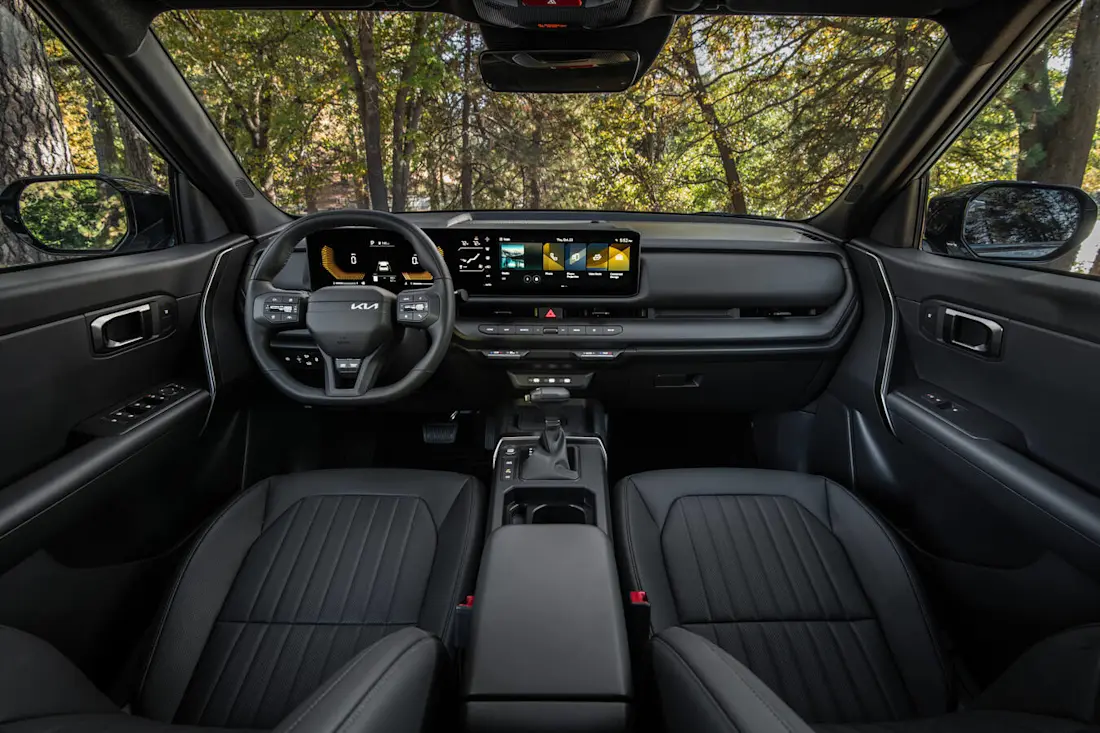
“Obvisously, we’re always trying to come at it from a customer point of view, and what’s the most usable and comfortable and intuitive feeling,” Kahl said.
What comes next for Kia is anyone’s guess; after all, there’s a common refrain in this business about the inability for spokespeople like Kahl to comment on future products. But it’s safe to assume that whatever it is, it won’t stray too far from the unified style that means there’s finally more than a passing resemblance between one of Kia’s vehicles and the next.

All Articles
See all
Own the Road with AutoTrader, Episode 118: The Backlash Against Touchscreens and Return to Buttons
Safer, easier to use, and better looking, buttons are making a comeback.

Planes, Trains and (Electric) Automobiles: A Race to Determine the Pros and Cons of Each
Discovering the best way from Toronto to Quebec City with the Subaru Uncharted.
 Jeff Wilson

AutoTrader Find of the Week: 2004 Porsche Cayenne Turbo is the Cure For Boring
For when practicality doesn’t interfere with fun.
 Chris D’Alessandro