
When Did Manual Transmissions Start Being a Luxury? When They Stopped Being Standard
 Sébastien Bell


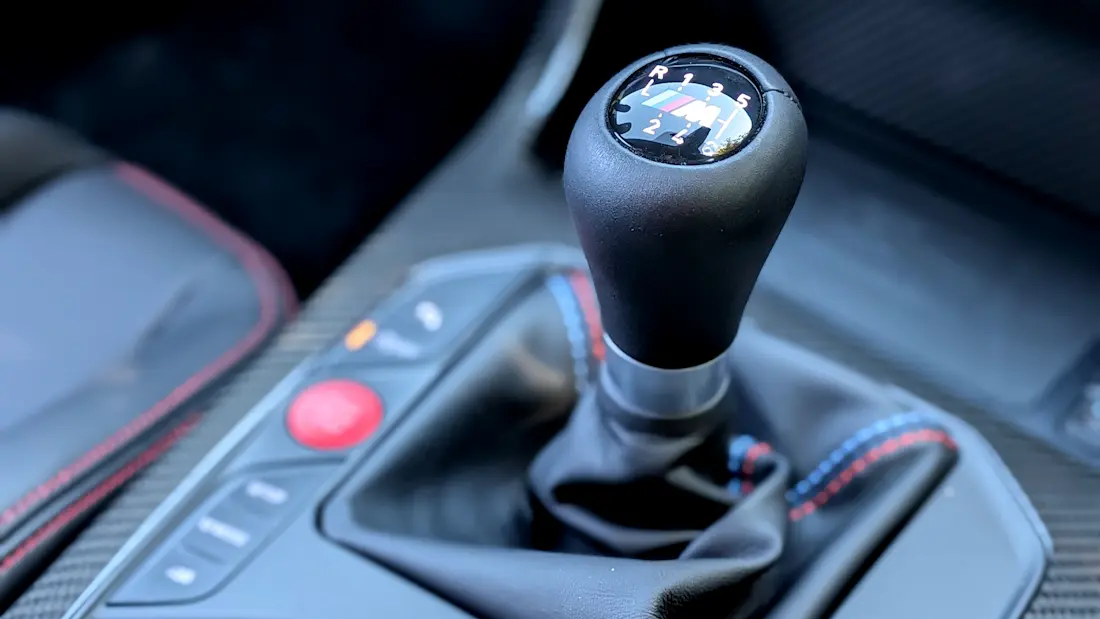
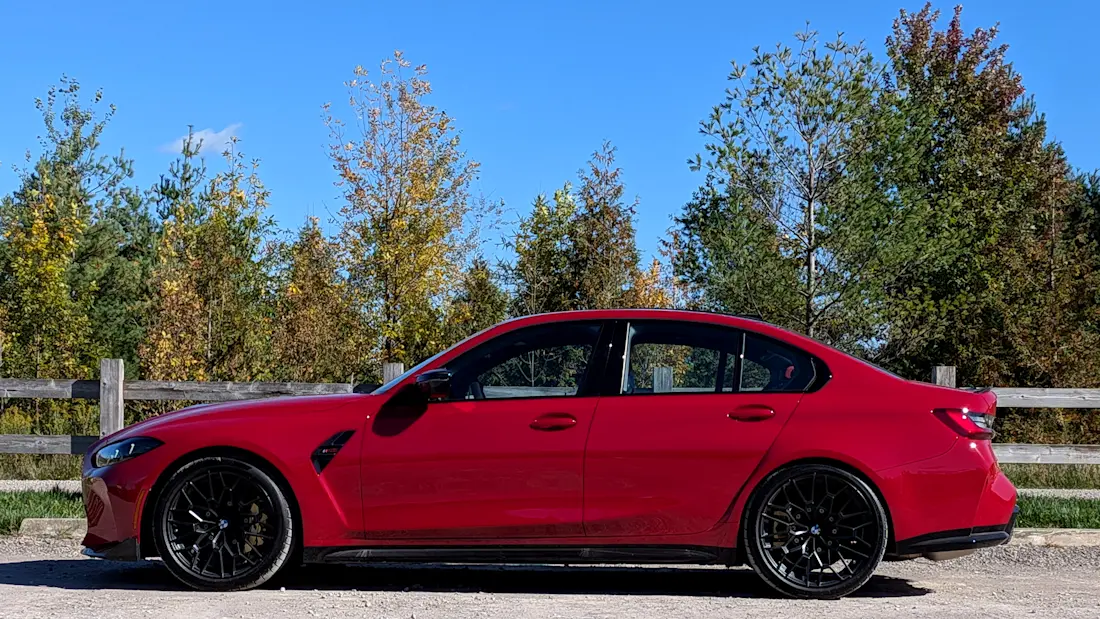
This year, to mark the imminent departure of the current 3 Series, BMW did something strange: it offered North American buyers an M3 CS with a manual transmission.
This “sendoff for the sixth-generation M3,” as BMW Canada calls it, is less powerful, slower, and more cumbersome, yet it costs more than the version equipped with an eight-speed automatic transmission. What’s more surprising still is that the M3 Handschalter (German for “hand shift”) isn’t the only vehicle trying to sell an old transmission to North Americans who, by and large, don’t really buy them.
The Not-So-Standard Manual
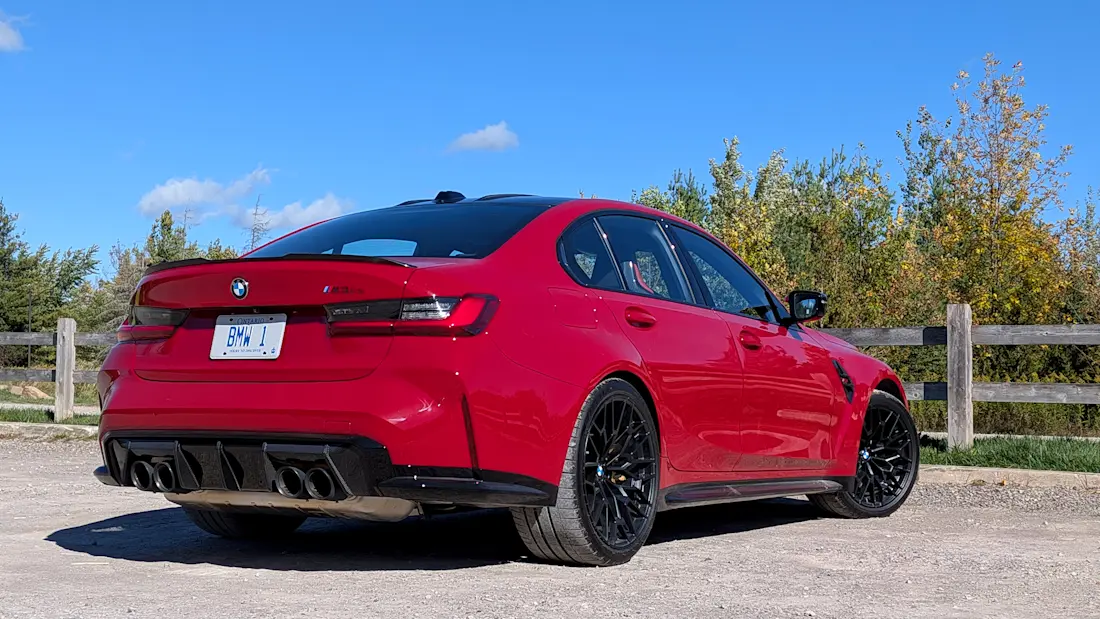
BMW pulled the same move with the latest Z4, sending it off with its own “Handschalter” package. That one was offered worldwide, but the M3 with three pedals is for North America only. And BMW isn’t the only one targeting manuals on our continent. When the Volkswagen Golf GTI returned for its eighth generation, North American consumers helped keep the manual transmission shifting until the German factory where the hot hatch is built decided to phase out the gearbox. Even Porsche is susceptible to this trend. Earlier this year, the automaker added a third manual option exclusively for North American 911 buyers, the mid-level Carrera S with MT Package.
What’s surprising about these special-edition models is that they fly in the face of broader market dynamics. According to data from Jato Dynamics, just 1 per cent of new vehicles in the U.S. and Canada were sold with a manual transmission in the first half of 2023. By contrast, 32 per cent of new cars in Europe had the same transmission at the same time.
This is by no means a recent trend. Cadillac and Oldsmobile sold the first mass-market automatic transmissions for the 1940 model year, and they were an immediate hit. By 1942, when production of passenger cars was paused to support the war effort, nearly 200,000 vehicles equipped with GM’s Hydra-matic automatic transmission had already been sold. And the war didn’t even stop development of automatics, with many of the Cadillac V8-equipped tanks sent into battle featuring the new technology, allowing the automaker to sell the technology as “battle-tested” after the war.
And the marketing worked. When Pontiac introduced the Hydra-matic gearbox in 1948, 70 per cent of the vehicles it produced that year were equipped with the transmission.
An Automatic Love Affair
The “Futuramic” badge affixed to Oldsmobiles featuring the Hydra-matic transmission hints at the whizzbang appeal of a transmission that shifts itself but fails to express the devilish challenge of handling early manuals.
In the beginning, drivers had to make do with “crashbox” manuals. They were so-called because they were extremely finicky and the gears almost inevitably crashed into each other, grinding loudly unless a talented driver could manage double-clutching and precise rev-matching on both upshifts and downshifts — something my grandmother used to take pride in telling us she could do.
Synchro-mesh (another Cadillac innovation) came to make shifting smoother in 1928. Put simply, this adds a cone shape to the gear to help it match the engine speed as the gears approach each other, resulting in smoother shifting. Unfortunately, the technology was anything but ubiquitous until much later, and even where it was available, Synchro-mesh was only fitted to higher gears — meaning that drivers were encouraged to come to a complete stop every time they wanted to shift into first gear.
It’s hardly a surprise, then, that when a technology came along to make driving easier, it was an explosive hit. By 1957, 80 per cent of new cars in the U.S. had an automatic transmission, and now it’s around 99 per cent of new vehicles.
European Dissent
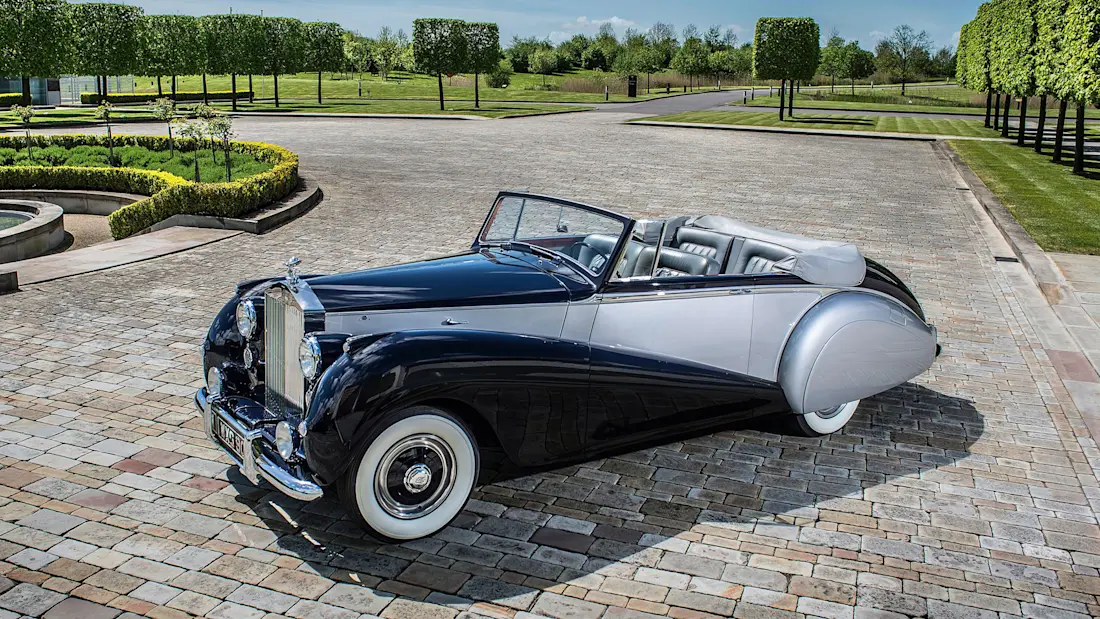
However, a few factors have conspired to keep manuals popular in Europe and other parts of the world. Firstly, the transmission was cheaper to produce (and therefore cheaper to buy) for much of its history. Not all countries benefitted from a post-war economic boom like the U.S. and Canada, meaning that automatics were the province of the wealthy in war-torn Europe — see Rolls-Royce’s use of the Hydra-matic.
Second, manuals were more fuel-efficient and remain lighter than early automatics. Anyone who has rented a car in Europe knows they pay much more for fuel than we do, so manuals benefited the thrifty. European tax rules also encouraged the use of small engines, which were better suited to lighter manuals.
Finally, there are other regulatory factors to consider, too. In certain jurisdictions, such as the U.K., drivers can either take their driving test with a manual or an automatic. However, if they opt for an automatic, it means they aren’t licensed to drive manuals, which still make up a significant portion of the cars on the road. That’s a meaningful incentive to get young drivers to learn how to drive a stick shift.
The Paradox of Limited Choice
It may, therefore, seem backwards that North Americans get the special-edition manuals, not Europeans. However, I would argue that apparent reversal actually makes perfect sense, because of the word “special.”
In Europe, a stick shift still feels standard, while automatic transmissions retain their aura of luxury, whether that’s the opulence of silky-smooth Rolls-Royce-ing or the high-performance play of paddle-shifting the dual-clutch transmissions that were initially inspired by Ferrari and its Formula One race cars.
Over here, only a small number of manual-equipped vehicles remain, and none of them are dull. Even the mainstream brands that offer manuals — Mazda, Nissan, Honda, etc — reserve them for exciting, sporty cars, like the MX-5, Z, or Civic Type R. That, in turn, allows higher-end automakers like Porsche and BMW to sell manual-equipped vehicles without fearing that the stink of the standard will make them feel less special. In fact, their rarity only makes them more special.
It May Be Rare But is it Right?
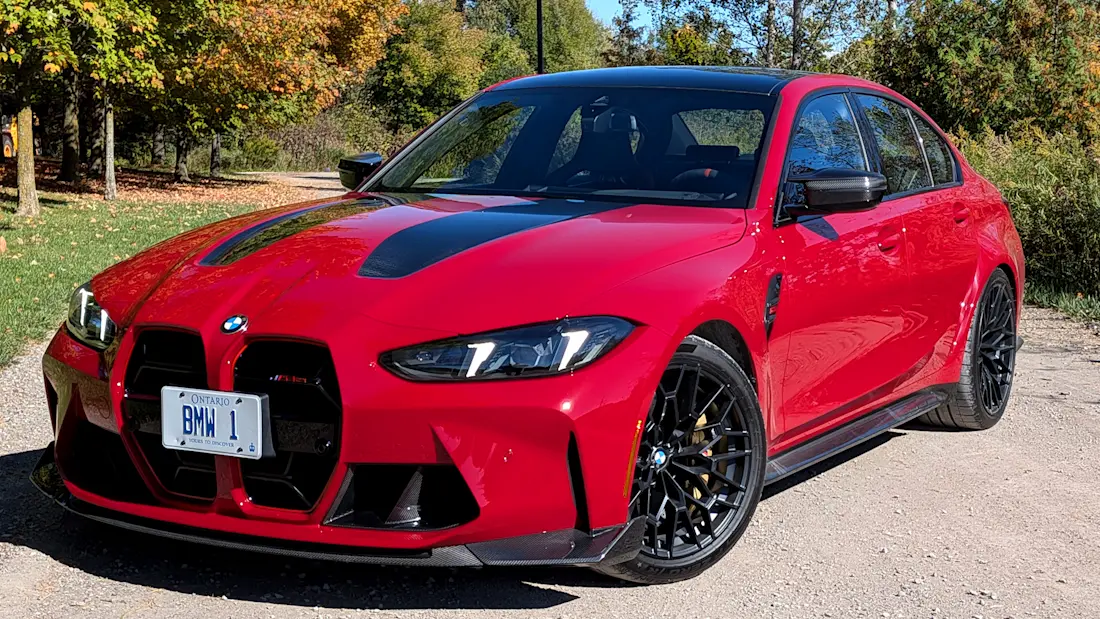
We may even consider ourselves lucky, because the M3 CS Handschalter has convinced me that we’re settling into a sweet spot with transmission availability. Some people long for a time when standards were standard, but clearly, most people, in Canada, at least, don’t actually want a three-pedal vehicle. And that makes sense. To those for whom a vehicle is an appliance, manuals are needlessly difficult — despite significant advancements.
If opening your fridge wrong caused it to turn off and lurch forward frighteningly, you’d send it back to the factory. Most people just want a fridge that works. That doesn’t mean that some of those same people don’t also enjoy different forms of food preservation. In that sense, the BMW M3 CS Handschalter is a funky, salty, sweet, acidic, complex pickle, not a soggy cucumber that’s been hanging out in the crisper for too long.
Despite the clear signs that this particular manual was retrofitted into a car not designed for it — the rotary iDrive controller on the centre console, for instance, got bumped a lot while I was shifting gears — the transmission still makes the M3 CS feel as special as it really is. This is already an inconvenient car. Its carbon fibre bucket seats require you to spelunk into them and fit only the chicken-legged among us thanks to a ridge in the middle of the lower cushion’s front edge. A stiff suspension makes it uncomfortable around town, and a carbon fibre front spoiler causes consternation over every bump.
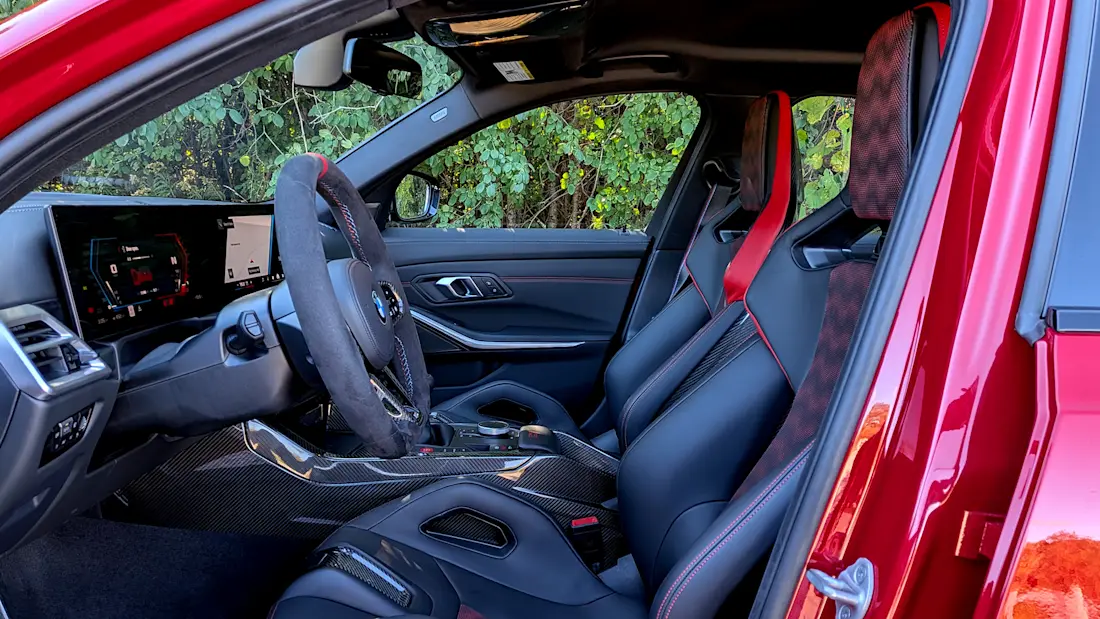
This is not a daily driver, nor is it meant to be one. It’s a special car for special occasions, and if that means track days for you, then the eight-speed auto will undoubtedly help you set the fastest lap time. If you want to feel connected to the long history of M3s and relish the challenge of using old-fashioned technology (not just manuals but, increasingly, internal combustion engines), then the Handschalter is peerless among modern M3s.
Thanks to a decision to attach only the rear wheels to the engine, the M3 CS Handschalter encourages you drive around corners with the throttle as much as you steer through them with the wheel. That’s especially important here because modern BMWs communicate more through their seats than their steering wheels. And so, the control you get from a manual (this M3 will never select a different gear for you mid-corner, spoiling your fun and unsettling itself in the process) is perfectly suited to its powertrain and its character.
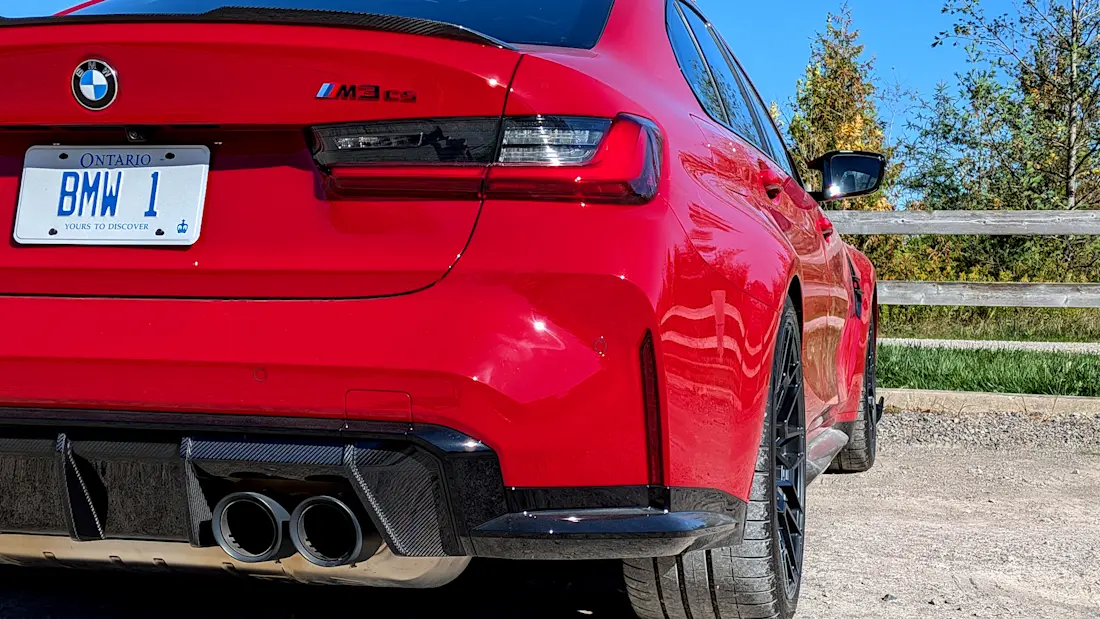
Maybe it has as much to do with the driving dynamics as it does with the rarity (only 40 BMW M3 CS Handschalters are earmarked for the Canadian market), but it’s a perfect encapsulation of the appeal of these newfangled — or is that old school — manual editions. Better still, it gives the M3 something it has been sorely lacking. Despite its exuberant styling, its big power, and its historic nameplate, other models in the lineup can feel a little lifeless from behind the steering wheel. The manual transmission makes this special edition model feel special, and that’s what a model like this is really all about.

All Articles
See all
SEMA Show Offers Toyota Opportunity, Insight
The annual show acts as a crystal ball to see what could be around the corner.
 Dan Ilika

Here's What It Takes to Break a Speed Record in the Desert
BYD’s electric hypercar is now the fastest car in the world — again.
 Chris Tsui

BYD Confirms Flash Charging is Coming to Canada
Tech promises a 10 to 70 per cent charge in five minutes, even in winter.
Chris Tsui