
8 Modern Car Features That Existed Longer Than You Thought
 Michael Karant


Navigation, touchscreens, and cruise control are common features in today’s cars, even on budget-focused base-trim models. While these features are associated with modern cars, their earliest iterations appeared on production cars long before you might expect, with many of these technologies functioning very differently from what you’d find today.
Many seemingly modern technologies have existed far longer than you might think, often debuting decades before they became mainstream.
1. Touchscreens
The touchscreen is a relatively modern feature that has become a staple in cars. Pretty much every new vehicle today comes with a central touchscreen, regardless of price. You’d assume that this feature was first introduced in the 2010s or maybe the 2000s, when other touchscreen devices were gaining popularity; however, the very first road car with an in-car touchscreen debuted 40 years ago, in the 1986 Buick Riviera.
It was called the Graphic Control Center (GCC). It served the same function as modern infotainment screens, featuring climate controls, volume, and music controls. However, the GCC could also show more advanced data about the car, such as real-time oil pressure, battery voltage, a trip computer, and even a tachometer, all digitally displayed. The system even let the driver set reminders for upcoming events, predating Google reminders by over 30 years. While some technology has aged poorly, the Riviera’s in-car infotainment holds up surprisingly well in terms of functionality and looks very cool, with a neon-green colour palette that’s very 1980s.
2. Navigation
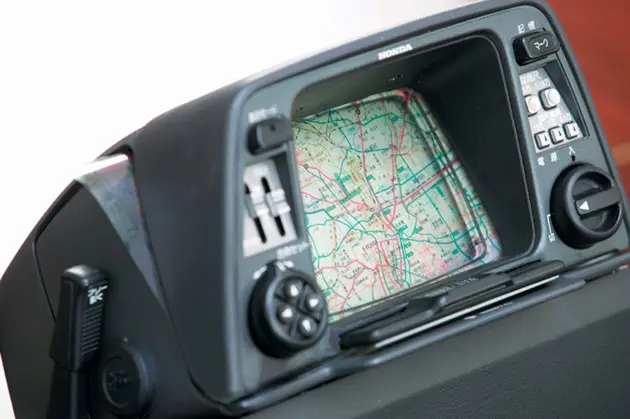
Since every new vehicle has an infotainment touchscreen, in-car navigation is also typically standard. Naturally, this wasn’t always the case, as a navigation system was once considered a luxury, often reserved for premium models.
The system has also changed considerably over the years, as navigation didn’t always use the Global Positioning System (GPS). In the 2000s, there was CD-based navigation, a map programmed onto a compact disc for a given area that you’d have to manually insert depending on where you were driving.
Honda was the first brand to do it, introducing in-car navigation in the early 1980s. This mechanical system, known as the Honda Electric Gyrocator, was offered as an option on the Japanese-market 1981 Honda Accord and Vigour. As the name suggests, it was a gyro-based system that calculated the vehicle's position using speed and changes in terrain. To show where the car was going, Honda’s Gyrocator required users to insert physical film maps over the navigation screen. Naturally, this system was very limited in its usage, as every location required a corresponding physical map. Honda ultimately moved from this early iteration of navigation to a digital system, a far more accurate tool for calculating the car’s real-time position.
3. Adaptive Cruise Control
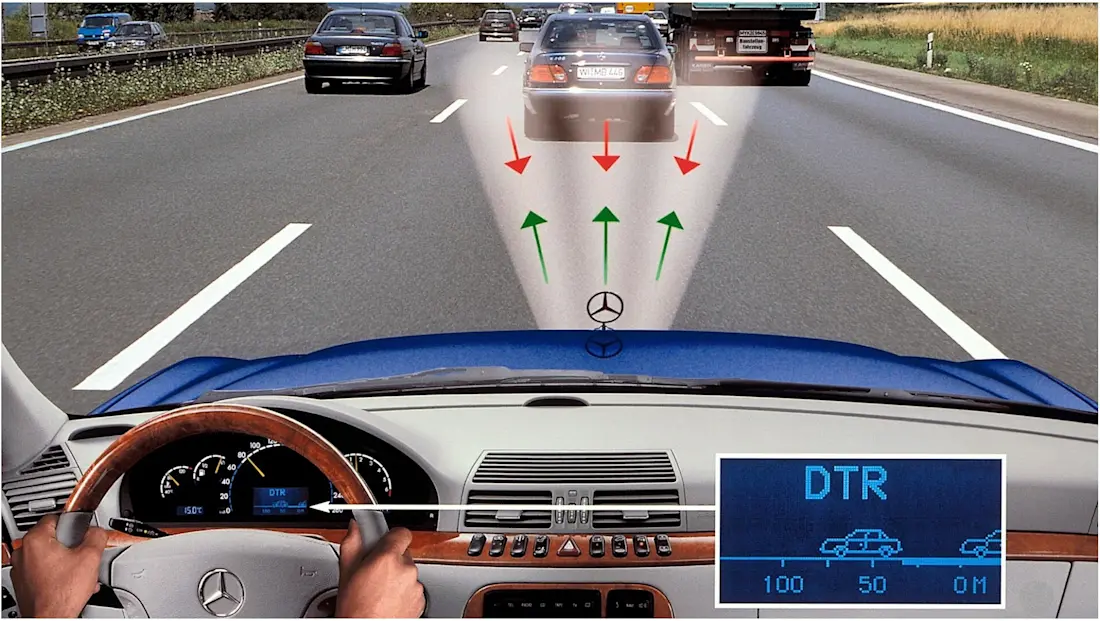
Adaptive cruise control has become mainstream; every brand has its own take on a semi-autonomous driving mode that lets a car cruise, maintain distance, and brake without driver intervention. The system is an excellent tool for reducing fatigue on long journeys. Adaptive cruise control has only become mainstream in the past few years, and like all technology, it was once a luxury, first introduced on the 2000 Mercedes S-Class and CL.
Mercedes marketed its adaptive cruise control as Distronic, the first cruise control system that could control the vehicle's speed and distance, and apply the brakes when needed. This system was limited because it couldn’t operate at low speeds or come to a complete stop. The original iteration of Distronic was intended for highway driving and steady traffic. Since then, adaptive cruise control has become far more advanced, with some systems now handling stop-and-go traffic, steering, and even lane changes without driver intervention.
4. Voice Control
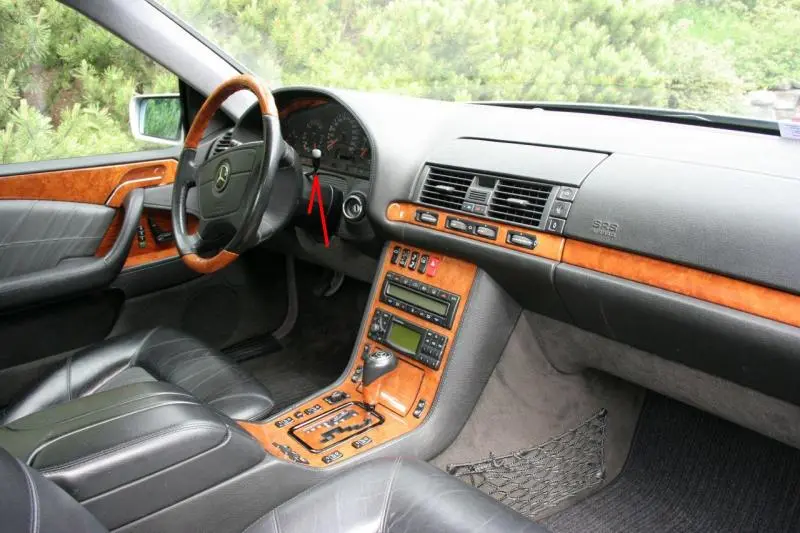
With every new car coming with touchscreen infotainment, it's now common to find AI assistants that can help with everything from changing climate settings to scheduling appointments and even having a full conversation if you want. Voice control has its benefits, as performing basic functions without taking your eyes off the road is naturally safer.
Much like many other features on the list, voice control was once a rare luxury, with the first to the punch being the 1996 Mercedes-Benz S-Class. Mercedes dubbed this system Linguatronic, because everything in Mercedes world has to be “tronic.” The system was operated by pushing a lever mounted near the steering wheel, and it recognized around 30 specific voice commands, mostly related to phone and radio functions. The system was rudimentary and struggled to recognize commands, especially if you had an accent. Regardless, all technology has to start somewhere, and in 1996, voice command was truly impressive.
5. Power Operated Trunk
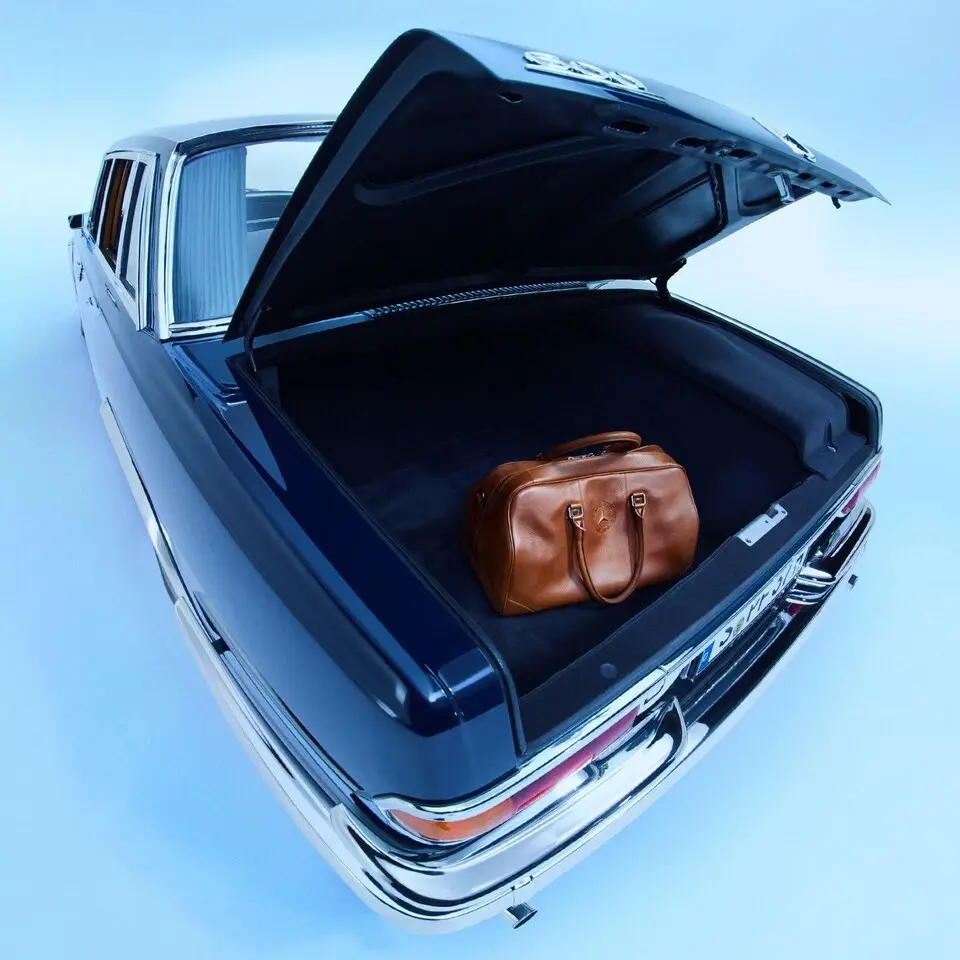
Power-operated trunks have become mainstream in the past few years, and are either motion- or proximity-activated or operated by a press of a button. It's very convenient if your hands are full. Many new vehicles introduced this option in the early 2010s, but the system existed long before that. Unsurprisingly, it was once again Mercedes-Benz that was the first to do it, introducing the feature for the ultra-luxurious 600 Grosser.
The Grosser was a truly innovative car reserved for only the wealthiest customers and was the most expensive car in the world at its launch in 1963. One of the greatest contributors to the 600’s cost was its innovative hydraulic system, which powered multiple amenities such as the windows, seats, and, yes, the trunk lid, all powered by a pump operated by the 600's engine. The 600 Grosser is extremely rare, and despite its 14-year production run, only 2,677 units were produced, making the power-operated trunk quite an exclusive feature reserved only for rock stars and dictators.
6. Head-Up Display
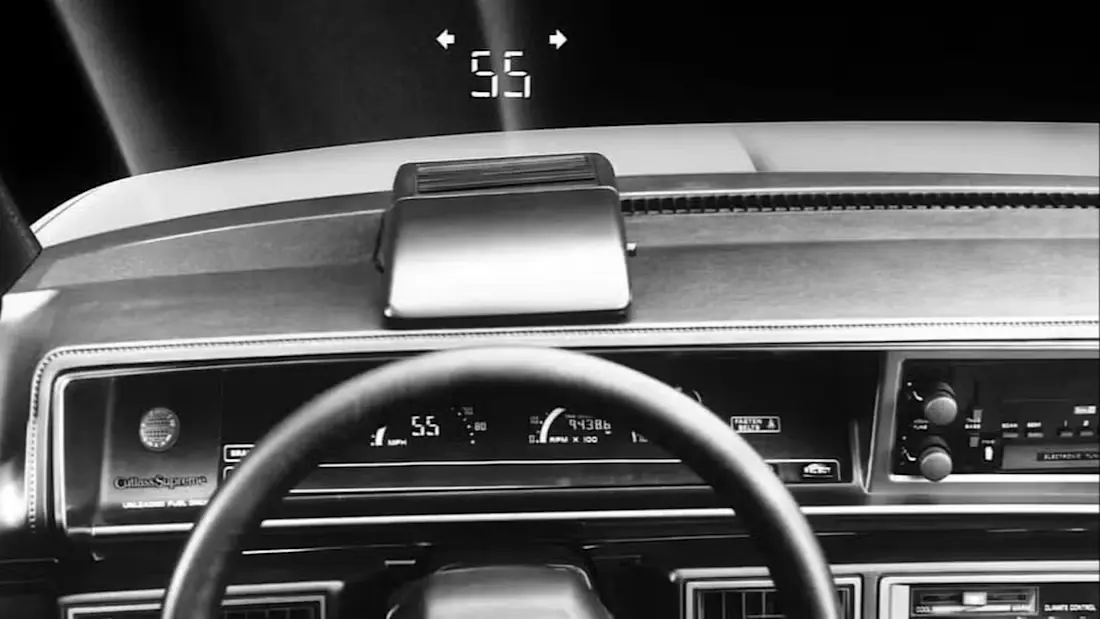
A head-up display projects vital information onto the road ahead or onto the windshield in a driver’s line of sight, so they can see important info without taking their eyes off the road. Like other nifty technology on this list, the head-up display first appeared in the tech-obsessed 1980s.
The 1988 Buick Cutlass Indy Pacecar Replica was the first road car to feature this fighter-jet-inspired technology. However, in this early iteration, the system was limited, as it displayed only the vehicle’s speed and indicator signals on the windscreen. The projection also came from a conspicuous box right in front of the windscreen, which wasn't the most attractive way to display the technology. There were also complaints that the head-up display didn’t work that well on sunny days. Regardless, customers still really enjoyed this gimmick, as it seemed straight out of the future.
7. Four-Wheel Steering
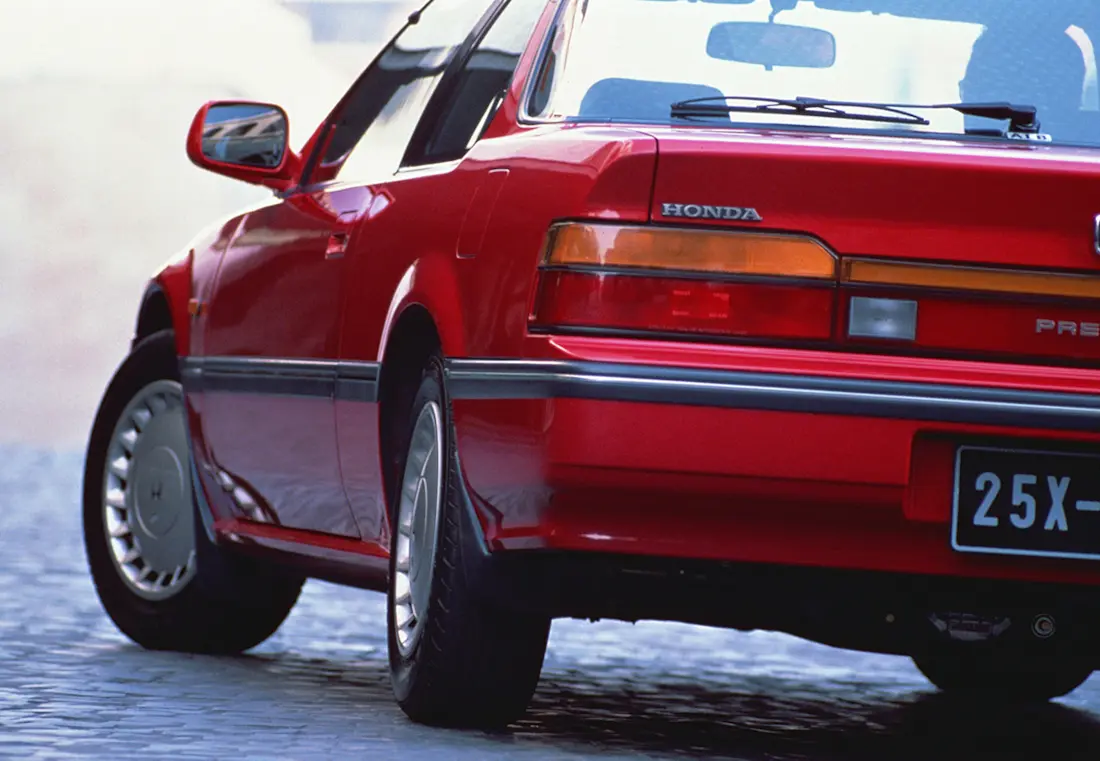
Unlike some of the technologies on this list, four-wheel steering hasn’t become mainstream yet on new vehicles. It’s typically offered on higher-end SUVs and performance vehicles. The technology is very clever. By turning both sets of wheels, the vehicle shrinks its turning radius so it can perform tighter turns and be more agile.
You might assume this tech was first seen in a high-end, technologically advanced supercar, but no, it was the third-generation Honda Prelude from 1987 to first feature four-wheel steering on the top-of-the-range SI model. Road tests at the time proved that the system improved maneuverability, but it was ultimately too expensive for the real-world benefits it offered. The rear wheels could only turn a few degrees, but implementing the system onto the vehicle required many additional moving parts, increasing the overall price.
8. Paddle Shifters
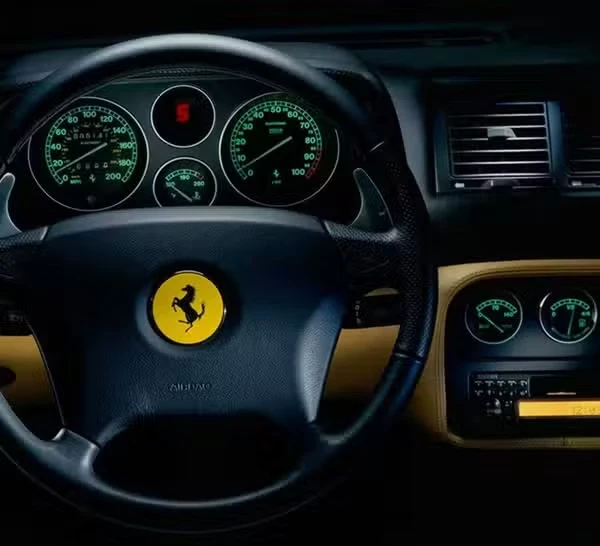
Paddle shifters were once intended for performance cars, an innovation to push the boundaries of performance and allow for quicker and more consistent gear changes compared to a traditional manual transmission. However, since their inception, the technology has made its way onto many mainstream vehicles that really don’t require paddle shifters, and, as a result, are likely never actually used by their owners.
“Flappy paddle gearboxes” made their debut in Formula One racing in the late 1980s, so it was fitting that the first automaker to implement the technology was Ferrari, with its then-new F355 being the first to offer the option. Ferrari dubbed F355 models equipped with the flappy-paddle gearbox as F1 models, and they outperformed conventional manual models. The F1 gearbox ditched the third pedal, but still allowed the driver to engage with the vehicle. The automotive industry followed the trend, with more performance automakers offering the tech on increasingly mainstream models, eventually trickling down to economy cars that never really needed it.

All Articles
See all
BYD Confirms Flash Charging is Coming to Canada
Tech promises a 10 to 70 per cent charge in five minutes, even in winter.
 Chris Tsui

Mercedes Wants You to Talk With Your Rear Window
Micro LEDs embedded in the glass allow drivers to express themselves
 Sébastien Bell

The BMW iX3 Offers a Drive Interface Revolution. Are Long-Time BMW Owners Ready For It?
We all know screens are distracting, so why does BMW’s new EV have so many of them?
 Benjamin Hunting