
Rotary Power Makes the 1993 Mazda RX-7 Incredibly Unique
 Kunal D’souza


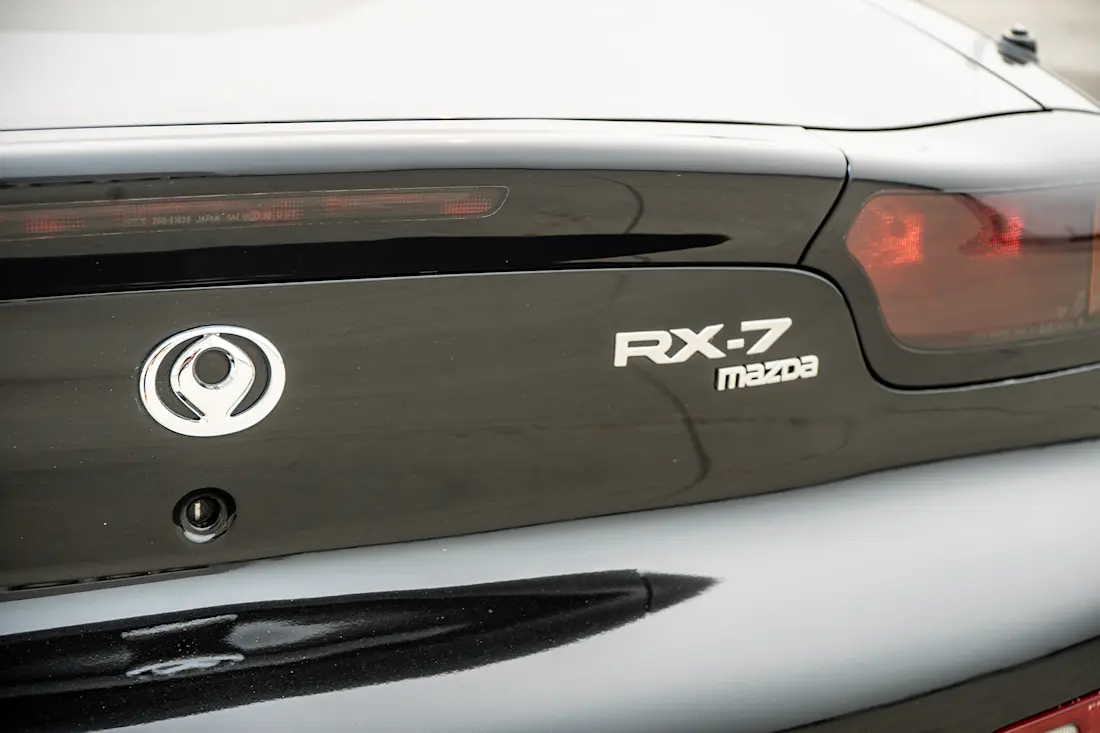
The Mazda RX-7 is one of the most iconic Japanese sports cars ever made. Spanning three generations, the third and final iteration, which went on sale in 1993, is probably the most famous.
I dreamt of driving one in high school, years before The Fast and the Furious catapulted it to silver-screen stardom. I read about the RX-7 and its amazing rotary engine countless times in magazines and experienced it on virtual roads in Need for Speed Special Edition, a popular racing game released in 1996.
That’s why having the keys to an all-original and unmodified 1993 Mazda RX-7 in my hand felt surreal. With only 15,000 km on the odometer, this brilliant black-on-red RX-7 lived a pampered life for the past 33 years; Mazda Canada ordered it as a press unit in 1993. It was one of the first examples of the internally designated FD3S RX-7s in North America, and I was about to get into the driver’s seat of this wonderfully preserved piece of history.
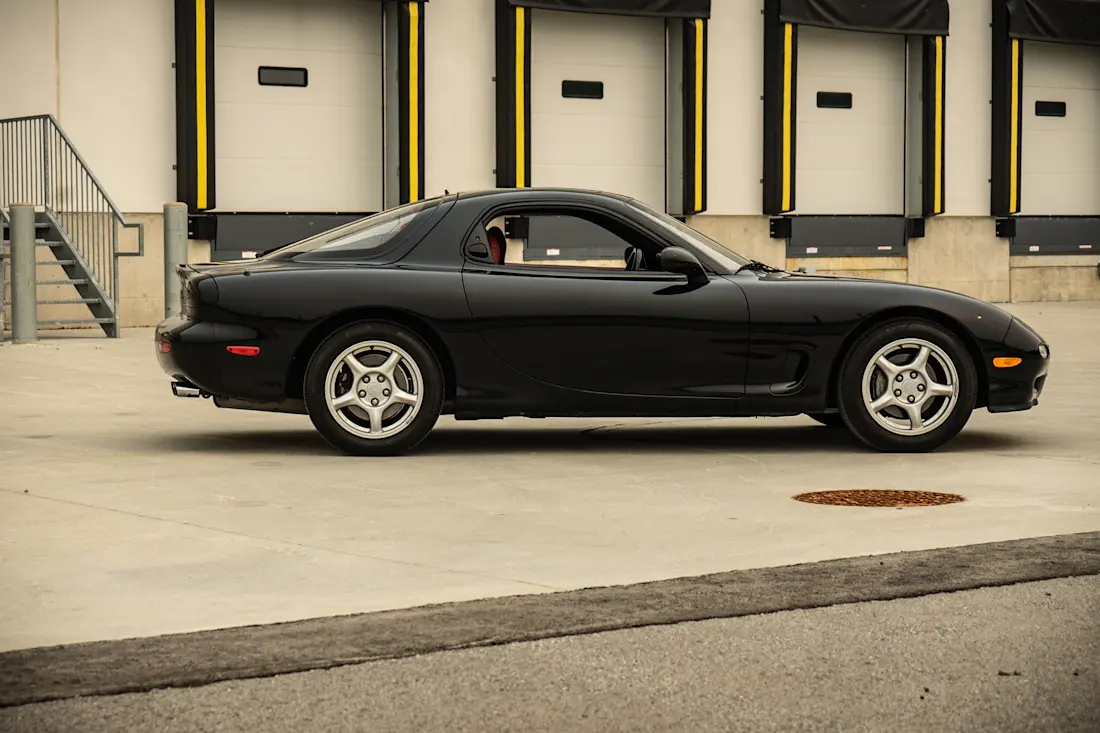
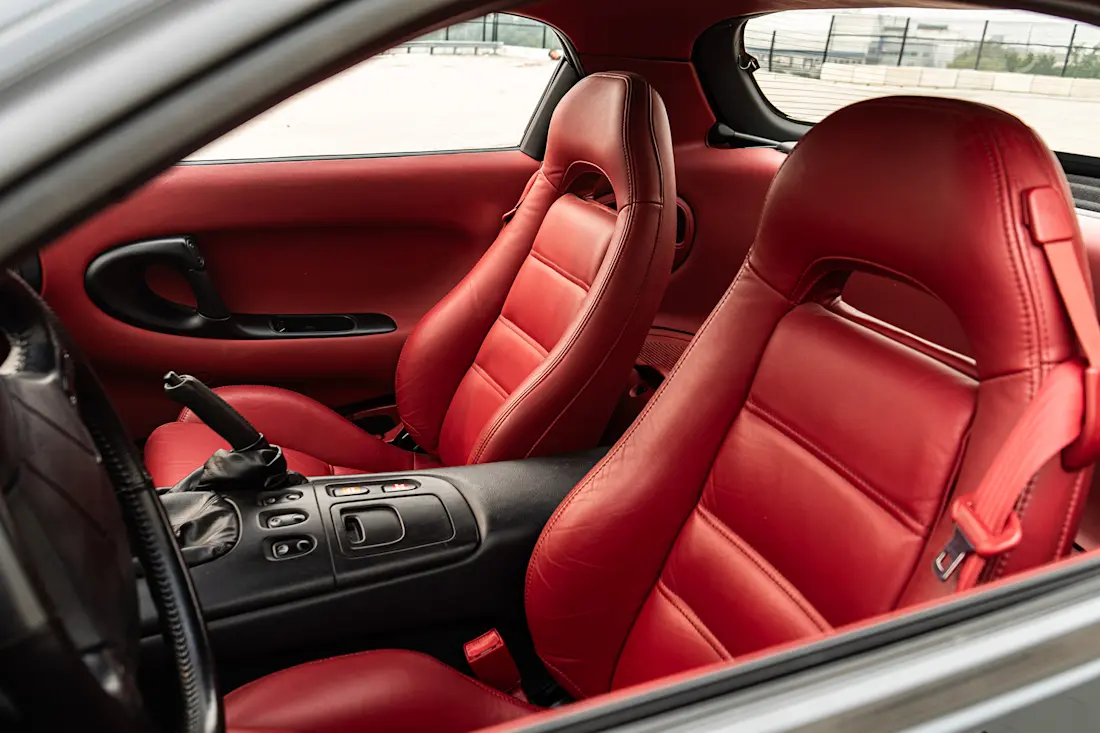
Starting it requires twisting a mechanical key that you insert into a slot in the steering column (remember that?), which sparks the engine to life with a refined mechanical zing and a throaty exhaust note. The seats and door cards are upholstered in supple burgundy leather, with matching red headliner, door sills, and rear storage bins.
Mazda developed the RX-7 as a pure sports car with a snug cabin and seating for two. It’s immediately evident when you get moving; the steering is so talkative it borders on subliminal messaging and cannot be compared to any modern car. Wind and road noise are constants, and at just 1,270 kg, the RX-7 is exceptionally light and handles better than many modern sports cars.
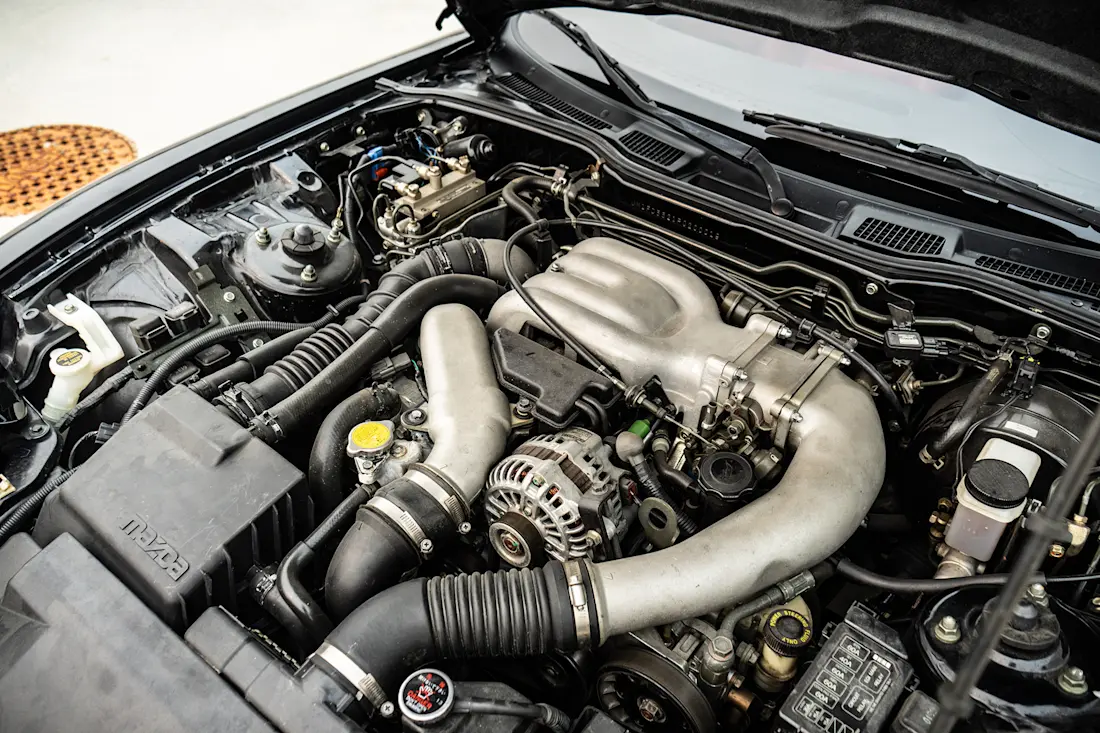
But the real masterpiece is under the hood. A 1.3L Wankel rotary engine with twin sequential turbos produces 255 hp and 217 lb-ft of torque, propelling the RX-7 from rest to 100 km/h in about five seconds.
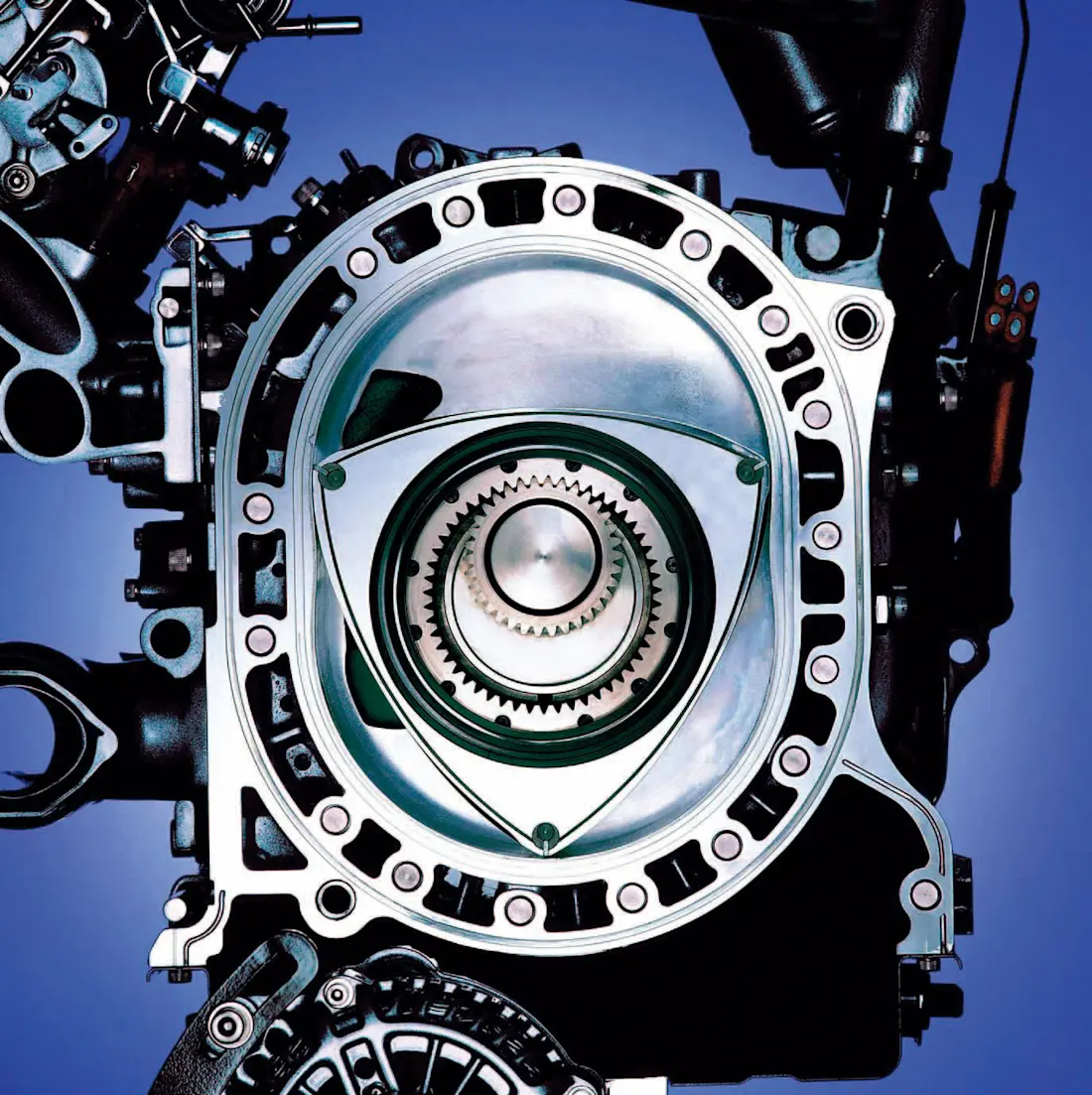
Mazda is still the only car company in the world to successfully mass-produce the rotary engine, which is still in production today as a range extender in the Mazda MX-30 REV that’s currently only sold in Japan.
The rotary engine bears no resemblance to a traditional piston engine and is so unusual that it could have been conceived on a different planet. Instead of pistons, it uses triangular-shaped rotors that spin inside an epitrochoid housing, driving the eccentric shaft (crankshaft equivalent). A rotary engine completely avoids the reciprocating (up-and-down) motion of a piston engine, making it nearly vibration-free and capable of high revs. It’s also responsible for its unique sound, akin to a circular blade slicing through the air at high speed.
A rotary engine has inherent advantages. The main block is about the size of an air fryer, which makes it easy to mount low near the vehicle’s centre of gravity. According to Mazda Japan’s communications team, a rotary provides excellent dynamic performance and a high degree of packaging flexibility, making it particularly well-suited to sports cars like the RX-7.
During the Golden Age of Japanese sports cars in the 1990s, which produced legends like the first-generation Acura NSX, MK4 Toyota Supra, and Nissan Skyline GT-R, the RX-7 was the lightest by far, a scalpel amongst cleavers. The engine itself was about 136 kg lighter than its competitors’ and was nearly in the middle of the vehicle, giving it a front mid-engine configuration.
The company’s weight loss regimen for the RX-7 was exhaustive and included drilling holes in the aluminum brake and clutch pedal, trimming the spark leads to the perfect length to avoid using unnecessary wire, composite seats frames, hollow upper and lower control arms at all four corners and a hollow steering rack. The factory wheels weighed just 5.9 kg each.
After just a short time driving it, you feel like you are a part of the car with its precise inputs and near instantaneous response. The sequential turbos quell engine lag effectively with the first operating at low RPMs before handing off to the second turbo for the higher rev ranges. Mazda’s “Jinba Attai” philosophy meaning horse and rider as one, was first used to describe the Miata during its development in 1987, but it’s just as apt a term for the RX-7. Driving it was one of those moments where you meet your heroes and it’s even better than your dreams.
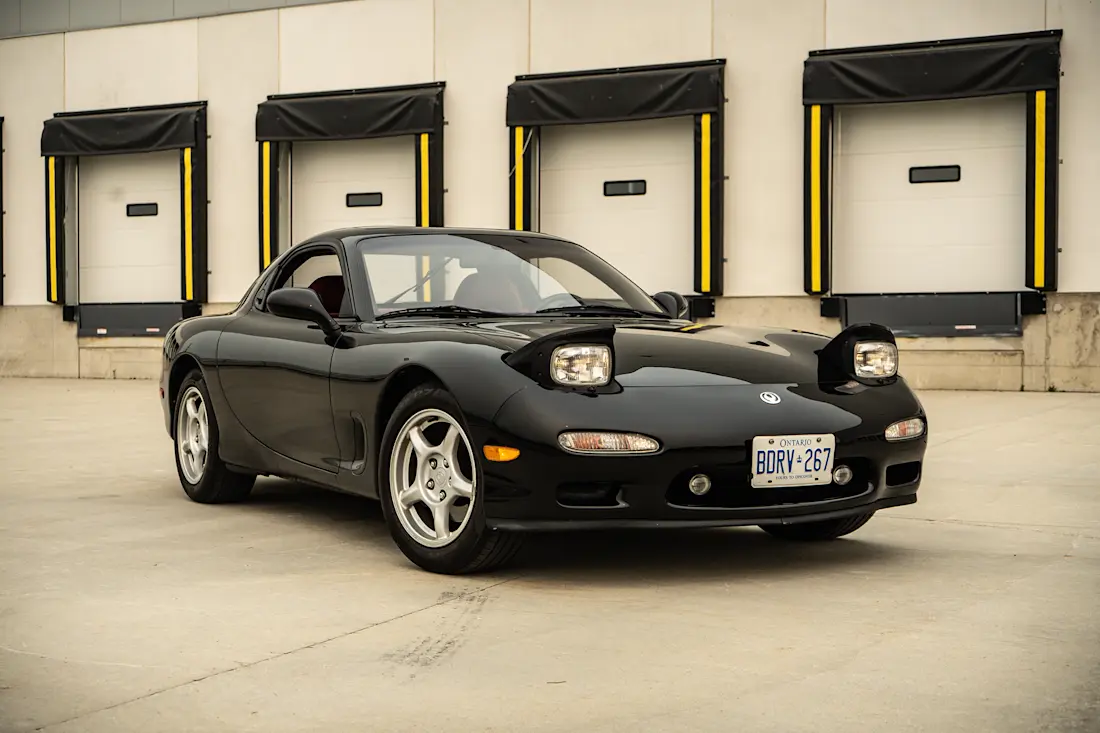
As brilliant as I think it is, the FD3S RX-7 was only sold in North America for two years before being discontinued due to lack of sales, although it was still sold in other markets including Japan until 2002, with the RX-7 Spirit R being the final version.
The third generation of the RX-7 was more powerful, more advanced, and more premium than the car it replaced, which also inflated the price. Mazda wanted the RX-7 to compete directly with the NSX and Supra and moved it upmarket, but the buyers just weren’t there yet.
The black RX-7 that I drove was one of two that Mazda Canada purchased in 1993. The other, a yellow Mica example, had transmission issues that was being diagnosed, but rumour has it that it was the film car used in Need for Speed, the video game that first introduced me to the car.
It’s a fascinating bit of lore and while it cannot be fully confirmed, it was one of the only RX-7s in the country at the time and was situated at Mazda Canada’s Vancouver office where Electronic Arts studios was also based during development of the game. It’s also the identical spec.
The Wankel rotary was invented in 1924 by German engineer Felix Wankel, but it wasn’t until 1959, after partnering with West German automaker NSU, that the “successful development of a rotary engine” was announced.
According to a document sent to me by Mazda Japan, the company, then Toyo Kogyo, took an interest in the technology and flew representatives to Germany in 1960, including then-President Tsuneji Matsuda, to negotiate a technical partnership with NSU. A formal agreement was finalized on February 27, 1961, and received official approval from the Japanese government in July of the same year.
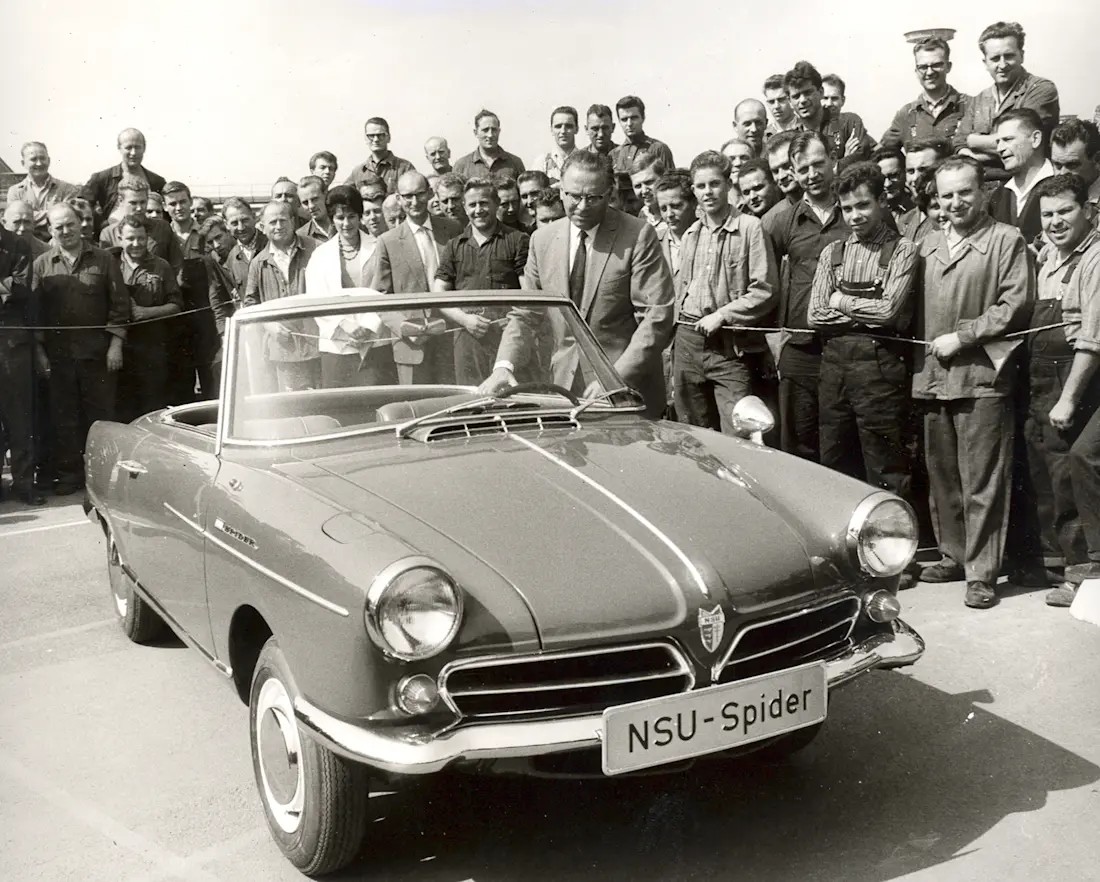
In 1963, NSU debuted the Spider, a small convertible that became the world's first production car to use a rotary. The engine, however, was unreliable and failed prematurely because of poor apex seals, which perform the same job as piston rings in a traditional engine.
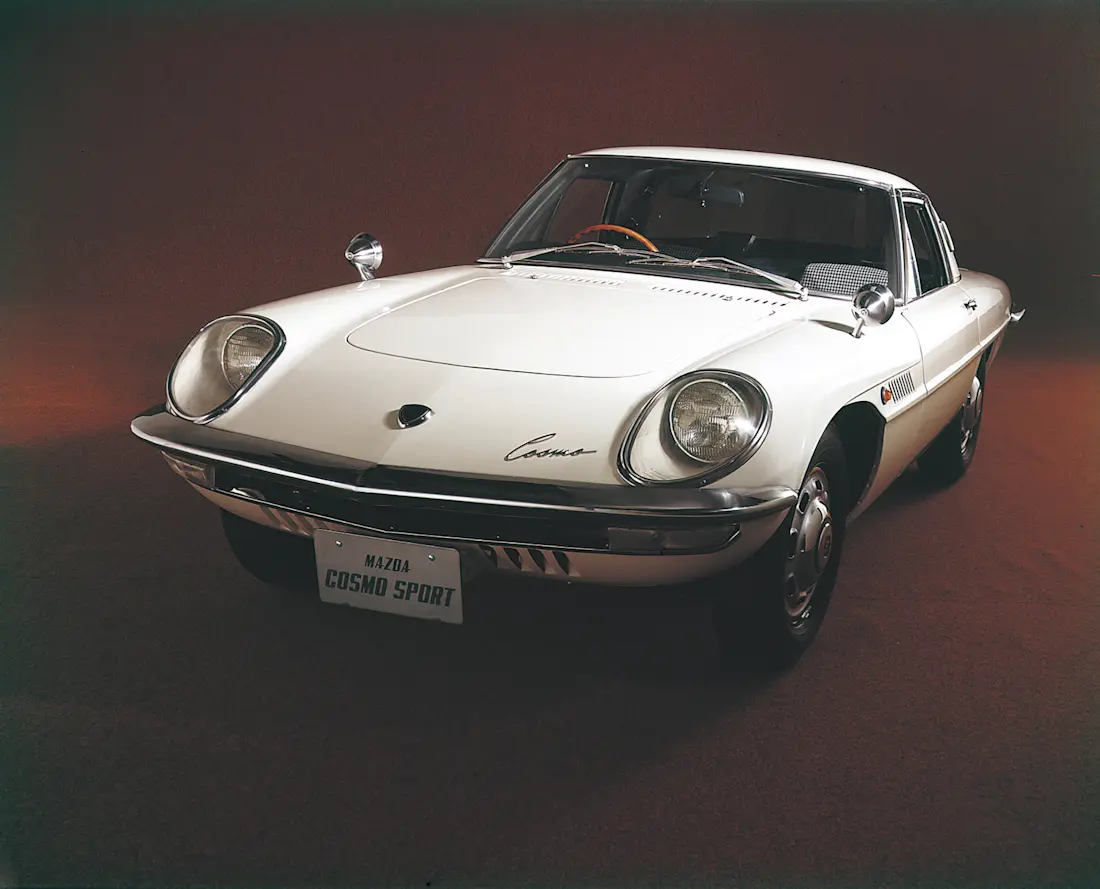
Mazda engineers were determined to solve the problem, leading to the development of seals made from a carbon-aluminum composite. In 1967, the company debuted the Cosmo, its first rotary-powered car, which eventually led to the development of the RX-7 in 1978.
The rotary helped differentiate Mazda from much larger companies like Honda and Toyota and was one of the main reasons the company exists as a full-line automaker today. It’s much more than just engine technology for Mazda, which says it embodies the company’s spirit and engineering DNA cultivated over many years.
A major technical hurdle with the continued development of rotary engines is meeting ever more stringent emissions regulations. The company admits it’s a much bigger challenge than it is for piston engines and requires advanced technological development. Rotary engines are more prone to combustion-gas leakage through the seals and to mixing unburned gases with oil. It also consumes oil by design, which is introduced into the combustion chamber for lubrication and cooling.
Despite this, the company showed the Iconic SP concept at the 2023 Tokyo Mobility Show, a beautiful rotary-powered sports car concept. And in 2024, it revived the RE (rotary engine) development group to advance research and development.
Mazda says a rotary engine can be adapted to run on a wide variety of fuels, including hydrogen, and its compact size and weight make it well suited for integration with electric powertrains. The company says it’s an important technology it will continue to explore, which leads us to believe there’s still a future for this special engine and possibly even a successor to the RX-7.

All Articles
See all
Here's What It Takes to Break a Speed Record in the Desert
BYD’s electric hypercar is now the fastest car in the world — again.
 Chris Tsui

BYD Confirms Flash Charging is Coming to Canada
Tech promises a 10 to 70 per cent charge in five minutes, even in winter.
Chris Tsui
Mercedes Wants You to Talk With Your Rear Window
Micro LEDs embedded in the glass allow drivers to express themselves
 Sébastien Bell