
Here's What It Takes to Break a Speed Record in the Desert
 Chris Tsui


BYD’s electric Yangwang U9 Xtreme hypercar was already the fastest car in the world, setting a Guinness World Record by hitting 496.22 km/h last September. It has now broken its own record, showing a leading digit on its speedometer that no other production car has seen before, reaching 503.17 km/h. To put that number in perspective, the highest speed limit in Canada is 120 km/h, and the fastest a Formula 1 race car has ever gone during a race is 372.5 km/h.
The 503-km/h Yangwang sets two Guinness World Records: the highest speed achieved by a production car in a single-direction run and the highest speed achieved by an electric production car in a single-direction run. The feat was also certified by the FIA, the organization that oversees motorsport at the highest level.
Despite BYD's resources as the world’s biggest electric vehicle (EV) maker, doing something like this isn't easy. It’s an intersection of cutting-edge technology, massive coordination, and an organization (and a driver) that’s willing to push limits.
Nerves of Steel
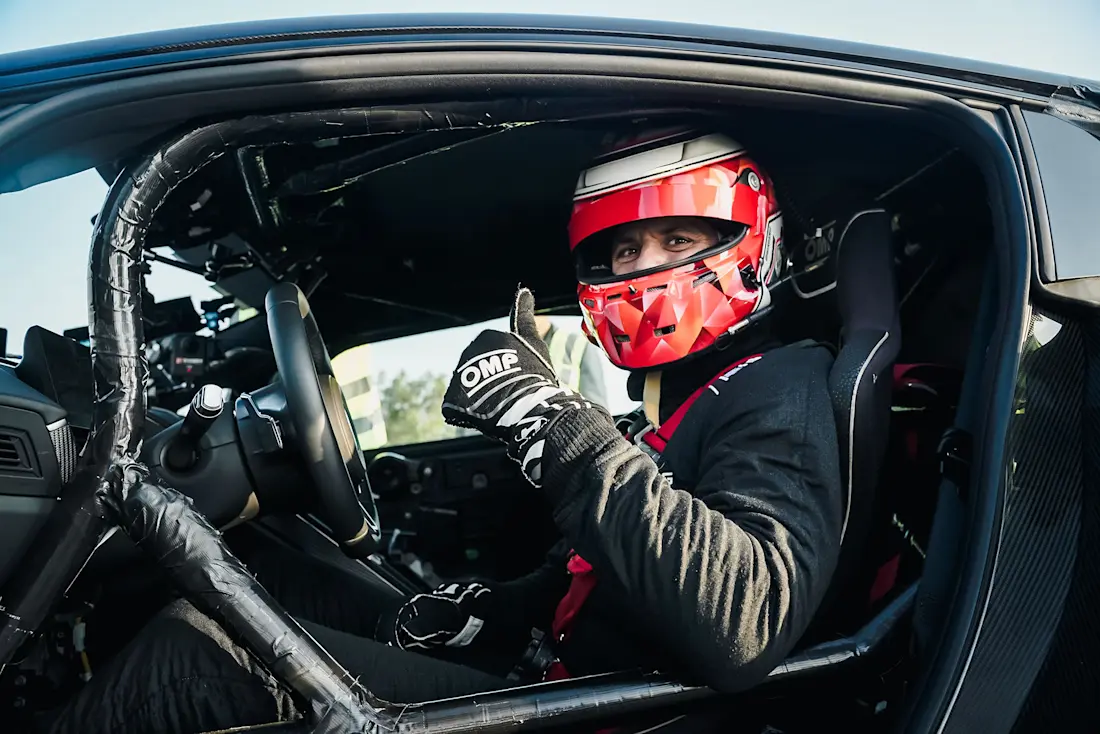
Unlike the U9 Xtreme’s last top-speed run on a smooth test track in Germany, Yangwang did it this time on a public highway in Abu Dhabi. The highway was closed and empty, but the venue choice still presented some challenges.
The highway on which the hypercar did its record speed run was shut to the public, but the nearby roads and deserts weren’t, and every metre of the 10-km stretch had to be inspected (and swept if necessary) before each run to get rid of stuff like “rogue wire particles” that could cause disaster.
In the days before this record attempt, a different U9 Xtreme crashed hard into a barrier during high-speed testing on a closed course, rendering the car unrecognizable. The passenger cell, however, remained intact and the test driver was able to walk away without serious injuries. An inadvertent demonstration, perhaps, of how far Chinese cars have come in terms of crash safety. Even after the collision, German racing driver Marc Basseng got behind the wheel in Abu Dhabi and went for it.
“Unlike a dedicated test track, a public road presents a different set of challenges, making precision, stability, and confidence in the vehicle more important than ever,” Basseng said. “Breaking a world record once is extraordinary, but doing it again in such a different environment is truly special. At these extreme speeds, every detail matters.”
A Really Fast, Really Cool Car
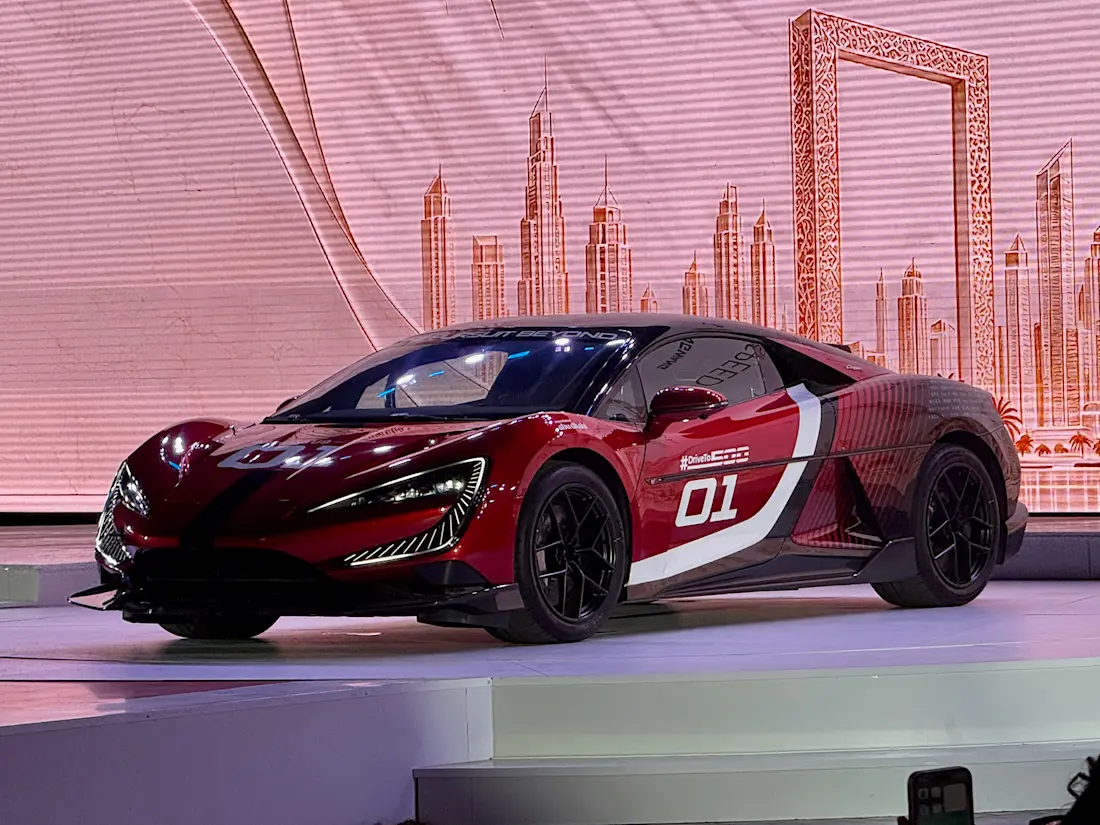
One of the most important details, of course, is the car you choose to bring. The Yangwang U9 Xtreme uses four electric motors (one at each wheel) to deliver a total of 2,978 horsepower — each of its four motors independently makes 745 hp. For context, a base version of the Porsche 911, the archetypal fast car if there ever was one, makes just 388 hp. Not 388 per wheel, 388 from the whole thing.
Sniffing at nearly 3,000 hp combined, each of the U9 Xtreme’s four motors can spin up to 30,000 rpm (a regular gas car’s engine is rarely able to spin quicker than about 7,000 rpm) thanks to stators (that’s the stationary outer part of an electric motor’s electromagnetic circuit) that use super-thin, super-silicon steel measuring just 0.1 millimetres thick. The rotor uses very strong silicon steel, and the motor housings are made of aerospace-grade aluminum.
All that performance going full-tilt generates a lot of heat, and being in the desert in the UAE certainly doesn’t help. The U9 Xtreme uses a 1,200-volt architecture (most new luxury EVs like the BMW iX3 and Volvo EX60, for example, use 800-volt systems), which means it needs less electrical current to generate the same amount of power. Less electrical current means less heat. Specifically, Yangwang says its 1,200-volt system generates 67 per cent less heat than an 800-volt system doing the same job.
Then, there’s the matter of transmitting and keeping that power on the ground. Yangwang worked with Indonesian tire maker Giti to make the U9’s semi-slicks that use a bespoke tread design, plus special knurling and lubricant that keeps the tires intact with their rims. Pretty important when you’re exceeding 500 km/h.
Trial and Error
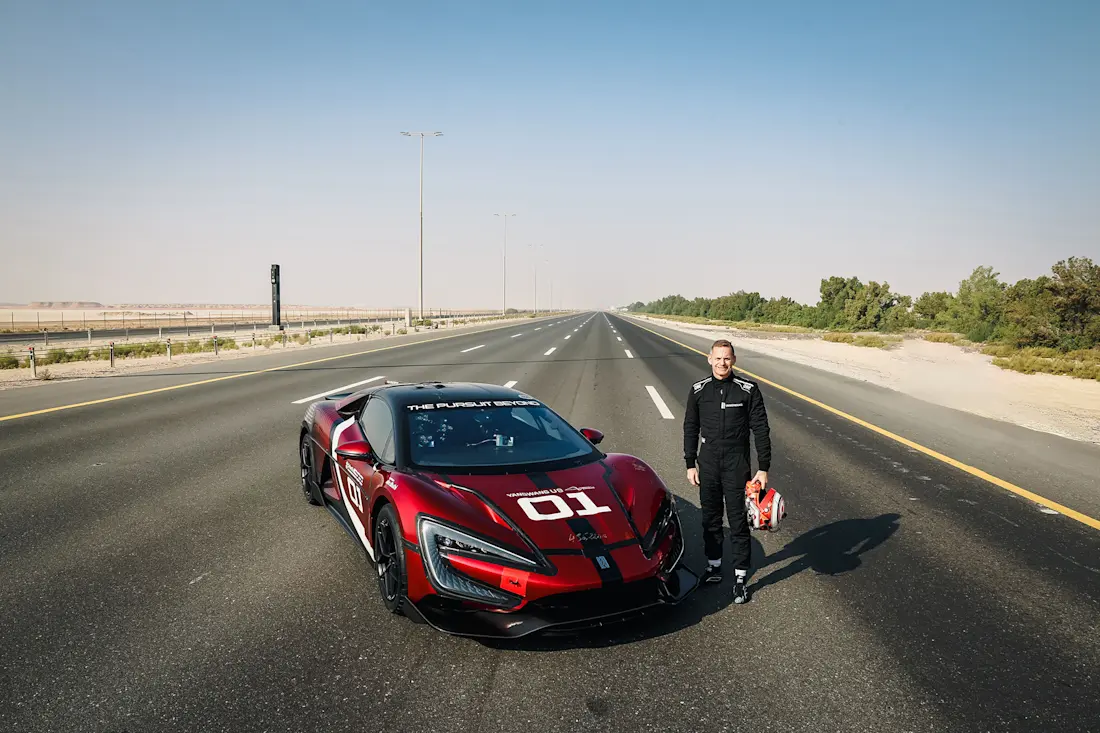
Even with a hero behind the wheel and a lightning-quick machine, setting a new world record isn’t just a matter of shipping a car to the desert, pointing it down a long, empty road, and flooring the accelerator. Like raising a child, it takes time and, apparently, a village.
This latest record-breaking result was the culmination of almost three years of testing and tuning, and even the night before the big 503-km/h run, engineers were still tinkering. On October 31, the Yangwang team did two runs, hitting a top speed of 490 km/h. Extremely, ridiculously quick by any standard, but not quick enough to break the car’s own previous record.
Overnight, engineers apparently adjusted the angle of the rear spoiler to optimize rear downforce, reprofiled suspension software to bump up rebound damping to better deal with subtle road undulations, perfected tire pressures, and, of course, made sure the battery and motor temperatures were ready for prime time. The next day, it took another two runs to achieve the headline 503.17 km/h.
Onboard 503 km/h
It’s not a real top speed run without instrumented onboard footage, and watching it back, a few things stand out. First off, yes, 500 km/h looks absolutely nuts, doubly so on a public road where there are utility poles rushing past mere feet away. Secondly, Basseng doesn’t actually go full throttle until about 400 km/h. In the run up to 400, his foot is only about halfway from the floor.
Lastly, the rate at which speed was still climbing around the 500 km/h mark makes me think the car still has quite a lot to give. If I had to hazard a guess, real estate and/or tires may have been the real limiting factors here, not horsepower or aerodynamics.
The Point
At this point, you might be thinking: why would anyone ever need a car that goes 500 km/h in real life? It’s a fair question and the truth is that no one really does.
Sure, I could argue that the technology and learnings that BYD will glean from this will trickle down to the EVs you and I might drive in the near future, making them quicker at more pedestrian speeds, more efficient, better at managing thermals, and steadier on the highway than they otherwise would be. But I suspect the real reason BYD went through all this trouble to build a car that can go 503.17 km/h without really breaking a sweat is a lot simpler: because it’s friggin’ cool.

All Articles
See all
The BMW iX3 Offers a Drive Interface Revolution. Are Long-Time BMW Owners Ready For It?
We all know screens are distracting, so why does BMW’s new EV have so many of them?
 Benjamin Hunting

BF Goodrich Winter Tires Compared: Winter T/A KSI vs. All-Terrains
Yes. You need winter tires.
 Jacob Black

BFGoodrich Winter T/A KSI Review: Our Ice and Snow Test Results
An effective winter tire for the masses
 Chris Chase