
Mercedes Wants You to Talk With Your Rear Window
 Sébastien Bell


Mercedes-Benz has a long history of innovation in the automotive space. Its latest batch may not end up being its best remembered, though. The automaker has highlighted two new technologies that turn vehicle glass into a screen.
The first, and perhaps silliest, embeds mini LEDs between layers of laminated glass. This could allow a vehicle to show messages on, say, its back window. The automaker can also use micro LEDs, which are high resolution enough and the system is clever enough that animations can even be displayed on the window. Better yet, when the LEDs are off and no messages are being displayed, the glass looks almost completely transparent.

Mercedes suggests that the technology would be best used to display warning signs, brake lights, and traffic information about the road ahead to people in following vehicles. It doesn’t go into detail about how messages might be selected for the window to display, but if a driver has control over them, that would seem to be a distraction for the driver and the following vehicle given the furious tenor of the messages drivers tend to like share with one another.
The second window display technology is for people inside the vehicle, not those outside of it. Mercedes is noodling with the idea of installing holographic optical elements into its vehicles’ glass to allow them to display holographic images.
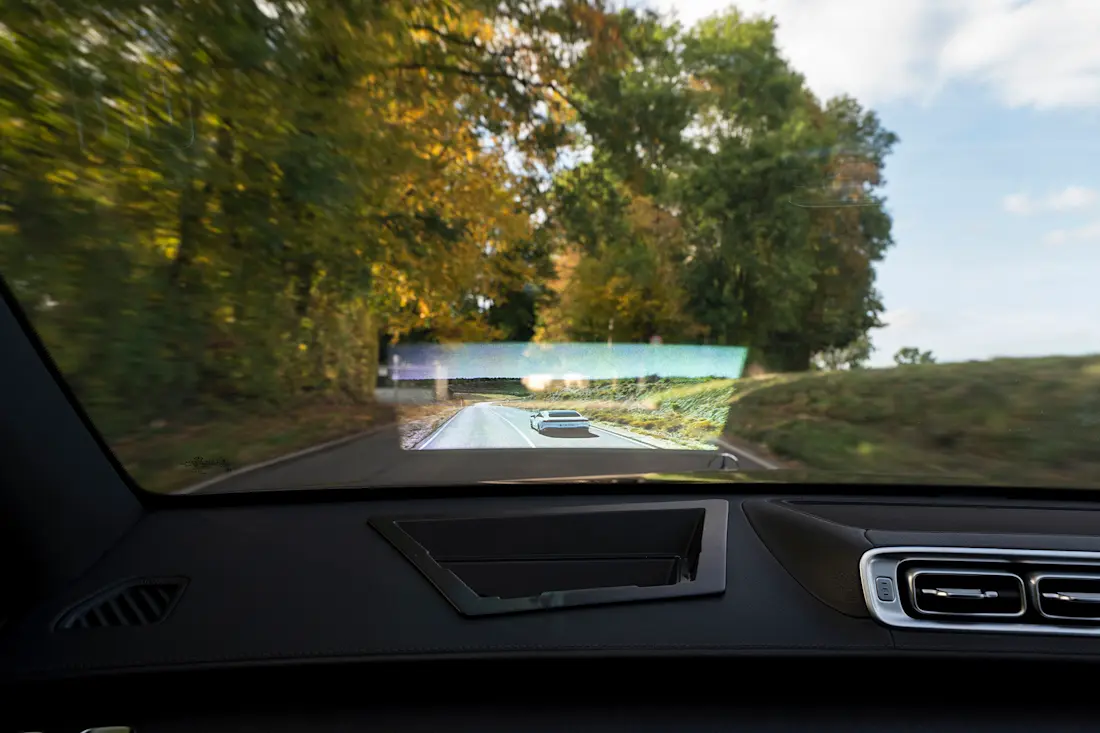
This appears to be a development of head-up display technology. Like that, this technology uses a projector in, say, the dashboard to reflect an image on a particular part of the windshield. The main benefit of the technology is that it remains legible even in bright light.
The holographic optical elements can also be oriented in such a way that projected images can only be seen from certain angles. This could allow the passenger to use portions of the screen to watch a movie, for instance, without the driver seeing it. The windshield could even be used for driver navigation and a passenger video call at the same time.
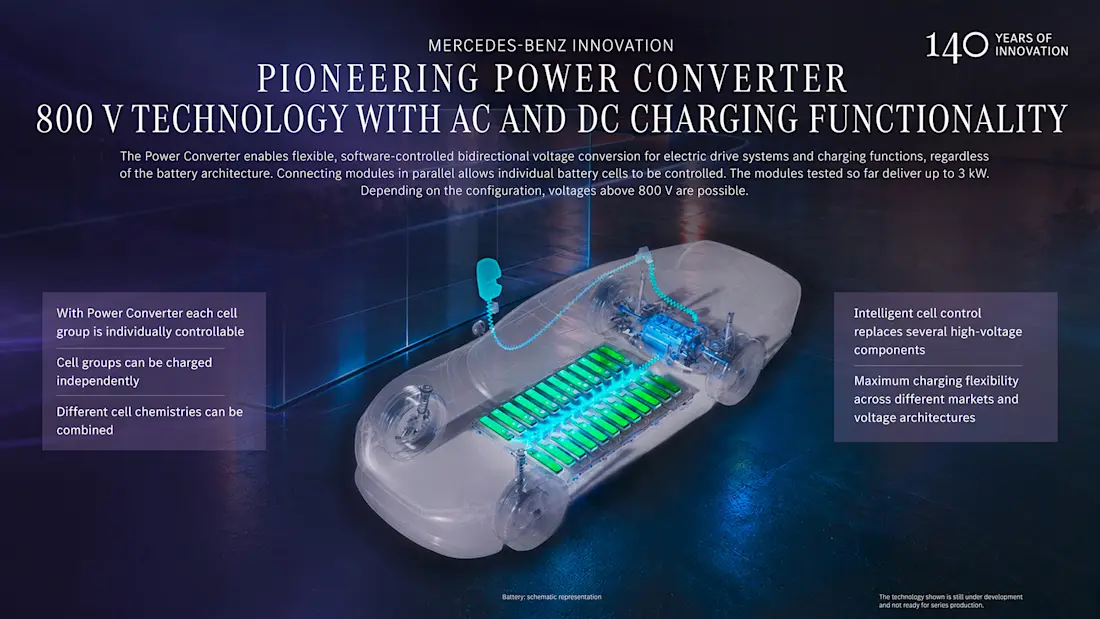
Finally, Mercedes also decided to highlight an improved charging technology concept this week. By using programmable micro-converters, it says it can better control the flow of electricity to individual battery cells to provide a constant 800V output.
The technology allows for greater control over the battery pack and could allow for a single hardware unit to perform tasks that are currently handled separately. Ultimately, Mercedes believes this will make its vehicles more efficient, compact, and flexible.

All Articles
See all
BFGoodrich Winter T/A KSI Review: Our Ice and Snow Test Results
An effective winter tire for the masses
 Chris Chase

New Cars Are Getting Too Complicated — Buyers Are Pushing Back
From frustrating touchscreens to intrusive safety alerts, new car tech is overwhelming drivers. Here’s how automakers are responding.
 John LeBlanc

Subaru’s Uncharted Could Point to the Future of Enthusiast Hatchbacks
This electric Subaru is surprisingly fun, but is it more fun than a Golf R?
 Jeff Wilson