
Protecting Your Future: How Safety Tests Challenge Automakers to Build Safer Vehicles
 Michael Karant


Update: The IIHS released the results for the CX-5’s crash testing, with the new model receiving “Good” ratings in each assessment. It was enough to earn the CX-5 the Top Safety Pick+ rating — the not-for-profit organization’s highest, making it Mazda’s eighth model to receive the award this year.
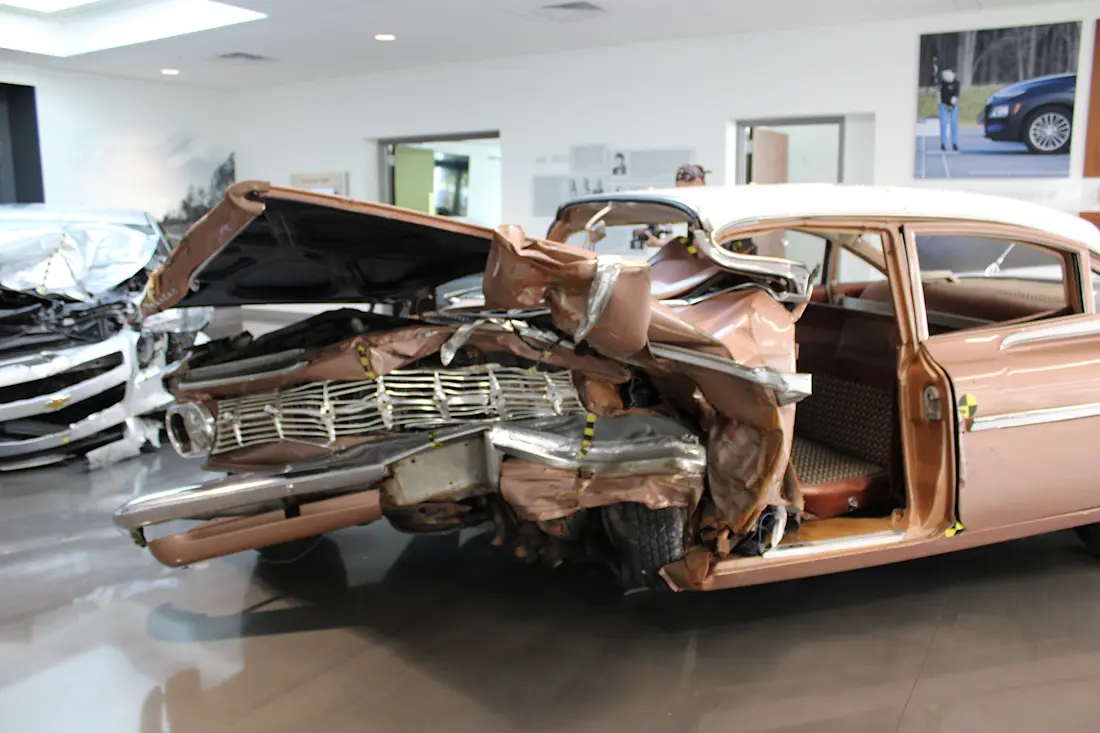
In 2009, the Insurance Institute for Highway Safety (IIHS) conducted one of the most famous crash tests in history, crashing a 2009 Chevrolet Malibu into a 1959 Chevrolet Bel-Air in a 40 per cent overlap frontal collision.
The results were as expected: the 1959 Bel-Air fared very poorly. The driver's floor and pedals sank deep into the cabin, and the lack of airbags and safety belts meant the crash test dummy smashed its head against the steering wheel and the ceiling. Needless to say, the chances of surviving a crash like this were slim. Meanwhile, the 2009 model performed as expected with modern crumple zones and airbags protecting the interior occupants.
This demonstration stands as a testament to progress in safety innovation, something that wouldn’t have been possible without increasingly stringent rules that push automakers to build safer vehicles. Today, you might assume that every new vehicle performs well by default, however, this is far from the case, as succeeding in a crash test is still difficult by design.
To better understand this process, we were invited to witness the new 2026 Mazda CX-5 undergo a moderate frontal-overlap collision in real time. This particular test was a special milestone for Mazda, marking the brand’s chance to receive its 100th award from the IIHS.
Future-Proofing Cars
Passenger vehicles haven’t come this far solely through automakers' own ambitions; progress has been largely spurred by institutions such as the IIHS, which continually raises the bar for successful crash tests. This, in turn, pushes automakers to over-engineer their models to meet these evolving safety standards.
This means that a vehicle that receives a good rating now may not pass with such flying colours five years later. This is why aging models may fall behind, especially by the end of their model cycle.
“The new cars of today are the used cars of tomorrow, so we don’t engineer a car to be safe just now, but also 10 years on,” said Jennifer Morrison, Mazda’s director of vehicle safety strategy for North America.
Mazda has already received a “Good” rating for every crash test of the eight vehicles in its model lineup, ranging from compact cars to large SUVs. To achieve such wide praise is no easy feat. Mazda, like many automakers, conducts extensive research to ensure its vehicles not only protect their occupants but also others around them. They also attempt to avoid a crash in the first place, another area of safety increasingly accounted for by the IIHS.
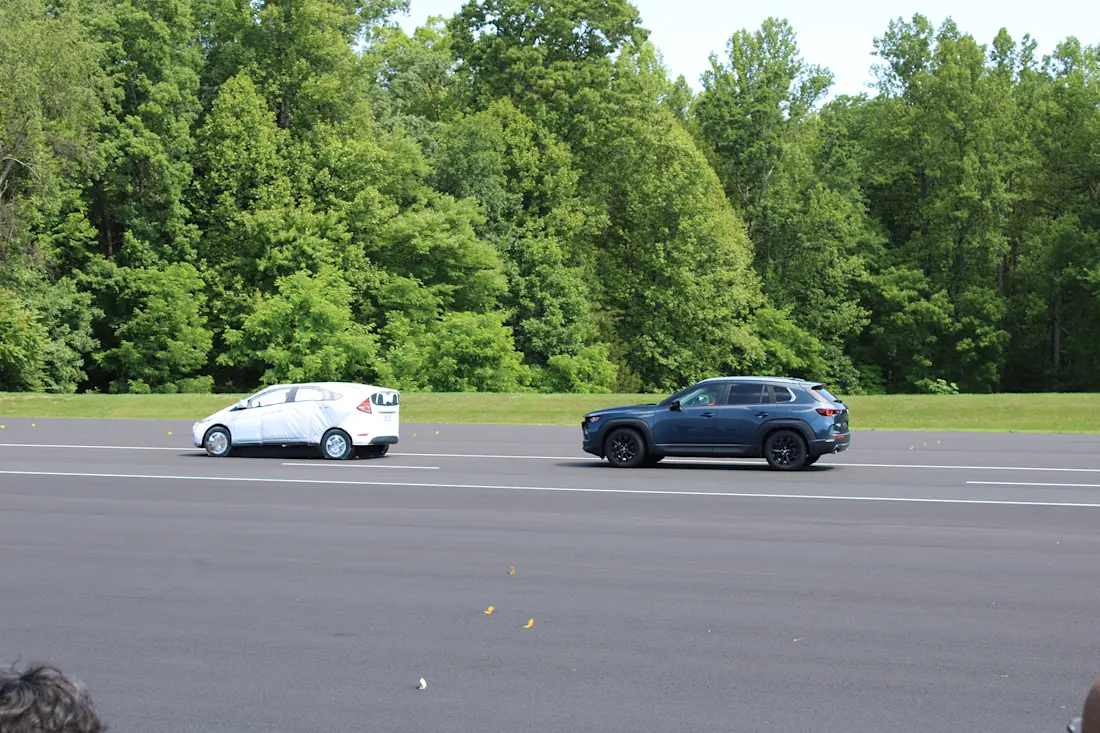
In the Mazda CX-5, safety comes down to its camera and sensor systems, which help it automatically brake when it detects a potential collision with a vehicle or a pedestrian.
“The most important part for Mazda is that safety equipment is standard; the drivers need to know the car has their back and they don’t have to pay any extra for it,” Morrison said.
This approach allows for the brand's entire product lineup to be engineered to the same standard and helps Mazda’s cars earn a reputation for being safe.
In the event of a crash, the vehicle is designed to absorb the brunt of the impact while keeping the cabin’s occupants safe. This was one of the greatest shortcomings discovered by the IIHS’s frontal overlap test, which showed that a vehicle may protect its occupants in a head-on collision, but in an overlap crash, the cabin was often compromised, leading to increasingly reinforced cabins in modern vehicles.
Testing a Reasonable Middle Ground
The IIHS introduced the 40 mph (64 km/h) 40 per cent frontal overlap test in 1995 and immediately started filming and publicizing the results. This represents a realistic speed at which many collisions happen. Even on highways where speeds exceed 64 km/h, a driver usually slows down before impact.
At this speed, automakers can also achieve a sweet spot between safety and engineering. In theory, a car could be engineered to survive a 100 km/h crash, but it would compromise on other aspects of the vehicle, such as increased weight, resulting in worse fuel economy and performance.
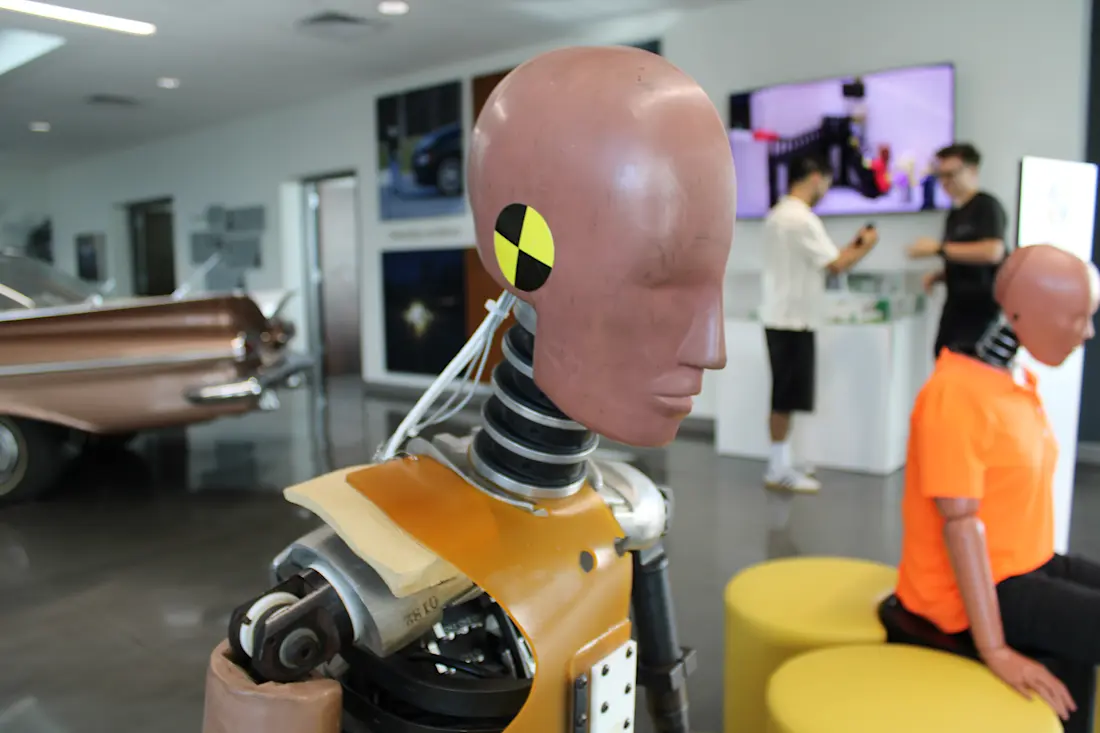
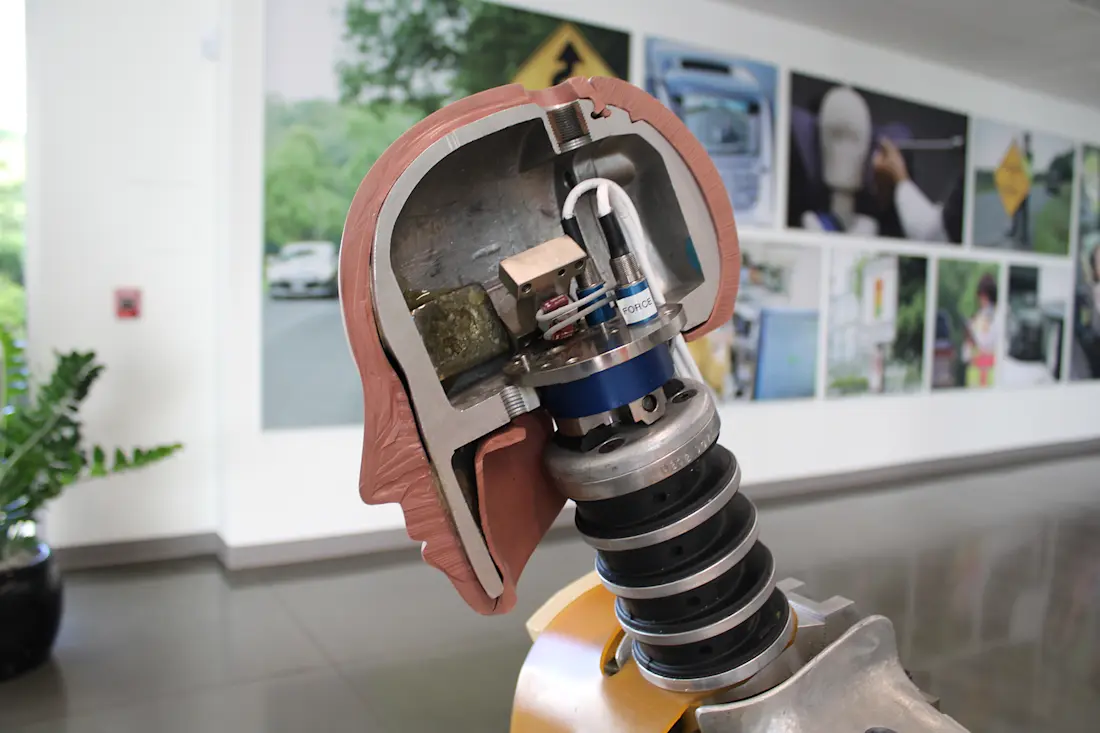
The test dummies are also an integral part of the process, as they represent how occupants fare in a collision. The IIHS uses two dummy types: one representing a mid-size adult male, and another a small female or child in their early teens. These dummies are specifically under-representative of actual human size, as conducting tests with a more vulnerable target pushes automakers to over-engineer their vehicles to better protect these dummies. In turn, a real human in a real crash is likely to fare much better than a test dummy in a crash test.
Keeping Tests Relevant
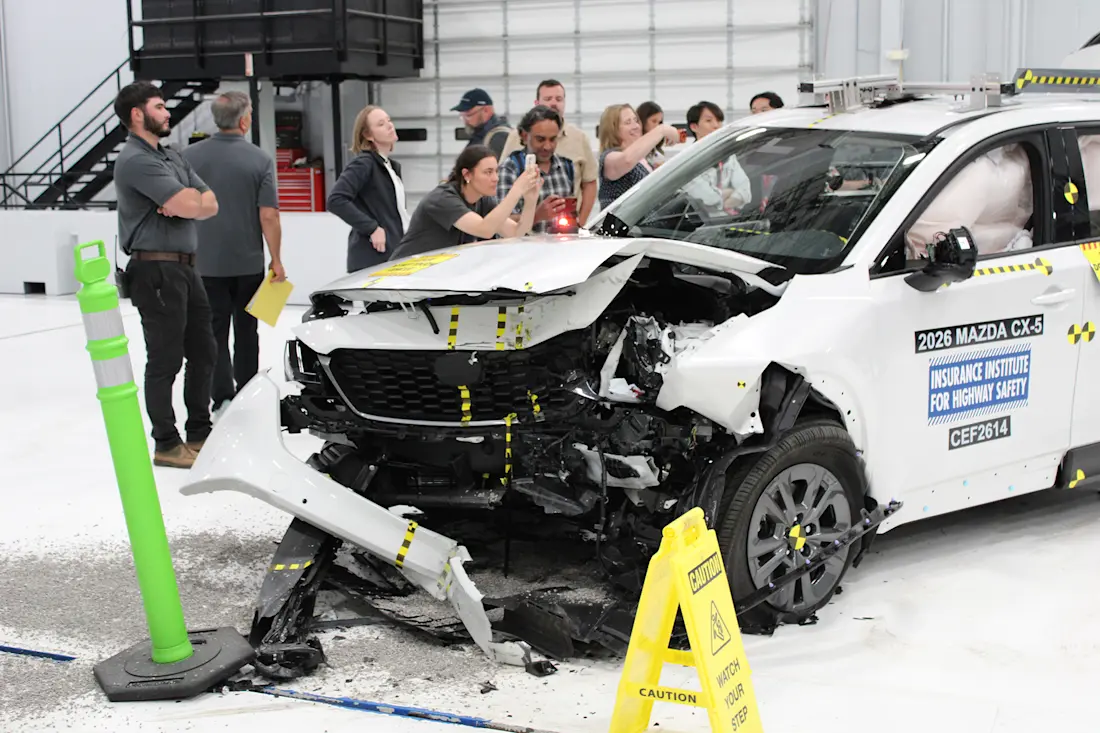
The IIHS continuously updates its testing to push manufacturers to achieve better safety results. For example, in 2022, the frontal overlap test also added a dummy behind the driver's seat, giving the IIHS further information on how rear passengers interact with those seated in the front in a collision, which Morrison said is one of the more difficult categories to succeed in.
One of the tests that's had a profound impact on safety is the side impact. Cars didn’t used to have side curtain airbags to protect their passengers, so many vehicles fared poorly in this test. The industry had to adapt, and now side curtain airbags are standard in most vehicles, and over time, more vehicles have received Good ratings in this area.
The IIHS ensures that the benchmark it sets for tests is attainable.
“When we introduce a new test, we make sure it's always difficult; we do that by design. We do always have at least one or two vehicles that perform well in the test, that way we know it can be done,” said Jessica Jermakian, senior vice president of vehicle research at the IIHS.
The institute has also eliminated several tests over time, such as the roof strength test, which assesses how well a vehicle maintains its structural integrity in a rollover. This test was omitted due to a new federal standard requiring a vehicle's roof to withstand 3.5 times its weight, meaning every new vehicle would have achieved a Good rating according to IIHS testing standards.
How Mazda Aims to Improve Safety
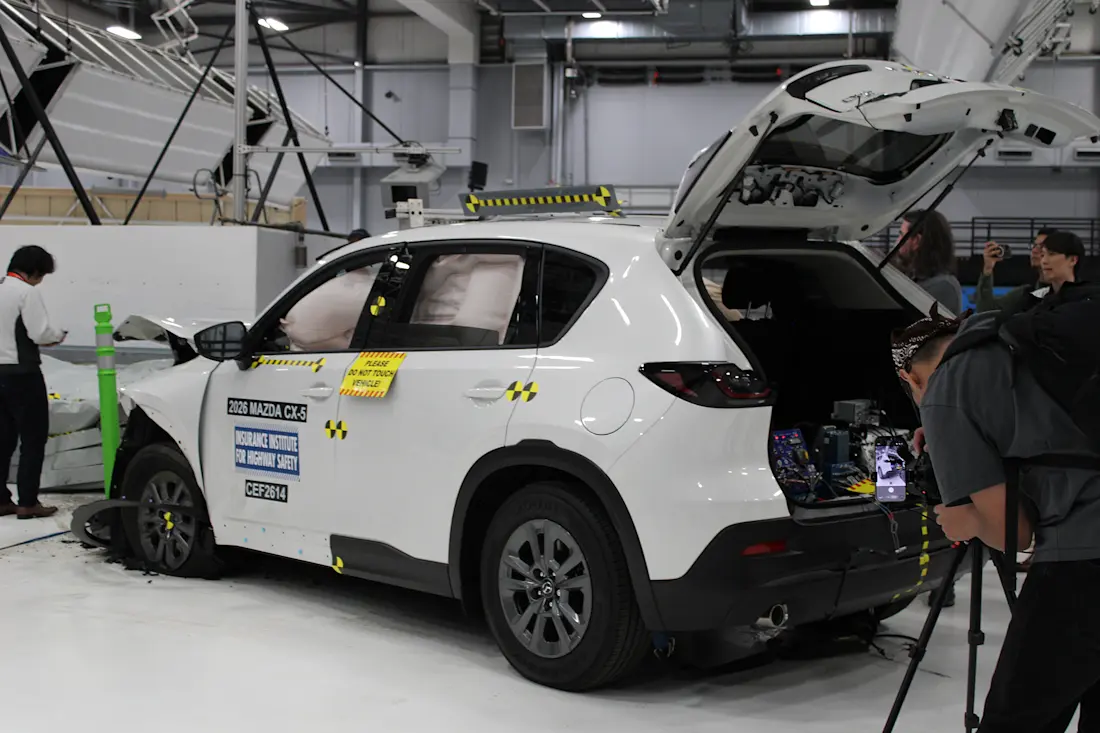
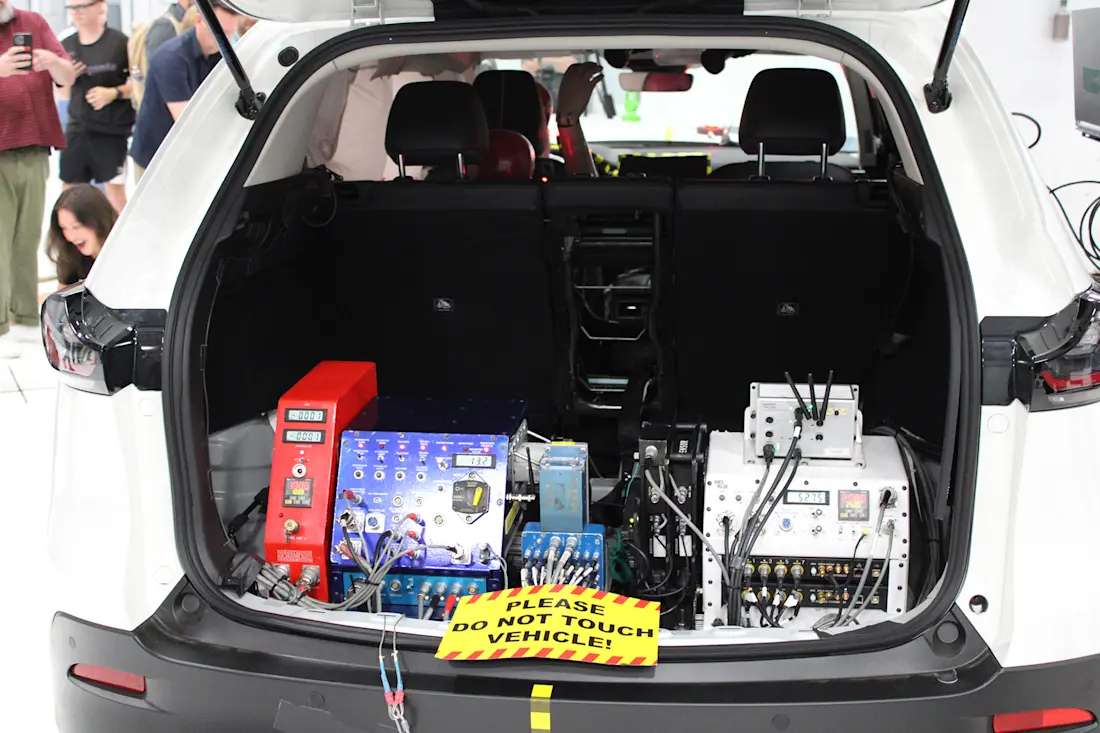
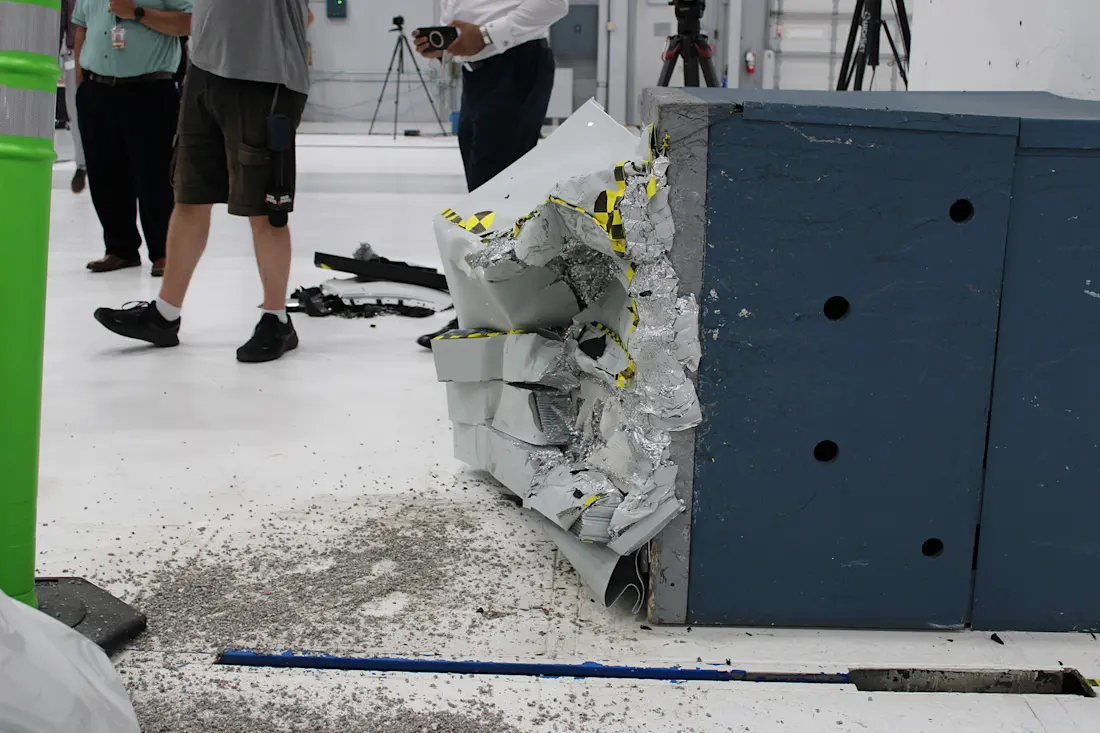
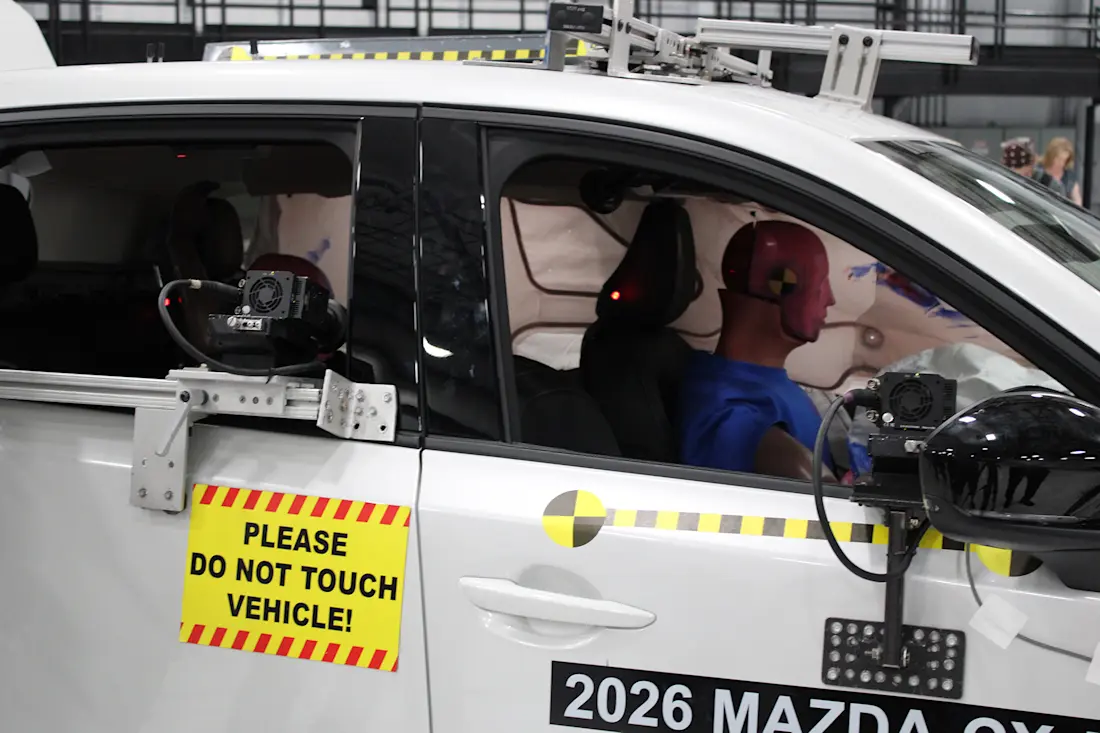
The frontal overlap test that added a dummy behind the driver's seat in 2022 was crucial in highlighting oversights in vehicle design. When tested in 2022, the previous-generation Mazda CX-5 fared poorly in the rear-passenger department of the moderate-overlap collision. Mazda addressed the test results and, when retested in 2023, the CX-5 received a good rating.
In 2026, Mazda’s entire lineup receives a Good rating in every testing category but one: vehicle collision avoidance, where it receives an “Acceptable” rating across the board. This problem stems particularly from smaller vehicles such as motorcycles and bicycles, which are more difficult for the camera and sensor-based detection system. The brand is well aware of the shortfall and aims to improve in this department as detection technology improves.
Mazda vehicles routinely get awarded the coveted “IIHS Top Safety Pick+” rating for its vehicles, and the crash test results for the new 2026 Mazda CX-5 will be finalized later this year.
It's clear that as long as the bar for safety is set increasingly high, automakers will continue to push the boundaries and make their cars safer.

All Articles
See all
Here's What It Takes to Break a Speed Record in the Desert
BYD’s electric hypercar is now the fastest car in the world — again.
 Chris Tsui

BYD Confirms Flash Charging is Coming to Canada
Tech promises a 10 to 70 per cent charge in five minutes, even in winter.
Chris Tsui
Mercedes Wants You to Talk With Your Rear Window
Micro LEDs embedded in the glass allow drivers to express themselves
 Sébastien Bell