
What Does a Piece of Pottery Have to Do with the New Genesis GV90?
 Jodi Lai


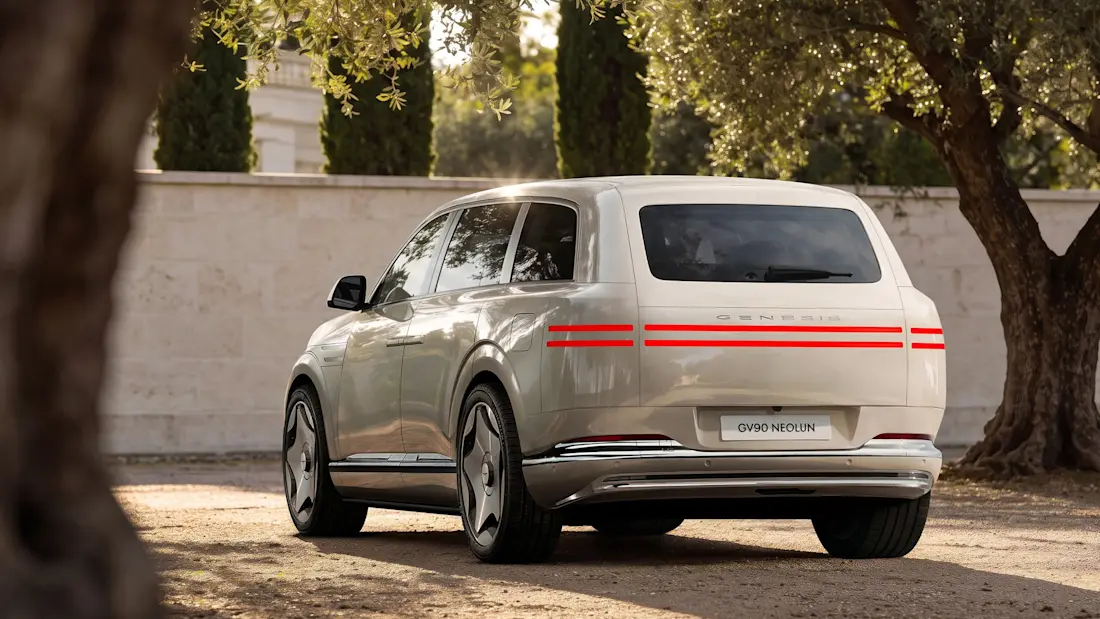
As Korea’s only luxury automaker, Genesis has made it an essential part of its philosophy to showcase its culture to the world. The brand leans into its heritage with everything it does, and nowhere is that more evident than the Genesis GV90, the brand’s new electric flagship SUV.
At the electric SUV’s recent debut in San Francisco, some attendees remarked that it looks like Genesis is going after ultra-luxury brands like Maybach and Bentley with its new flagship SUV. Built around the brand’s core values of Korean hospitality and its distinct minimalist, unpretentious aesthetic, the three-row SUV’s design is guided by an unexpected source: a piece of pottery.
“The exterior of the GV90 draws inspiration from the iconic moon jar — a symbol of traditional Korean aesthetics,” Genesis explains in a statement. “By minimizing superfluous elements to emphasize the beauty of the essential, every aspect of the GV90’s design reflects the core tenets of the moon jar — its fundamental form of proportion and curve, the beauty of white space, and the spirit of exquisite craftsmanship.”
Moon jars are unique to Korea and originated during its Joseon Dynasty, which lasted from 1392 until 1897, and are admired for their simple elegance. Traditionally crafted from white clay, the soft, round form is said to echo the moon’s glow, and the white colour symbolizes purity and new beginnings. Not just decorative objects, these vessels were meant to be functional, and they carry deep symbolic meaning in Korean culture. Traditionally, moon jars are believed to bring blessings of health and prosperity.
These pieces of pottery are so significant to the brand that every time a new dealership opens, Genesis Canada gifts them a moon jar from South Korea that’s proudly displayed inside.
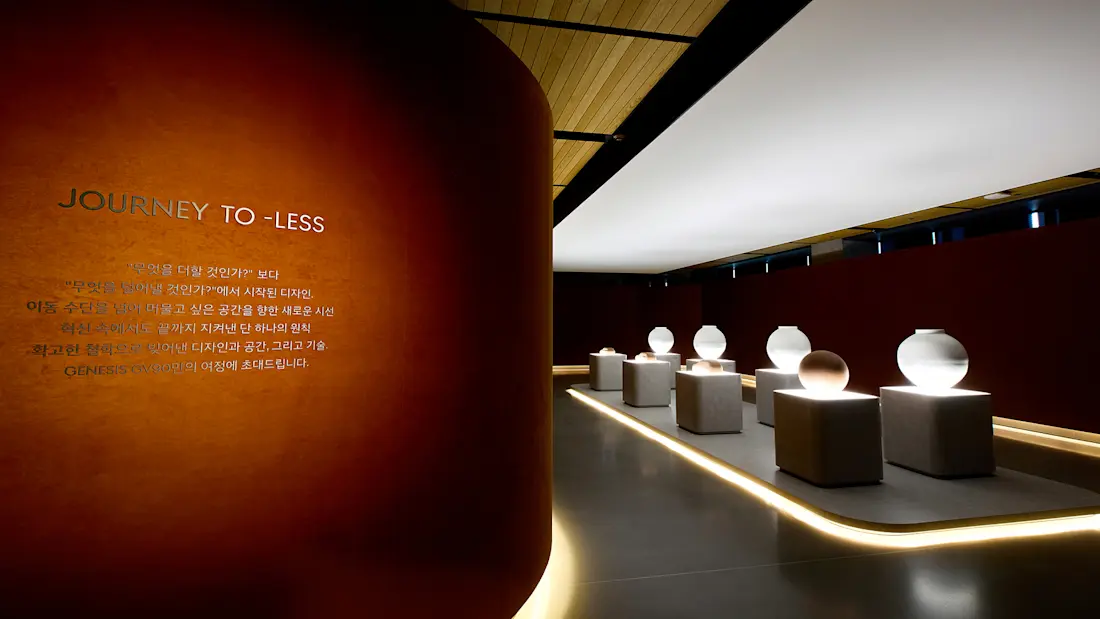
According to Christie’s, moon jars “represent the pinnacle of Korean ceramic arts,” and are functional objects characterized by their minimalist design, which Genesis refers to as “restrained elegance.” Christie’s says this “timeless piece of cultural heritage” is “admired for its craftsmanship and beauty,” and sold an 18th-century example in 2023 for $4.56 million USD.
So it makes sense that Genesis, which is fighting an uphill battle to prove itself as a luxury brand, would use moon jars as inspiration: not only do they beautifully embody Korean aesthetics, culture, and history, but they’re also highly sought after by the wealthy, an audience that Genesis perhaps hasn’t broken through to yet.
The other important part of the moon jar inspiration is that it’s rooted in humanity, something that’s increasingly important in an AI-driven world.
AI Slop Versus Actual Innovation
Artificial intelligence (AI) is increasingly leading the marketing of new products. Sold as cutting-edge, it seems impossible that a luxury product today would be sold without AI at the forefront. So of course, the Genesis GV90 has AI integration. Drivers will be able to use conversational language and voice commands to operate various vehicle functions, access controls, and search for information.
The system is context-aware, can handle multiple commands within a single request, and can also determine where in the car the command is coming from. For example, a rear seat passenger could say something like, “It’s too hot in here,” and the GV90 will turn on their ventilated seats and adjust their personal climate controls, without disrupting other passengers. The brand sees AI and other tech as tools to help protect its human-centred philosophy, not as the philosophy itself.

“We will not contradict the brand values that we have had since the beginning of being human-centred,” said Luc Donckerwolke, President and Chief Creative Officer of Genesis parent company Hyundai Motor Group, after the GV90’s global debut. “Implementations of technology like AI and everything must also be human-centric. We don't do it for the sake of complicating the car or adding another element on the spec list of the car.”
The goal of AI in the GV90 is to make the vehicle safer and more intuitive for its customers.
Euisun Chung, Executive Chair of Hyundai Motor Group, elaborates in a press release: “Technology alone does not create luxury, and design alone does not define luxury. The value of innovation lies in transforming the customer experience in intelligent and intuitive ways to improve people's lives.”
Hospitality and Craftsmanship Are Inherently Human
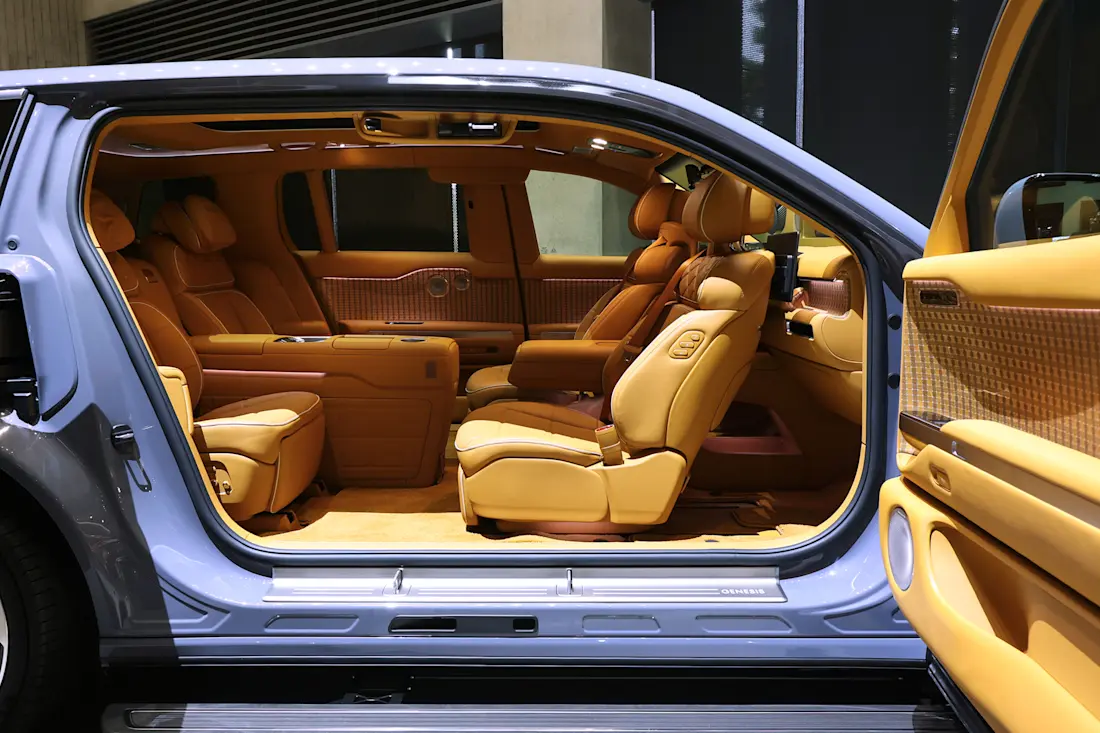
While the GV90 is a three-row SUV, the top-line Neolun executive trim has front seats that swivel when parked, allowing occupants to speak face-to-face. Another innovation is the huge pop-up screen that can be deployed when parked in a cinema mode so everyone can watch a show or movie together, a shared experience. The innovative coach doors that use an invisible B-pillar look incredible, but they primarily ease entry and exit. Hospitality is inherently human, and these are just a few examples of Genesis’ human-centric approach.
“A luxury brand always has an origin, and in our case, Korea. So Korean culture, which is hospitality, has to be at the centre of the design of all vehicles. And everything we do has to serve that value,” Donckerwolke said.
A moon jar’s design looks deceptively simple, but it’s very complex to make. Crafted by joining two halves rather than being thrown on a wheel as a single piece, it also symbolizes unity, partnership, and connection. And the GV90 — with its swivelling seats and movie screen — is meant to bring people together.
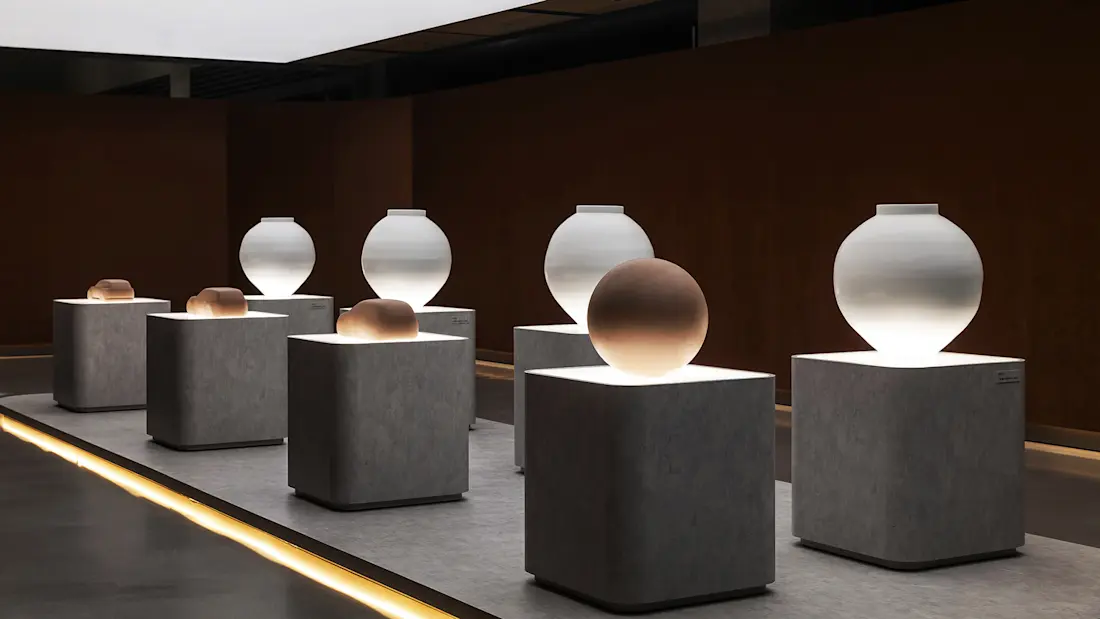
Traditional Korean moon jars are celebrated for the imperfections that result from being handmade with this unique technique: the jars are often not perfectly symmetrical, and the glaze is not uniform. No two are alike.
Those imperfections are a big part of why moon jars are so beautiful — they were created by human hands, and in a world where AI is dominating the zeitgeist and erasing character and charm, that humanity becomes even more profound.
“These natural imperfections are viewed as essential to the beauty of the moon jar. Instead of seeking flawlessness, collectors appreciate the artisanal process that these differences reflect,” Christie’s writes. “Each variation is part of the jar’s story and symbolizes the natural imperfection of life.”
Takaaki Murakami, Head of Japanese and Korean Art at Christie’s, summed up the moon jar that sold for over $4 million simply and beautifully in a post from the auction house: “It feels alive.”
In this AI-powered and increasingly isolating world, feeling alive, making human connections, and feeling cared for is the new currency of true luxury. Genesis puts this at the centre of everything it does.

All Articles
See all
Own the Road with AutoTrader, Episode 118: The Backlash Against Touchscreens and Return to Buttons
Safer, easier to use, and better looking, buttons are making a comeback.

Planes, Trains and (Electric) Automobiles: A Race to Determine the Pros and Cons of Each
Discovering the best way from Toronto to Quebec City with the Subaru Uncharted.
 Jeff Wilson

AutoTrader Find of the Week: 2004 Porsche Cayenne Turbo is the Cure For Boring
For when practicality doesn’t interfere with fun.
 Chris D’Alessandro