
AutoTrader Find of the Week: Chrysler Crossfire SRT-6 is the Overlooked American Sports Car
 Michael Karant


Outside of a few smash successes like the Chevrolet Corvette, America has struggled with sports cars, with many U.S. automakers attempting to execute the concept, only to have their models stick around for a generation or two. Chrysler, especially, has never really been a performance brand. Its only true sports car was the Crossfire, a weird byproduct of the turbulent merger with Mercedes-Benz.
This week's AutoTrader find is this 2006 Chrysler Crossfire, a car that for 20 years has been almost forgotten, never receiving the same nostalgic praise as other 2000s sports cars. However, the Crossfire, especially the hot SRT-6 model, offers plenty of performance for the price, and a design that remains unique even two decades after its release.
The Crossfire wouldn’t have existed if it hadn’t been for the “merger of equals” between Mercedes and Chrysler that formed the short-lived Daimler-Chrysler group. The partnership came about from Mercedes-Benz’s push for global expansion, with the Chrysler Group considered an ideal partner due to its well-established presence in the North American market.
At the time of the merger, Chrysler was doing really well with a broad range of models across multiple marques. A luxury brand such as Mercedes would allow Chrysler to expand its higher-end offerings while also providing expertise to develop new models. However, this wasn’t quite the perfect partnership it set out to be, as it became evident that the merger was more of an acquisition of the Chrysler brand by Mercedes-Benz than a true collaboration.
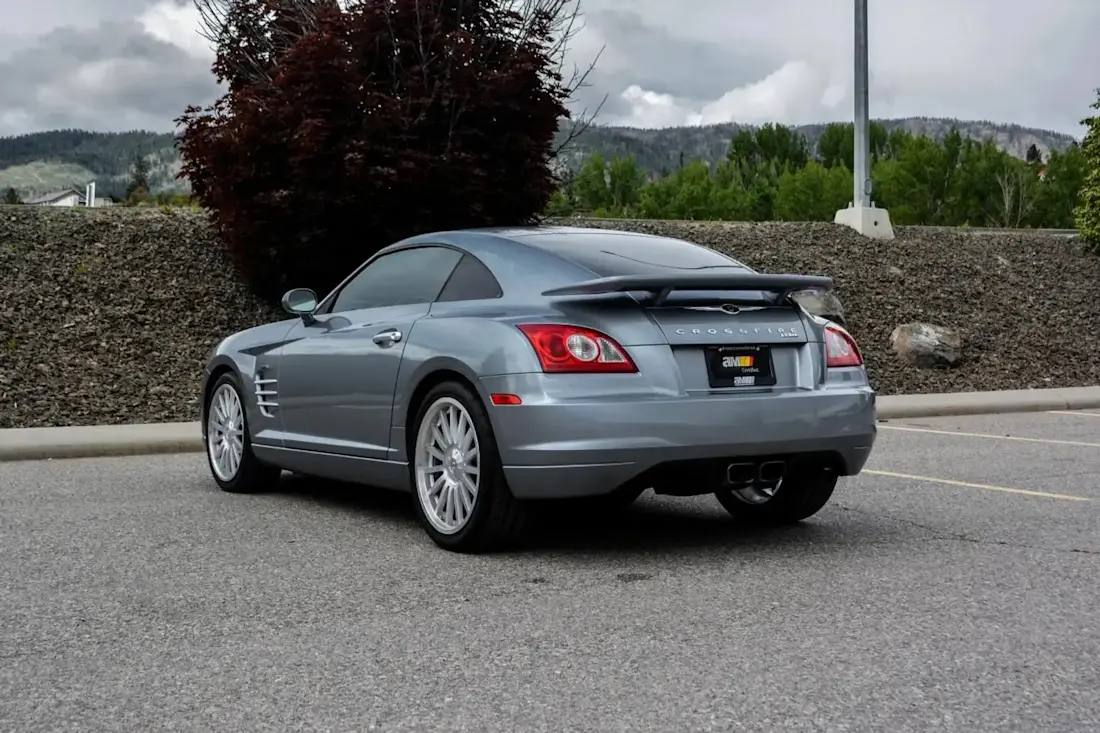
Chrysler intended the Crossfire to be an elegant sports car with Art Deco-inspired styling to add a hint of class and match other models in its lineup, like the PT Cruiser. This would position the Crossfire as a backroad cruiser rather than a track monster, so it made a lot of sense that it would share a platform with the Mercedes SLK, since the SLK was already more of a cruiser. In an ideal situation, Mercedes would have given Chrysler the platform of the then-new second-generation SLK, released in 2004.
However, I imagine some Mercedes executive found the idea of a Chrysler being as good as a Mercedes being absolute sacrilege. As a result, the Crossfire was based on the first-gen SLK that was just concluding its production run. It had been on sale since 1996, making the Crossfire’s platform nearly a decade old at the time of its launch.
Unsurprisingly, the Crossfire’s engines were sourced from Mercedes: the standard setup was the M112 V6 producing 215 hp, or a supercharged version of the same engine, bumping the power output to 330 hp for the SRT-6 model.
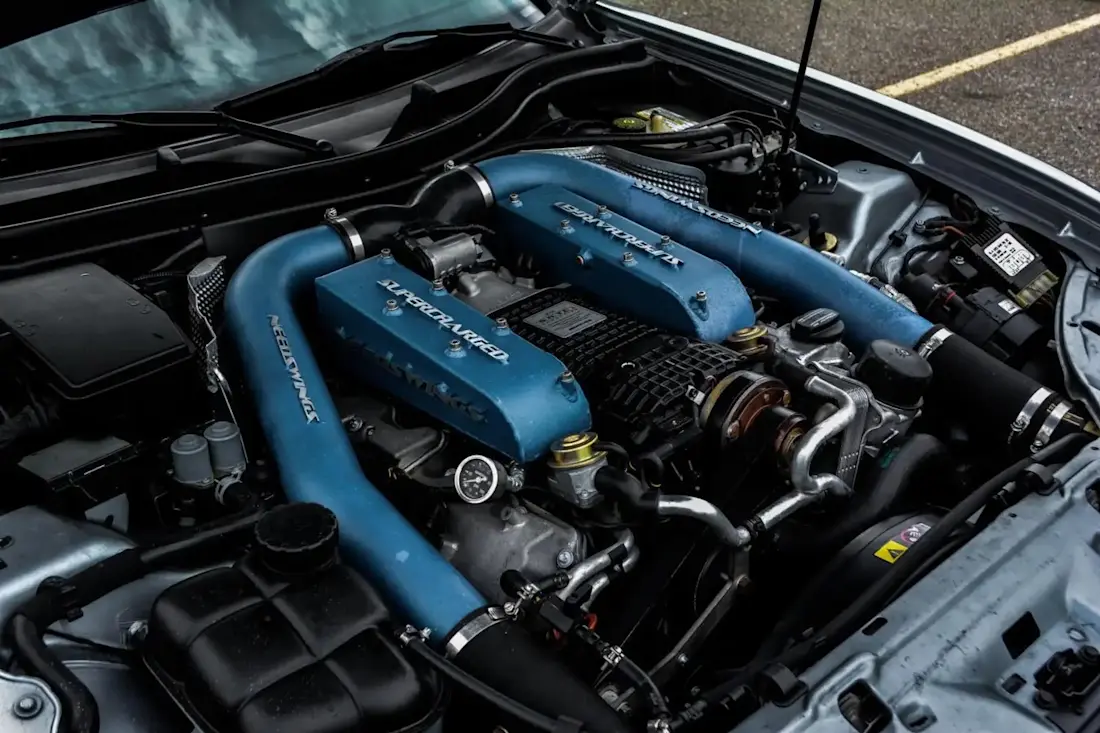
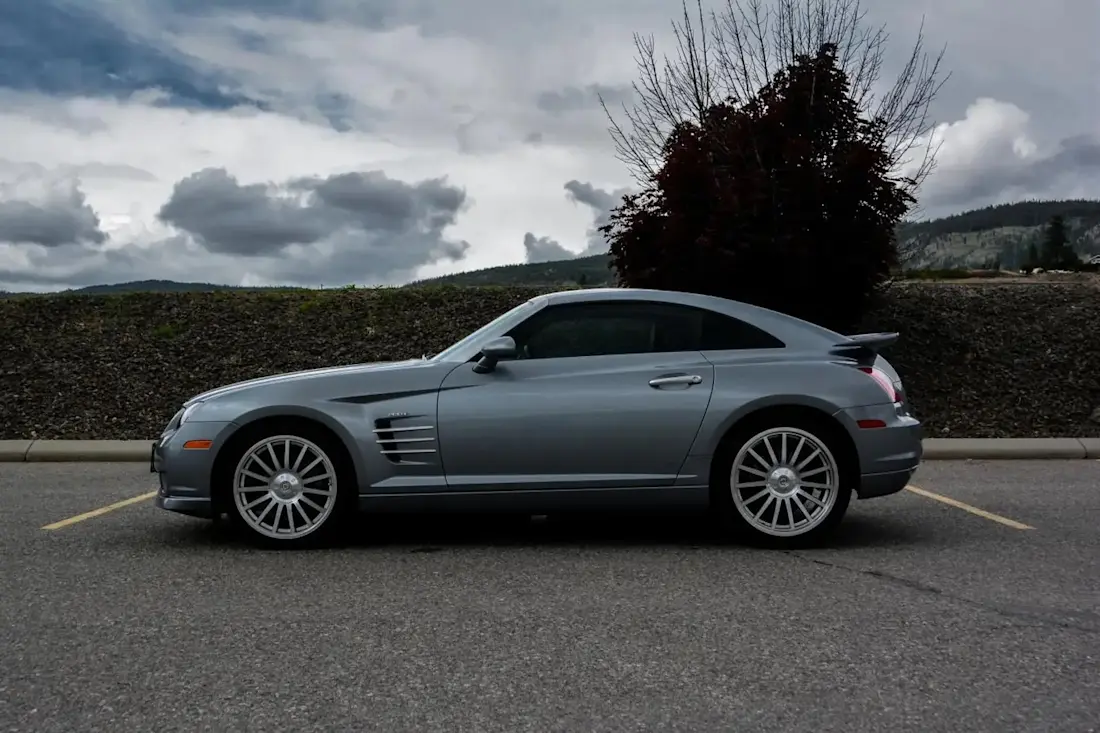
Meanwhile, the exterior was completely Chrysler. In my opinion, it looked far more interesting than the SLK on which it was based, and far better-looking than the weird F1-nose second-gen SLK. The Crossfire has a distinctive chrome grille, a sloping rear, and streaks along the hood that make it look truly unique compared to any other sports car on the market at the time. The SRT-6 had received some welcome visual distinctions over the base model, including aggressive multispoke wheels and a front splitter that made the SRT-6 just that little bit sharper.
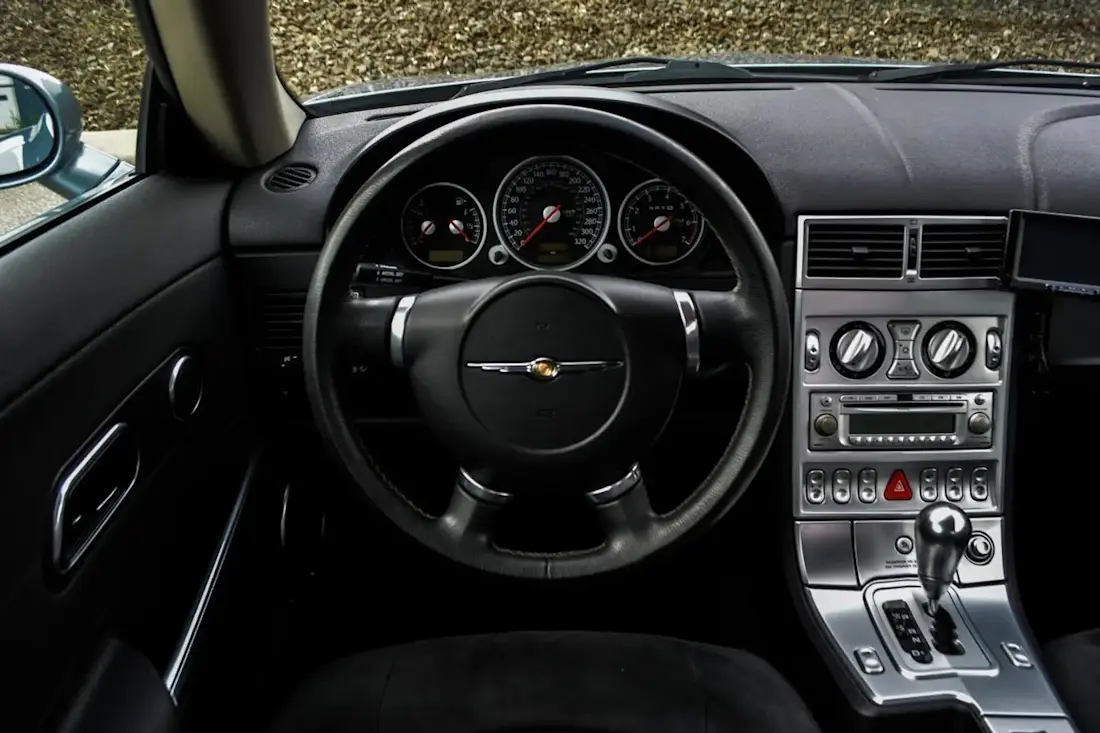
The interior was unmistakably based on the SLK, with the biggest giveaway being the prominent upright centre console. The only Chrysler changes were the gauges and the steering wheel, which really didn’t give the Crossfire the cool Art Deco interior to match its exterior styling.
The Chrysler Crossfire is not remembered fondly, and in a 2005 comparison by Car and Driver, the Crossfire SRT-6 placed dead last among the four cars it reviewed, beaten by the second-gen Mercedes SLK350, as well as the Corvette and Porsche Boxster. The biggest point of criticism was that the Crossfire felt outdated, with its ride being too stiff, especially for the $51,000 USD as-tested price. However, 20 years have now passed, and at this point, every 20-year-old car feels equally outdated. Luckily, Crossfire prices have also depreciated since 2005, making buying one today a far more compelling proposition.
That, by no means, makes a used Crossfire a great deal, as prices hover between $20,000 and $25,000, a price point where you can find a lot of great sports cars, including Corvettes, Boxsters, and BMW M3s. Even the SLK 32 on which the Crossfire is based can be found for cheaper. So why would you buy a Crossfire SRT-6?
Even today, 330 hp is nothing to scoff at, a figure that exceeds many modern entry-level performance cars. The Crossfire SRT-6 can hit 100 km/h in under five seconds, with the supercharger whine as the cherry on top. The SRT-6 was also quite rare, being produced for the 2005 and 2006 model years, with just over 4,000 units made worldwide, giving it a rarity bonus.
In my opinion, there is one thing that the Crossfire does better than its competition, and even many other sports cars today: styling. About 20 years on, the Crossfire’s design still stands out, and that was the goal. Chrysler’s Art Deco inspiration was intended to make a statement. Love it or hate it, you will remember what a Crossfire looks like, and you certainly won’t mistake it for a Miata. While the PT Cruiser looks a little silly after 25 years, the Crossfire remains completely unique, with a silhouette and design details that likely won’t make a comeback anytime soon.
To this day, when I see a Chrysler Crossfire at a car show, I can’t help but look at it; it always captures my attention over any early 2000s sports car. There’s also a decent pool of parts available for the M112 V6, which found a home in nearly every model in the Mercedes lineup. Meanwhile, over 70,000 Crossfires were produced and mostly sold in North America, making the ownership experience pretty manageable. The Crossfire is definitely not for everyone, but if you want something a little loud, a little weird, and still plenty quick, then the Crossfire SRT-6 is certainly worth considering.

All Articles
See all
Own the Road with AutoTrader, Episode 118: The Backlash Against Touchscreens and Return to Buttons
Safer, easier to use, and better looking, buttons are making a comeback.

Planes, Trains and (Electric) Automobiles: A Race to Determine the Pros and Cons of Each
Discovering the best way from Toronto to Quebec City with the Subaru Uncharted.
 Jeff Wilson

AutoTrader Find of the Week: 2004 Porsche Cayenne Turbo is the Cure For Boring
For when practicality doesn’t interfere with fun.
 Chris D’Alessandro