
AutoTrader Find of the Week: 1995 Lancia Delta HF Integrale Evoluzione II is Peak Everything
 Chris D’Alessandro


Surely no five-door hatchback from the 1990s can be worth $200,000.
That’s like a superhero movie winning an Oscar or a tequila that somehow doesn’t give you a hangover. It’s not an impossibility, but it’s not exactly how these things are supposed to work.
The whole point of a hot hatch is to be cheap and cheerful while offering low-stakes, carefree fun. Sure, they may not always be as purely exhilarating as a true sports car or as ruggedly capable as a 4x4 off-roader, but the best ones manage to avoid many of the compromises of the aforementioned while offering more than a handful of the perks of both.
Certainly, that’s what engineers at Lancia must have had in mind when designing the original Delta. It was so cheap, practical and well-optioned that it won European Car of the Year in 1980.
However, while the Delta may have been conceived as an affordable runabout, it also just so happened to win six consecutive World Rally Championship Constructors' titles from 1987 to 1992.
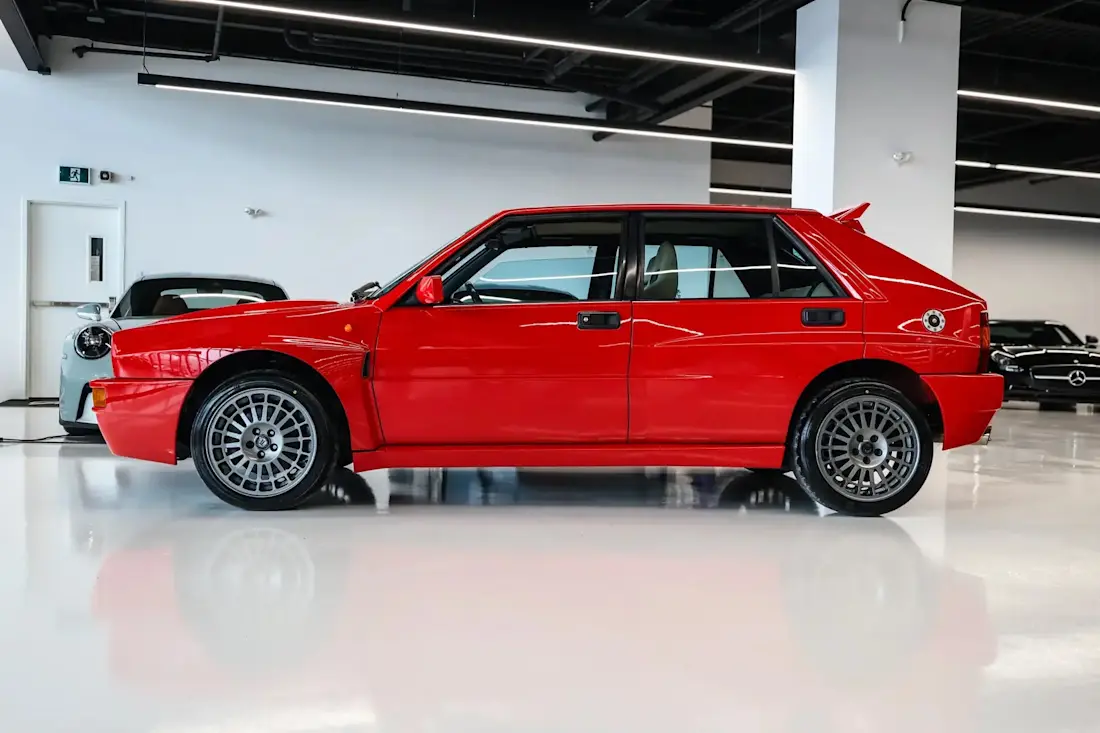
And it’s that very racing pedigree that makes the Delta’s highest trim levels arguably the most desirable hot hatches on the planet.
It’s why an example like this 1995 Lancia Delta HF Integrale Evoluzione II can now command an asking price of $189,999 CAD.
By the mid-1980s, Lancia, which had formally dominated European rally racing with its flagship Stratos, was struggling to compete with Audi, which had just recently had the bright idea to fit four-wheel-drive to a compact car platform (this is despite the fact that Lancia actually won the 1983 WRC champion, but they would be the last rear-wheel-drive car ever to do so).
Lancia’s answer came in the form of the Delta, which had been born with four-wheel independent suspension. It was originally homologated as the S4 Stradale, which, in fact, shared very little (almost nothing) in common with the street version of the Delta. It was mid-engined, both turbocharged and supercharged, and had a habit of crashing into crowds.
It was actually the S4 Stradale that ended the infamous WRC Group B rally series altogether after a deadly crash in 1986. Teams entering the 1987 competition year would have to compete in Group A, which meant vehicles had to be based on street cars.
Luckily, however, Lancia had just updated the street version of the Delta with a more powerful, repositioned engine and four-wheel drive, giving birth to the Delta HF 4WD (HF stands for High Fidelity — a club for the brand’s best customers that dates back to the 1960s — sort of like Mopar’s Scat Pack).
Despite not being conceived with rally ambitions, the Delta HF 4WD amazingly won its first rally, and then the entire 1987 WRC season. Spurred on, Lancia teamed with Abarth to create the Delta Integrale, now with the explicit intention of rally racing.
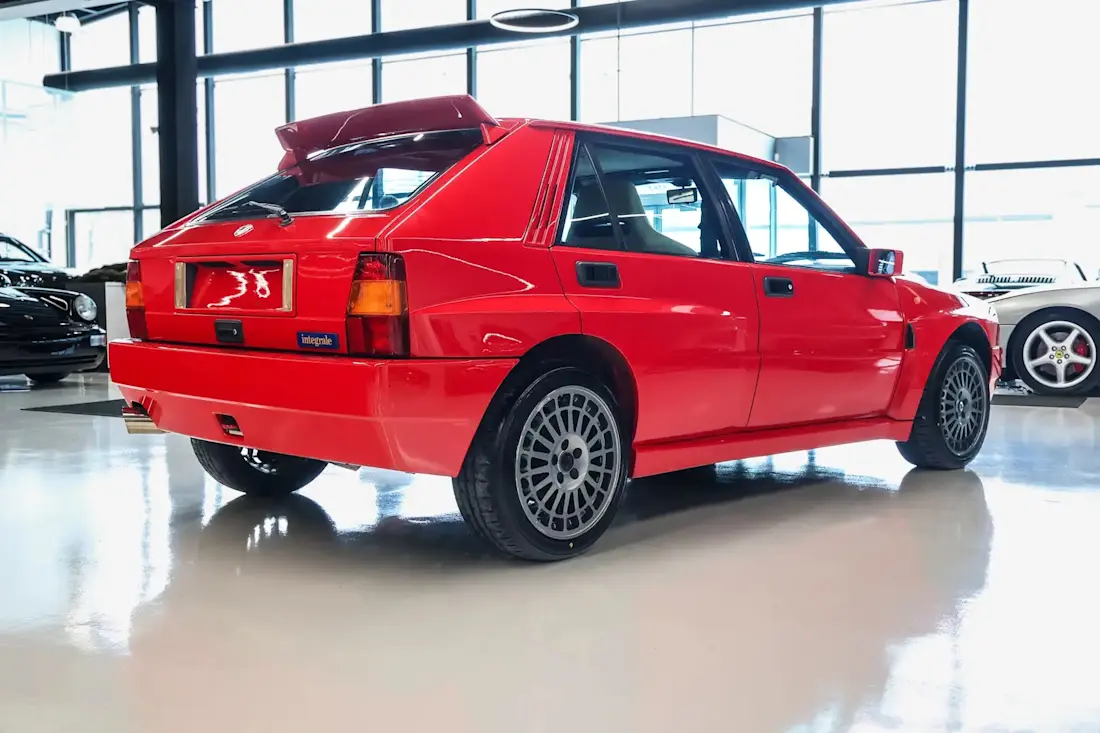
This engineering ambition eventually led to the Integrale Evoluzione — with its massive boxed fender flares to accommodate wider tires and welded-in shock tower extensions to increase suspension travel.
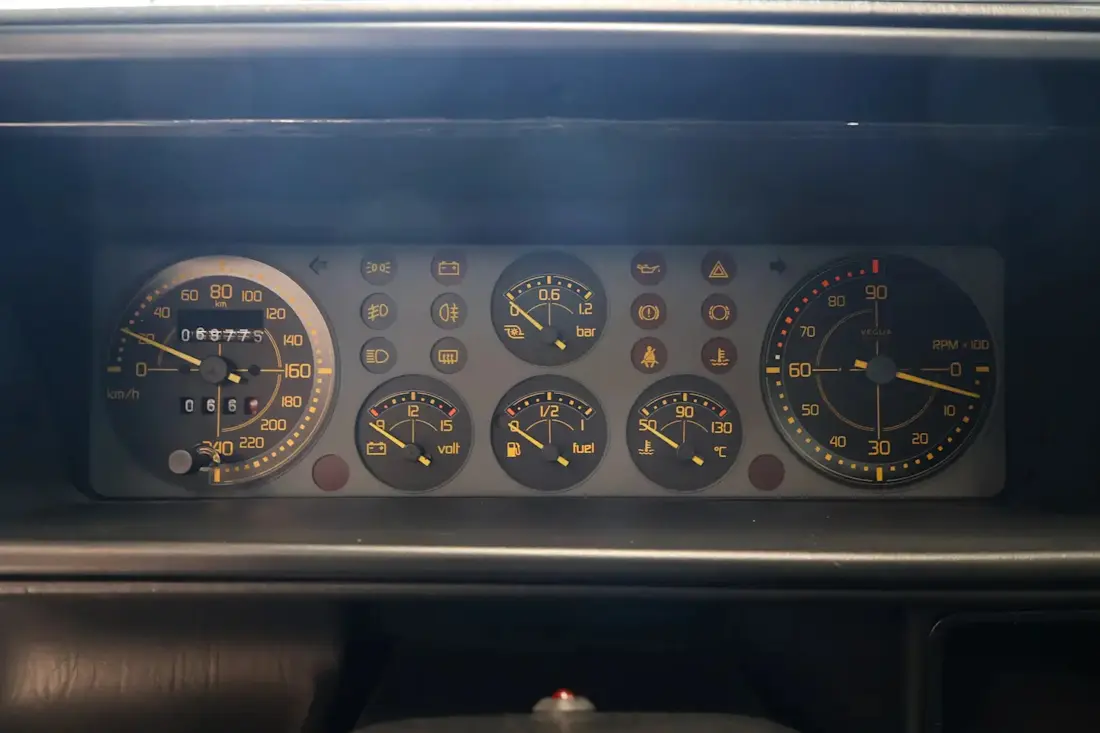
Inside, there are Recaro rally-style racing seats, a Momo Corse sports steering wheel, a very trick shift knob, and what are perhaps the coolest-looking gauges of all time with their crosshair motif. But perhaps the most satisfying “racecar for the road” touch on the Integrale Evoluzione is a locking gas cap, which is unlocked and removed with the key.
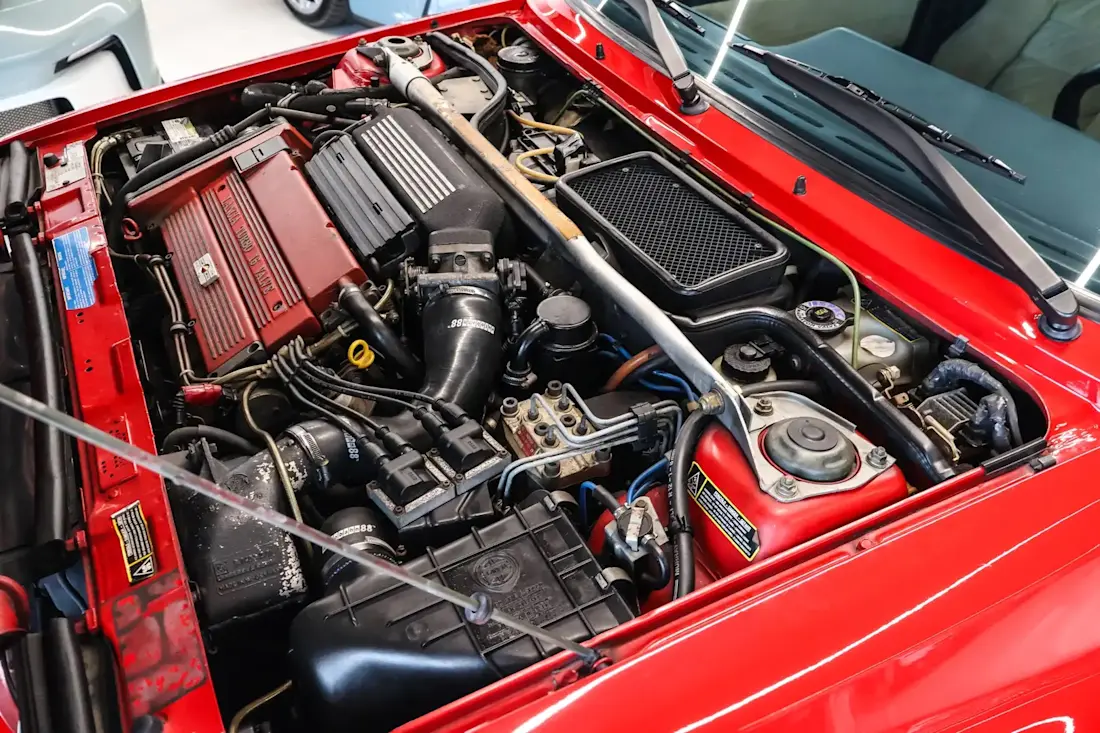
Under the hood is a slanted 2.0L 16-valve turbocharged inline-four rated at 215 hp and 232 lb-ft of torque. This is thanks to the Evoluzione II’s improved multi-port injection, Garrett turbocharger, and ECU tuning. Common consensus is the zero-to-100-km/h time is somewhere in the 5.7-second range, which is pretty respectable even by modern standards, but in 1995 was about on par with the contemporary Corvette.
There are many special editions of the Delta Integrale. The Martini 5 for the Evoluzione I and the Dealers Collection and Edizione Finale for the Evoluzione II would be commonly cited.
This example for sale on AutoTrader through Motorcarlease in Montreal, Que., is just a straight-up Evolution II finished in Rosso Monza red paint with the obligatory beige Alcantara interior. ABS, fog lamps, and even the Recaro seats were all standard on the Evoluzione II in 1995, and so the only option was for air conditioning, which this car has.
It has only ever driven 69,775 km in 30 years.
So, yes, it’s a little difficult to wrap your head around shelling out $200,000 for a European five-door hatchback with less horsepower than a Hyundai Santa Fe. But it’s not so difficult to understand where that asking price comes from when you consider the history, the pedigree, the engineering, the rarity, and the cold hard fact that the Delta Integrale will probably forever be cited as the greatest vehicle in its class ever, of all time.
It is what the kids would call “peak.” It is what every hothatch that will ever be will aspire to be.

All Articles
See all
Own the Road with AutoTrader, Episode 118: The Backlash Against Touchscreens and Return to Buttons
Safer, easier to use, and better looking, buttons are making a comeback.

Planes, Trains and (Electric) Automobiles: A Race to Determine the Pros and Cons of Each
Discovering the best way from Toronto to Quebec City with the Subaru Uncharted.
 Jeff Wilson

AutoTrader Find of the Week: 2004 Porsche Cayenne Turbo is the Cure For Boring
For when practicality doesn’t interfere with fun.
Chris D’Alessandro