
AutoTrader Find of the Week: 1970 Mercury Cougar is One of One
 Chris D’Alessandro


In today’s market, you’d be forgiven for thinking you’re likely priced out of the classic muscle car scene.
Never mind halo rarities like Shelby Mustangs, Hemi Mopars, and COPO Chevrolets. Even lesser trim levels of the most well-known nameplates regularly track near six-digit price tags.
However, there are several lesser-known models from the golden age of muscle that can still be had for about what you’d expect to pay for a new(ish) Dodge Challenger Scat Pack.
Ford Torinos, Chevrolet Chevelles, Novas, Monte Carlos, and even some Mopars like the Plymouth Roadrunner can be had in decent condition for around $50,000. While these might be names regularly checked by classic muscle enthusiasts, they’re not really on the radar of car enthusiasts in the way the Mustang, Camaro, Charger, and Challenger are. And because of their trivial obscurity, there are savings to be had.
How far could you stretch that $50,000 on a less frequently namechecked classic muscle car?
I think this 1970 Mercury Cougar XR-7 currently for sale on AutoTrader in Maple Ridge, B.C., answers that question nicely.
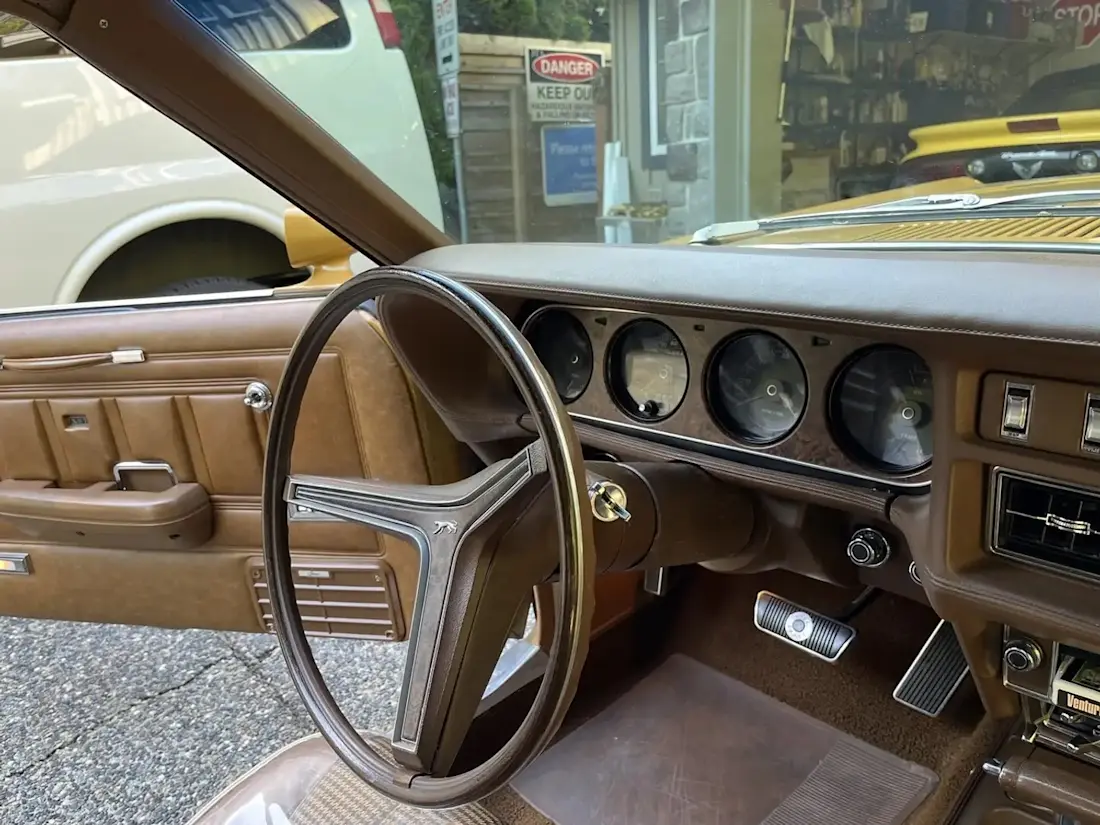
It hasn’t gone through a big restoration like you see on Barrett-Jackson, nor is it some tricked-out restomod. It’s what you would call a “survivor.” Despite being completely unrestored and, as the owner describes, still possessing every original “wire, hose, nut and bolt,” it is somehow rust-free. Heck, the owner even has the original factory tires.
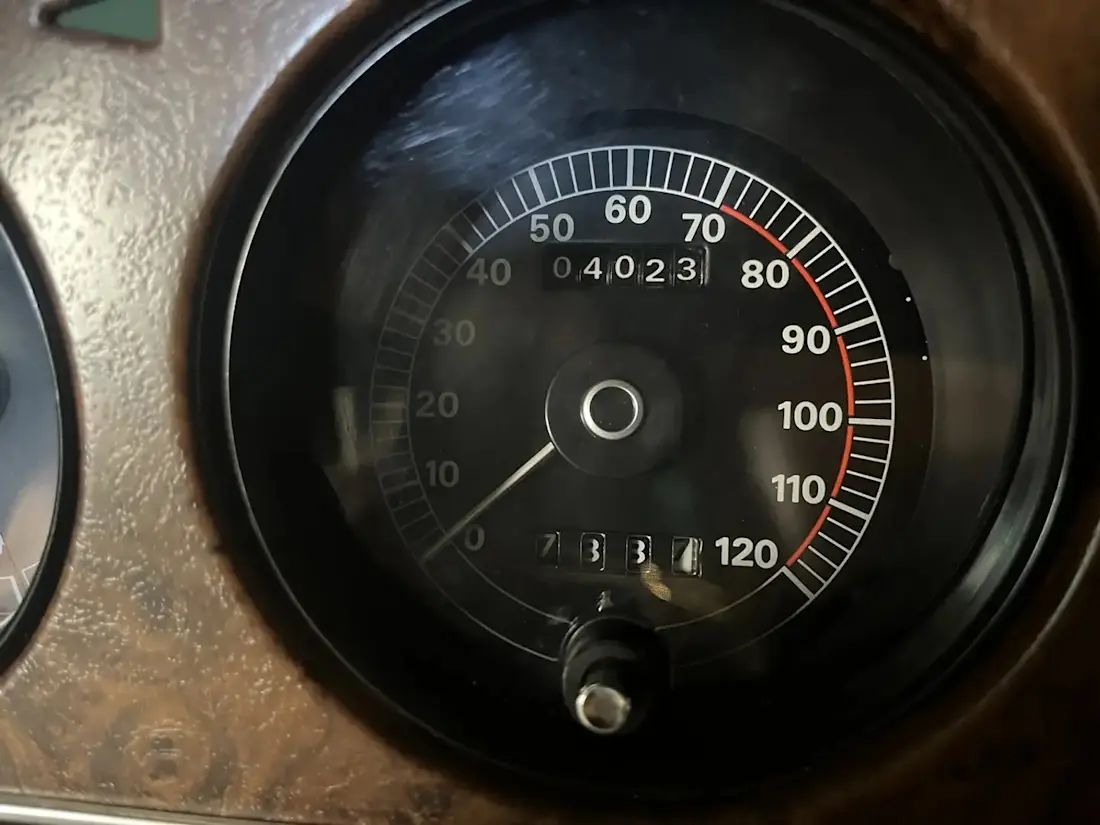
How has this almost six-decade-old vehicle managed to be so well-preserved? Perhaps because this is a one-owner vehicle that has only ever driven less than 7,000 km in 56 years.
Happily, though, you’ll see this Cougar isn’t completely free from some light road grime patina. It’s a driver. And it’s clues like this that let you know the car was never mucked with from its original spec.
But more impressive than this Cougar’s time-capsule-like state is that it truly is the only one of its kind. A “Marti Report” provided by the owner outlines this specific car’s rarity.
A quick glance at the VIN 0F93H547554 will confirm that this is a 1970 (0) Dearborn, Mich.-assembled (F) Mercury Cougar XR-7 (93) with a 351-cubic-inch V8 engine (H).
However, of the 72,365 Mercury Cougars assembled for the 1970 model year, this one, unit #47554, is unique. It is the only 1970 Mercury Cougar XR-7 with an automatic transmission, finished in Deep Gold Metallic paint with “Medium Brown Houndstooth Cloth Bucket Seats,” optioned with wire wheel covers, a brown vinyl roof, and power side windows.
Believe it or not, it’s the power side windows that were the rarest option.
Clearly, the original owner bought this vehicle for all the reasons one would have purchased a Mercury Cougar in 1970: to have a more upscale, luxurious version of its sister car, the Ford Mustang.
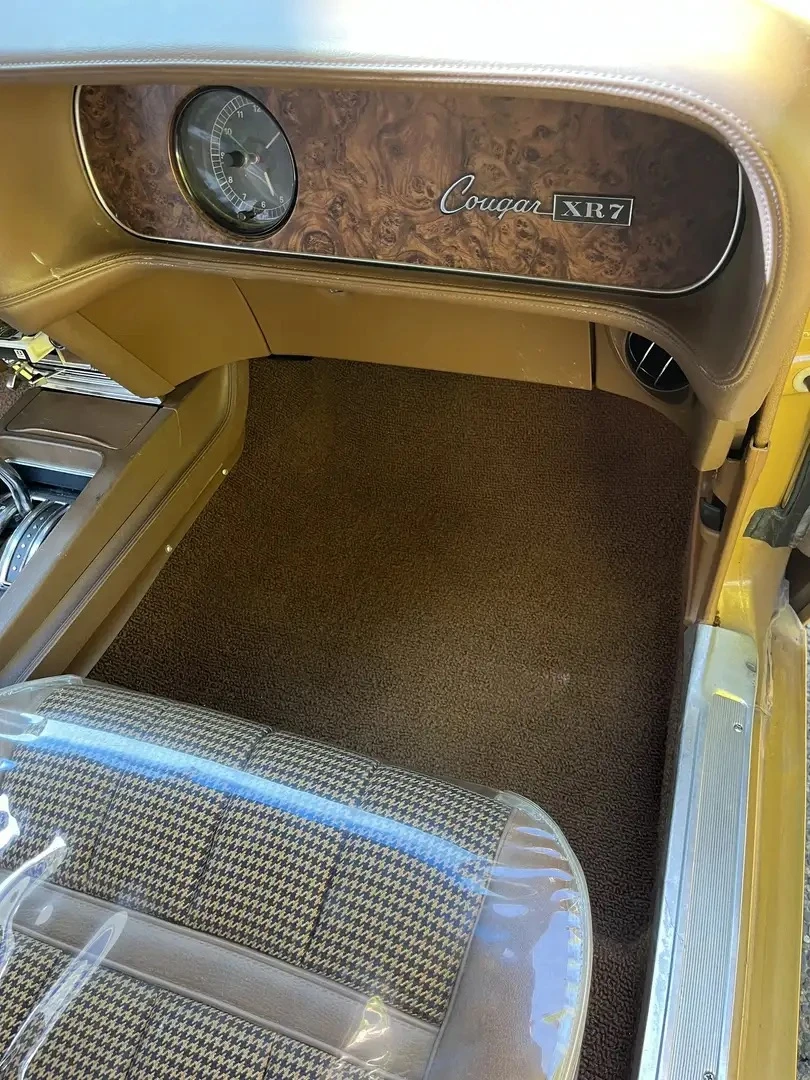
Conceived simultaneously and on the same Ford Falcon-derived unibody “compact chassis” architecture as the Mustang, the Cougar spun off early in development from the “T-5” code-named Mustang project into its own “T-7” internal designation, and was eventually launched alongside the revised 1967 Mustang. The goal was two-fold. First, to ensure Lincoln-Mercury dealers had an answer to the Mustang, and second, to create yet another new segment to sit between pony and luxury vehicles.
The Cougar was positioned to fit squarely between the Mustang and Thunderbird in terms of Ford’s “sports car” offerings. While the base price of the Cougar was reportedly $285 USD more expensive than the base Mustang, the highest trim level, XR-7, came in at the same price as a base Thunderbird.
The market positioning and value offering were a success, as in 1967, Cougar sales accounted for 45 per cent of all Lincoln-Mercury sales, and Motor Trend even named it Car of the Year.
The Cougar would go on to have a respectable career in Trans-Am series racing with famous drivers behind the wheel, such as Dan Gurney and Parnelli Jones, as well as a short stint in NASCAR Grand American racing.
While the first-gen Cougar was available in a variety of trim levels, including its own Boss 302 version (just like the Mustang, a salute to its Trans-Am presence) and 428 Cobra Jet-powered “Eliminator,” this 1970 model in question is an XR-7 with the 351 cu-in “Windsor” V8, rated at 250 horsepower.
Of course, a simple carb upgrade and tune was enough to add another 50 horsepower to the ol’ Windsor engine. But if you did that, this car wouldn’t be original anymore, would it?
Sure, it’s not a performance monster by today’s standards. But that’s not why you get into classic muscle cars. At least not these days, anyway.
You get into them to experience some more analogue and rawness.
It’s easy to write off such trite buzzwords when you’re being asked to shell out house down payments for a vehicle conceived at the height of planned obsolescence. But, if you can have one that’s essentially brand new for the same price as a modern-day equivalent? That offer is much more appealing.
And did we mention it’s the only of its kind?

All Articles
See all
Own the Road with AutoTrader, Episode 118: The Backlash Against Touchscreens and Return to Buttons
Safer, easier to use, and better looking, buttons are making a comeback.

Planes, Trains and (Electric) Automobiles: A Race to Determine the Pros and Cons of Each
Discovering the best way from Toronto to Quebec City with the Subaru Uncharted.
 Jeff Wilson

AutoTrader Find of the Week: 2004 Porsche Cayenne Turbo is the Cure For Boring
For when practicality doesn’t interfere with fun.
Chris D’Alessandro