
7 Greatest Automotive Collaborations on a Single Model
 Michael Karant


It's uncommon for two automakers to collaborate on creating a single model. When companies team up, they usually do so for more extensive collaborations across multiple models, resulting in a longer and more financially sustainable partnership. Most automotive partnerships are fiscally motivated, but others are much deeper and emotional.
Individual model collaborations with two seemingly mismatched brands coming together to create something special are quite rare, and in some cases, a little weird. Here are the seven greatest models to come from these oddly paired automakers collaborating.
1. Mercedes-McLaren SLR
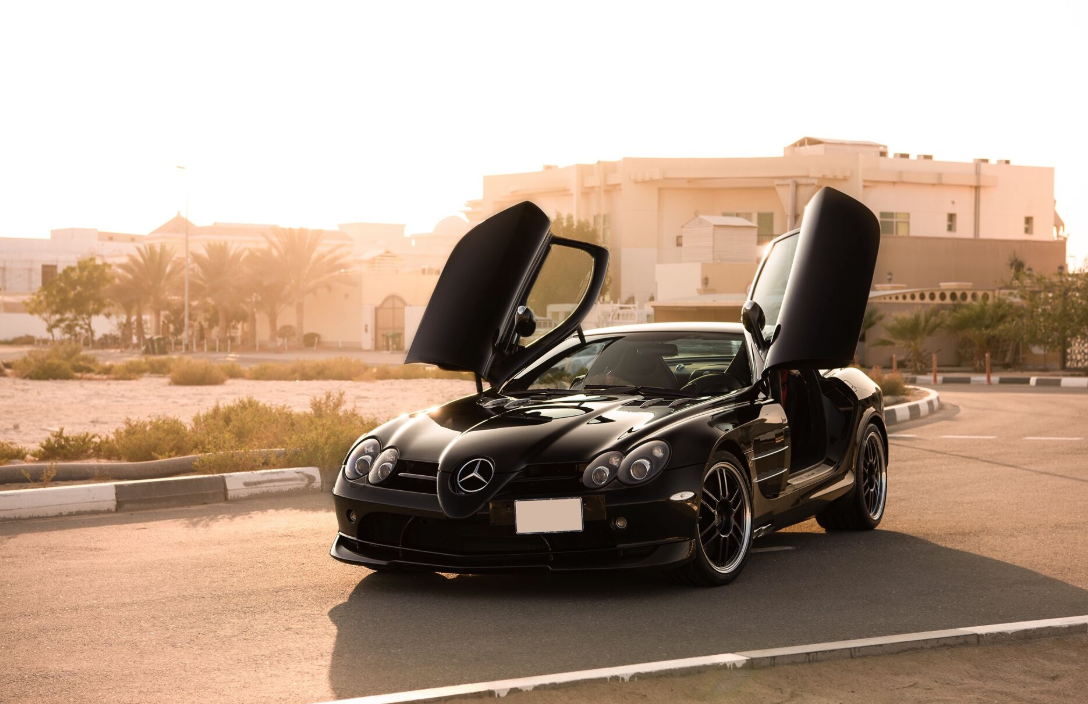
The Mercedes-McLaren SLR is one of the few cars that bear the name of two automakers. The project came about when Mercedes acquired a small stake in the McLaren F1 team in the early 2000s. Back then, McLaren wasn’t known as a producer of road cars; its only road car at the time was the world speed-record-breaking McLaren F1.
The SLR was a very different project compared to the F1. It was intended to revive the SLR coupe name from the 1950s. Mercedes wanted it to be the brand’s flagship, rivalling industry giants like Ferrari, Lamborghini, and Aston Martin. However, Mercedes didn’t want the SLR to be another soft highway cruiser. To add the needed performance edge, McLaren was responsible for the engineering of the SLR and placed the 617-hp supercharged V8 behind the front axle, making the SLR a front-mid-engined car for ideal weight distribution. The final product was truly special. The SLR debuted as Mercedes’ flagship supercar, with magazines comparing it to the Ferrari Enzo and Porsche Carrera GT.
2. Audi RS 2: Audi and Porsche
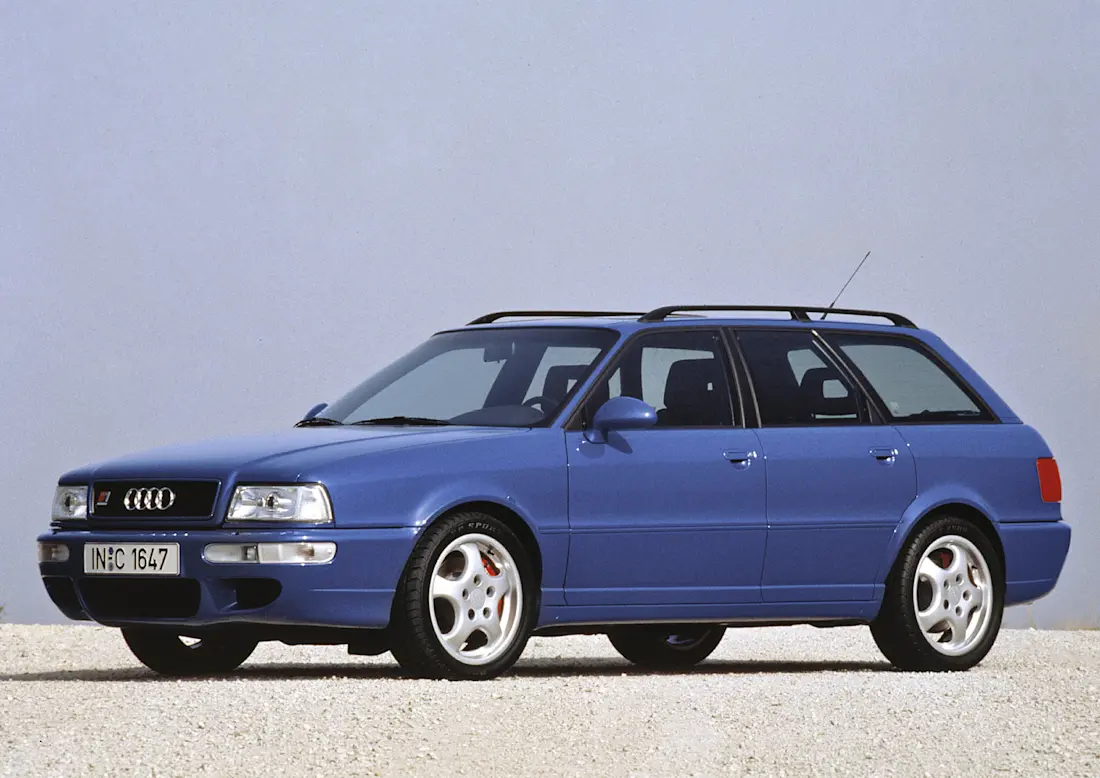
Audi’s RS division makes some of the best performance sedans on the market, however, its origins and success are largely credited to Porsche, as without the renowned automaker, the Audi RS line may not exist. Nowadays, this may not seem like an odd collab, as Porsche and Audi are both part of the larger Volkswagen Group, however, when the RS2 was released in 1994, Porsche was an independent brand. Audi partnered with Porsche to build a high-performance model to better compete with BMW and Mercedes, which already had well-established performance divisions.
The RS 2 was based on the Audi 80 wagon, the predecessor to the Audi A4. To make the RS2, Porsche heavily reworked Audi’s standard 2.2-litre inline five-cylinder by modifying the exhaust, camshafts, fuel injectors, intercooler, and engine control unit. The result was an increased power output from 133 hp to an impressive 311 hp. The RS 2 also received Porsche brakes and wheels, with its original branding still present. Its side mirrors were plucked directly from the Porsche 911. Additionally, the RS2 was built at the Porsche factory right after the Mercedes-Benz 500E ended production there, making it a true Porsche sedan.
3. Toyota Matrix/Pontiac Vibe: Toyota and General Motors
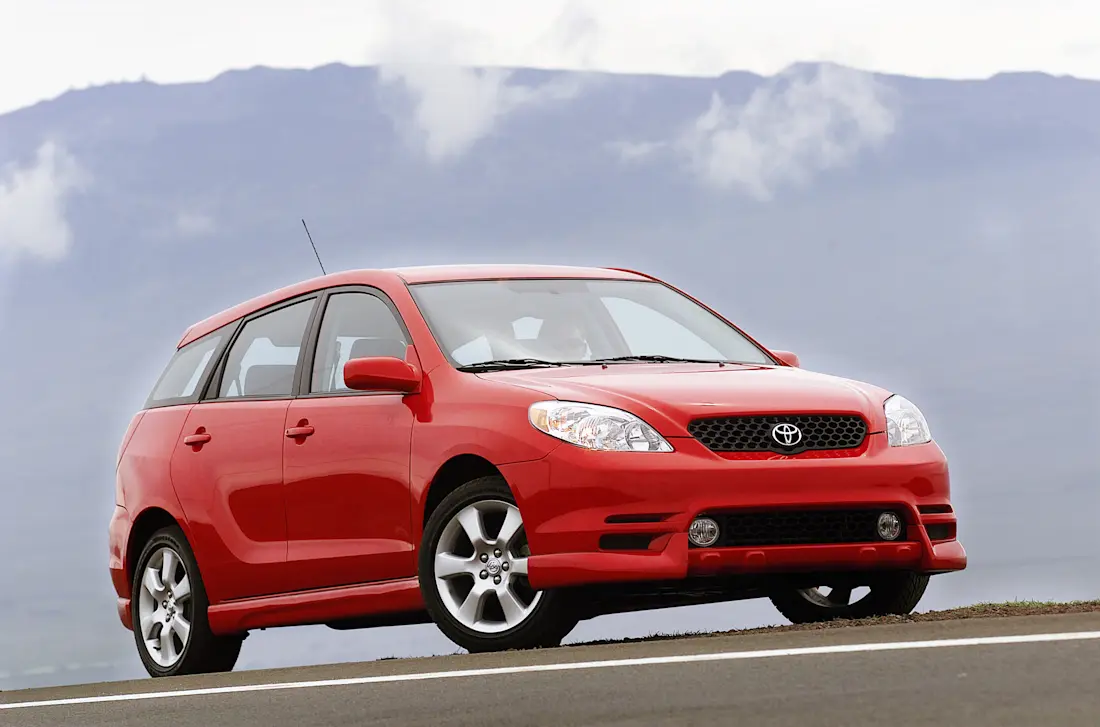
No one ever said that the result of a great collaboration had to be a fast performance car; after all, some of the greatest cars are the ones that are good at getting you from A to B. That's exactly what the Toyota Matrix and Pontiac Vibe did. These two models came from Toyota and General Motors’ partnership created in the 1980s. This collaboration focused on selling compact models in North America, with GM bringing the name recognition and Toyota bringing its reputation for reliability. The Matrix and Vibe were the last models to come from the relationship, and while both are pretty unexceptional, run-of-the-mill economy cars, that’s what made them great.
Both compact cars had plenty of interior space and headroom that made them feel larger than they actually were. There were also some solid performance models offered, particularly the XRS trim for the Matrix and GT model for the Vibe, which produced 180 hp, not a bad figure in such a small, lightweight car. All-wheel drive (AWD) was also an option, meaning the little hatch could do just about anything you asked of it. Years after production halted, it's not rare to see both models still driving on Canadian roads, as they have proved extremely reliable, making them excellent used purchases.
4. Toyota Supra/BMW Z4
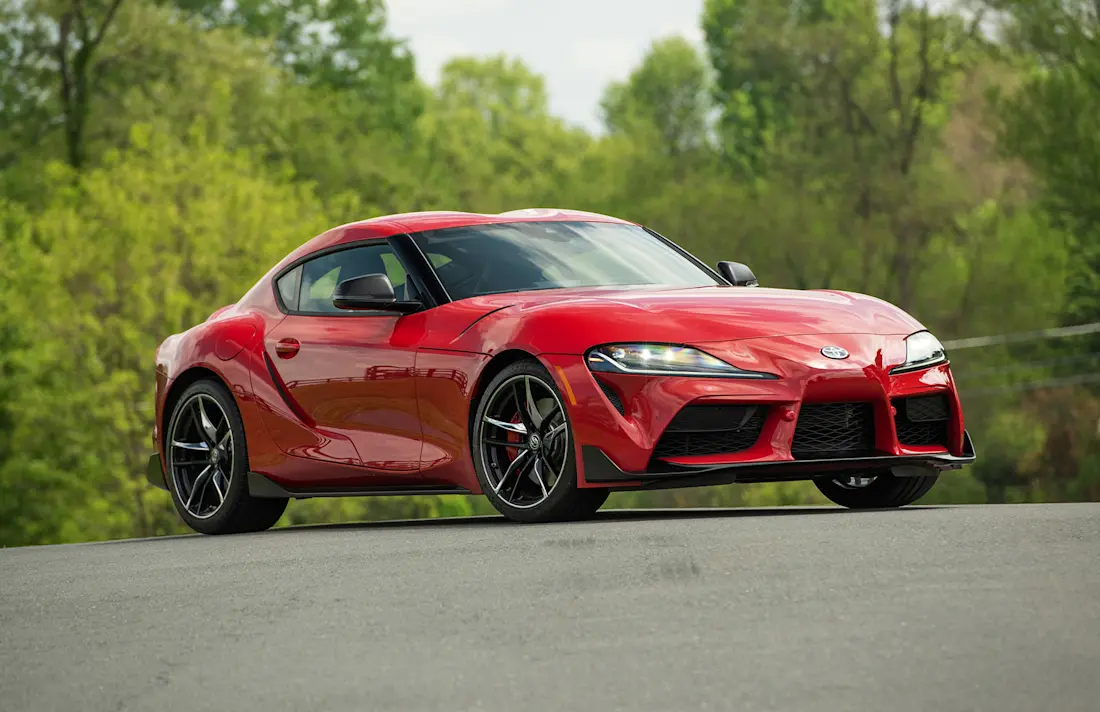
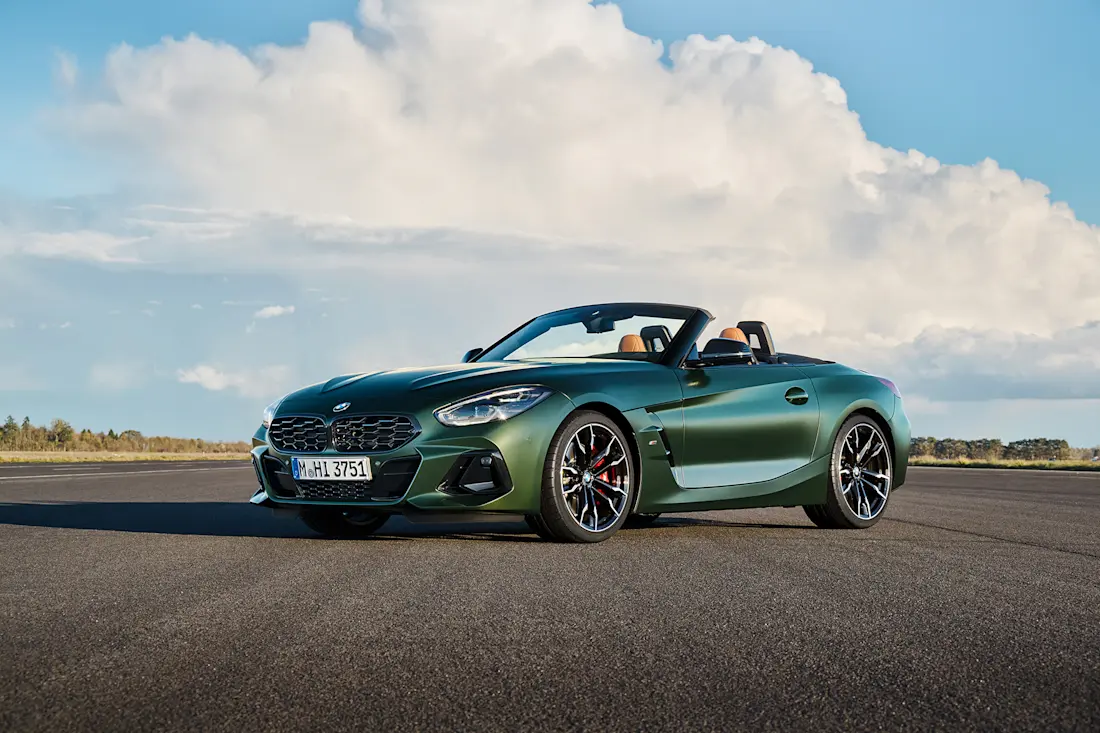
After a 20-year-long hiatus, Toyota revived the legendary Supra name to a bit of criticism, because it would share a platform with the BMW Z4. In fact, BMW handled most of the new Supra’s engineering, from the engine to the transmission. The two cars were distinctly different on the outside, however. The BMW was exclusively a roadster, and the Supra only came as a coupe. The cars shared BMW’s B58 turbocharged inline-six engine producing 382 hp, which was fitting, as it's the same configuration you’d find in the beloved 1990s Supra. It also offered an entry-level turbocharged BMW four-cylinder producing 255 hp. While that may not sound that impressive, the lightweight sports car can accelerate from zero to 100 km/h in just five and a half seconds.
Initially, the new Supra was criticized for only being available with an eight-speed automatic; however, the classic six-speed manual became available from 2023 onwards, which received praise from many automotive enthusiasts. In a market increasingly shifting towards producing SUVs, two new sports car models sticking to a classic formula were a breath of fresh air. Both models have now concluded their production runs as of this year, ending two long-loved sports car lineages that spanned decades.
5. Aston Martin Cygnet: Aston Martin and Scion
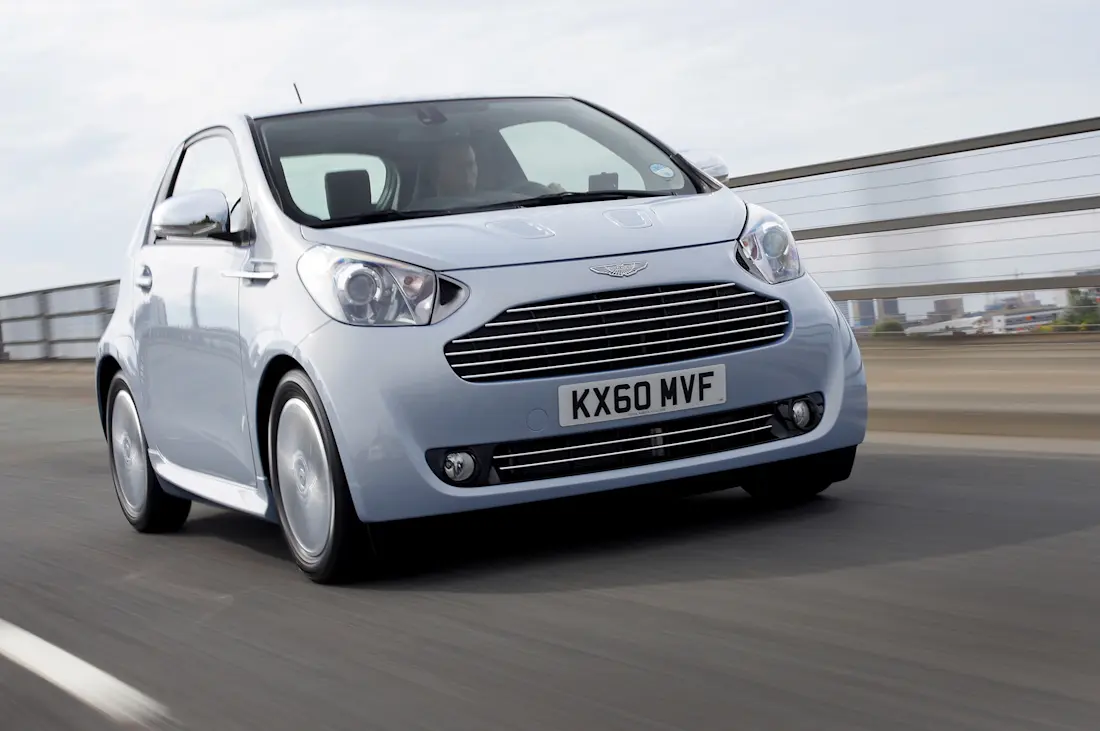
The sheer absurdity of the Aston Martin Cygnet is why it's great. This subcompact Aston Martin came about as a result of a European regulation requiring every automaker to achieve an average emission rating across its fleet, presenting a significant problem for the independent Aston Martin brand that made big V8 and V12 performance cars. As a result, Aston Martin reached out to Toyota for a city car, the smallest city car on offer, the Toyota/Scion IQ.
Aston Martin put its own branding on the tiny city car and revamped the interior. The result is one of the weirdest automotive rebadges ever, and by far the slowest and most ridiculous Aston Martin in history. That's what makes it so special; it's so absurd that you can’t help but love it, and the likelihood of something similar being created today is extremely low. Aston Martin also made one Cygnet with a 4.7-litre V8 from the Vantage, resulting in a 430-hp city car that's too stupid for its own good, and it sold for over $600,000 USD at auction last year.
6. Lotus Carlton
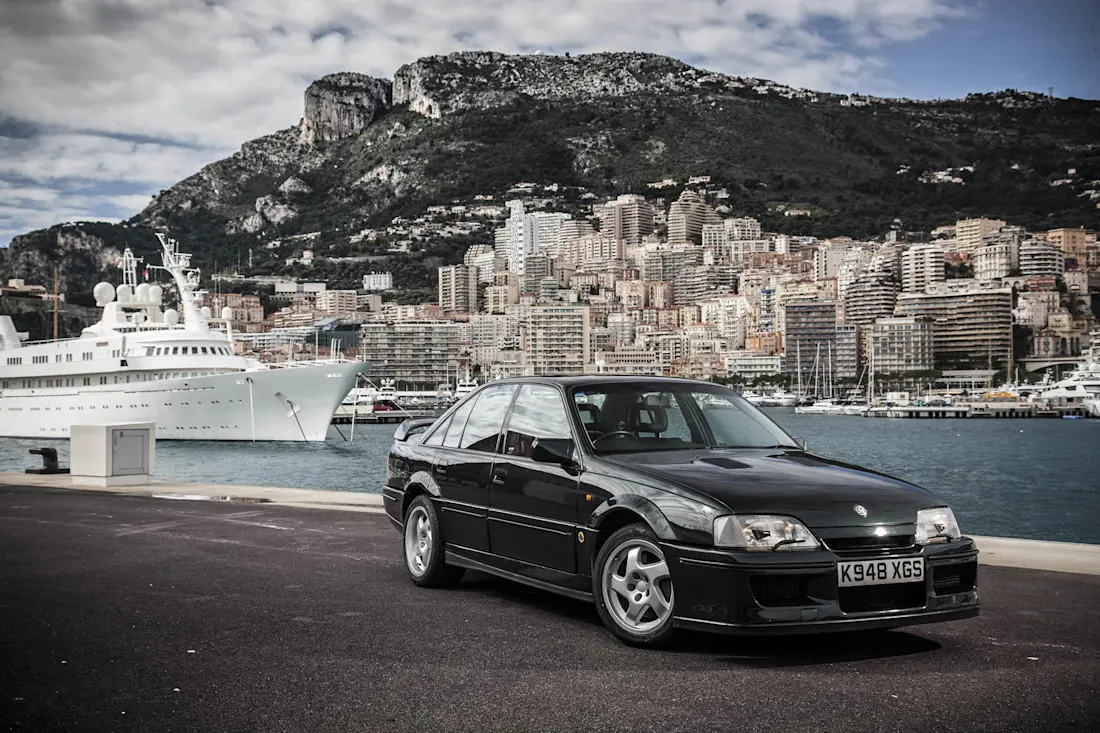
Some Canadians may not be aware of this car, as Lotus and Carlton aren’t necessarily household names on this side of the pond. The Vauxhall Carlton/Opel Omega were midsize family sedans sold under GM’s European divisions. Lotus has a long history of partnering with mainstream automakers to make their family sedans more special.
This is what happened with Carlton. Lotus took the 3.0L engine, upped the displacement to 3.6 litres, and added two turbochargers for good measure, resulting in 377 hp. Lotus also upgraded the transmission to one from a Corvette ZR1 to handle all the additional power. On the outside, the Carlton received a wider body kit, more aggressive bumpers, and hood vents that turned this family sedan into an angry racer. The result was the fastest four-door sedan at the time, capable of accelerating from zero to 100 km/h in just over five seconds and topping out at 283 km/h. It would take BMW and Mercedes over a decade to build a sedan that was faster than the Lotus. Only 950 units of this insane sleeper car were produced, making them very rare.
7. BMW M1 BMW and Lamborghini
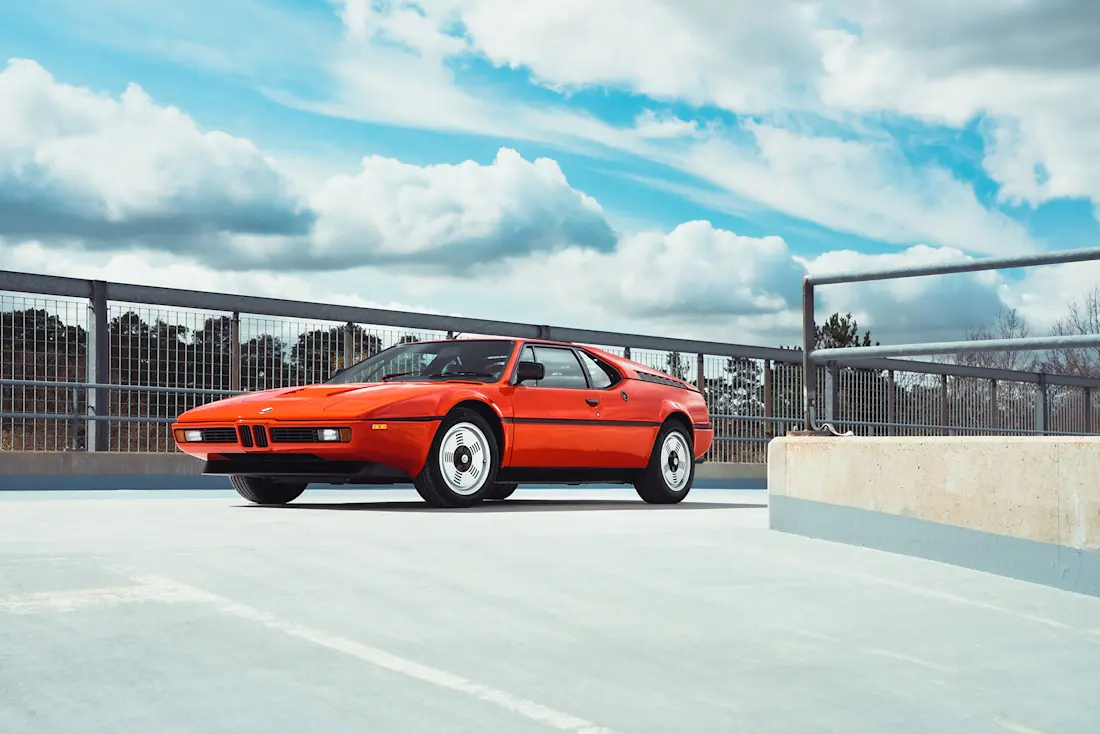
Despite BMW’s racing and performance heritage, the brand has never fully entered the world of supercars, with one exception. The BMW M1 was created to compete in Group 5 racing, which required 400 homologated road-going versions to be made to compete in the series. BMW was unable to fulfill the order, resulting in a partnership with Lamborghini to develop and build the road-going M1 models. Lamborghini was a good choice, as the brand was the innovator of the mid-engined supercar, releasing the Miura over a decade prior.
BMW opted for a naturally aspirated 3.5L inline six-cylinder engine producing 277 hp and 243 lb-ft of torque. While this may not seem like a lot today, this car came out in the late 1970s when even Corvettes and Ferraris produced just over 200 hp. Plus, the car weighed just 1,300 kg. Due to its racing origins, the BMW M1 wasn’t as luxurious as you’d expect a BMW to be, with a relatively stripped-back cloth and utilitarian leather interior, and some amenities tacked on for good measure. The M1 ended up being a legendary and iconic BMW and is highly collectible today. BMW also put the M1’s engine into the mid-size 5 Series sedan, creating the first M5.

All Articles
See all
Own the Road with AutoTrader, Episode 118: The Backlash Against Touchscreens and Return to Buttons
Safer, easier to use, and better looking, buttons are making a comeback.

Planes, Trains and (Electric) Automobiles: A Race to Determine the Pros and Cons of Each
Discovering the best way from Toronto to Quebec City with the Subaru Uncharted.
 Jeff Wilson

AutoTrader Find of the Week: 2004 Porsche Cayenne Turbo is the Cure For Boring
For when practicality doesn’t interfere with fun.
 Chris D’Alessandro