
7 Biggest Gas Guzzlers in Canada
 Chris Tsui


Despite crude oil being Canada’s top export by a considerable margin, prices at the pump have rarely been more painful than they are now. There’s no shortage of roundups online laying out the most fuel-efficient gas cars, the most affordable hybrids, or the best electric vehicles (EVs) you can buy, but this made us curious in the other direction.
What are Canada’s least fuel-efficient cars?
To give the numbers below some context, a regular gas crossover like, say, the Honda CR-V is rated for 7.8 L/100 km combined, while a compact hybrid such as the Toyota Prius is good for 4.8 L/100 km. The vehicles on this list are much, much thirstier.
They’re big, they’re powerful, they’re fast, and more than likely a combination of the three. Here are the seven least efficient cars of 2026, ranked by combined fuel economy according to Natural Resources Canada (NRCan) ratings.
7. Ferrari 12Cilindri Spider: 19.6 / 13.5 / 16.8 L/100 km city/highway/combined
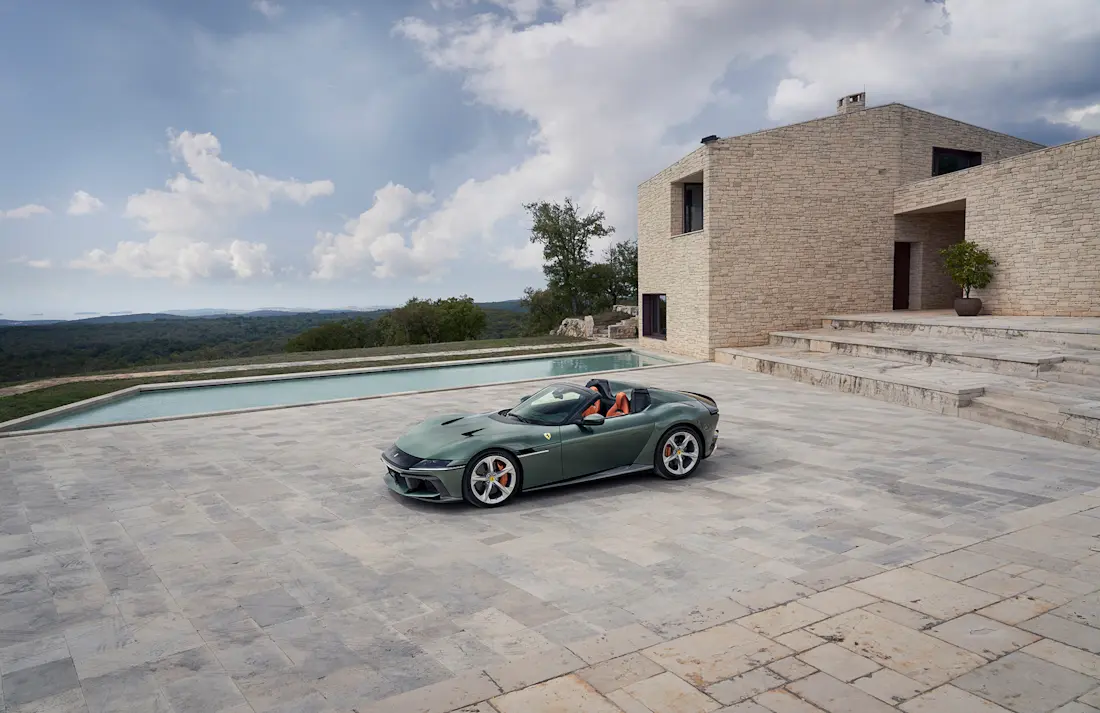
Kicking off the list of Canada’s least fuel-efficient cars is the monstrously fast and monstrously thirsty Ferrari 12Cilindri Spider. Able to gulp down 19.6 L/100 km in the city, 13.5 on the highway, and 16.8 combined, its 6.5L V12 makes 819 horsepower and can rev to a glorious 9,500 rpm.
Unlike its chief V12 rivals in the Lamborghini Revuelto and Aston Martin Vanquish, which are hybrid and turbocharged, respectively, Ferrari’s latest two-seat grand tourer goes about its business completely naturally aspirated. Interestingly, the 12Cilindri (pronounced dodici cilindri, by the way) ekes its way here in droptop Spider form only, as the lighter coupe actually gets 16.5 L/100 km instead of 16.8.
To be fair, it’s unlikely fuel economy is of much concern to the typical 12Cilindri driver. This car starts at about half a million dollars, but after options, fees, and taxes, the average example probably cost its wealthy owner closer to $1 million. A reasonable price to pay, perhaps, for a car that we once declared “makes you feel superhuman in a way its rivals can’t quite match.” Apparently, it’ll also enrich your local gas station in a way its rivals can’t quite match, either.
6. Jeep Wrangler 392: 18.7 / 14.5 / 16.8 L/100 km city/highway/combined
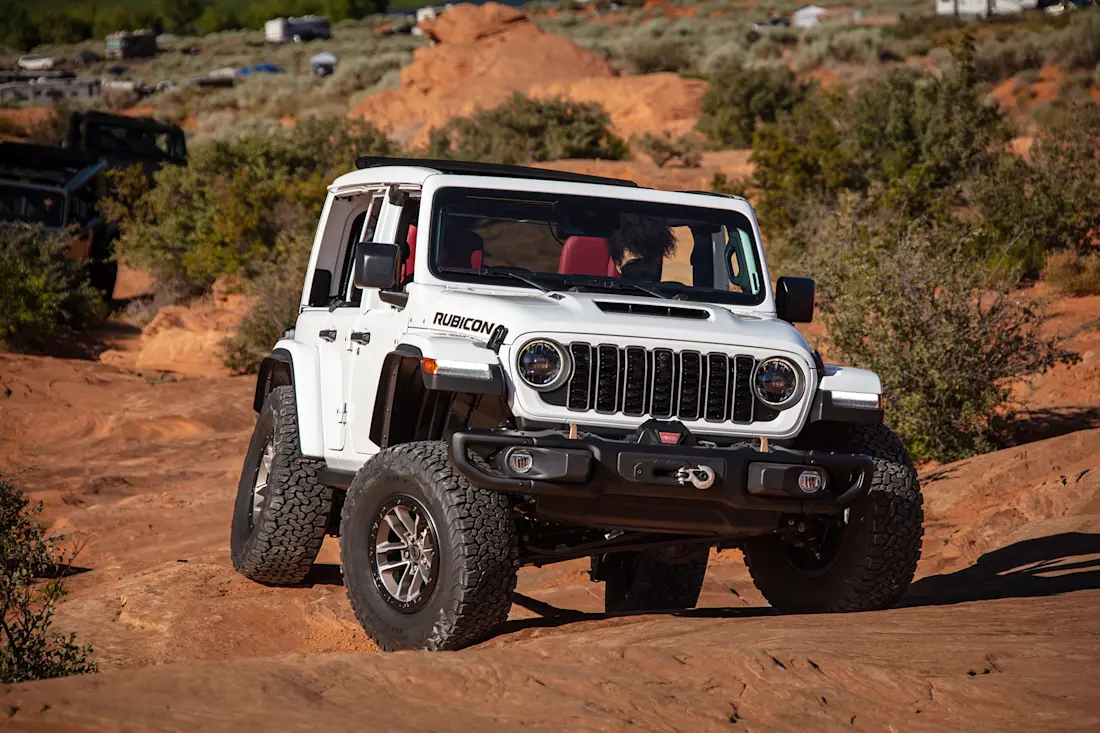
Don’t worry, it’s not exotic unobtanium all the way down this list because coming in sixth is the Jeep Wrangler 392. This is Jeep’s famously boxy off-roader but equipped with a 6.4L Hemi V8 that makes 470 horsepower and gets 18.7 L/100 km in the city, 14.5 on the highway, and 16.8 combined.
Why does an off-roader like the Wrangler need a V8, you ask? Factual answer: It doesn’t. Real answer: If you have to ask, this car isn’t for you. Rather, the Jeep we once called “the best worst decision ever” was clearly made to appease those who believe that any car would be improved if it had a V8. And in terms of noise and sheer ability to turn fuel into ridiculous, savage, “kick-in-the-pants” power, they might have a point there.
The Hemi Wrangler is available for 2026 as either the $102,890 Rubicon Moab 392 or the $98,890 Willys 392, which Jeep says is a price cut of more than $20,000 compared to last year. That’s terrible news for anybody who bought a 2025 model at or near sticker, but stellar for anybody who was still saving up for one — perhaps now you’ll have enough to get the car and set up a special fuel fund to go with it.
5. Dodge Durango SRT Hellcat: 20.5 / 13.8 / 17.4 L/100 km city/highway/combined
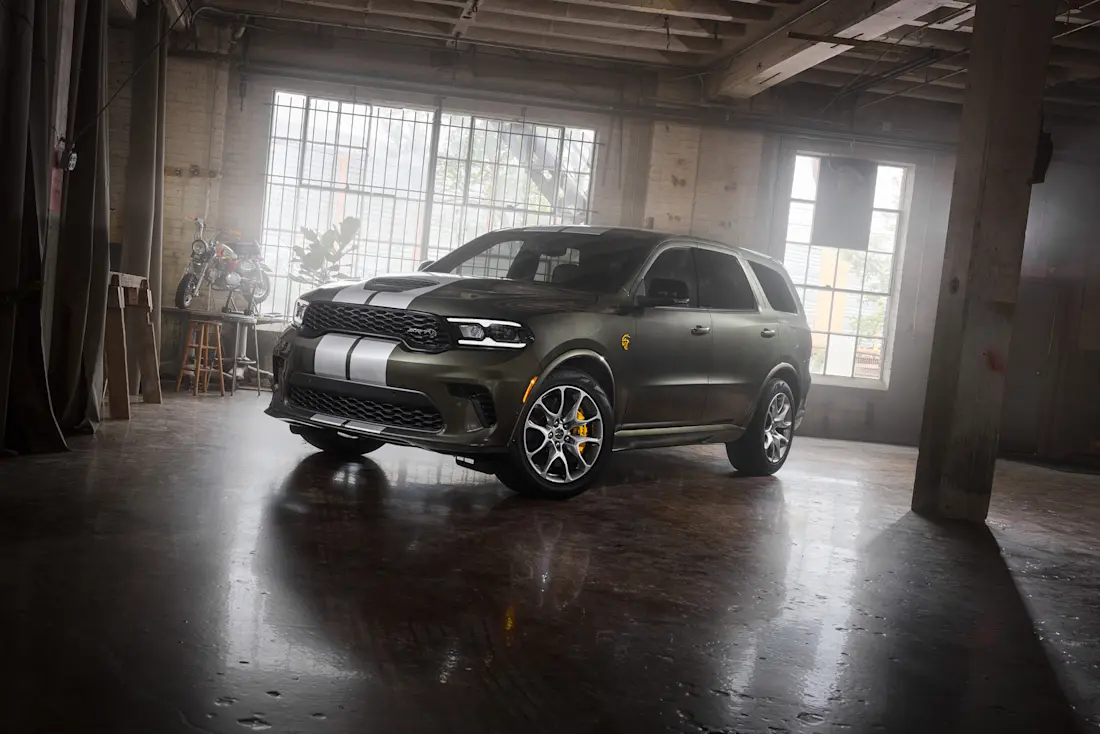
In fifth place is the Dodge Durango SRT Hellcat. Powered by a 6.2L supercharged Hemi V8 making 710 horsepower, it’s rated for 20.5 L/100 km in the city, 13.8 on the highway, and 17.4 combined. The last time we reviewed this car, by the way, we observed a “rather sobering” 22.8 L/100 km.
The Durango Hellcat is the car that people who drove the old Challenger and Charger Hellcat buy when they have kids and use it as an excuse to somehow spend even more of their monthly budget on gas. It may have three rows of seats and wouldn’t look totally out of place in a school pickup line, but it can get from zero to 100 km/h in just 3.6 seconds and also wake up the entire neighbourhood in the process.
Per Dodge’s website, the Hellcat Durango starts at around $130,000 after a cash discount and is only available as a “Jailbreak” model for 2026. We’re not exactly sure what crimes Durango Hellcat owners are committing to land themselves in jail so often, but given how thirsty their cars are, fuel theft is a good guess.
4. Cadillac Escalade-V: 20.8 / 13.8 / 17.7 L/100 km city/highway/combined
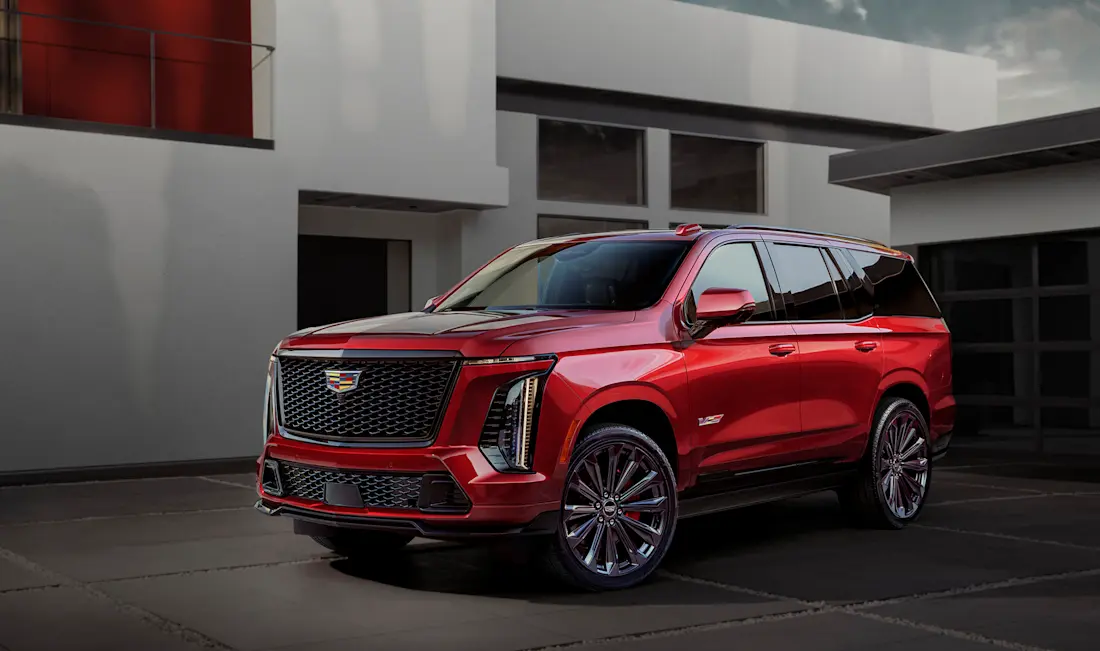
If a supercharged Durango isn’t inefficient enough for your taste, Cadillac’s rendition of the big, fast SUV has got you covered. Sitting in fourth place is the Escalade-V, GM’s high-performance version of its biggest, cushiest, most luxurious SUV.
Powered by a 6.2L supercharged LT4 V8 making 682 horsepower (the same engine found in the CT5-V Blackwing and previous-generation Corvette Z06), the Escalade-V gets 20.8 L/100 km city, 13.8 highway, 17.7 combined, and from zero to 96 km/h in 4.4 seconds.
That means it’ll still probably lose a drag race against the Durango Hellcat despite drinking more fuel — all that leather, chrome, screen, and hubris isn’t exactly lightweight. To put its curb weight of 2,885 kg into context, the Escalade-V is more than double the weight of Chevrolet’s compact Trax crossover. Starting at $213,999 including destination, it’s about seven times the price of that car, which is also probably proportional to how much more often you’ll be visiting the gas station.
3. Ferrari Purosangue: 22.0 / 15.3 / 19.0 L/100 km city/highway/combined
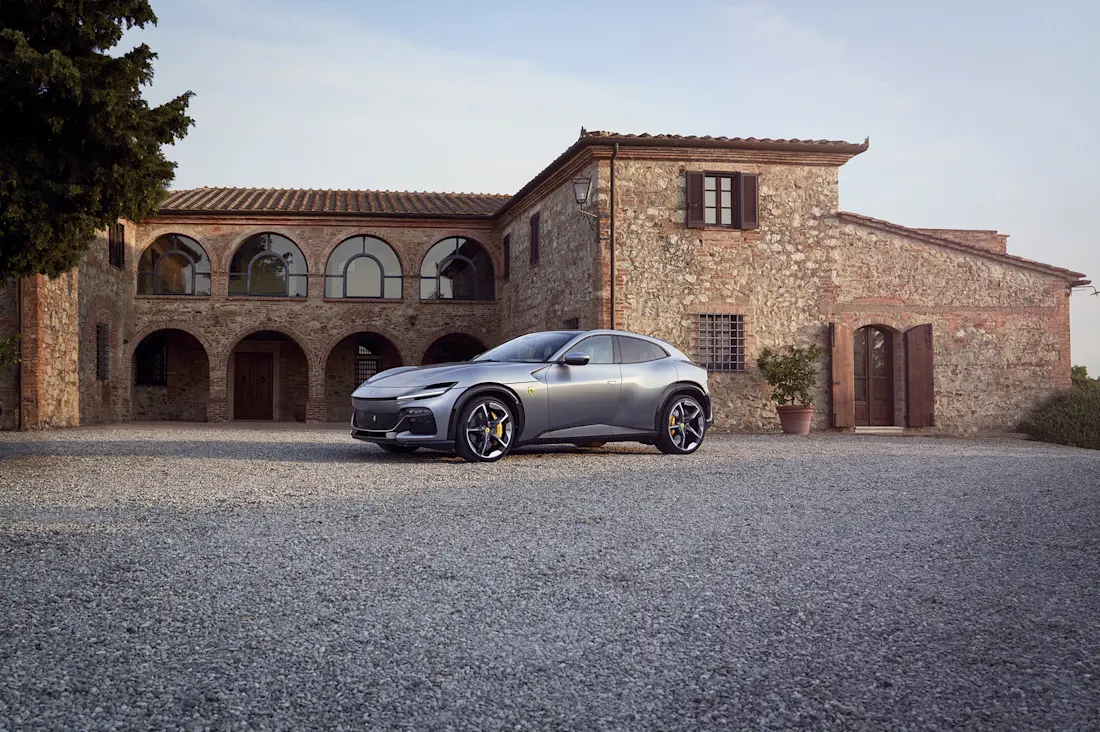
Sneaking in a podium finish in third is the Ferrari Purosangue, Ferrari’s crossover SUV that uses a version of the same 6.5L V12 found in the 12Cilindri detuned to 715 horsepower. Here, it’s rated for 22.0 L/100 km in the city, 15.3 on the highway, and 19.0 combined.
The first-ever production Ferrari to ship with four doors (the two in the back are rear-hinged), the Purosangue is the car you take to Costco if your name happens to start with Charles and ends in Leclerc — Lewis has not done his own shopping in years, I’m told.
Purosangue, by the way, is Italian for “thoroughbred” or “pure blood,” which always felt like more of a pre-defensive PR play rather than a creative one. Almost as if the suits in Maranello saw the “not a real Ferrari” comments coming and decided to rebut them preemptively with the name. Might as well have called it the Ferrari Legittimo. Real Ferrari or not, given the Purosangue starts at more than half a million dollars and its place on this list, it’ll definitely drain one’s wallet like a real Ferrari should.
2. Ford Mustang GTD: 23.5 / 13.9 / 19.2 L/100 km city/highway/combined
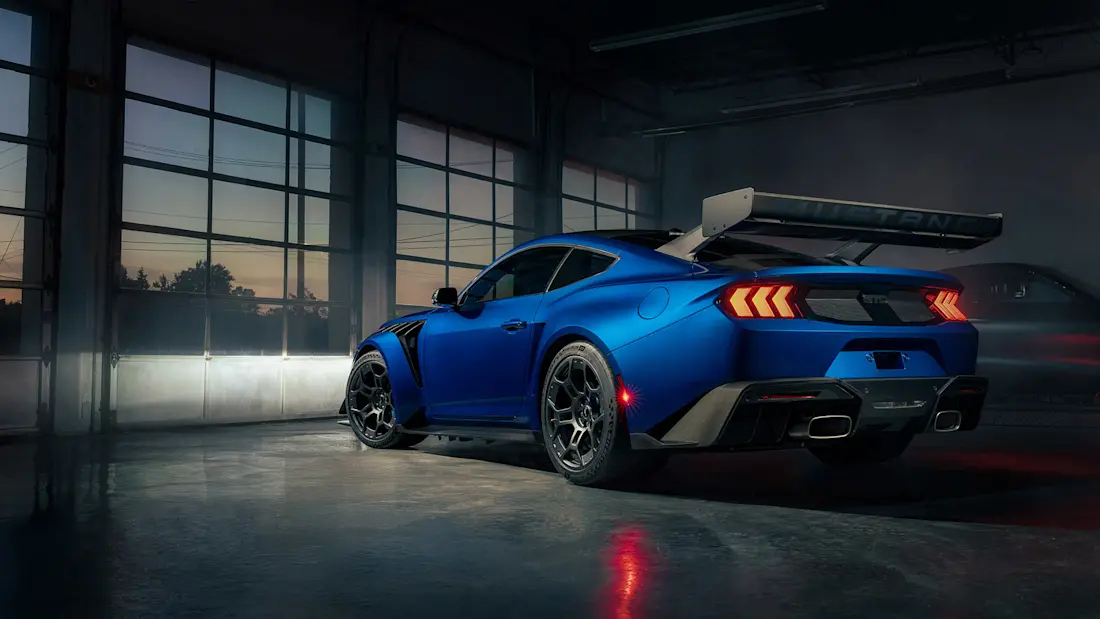
This is famously not the first time Ford has pulled a 1-2 finish ahead of Ferrari, but taking home the silver is the Mustang GTD. Barely mechanically related to the Mustang you might see being a bit too loud at your local SmartCentre, it’s essentially a street-legal version of Ford’s GT3 race car powered by a 5.2L supercharged V8 making 815 horsepower. Official economy ratings are 23.5 L/100 km in the city (the highest single efficiency figure on this entire list), 13.9 highway, and 19.2 combined.
With a wild carbon fibre body, race car aerodynamics, and in-board rear suspension that moves side to side, the GTD is one of those cars where merely seeing one outside of an auto show stand will be a rarity. As of this writing, Ford is capping production at 1,700 units, and each one costs in excess of $440,000 CAD. Don’t call it exotic, though, because despite its rah-rah-American aura, the GTD is actually assembled here in Canada, specifically by Multimatic in Markham, Ont.
Yes, folks, Ford’s mighty Nürburgring slayer is built just a stone’s throw away from about 15 different plazas that all have 20 bubble tea spots each. Given how thirsty it is at the pump, it’s too bad it doesn’t run on tapioca.
1. Ford F-150 Raptor R: 22.8 / 15.9 / 19.7 L/100 km city/highway/combined
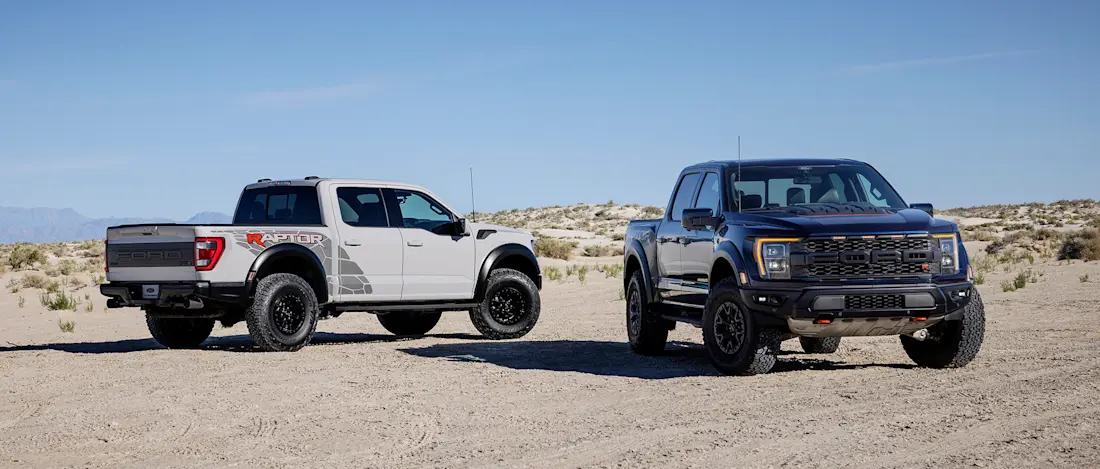
While the Mustang GTD exists as the pinnacle of modern Ford performance, it’s still no match for the company’s nutty F-150 Raptor R pickup when it comes to atrocious fuel economy. Ford’s most dune-stomping truck uses a version of the GTD’s 5.2L supercharged V8 making 720 horsepower. Giving it the crown as Canada’s least efficient vehicle in 2026 are NRCan efficiency ratings of 22.8 L/100 km in the city, 15.9 on the highway, and a whopping 19.7 combined.
Fox Live Valve shocks with adjustable dampers and 37-inch tires as well as beefier front axle components, air inlets, and oil management let it conquer rough terrain with excessive, borderline hostile confidence. It also just looks mean, towering over almost every other car on the road, orange suspension components peeking out from under its bulge-laden bodywork.
Come 2027, Ford’s $155,075 supertruck may no longer sit in this spot because its old Ram TRX rival is making a comeback with an even more powerful 6.2L supercharged Hemi V8 making 777 hp. Until that happens, though, the F-150 Raptor R wins this year’s proverbial pie-eating contest and the honour of being your local gas station owner’s favourite car.

All Articles
See all
Own the Road with AutoTrader, Episode 118: The Backlash Against Touchscreens and Return to Buttons
Safer, easier to use, and better looking, buttons are making a comeback.

Planes, Trains and (Electric) Automobiles: A Race to Determine the Pros and Cons of Each
Discovering the best way from Toronto to Quebec City with the Subaru Uncharted.
 Jeff Wilson

AutoTrader Find of the Week: 2004 Porsche Cayenne Turbo is the Cure For Boring
For when practicality doesn’t interfere with fun.
 Chris D’Alessandro