
6 Luxury Cars From Non-Luxury Automakers
 Michael Karant


Automakers typically position themselves in a specific market segment and don’t stray too far from it. Mass-market automakers typically focus on producing accessible, mainstream models, while luxury brands offer higher-end, more exclusive models with more features and performance. If a mainstream automaker sells luxury cars, it typically does so under a different name, as the brand is a vital part of marketing a luxury car. That's why many brands have a luxury sister company, such as Toyota with Lexus or Ford with Lincoln.
However, there are the odd circumstances when mainstream brands create a luxurious model that's far grander than the badge it wears, a marketing and product decision that usually has mixed results. This list covers the most luxurious cars made by typically mainstream car brands, which often stood out like a shiny sore thumb compared to the rest of the brand’s lineup.
Volkswagen Phaeton
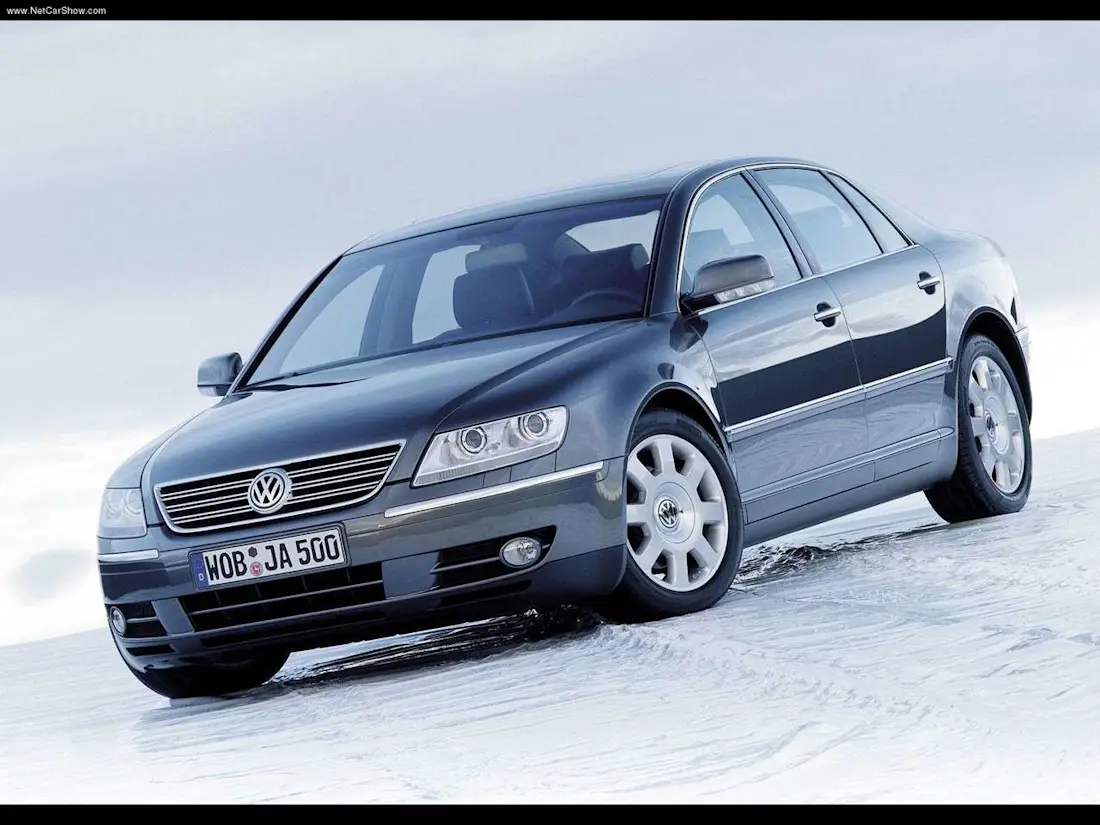
The Volkswagen Phaeton is perhaps the best example of why the badge matters on a luxury car. VW was entering a new era in the mid-1990s under the guidance of former chairman Ferdinand Piech, who sought to drastically improve VW's product quality. This change would be headlined with a model that proved that a Volkswagen can be as good as any BMW or Mercedes-Benz.
The Volkswagen Phaeton featured a burly W12 engine and was fitted with the finest wood and leather interior. It featured some of the greatest luxuries of the time, such as heated and cooled rear seats, as well as an active air suspension. It was far more than anyone would expect from a Volkswagen, and that was the problem. Volkswagen wasn’t and isn’t a brand associated with building high-end luxury cars; it is known for affordable and efficient mass-volume sellers like the Golf.
The Phaeton broke the brand’s mold a bit too far, with many critics saying that a car that costs over $100,000 shouldn’t wear the same logo as an everyman's Jetta. To say the least, the Phaeton was an absolute failure. The Phaeton saw much greater success when it was rebadged for VW’s other brands, notably the Audi A8 and Bentley Continental, a testament to how impressive it was from an engineering standpoint.
Hyundai Equus
Hyundai currently offers the most affordable new car on sale in Canada: the Venue. It has held this market position as the provider of affordable, high-value vehicles for the last 20 years and has become best known for entry-level models like the Accent and Elantra.
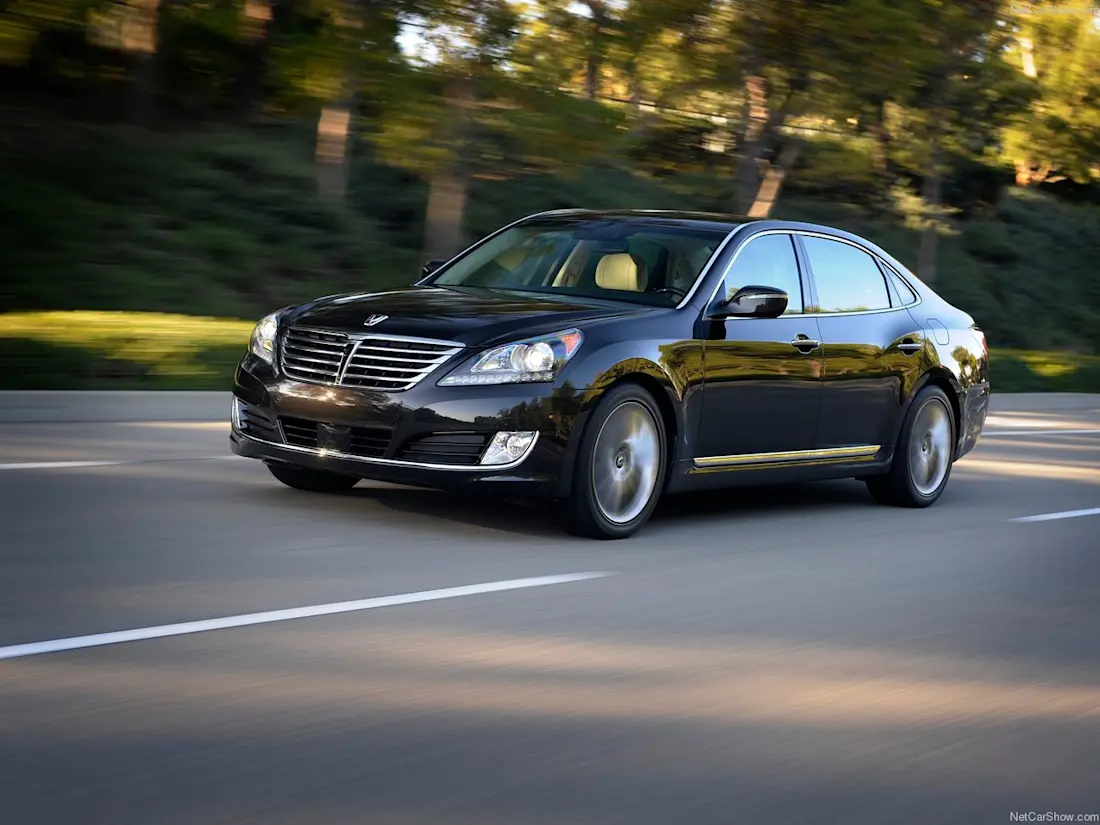
However, in 2010, the brand made an odd decision to sell the Equus, its Korean-market full-size sedan, in North America. Instead of targeting other full-size mainstream sedans like the Toyota Avalon or Chevrolet Malibu, Hyundai swung for the exclusive luxury leagues.
The Equus was a Hyundai like no other, marketed as a rival to full-size luxury sedans such as the Lexus LS. It offered premium features such as cooled rear seats and an air suspension. The interior was adorned with a combination of wood and leather, all the materials commonly found in German luxury cars, for a fraction of the cost. The Equus had an engine that would never again be found in a Hyundai model, a naturally aspirated 5.0L V8 engine producing 429 hp. Pricing for the base trim Equus in 2016 started at around $63,000, while the more powerful V8 model started at a whopping $71,000.
At this price point, the Equus far outclassed any other Hyundai model in the lineup; it was proof that the Korean brand had grown enough to make some truly impressive luxury cars. Selling a premium model alongside the budget-focused Accent and Elantra simply didn’t fit the brand’s image, so Hyundai created its own luxury brand, Genesis. You could say that the Equus was the genesis of Genesis.
Kia K900
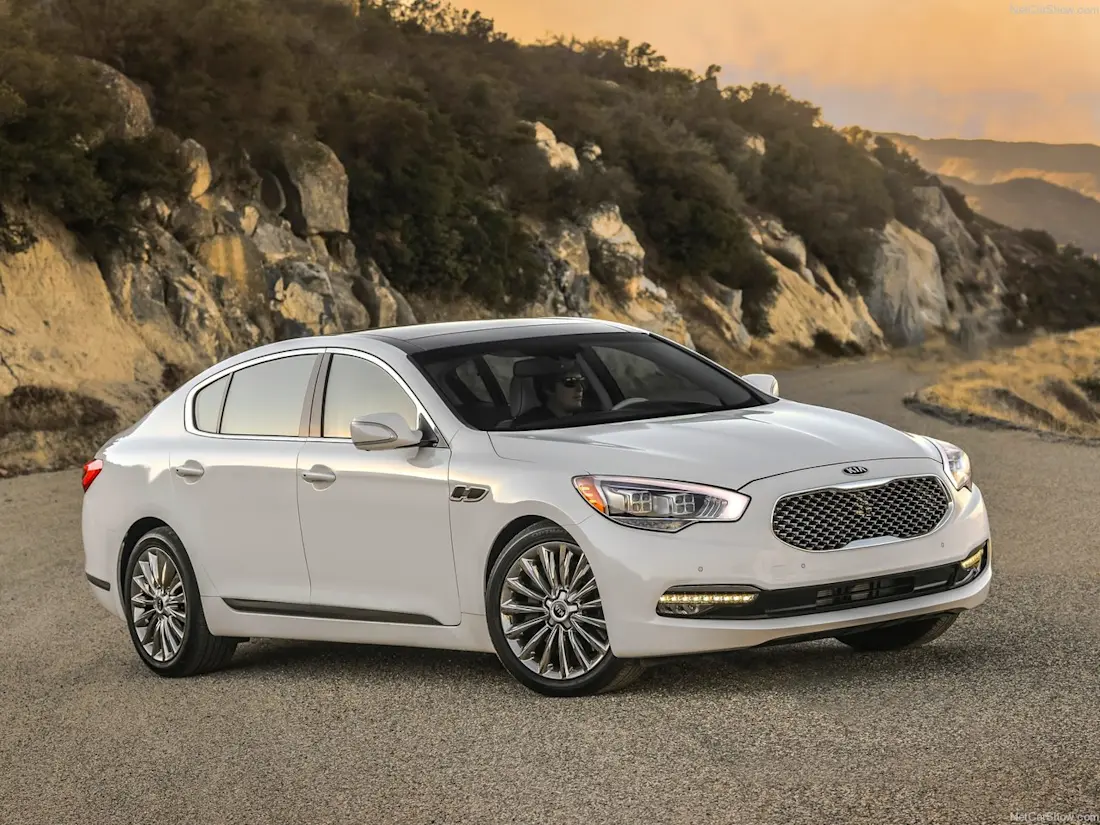
Much like Hyundai, Kia is a brand not necessarily known for being luxurious. Most of the brand’s model lineup consists of compact and midsize SUVs, geared towards the more affordable end of the market. However, internationally, the brand’s lineup was more diverse and included a full-size luxury sedan called the K9 or Quoris, depending on the market. It was branded as the K900 when it arrived in Canada. The K900 could not be more different from other vehicles in Kia’s lineup. In 2018, prices started at upwards of $60,000, going well over $70,000 for the top-of-the-line model equipped with the naturally aspirated 5.0L V8 engine, an engine that’s unheard of in a Kia today.
The K900 is the sister car of the aforementioned Equus, and much like that Hyundai, it suffered from the same issues. The Kia brand was known for compacts like the Soul and Rio, as well as affordable SUVs like the Sportage. An executive car like the K900 simply strays too far from the brand’s identity, and as a result, Kia hasn’t really tried to sell such luxurious models in Canada since, instead focusing on improving the quality of its core products.
Toyota Century
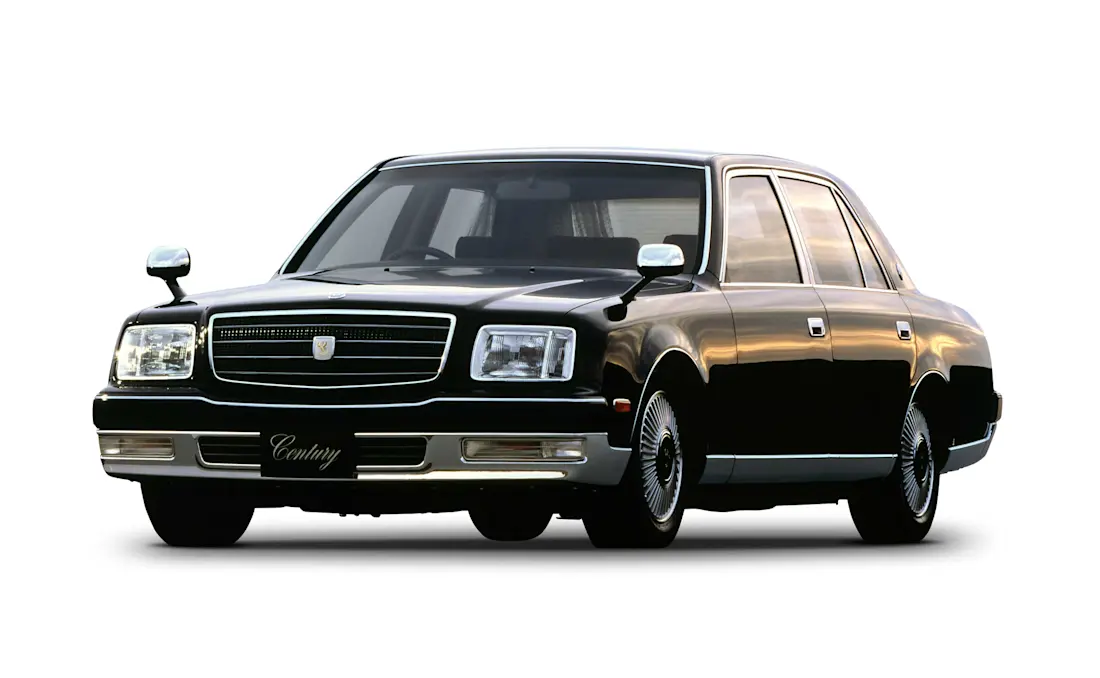
Toyota’s best-selling models are world-famous; the Corolla, RAV4 and more have dominated the market for decades, with exceptional reliability and build quality. These characteristics carry over well to luxury cars, so Toyota established Lexus as its luxury brand that predominantly targets North America and Europe. This means that Toyota-branded luxury models are typically reserved for the Japanese market, with the Century being the brand’s crown jewel.
The Century is intended for Japanese heads of state and titans of industry to be chauffeured in, and it was specifically created for this role, as there were no Japanese models that could rival the levels of luxury offered by Mercedes-Benz or Rolls-Royce. The Century is adorned with a fine wool interior, rather than leather. It also features a cutout in the front passenger seat to allow the rear passenger to rest their feet, as well as curtains to block out the light.
The second-generation Century is the one that's most desirable on the secondhand market. It was produced from 1997 until 2017 and featured a very special engine for a Toyota, a 5.0L V12 chosen for its impeccable smoothness. It was only ever fitted in the Century. The Century remains in production to this day as Toyota's flagship model and is now available as an SUV and a sedan. Prices for the Century SUV reportedly start at around 25 million Yen, roughly $220,000 CAD. However, if you want one, older models are legal to import and cost a fraction of the price.
Chrysler New Yorker
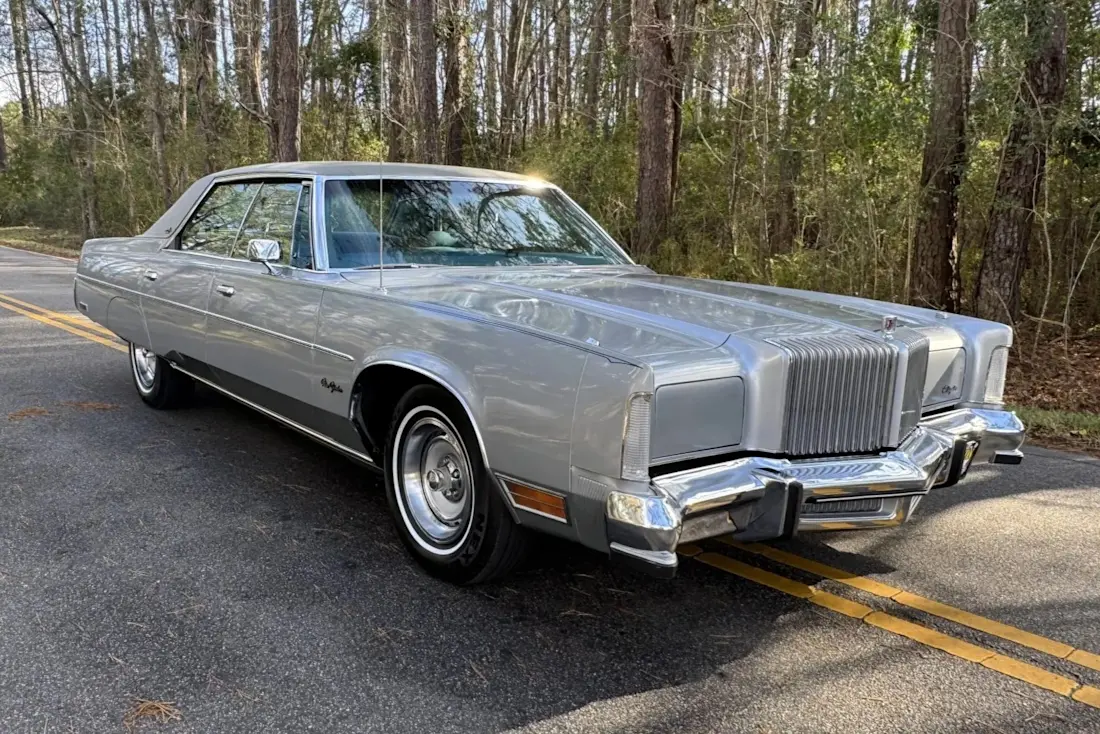
Chrysler’s current lineup is uninspiring: it’s one minivan that’s over 9 years old. This makes it easy to forget that Chrysler was once a luxury brand intended to rival Cadillac and Lincoln. No model better exemplified this than the Chrysler New Yorker, the brand's flagship sedan for much of the 20th century.
The most impressive New Yorker was the model produced from 1974 to 1978, and it simply screams 1970s excess. This New Yorker was the longest one ever, measuring 5.9 metres, with a curb weight just shy of 2,200 kg. The hefty New Yorker was powered by a 7.2L V8 producing just 195 hp, resulting in some very poor economy figures that heavily impacted its sales during the 1970s oil crisis.
Regardless, this was one of the grandest and most opulent Chrysler models to date, with enough fake wood and body-coloured leather to make any Cadillac driver jealous.
Mazda Eunos Cosmo
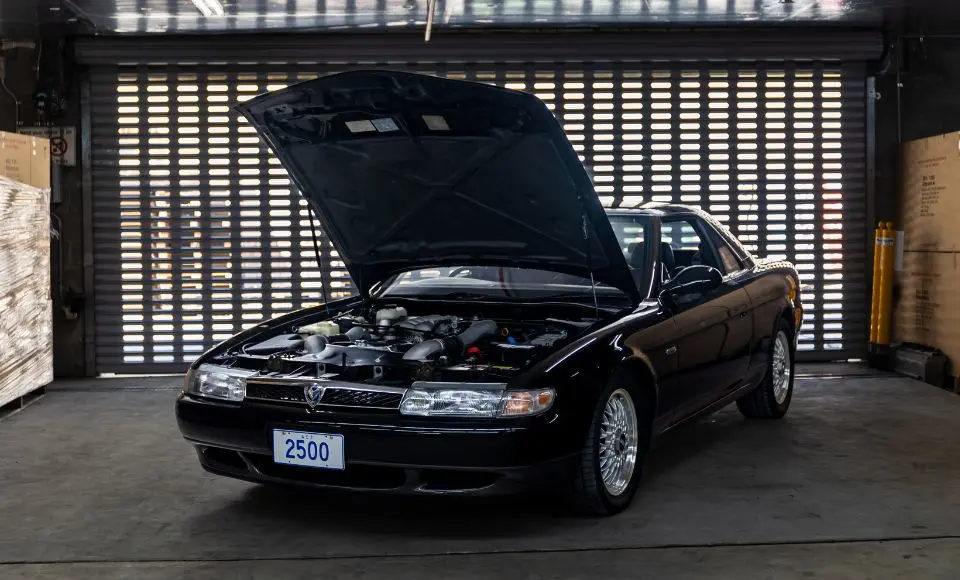
In the past few years, Mazda has been steadily improving the quality and design of its range, making current Mazda models far more impressive than they were 15 years ago. While it’s still trying to move its models upmarket today, the brand had humble origins. As part of an early attempt to make more luxurious cars, Mazda had the Eunos brand, which focused on luxury and performance, a philosophy that's embodied perfectly in a grand tourer.
The Eunos Cosmo was a luxurious grand tourer with a taste of Mazda engineering. It was powered by a twin-turbocharged triple-rotary engine producing 276 hp, a figure that's likely over 300 hp due to the Japanese regulations limiting power output. As a 1990s Japanese grand tourer, the Cosmo came with some very innovative technology including a touchscreen, mobile phone, satellite navigation, and even a TV. The Cosmo was only sold in Japan; it was intended for sale under the never-born Amati luxury brand intended to rival Lexus and Acura. If it did make it into Canada, it would have tried to compete with the BMW 8 Series and Porsche 928, truly impressive work from Mazda.

All Articles
See all
Own the Road with AutoTrader, Episode 118: The Backlash Against Touchscreens and Return to Buttons
Safer, easier to use, and better looking, buttons are making a comeback.

Planes, Trains and (Electric) Automobiles: A Race to Determine the Pros and Cons of Each
Discovering the best way from Toronto to Quebec City with the Subaru Uncharted.
 Jeff Wilson

AutoTrader Find of the Week: 2004 Porsche Cayenne Turbo is the Cure For Boring
For when practicality doesn’t interfere with fun.
 Chris D’Alessandro