
China’s Chery Considers Canadian Assembly Plant
 Sébastien Bell

China’s third-largest automaker, Chery Automobile Co., was among the first to announce plans to sell its vehicles in Canada and may soon be among the first to establish a manufacturing base here.
Guibing Zhang, executive vice president at Chery, told Bloomberg this week that the automaker is looking to develop a deeper presence in Canada, which could include an investment in local manufacturing.
Although no firm plans are set yet, the automaker is investigating the possibility of taking over idle capacity at an existing plant or working with a partner as ways of more firmly establishing itself in Canada, Zhang said.
In addition, serving its ambitions here, the plant could also set it up for a future entry into the larger U.S. market. However, that will be a long-term plan as, under the current White House administration, America will not allow vehicles from Chinese brands to be sold in its market, even if they’re assembled in North America. That has, however, already been factored into the automaker’s plans.
“Even without the American market, Canada is a market that is worth having a factory for manufacturing,” Zhang told Bloomberg. “We are looking for the suitable opportunity and communicating on the possible formats.”
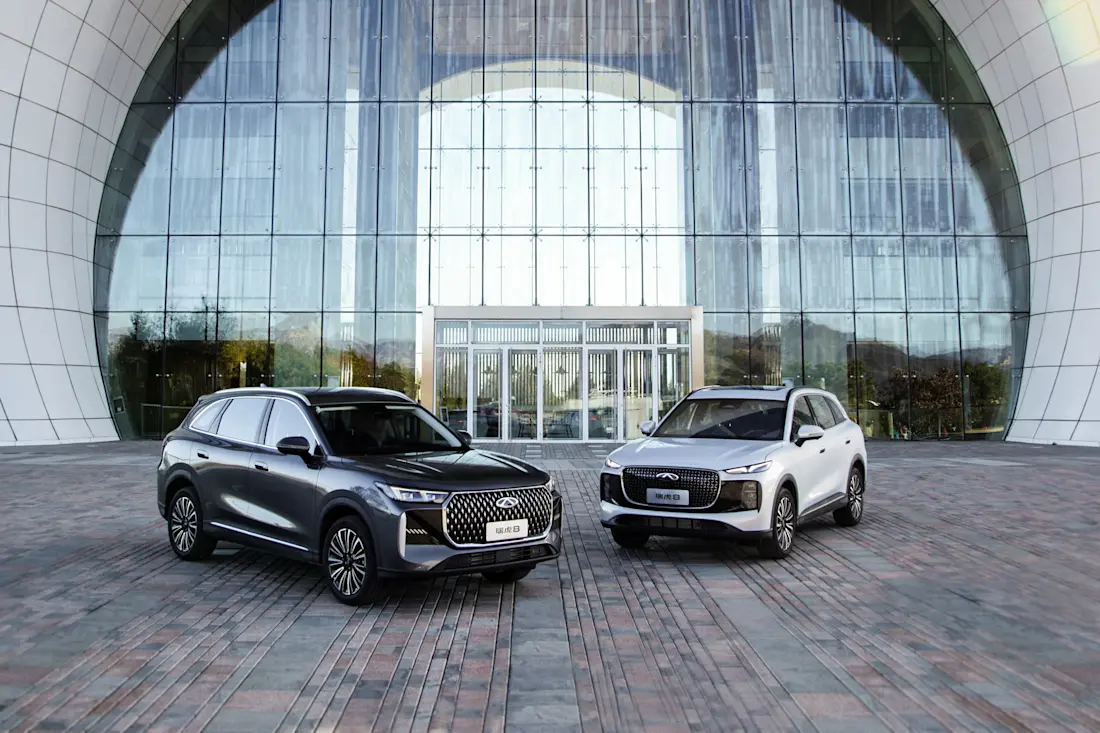
Chery was the first Chinese automaker to formally announce plans to export its vehicles to Canada following Prime Minister Mark Carney’s opening of automotive trade with China. Following trade hostilities with the U.S., Canada decided to allow up to 49,000 Chinese electric vehicles (a number that will grow over time) to be imported at a preferred tariff rate of 6.1 per cent, as opposed to the 100 per cent tariff imposed on the nation’s vehicles that fall outside the agreement.
Although that has opened Canada to EVs assembled in China, the trade exception is intentionally restrictive and covers vehicles from all brands. That means that Chinese automakers must compete with more familiar brands like Tesla, Nissan, and others, which also assemble vehicles in China.
Speaking to AutoTrader earlier this year, a Nissan spokesperson said that, although it has investigated importing EVs it assembled in China to Canada, the trade deal’s restrictions and the first-come-first-serve nature of the preferred tariff rate have made it difficult to craft a product plan around vehicles assembled in China.
As a result, supplementing Chinese imports with vehicles from other parts of the world will almost certainly be necessary for automakers interested in the Canadian market under this trade deal.
Chery is not the only automaker looking at manufacturing in Canada. Indeed, on a recent diplomatic trip to China, Minister of Industry Mélanie Joly met with representatives from Chery, Geely, and BYD, and said that the companies were open to forming joint ventures with established companies in Canada.
Joly has also previously said that Ottawa will not be satisfied with Chinese automakers forming simple plants that assemble “knockdown kits” — vehicles that are pre-assembled in another parat of the world, and then put together in their final destination. She said that entering automakers will have to set up local supply chains that meet Canadian labour standards. Zhang said that he has been in frequent communication with Joly.
“If we can find some good ways to merge with partners, not only just from investments from Chery but from different parties, and if we can get the manufacturing going — I think that is something that the Canadian government would welcome,” Zhang said.

All Articles
See all
2027 Nissan Sentra Costs a Little More, Gets Sinister New Range-Topping Trim
One of the last compact sedans on the market gets a Midnight Edition.
Sébastien Bell
5 of The Coolest Concept Cars from the 2026 Paris Motor Show
The best of France’s oddly exotic auto industry was on display this year.
 Chris Tsui

Porsche Announces Plans for Range-Topping Mid-Engine Model
The Porsche Mission S previews what a mid-engine model above the 911 might look like.
 Dan Ilika