
2026 Ram 2500 Tow Test: Pros and Cons of Towing with a Heavy-Duty Truck vs. a Half-Ton Pickup
 Benjamin Hunting


It might seem like a no-brainer to choose a heavy-duty (HD) truck over a half-ton pickup when it comes to towing. After all, HD models are brawnier in every conceivable way and are designed specifically to tackle the largest and most difficult trailer loads.
In the real world, however, bigger isn’t always better. The best choice a pickup truck buyer can make is to choose the model that matches the job you’ll need it to do. Just as there are consequences associated with trying to tow too much without “enough” of a pickup, there are similar downsides to opting for an over-muscled choice.
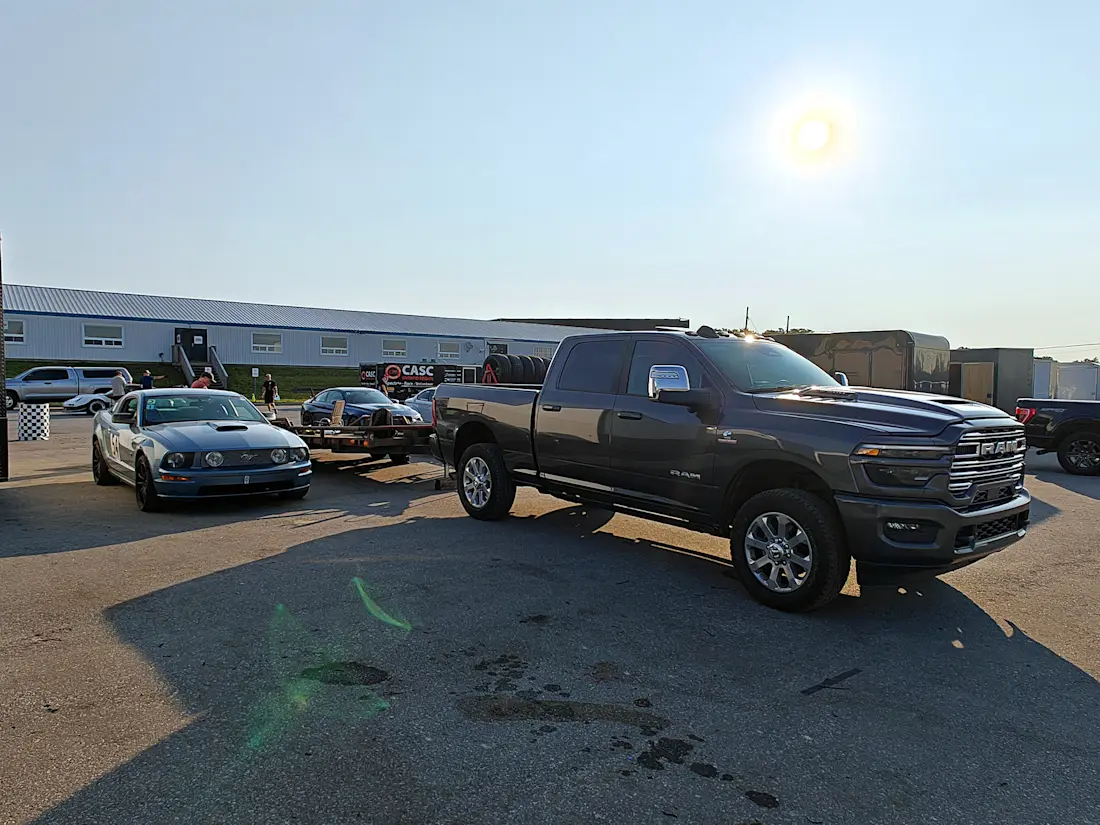
I spent 1,200 km behind the wheel of a 2026 Ram 2500 HD, towing a Ford Mustang race car from southern Quebec all the way to Canadian Tire Motorsport Park in Bowmanville, Ont. It’s a trailer load I’ve toted many times, in trucks both half-ton and HD, and all those hours gave me time to reflect on the pros and cons of choosing a heavy-duty pickup over a light-duty edition when it’s time to tow.
Where Heavy-Duty Trucks Shine Bright Compared to Half-Ton Pickups
Sky-High Weight Limits Add Safer Margins
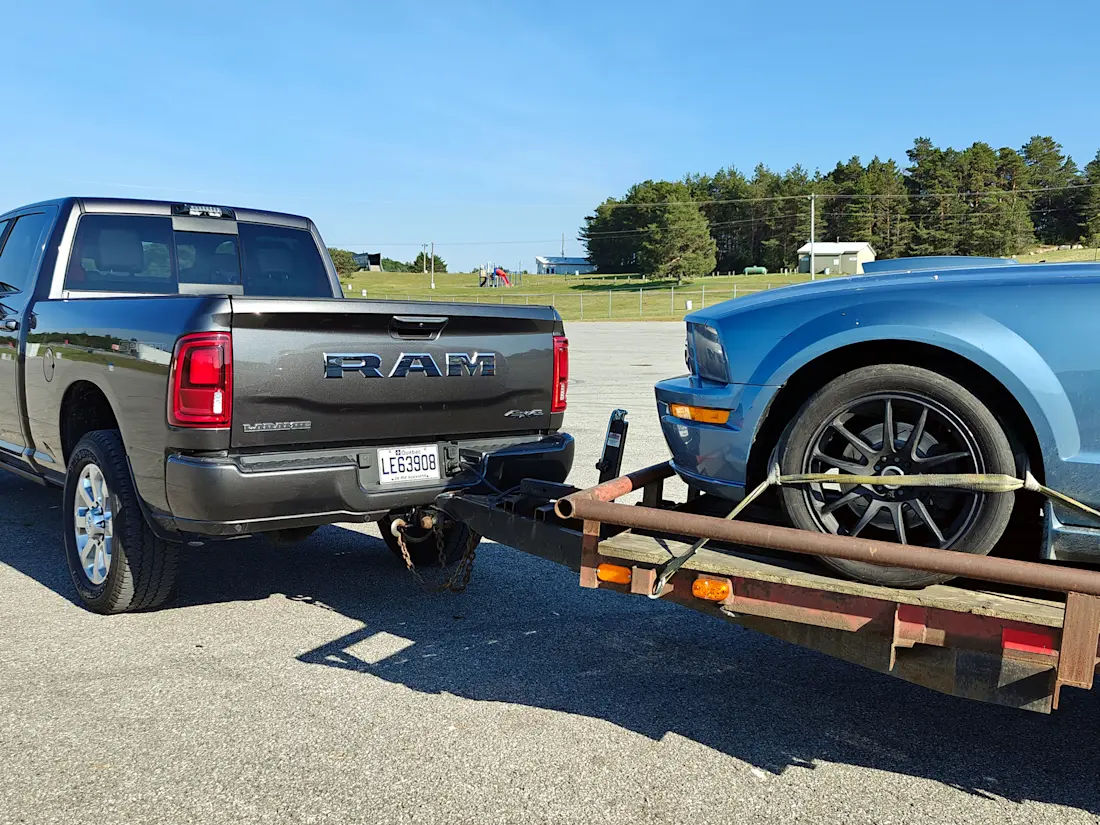
The most obvious advantage of towing with a heavy-duty truck versus a half-ton is the much higher limits for trailer weight rating, tongue weight, and payload.
The 2026 Ram 2500 Laramie I drove was not at all stressed by the 6,000 pounds of trailer, track car, and gear it was lugging along, given that its optional Cummins turbodiesel engine offered a maximum towing capacity of 20,000 pounds. Even if you stick with the gas-powered V8 model, the truck can still tow 17,750 pounds. If you need more, you can choose a 3500-series Ram truck that can tow nearly 35,000 pounds.
Each of those figures is well above the 11,370 pounds that the Ram 1500 tops out at. You’ll find a similar disparity across the board when examining HD trucks versus light-duty models at GMC, Chevrolet, and Ford.
Where does this count the most compared to a half-ton truck, beyond the numbers on the trailer scale? The higher gross vehicle weight rating of a heavy-duty pickup gives you additional headroom when loading the cargo bed or handling an awkward trailer load distribution. Because the truck’s frame can handle a substantial amount of weight, its payload and tongue weight ratings — the amount of trailer weight transferred to the hitch — are considerably higher than those of a light-duty pickup.
This means you can carry a full complement of passengers and a bunch of weekend gear in the bed without worrying about overloading like you might in a half-ton. The trailer I was using with the Ram HD I drove has a high tongue weight due to the positioning of the race car (which, in turn, is informed by matching the railing height to the door openings). In the past, it’s been an issue for half-ton trucks with air suspensions that weren’t rated for that much of a load, but the Ram 2500’s setup had no trouble with the design.
Staggering Available Torque
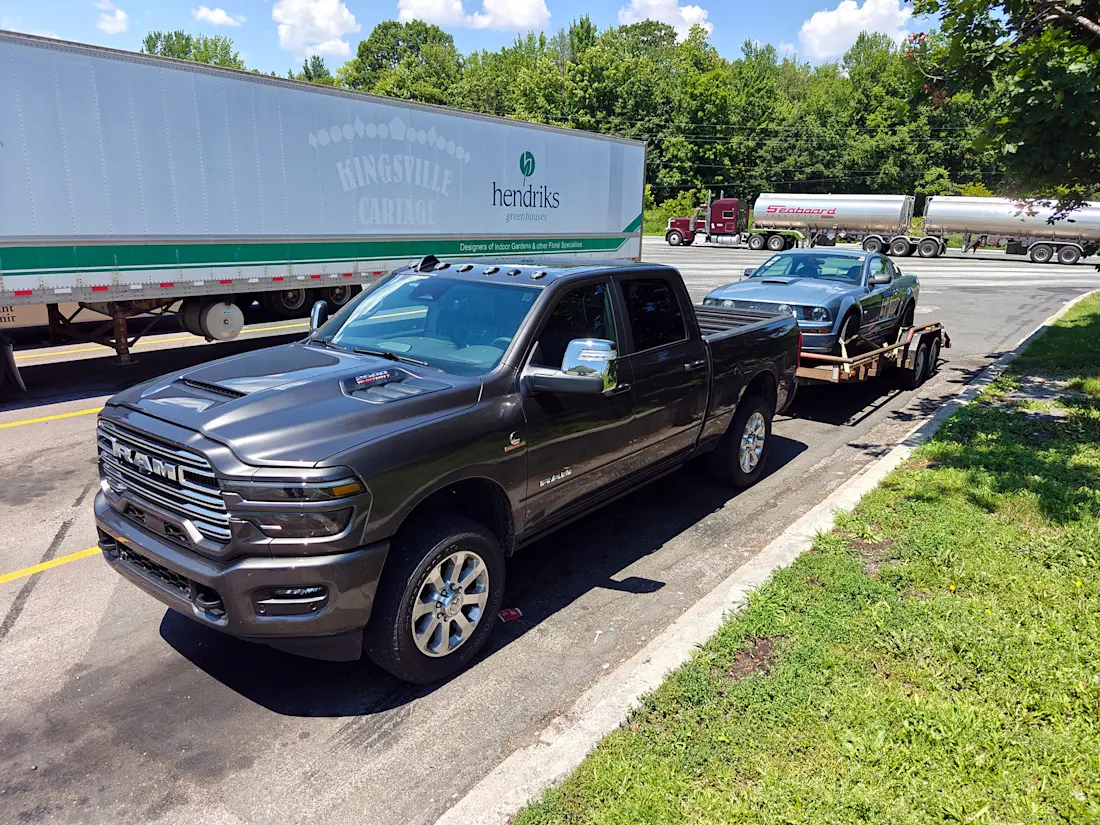
Most HD trucks offer at least one gas engine on the order sheet, and sometimes that’s a larger-displacement motor you can’t find in the standard pickup. For serious towing, however, a heavy-duty truck’s main weapon is its stout turbodiesel drivetrain.
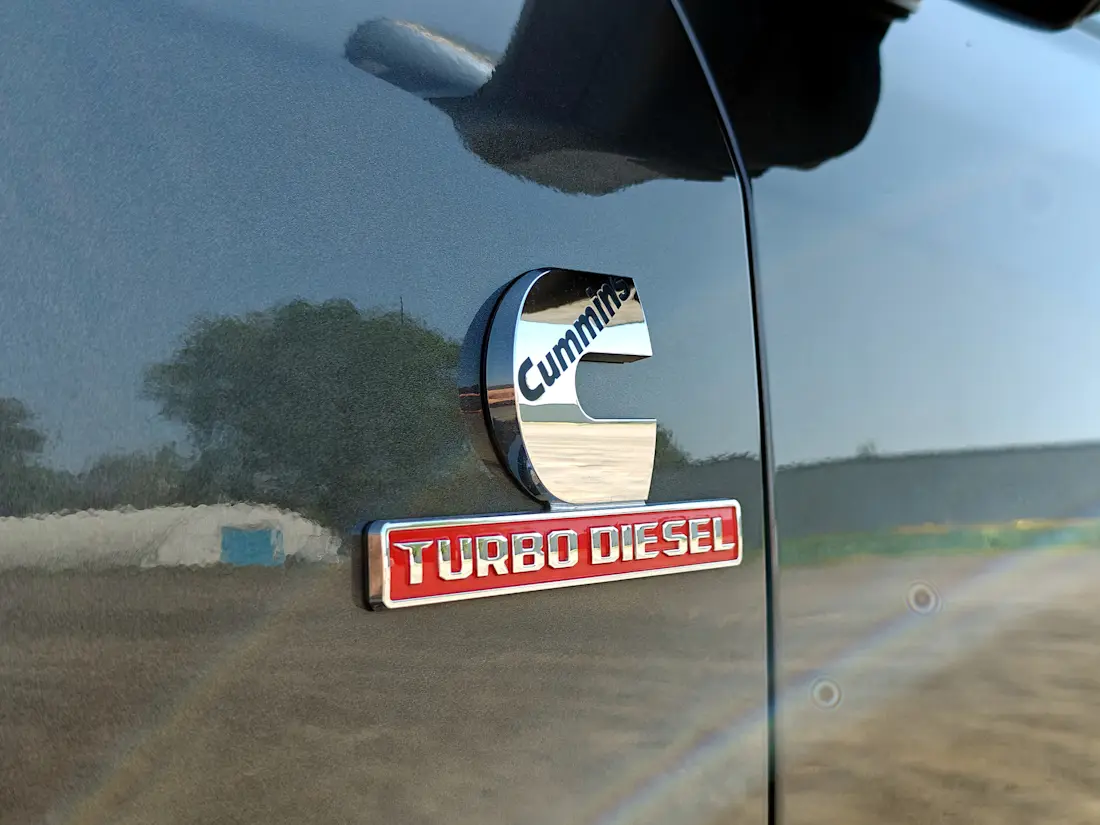
Unlike the diesel engines sometimes found in light-duty pickups, which are primarily geared toward balancing fuel efficiency and torque, HD trucks are all in on torque. The Ram 2500’s 6.7-litre inline six-cylinder Cummins turbodiesel, for example, delivers 430 horsepower and 1,075 pound-feet of torque.
More than 1,000 lb-ft is now the norm for heavy-duty turbodiesel trucks, and that enormous number informs the towing experience in several ways. Most of that output is delivered at low revs, which means there’s no hesitation when pulling even a very heavy trailer off the line. At higher speeds, hills and passing present no impediment either, which is a marked difference from gas-powered half-ton trucks that often strain to maintain highway speed when travelling up steep grades.
All that torque has another benefit when compared to a light-duty truck: better fuel mileage. For comparably sized loads, the low rpm of an HD’s turbodiesel means it’s never working as hard as a gas-powered half-ton truck, which reduces consumption. I saw 13 L/100 km while towing the Mustang track car to Canadian Tire Motorsport Park, which is nearly 20 per cent more frugal than my father’s 5.0-litre gas V8 Ford F-150 hauling the same vehicle.
Class-Specific Features You Won’t Find Elsewhere
The heavier loads that HD trucks enable also require innovative features to help keep drivers in control, regardless of trailer weight.
One such system, which isn’t available outside the heavy-duty segment, is a diesel exhaust brake. Channelling diesel exhaust to boost system backpressure essentially adds drag on the engine, causing it to function like an air-powered brake. This takes considerable strain off the friction-based brakes at each wheel, which can matter a lot if you happen to tow in an area with long downhill stretches that threaten to overheat pads and rotors. It also makes it easier to modulate speed on lengthy grades.
With a relatively light load like the race car, there was no need to keep the exhaust brake engaged. However, I’ve been in situations with half-ton trucks where I would have gladly given my right arm for the ability to take some heat off the brake pads while towing through the mountains.
Where Towing with an HD Truck Doesn’t Outperform a Half-Ton Truck
Gigantic Proportions Are a Huge Hassle
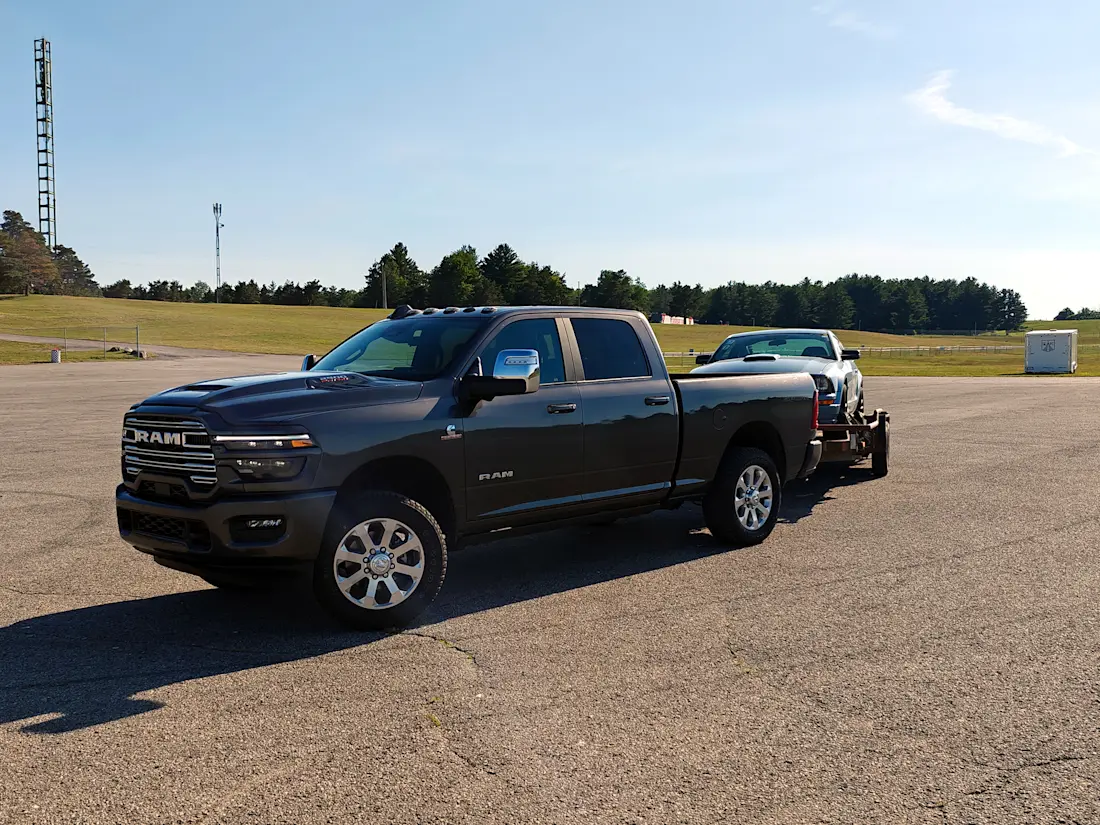
Think of how large modern half-ton trucks are today. Now expand their height and width (and even sometimes, their length thanks to stretched-out cargo bed options), and you’ve got a heavy-duty pickup, truly one of the most unwieldy vehicles on the road. Even getting in and out of these trucks is a pain for smaller folks, and you can forget casually reaching into the bed to grab your gear — you’ll likely need a ladder.
All of the above is compounded when towing. Not only does adding a trailer make a gigantic truck even longer, but it also requires you to match a tall hitch height to a trailer tongue that might not be that high off the ground. I’ve been in HD trucks where I had to let air out of the rear tires simply to connect the ball and tongue, even with a drop hitch in place. Some pickups, like the Ram 2500, can be had with a rear air suspension that lowers for hitching up, and even stay lowered while towing, but this feature is far from universal.
The gigantic size of heavy-duty trucks also means you have to constantly evaluate whether you can actually enter a lot, driveway, or side street — and then leave again — without getting hung up on some obstacle, or having to reverse out into traffic. Think of it as an enormous animal you have to stuff into a cage every time you’re looking for somewhere to park, and you’ve got the idea.
These issues are part of what makes HD pickups overkill when towing a lighter load like the one I was hauling in the Ram, and why I don’t recommend them for anyone who’s not going to be pushing a light-duty truck to its limits.
Sticker Shock for Some Options
The most affordable Ram 1500 starts around $62,000. Stepping up to a base Ram 2500 boosts that price to nearly $69,000.
At first glance, that doesn’t seem like a huge gap. It’s the details, however, that quickly change the equation. Entry-level 1500-series trucks from Ram come in four-door form, while the 2500 is single-cab. The HD truck is also more stripped down in terms of features (more on that later), which means you have to add options to compare two similarly equipped vehicles.
Then there’s the massive cost associated with opting for a turbodiesel engine. On the Ram 2500 Laramie I tested, the Cummins power plant cost $10,000 and required a $2,995 transmission upgrade. Including other equipment, this pushed the price of the truck to $122,000, which is almost $25,000 more than a fully-loaded Ram 1500 Laramie.
With a price delta that high, you really need to take advantage of everything an HD truck offers in the towing department before choosing one over its half-ton sibling, otherwise, it’s difficult to justify the extra investment.

All Articles
See all
Ontario Used Vehicle Information Package (UVIP): Cost, Contents, and When You Need It
Learn the documents, costs, and steps required for the Ontario Used Vehicle Information Package (UVIP) in Canada.

2018 Dodge Charger GT AWD: Specs, Horsepower and Used-Buying Guide
Learn what to check before buying a 2018 Dodge Charger GT AWD, including reliability, common problems, pricing and ownership costs.

The Death of Zero Per Cent Financing and What You Can Do About It
A “free” car loan sounds enticing, but there’s a lot more to the story.
 John LeBlanc