
The Death of Zero Per Cent Financing and What You Can Do About It
 John LeBlanc

Canadian car buyers love zero per cent financing. Monthly payments drop, making more expensive vehicles more affordable. It improves cash flow and lets people keep money invested elsewhere. It’s also a huge ego boost; the “zero” number feels like you beat the system.
But the days of “free” car loans seem to be on the wane.
For someone who hasn't been looking for a car over the past few years, higher sticker prices are merely one of the blows they are facing. Interest rates are also rising, leaving many buyers wondering where all those zero per cent financing deals have gone.
The Birth of “Free” Car Loans
Following the 9/11 terrorist attacks in New York City, consumer confidence in North America fell sharply, and sales of new cars suddenly came to a halt. To get the economy moving again and clear the enormous backlog of vehicles, General Motors launched its “Keep America Rolling” zero per cent financing campaign in mid-September 2001.
The promotion quickly extended to the Canadian market through GM Canada, offering zero per cent financing for almost all new models.
American rivals Ford and Chrysler (then DaimlerChrysler) had to follow suit almost immediately if they were not to lose market share. In the end, import brands were also forced to introduce their own zero per cent schemes to compete.
Intended to last only six weeks to stimulate a sluggish economy, zero per cent financing proved effective at moving cars. It soon became a standard marketing tactic that manufacturers resorted to whenever sales were sluggish over the next two decades.
What started as an emergency economic relief scheme in the fall of 2001 later transformed the automotive industry over the next 20 years.
Is Zero Per cent Really Free Money?
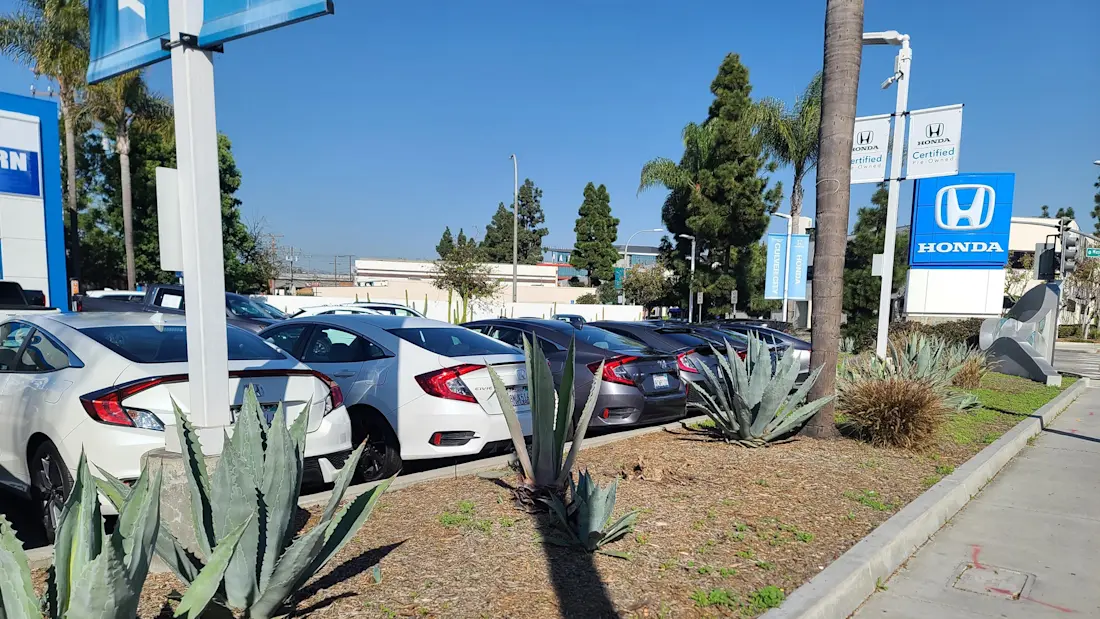
Zero per cent financing may seem like free money, but automakers and dealerships use it as a carefully planned marketing strategy. They don't suffer a loss on these transactions; instead, they pass the costs on elsewhere.
The most common way buyers get zero per cent financing is by forgoing a large upfront cash discount. Basically, car manufacturers always require customers to pick between cheap financing and a cash rebate.
If you choose zero per cent, you will almost certainly end up paying more for the vehicle.
If a car costs $40,000, you can take zero per cent financing on the full $40,000 or accept a $4,000 rebate and finance the remaining $36,000 at the normal bank rate (for example, 5 per cent). In most cases, it is cheaper to pay back the smaller amount at the usual rate than to finance the larger amount at zero per cent.
The big six banks of Canada — namely the Royal Bank of Canada, Toronto-Dominion Bank, Bank of Montreal, Canadian Imperial Bank of Commerce, Bank of Nova Scotia, and the National Bank of Canada — cannot offer car loans at zero per cent since they would then suffer losses due to inflation, which is currently at 3 per cent. On the other hand, lending companies associated with car manufacturers, such as Toyota Financial Services and Ford Credit, can provide loans at zero per cent.
Not Every Car Buyer Qualifies for Zero Per Cent Loans
Advertisements make zero per cent seem accessible to everyone, but in fact it is a very exclusive club.
First, to be eligible, you usually need a good credit rating (usually 760 or above). If not, dealers will tell you that you do not qualify for the zero per cent rate but can instead agree to a loan closer to 6 per cent or more.
Also, zero per cent financing is rarely offered with the long, flexible loan terms modern buyers tend to prefer. Even if a buyer wants an 84-month (seven-year) loan to keep monthly payments low, zero per cent offers are usually only available for 24, 36, or 48 months.
Finally, when the dealership gets little or no financing commission from the lending institution on a zero per cent deal, the finance and insurance (F&I) office will work hard to make up for that loss. You might experience pressure from the sales staff to buy extended warranties, gap insurance, and rust protection.
How to Obtain the Lowest Car Loan Rate if it’s Not Zero
If you don’t qualify for zero per cent financing, or it isn't available on the vehicle you are shopping for, the first thing you can do is to decrease the amount of money you borrow and to shorten the length of time during which the bank charges you interest.
Next, don't be tricked by the “low payment” option for 84 months: when interest rates are high, extending a loan over seven or eight years (84 or 96 months) to get a low monthly payment is financially disastrous. Keep your loan term at 48 or 60 months; if you cannot afford the monthly payments at a 48-month term, then the car will cost more than your budget.
It's also wise to have an external financing offer before you enter the dealership showroom, since dealerships generally add to the bank's interest rates to make a profit. Go to your local financial institution and get a pre-approval for an auto loan; if the dealership's finance department offers you, say, 10 per cent, you can give them your bank pre-approval at 8 per cent and, in that situation, they will have to match or exceed that rate to secure your business.
As for subsidised financing for manufacturers, even though deals at zero per cent interest are rare, the carmakers do provide promotional rates (known as "incentive financing") to get rid of specific stock.
As a last resort, if you don't want to buy a car that day, then ask the dealer to arrange a factory order rather than take one from the lot. When interest rates are high, dealers are often in a rush to pass on those costs to you via administrative fees and by forcing you to take on extra options.
But with a factory order, you eliminate unnecessary, high-margin dealer add-ons (such as nitro-filled tyres, rust protection, or window etching) that increase your loan amount.
Are There Currently Any Zero Per Cent Car Loans?
Several of Canada's major automakers still offer zero per cent financing, mainly on a selection of new vehicles, trucks, and SUVs to clear out stock. Since these offers are part of short-term marketing initiatives, the range of models available changes each month.
Most car loans carry a rate that is well above zero. Because the Bank of Canada has maintained its policy rate at 2.25 per cent (with consumer prime rates remaining at around 4.45 per cent), car buyers are currently facing auto loan rates ranging from 7 to 10 per cent.
Economic forecasters do not expect those rates to fall for some time. TD Economics expects Canadian car sales in 2026 to decline only slightly after strong sales in 2025. They blame tariffs and uncertainty around the current review of the CUSMA North American free-trade agreement, which is affecting supply chains and pricing.

All Articles
See all
Used 2008 Acura MDX: 4WD or AWD, Recalls and What to Check
Let's say you're scrolling used SUVs on a cold January night, and a 2008 Acura MDX pops up at a price that looks like a typo.

The EV Cool-Off: Why Are Canadians Hesitating to Go Electric?
Hybrids promise fuel savings without the plug. Here’s why that appeals to Canadian car buyers.
John LeBlanc
Ontario Used Vehicle Information Package (UVIP): Cost, Contents, and When You Need It
Learn the documents, costs, and steps required for the Ontario Used Vehicle Information Package (UVIP) in Canada.