
Electronic Rust Protection Isn’t Magic: A Body Man's Verdict

Electronic rust protection doesn’t have the proof to back its promise on cars. These electronic modules borrow a principle that protects ships and boats sitting in salt water, but a car body isn’t submerged, and it’s broken up by rubber bushings, paint and primer.
Two consent orders registered with Canada’s Competition Tribunal required sellers to pull devices whose claims weren’t based on proper tests. Wash the car, keep it oiled and inspect it instead.
Key Takeaways
- An electronic rust protection module sends a small electric current or signal into the body through electrodes. In two Canadian cases, sellers couldn’t back their rust-protection claims with proper testing.
- The Competition Act targets the claims made for rust modules: a performance claim must be based on adequate and proper tests.
- Consent orders dated Sept. 7, 2000, and Dec. 6, 2001, took two electronic anti-corrosion devices off the Canadian market.
- Toyota Canada’s 2026 warranty covers corrosion perforation for 60 months with unlimited kilometres and says extra rust inhibitors aren’t needed to keep it.
- About five million tonnes of road salt go down on Canadian roads every year, according to Environment and Climate Change Canada’s road salts FAQ (updated 2018).
- Offered a rust module? Ask for independent test results and the warranty terms in writing first.
Welcome to Goof of the Month! Every month, we ask for stories from our technician pals that highlight the need to understand one’s vehicle, how to maintain it and how it works.
This Goof of the Month first ran in May 2016, and its contributor wanted to save you money on a commonly overrated product. Jeff Major, a body man and collision repair tech in Sudbury, Ont., was flagging a trend he saw on the shop floor almost every day, rather than one customer’s complaint.
Do Electronic Rust Modules Work? What One Body Man Found
Rust control modules are an extra-cost add-on sold to new-car shoppers to prevent rust. Major’s verdict in 2016 was short: he hadn’t seen one do the job. To him, that made them an ineffective add-on and a waste of money.
The Complaint
At the time, Major was seeing more vehicles than ever with electronic rust modules installed, and they still had rust, sometimes a lot of it.
“I had a customer in for a body repair, and he came into my bay to get something out of his car while his front fender was off,” Major said.
“I didn’t know the customer had a rust module installed to this car, and when he saw that the surface beneath his fender was rusted fairly significantly, he was pretty upset. A few weeks later, I found out this customer tried to make a warranty claim against the module manufacturer for rust, and was denied.”
The paint looked fine. The rust was underneath, where it’s hard to see, on a car whose owner had paid his dealer hundreds of dollars for enhanced rust protection.
Major provided another example, with photos, of a 2014 Honda Civic. It had less than 8,000 kilometres on it, a rust module installed and rust already forming. “This car hasn’t even had its second oil change, and rust was starting to form. Seems like yet another total waste of money to me.”
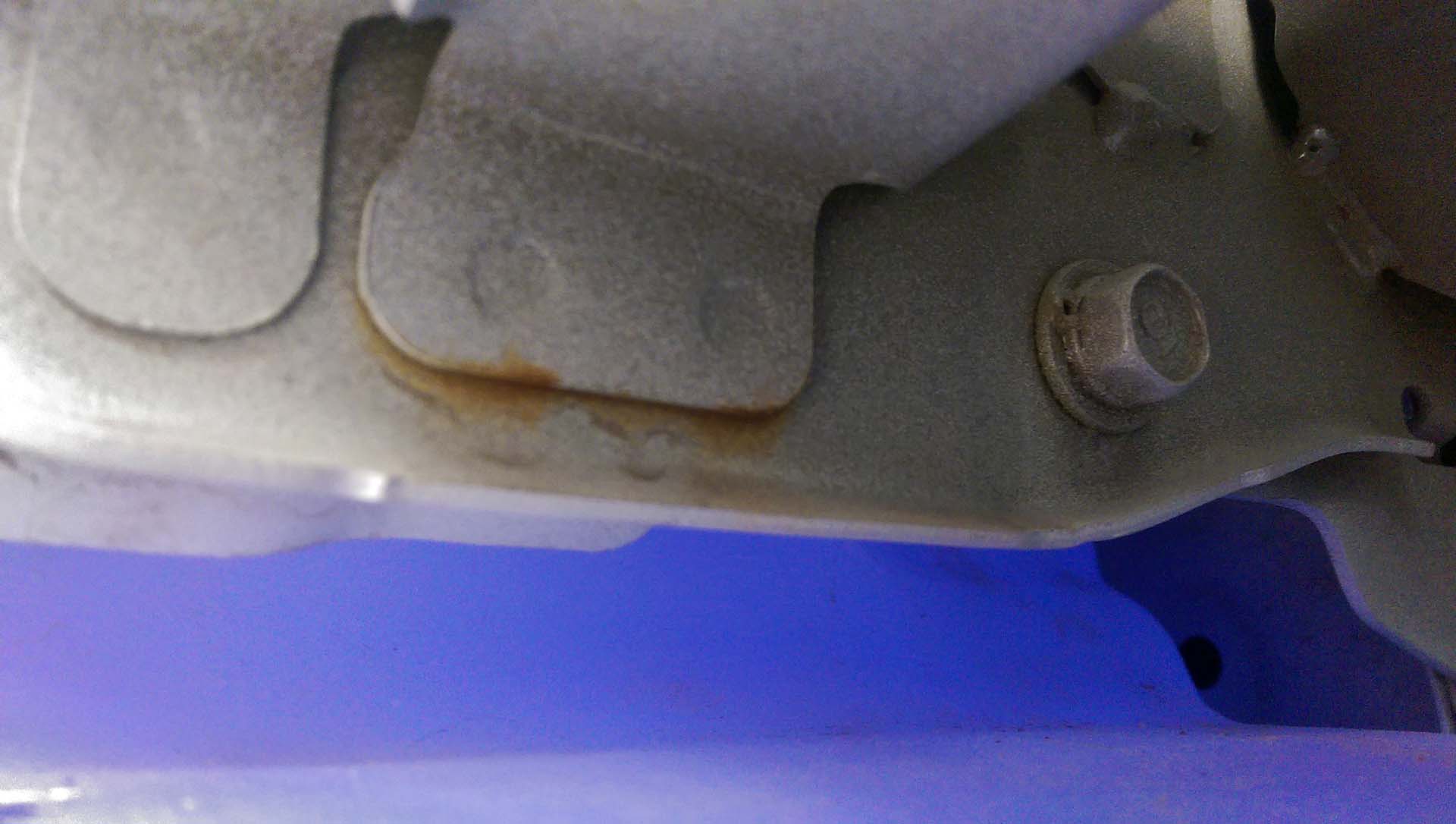
The Outcome
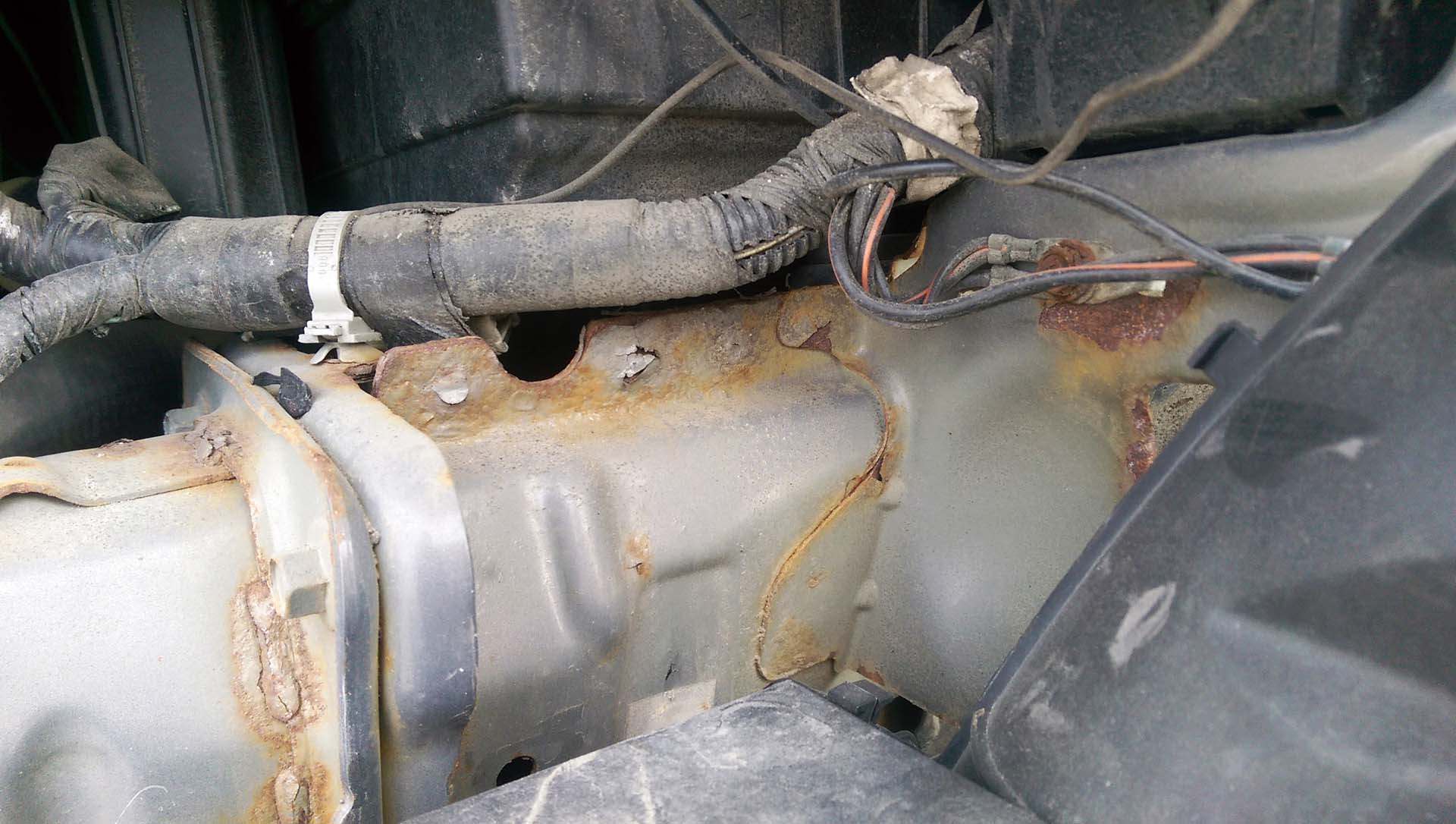
Major was passing his findings on to customers and friends. “Whether it’s the installation, or the product itself, I’ve yet to see a rust module that seems to be doing its job,” he said. “There are several factors at play; though whatever the reason, these things just don’t seem to work, plain and simple.”
How Electronic Rust Proofing Is Supposed to Stop Corrosion
Rust is an electrochemical reaction, a form of oxidation. Steel, oxygen and moisture trade electrons, and road salt and brine speed things up by loading that moisture with electrolytes. Electronic rust proofing (or electronic rustproofing) claims to interrupt that reaction with a small electric current from the car battery, sent through electrodes on the body.
You’ll see the same product sold as electronic rust prevention, electronic rust protectors, electromagnetic rust protection, a corrosion control module, a rust proof module or simply a rust module for cars. The pitch rarely changes.
The Body Man: Why Cathodic Protection Works on Ships, Not Cars
“It’s actually amazing how many of these modules we see,” Major said. “After a few customer complaints, I now make it a point to look for the modules on every vehicle I’m working on. When I find one installed, it’s never hard to find rust on the vehicle. I have yet to see a vehicle with a rust module installed that isn’t rusting somewhere under its skin.”
The principle is simple enough. “In very simple terms, the principle these devices claim to work on is that they emit a low frequency electrical charge which, in turn is supposed to ‘repel’ or prevent rust from starting and spreading.”
That principle has a real name: cathodic protection. And it does work, in the right place. “The science behind the modules is technically sound, and they’re used on machinery like oil tanker vessels, where they’re effective, because the entire vessel is solid steel, and submerged in water,” Major said.
A car in the real world is neither. “Even if correctly installed on an automobile, with one electrode affixed to steel contacts at the foremost part of the vehicle, and one at the rearmost part of the vehicle, protection is minimal – as many parts of a vehicle are isolated with rubber bushings and paint and primer, which insulate metal parts from electrical current.”
Electrodes on Tape and Paint: The Installation Problem
Installation may explain part of it.
“I’ve seen several examples where the electrodes for the module are attached to a painted surface with two-sided adhesive tape. There’s no connectivity there. Heck, I’ve even seen examples where the module electrodes themselves are rusting, which is hilarious. Or others, where the electrodes are both under the hood – even though they’re supposed to be located at opposite ends of the vehicle for maximum conductivity.”
Is Electronic Rust Protection Banned in Canada?
Canada’s rules go after the claim, not the gadget. Under the civil provisions of the Competition Act, a performance claim must rest on adequate and proper tests, as the Competition Bureau’s guide to misleading representations explains. Testimonials usually aren’t enough proof, the Bureau adds.
What the Competition Tribunal Orders Said
Two cases involving these electronic devices ended in consent orders registered with the Competition Tribunal.
The first, a consent order dated Sept. 7, 2000, covered an electronic anti-corrosion device a Quebec manufacturer sold through car and light-truck dealers, claiming eight years of rust protection. The order states those claims weren’t based on a sufficient and proper test. The company agreed to stop selling the device and to keep honouring buyers’ rust warranties.
The second, a consent order dated Dec. 6, 2001, was blunter. In claims cited in that 2001 order, its sellers had advertised 100 per cent rust protection and said chemical coatings and conventional rustproofing managed only 30 per cent. They agreed to pull the device and to offer buyers a refund or an eight-year rust warranty.
In both orders, the companies agreed not to bring the device, or any similar product, back to the Canadian market without proper testing, and each consent order was enforceable for 10 years. So the products weren’t banned as a category; they were pulled because their makers couldn’t back their claims.
Before You Pay for a Rust Protection Module
The rust protection module is an aftermarket add-on, and it can show up at the dealership alongside paint protection or an extended warranty when you’re signing for a new car. Before you agree, ask three things:
- What independent testing backs the claim? A brochure or a customer testimonial isn’t a test, and neither is a lab test on a steel panel in a salt spray cabinet. Ask whether an independent laboratory tested it on cars.
- What exactly does the warranty cover, and who stands behind it? Get the terms in writing, including any inspection conditions.
- What does the factory corrosion warranty already cover?
Our list of questions to ask before buying a new car covers the rest of the paperwork. Buying used? Another Goof of the Month, about an SUV sold as-is for a reason, shows what a skipped pre-purchase inspection can cost: a subframe so rotted that its structural integrity was gone.
Shopping Used? Check for Rust Before You Buy
Zoom in on rocker panels, door bottoms and wheel arches in the photos. Then get the car on a hoist before you commit.
A rust module is a promise. A hoist inspection is evidence.
Rust Modules vs Oil Spray, Undercoating and Washing
The options a body man will vouch for have a physical barrier or a hose behind them.
| Option | How it works | What backs it | What it asks of you |
|---|---|---|---|
| Electronic rust module | Small current or signal through electrodes on the body | Two Canadian consent orders pulled devices over untested claims | Nothing, which is the problem |
| Annual oil spray | Oil or wax coats the body and works into seams, crevices and spot welds | Recommended by our collision tech; covers exposed steel | Yearly reapplication |
| Undercoating | Thick coating on the underbody | Named in the original Goof as a proven option | Inspect for chips and trapped moisture |
| Regular washing | Removes salt and grime from the body and undercarriage | Basic maintenance; no add-on cost | Frequent winter washes, including the underbody |
Check Your Corrosion Warranty Before Any Add-On
Before paying for an add-on, read what your factory corrosion warranty actually asks of you. Toyota Canada’s 2026 owner’s warranty supplement is a good example. Its Corrosion Perforation Warranty runs 60 months with unlimited kilometres. It also says plainly that you don’t need extra rust-inhibiting products to keep that coverage.
Read the exclusions, though. That warranty covers perforation, meaning a hole through one of the body panels, and not surface rust. It excludes surface rust left unrepaired until it rusts through, and corrosion caused by a non-Toyota rust inhibitor that traps moisture against the metal. Your own booklet will have its own terms.
Lesson Learned: A Rust Routine for Canadian Winters
Environment and Climate Change Canada says about five million tonnes of road salt are used on Canadian roads each year (its road salts FAQ, last updated in 2018).
“The body of your vehicle needs maintenance to protect it from rust,” Major said. “A weekly exterior wash, being sure to clean door jambs, under the hood and trunk, and washing out caked on dirt from wheel wells, goes a long way. Annual oil sprays can protect steel or aluminum that has become exposed, too.”
- Wash often in winter, including the door jambs, wheel wells and underbody. Here’s where to wash your car during winter.
- Get an oil spray annually, ideally in the fall, before each Canadian winter. Here’s how corrosion protection adds years to the life of your vehicle.
- Fix chips and scratches early. Bare steel is where rust starts, and surface rust left alone can cost you perforation coverage.
- Look underneath each spring, including the bottoms of the doors, or ask your shop to check on the hoist.
Major’s last word: simple tasks like these spare you a pricey visit to a professional like him. “And, in my extensive experience, rust modules don’t.”
Thinking of Selling? See What Your Car Is Worth
Rust drags on resale value, and a clean body is easier to sell. Get a free valuation with your VIN or make, model and kilometres.
Electronic Rust Control FAQ
Sources
Accessed Oct. 9, 2026
- Competition Bureau Canada: False or Misleading Representations and Deceptive Marketing Practices
- Competition Tribunal:
- Toyota Canada: Owner’s Manual Supplement, 2026 Models
- Environment and Climate Change Canada: Road Salts: Frequently Asked Questions
- AutoTrader editorial:
All Articles
See all
Nissan Z MPG and Fuel Economy: Ratings and Running Costs
You found a Nissan Z on AutoTrader and the payment worked. The next question is what it'll cost at the pump, and whether the manual makes it worse.

Tips on EV Ownership and Driving in Canadian Winters
Beat the freezing temperatures, maximize your range, and drive with confidence.
 John LeBlanc

Hyundai Elantra Hybrid Reliability: Recalls, Warranty and Maintenance
Let's say you've found a three-year-old Elantra Hybrid on AutoTrader with sensible kilometres and a fair price.