
Chinese Automaker Chery Heads to Canada With Ambition on Its Side
 Dan Ilika


Listening to Charlie Zhang tell it, it’s hard not to buy into the underdog story behind Chery Automobiles.
“We were not born in a rich family — with a silver spoon,” says Zhang, who happens to be vice-president of one of China’s biggest automotive success stories. After all, this is a company that didn’t exist 30 years ago, and now it features in the Fortune 500, with global sales of more than 2.8 million in 2025 — a record it’s on track to exceed this year, and by no small margin.
Of course, he’s skipping past the support Chery had from the local government in Wuhu, China, where the company is headquartered, not to mention its earliest days building clones of more common cars made by other brands; General Motors (GM) even famously sued Chery for copying one of its cars, although the issue was settled out of court a couple years later.
Look beyond that checkered past, and Chery has emerged into a force to be reckoned with both in China and beyond. And now it has its sights set on the Canadian market, where it’s among the first companies from that country to establish operations here in the hopes of cashing in on the federal government’s tariff reduction strategy for Chinese-made electrified vehicles.
It’s also navigating murky bureaucratic waters, with the number of vehicles eligible for a newly slashed tariff rate of 6.1 per cent — down from an insurmountable 100 per cent that was implemented in unison with the United States in 2024 — capped at 49,000 in 2026 and slowly increasing in subsequent years. But how that quota is divided amongst competitors remains unclear as Chery and others gear up to enter the market.
“I hope I can get as many as possible,” Zhang says of Chery’s share of vehicles that qualify under the government’s import quota, “but I don’t have a crystal ball.”
That the company is fighting for its share of those totals with the likes of BYD and Geely, not to mention Tesla, makes it an exciting if tenuous time for companies and consumers alike. But there should be no doubting Chery’s ambition as it looks to make a name for itself in this part of the world.
A Company Town

Travelling from Shanghai to Wuhu takes four hours by car, but significantly less time by high-speed train. Upon arrival, it’s clear this is a company town — a term used anecdotally considering its population of about 3.8 million inhabitants. But it’s the north side of the city where the scale of Chery’s presence comes into focus, with building after building boasting the company’s name or that of one of its subsidiaries or suppliers.
Few places this side of Toyota City in Japan have this kind of single-source footprint. But it isn’t just the sprawling real estate under Chery’s control that stands out, or the variety of operations. No, it’s the amount of activity at every turn that’s the truest testament to the company and its aspirations.
The sheer volume of prototypes and test mules is staggering. From city streets to factory parking lots, the vehicles — many of which are wrapped in camouflage to hide upcoming designs — host a flurry of activity, with engineers and other employees milling around them, computers plugged in and pulling data, body panels being actively installed or removed. It’s an all-hands-on-deck effort — a level of urgency that underscores Chery’s accelerating change.
Prototypes are spotted along the densely packed roads in and around Wuhu, testing the latest autonomous driving technology. According to the team in charge of ferrying journalists around in one such vehicle to showcase the company’s capabilities, most of that technology is developed internally, although some older iterations were licensed from international partners like Bosch.
The systems prove far from flawless during this day that includes a series of police-enforced road closures, with the ensuing chaos challenging the limitations of Chery’s hands-free driving tech. But all the while the onboard sensors are collecting valuable data that will serve to improve future iterations of the technology. It’s a sort of rapid development that permeates the entire Chinese auto industry, and it has leaders of other companies fearful for the future.
Speaking at the Aspen Ideas Festival, Ford CEO Jim Farley described the scope and scale of the modern Chinese auto industry as “the most humbling thing I’ve ever seen.” He also called the cost and quality of the vehicles “far superior” to what companies like his are capable of. Those are strong words coming from the head of one of North America’s largest automakers.
Freedom of Choice
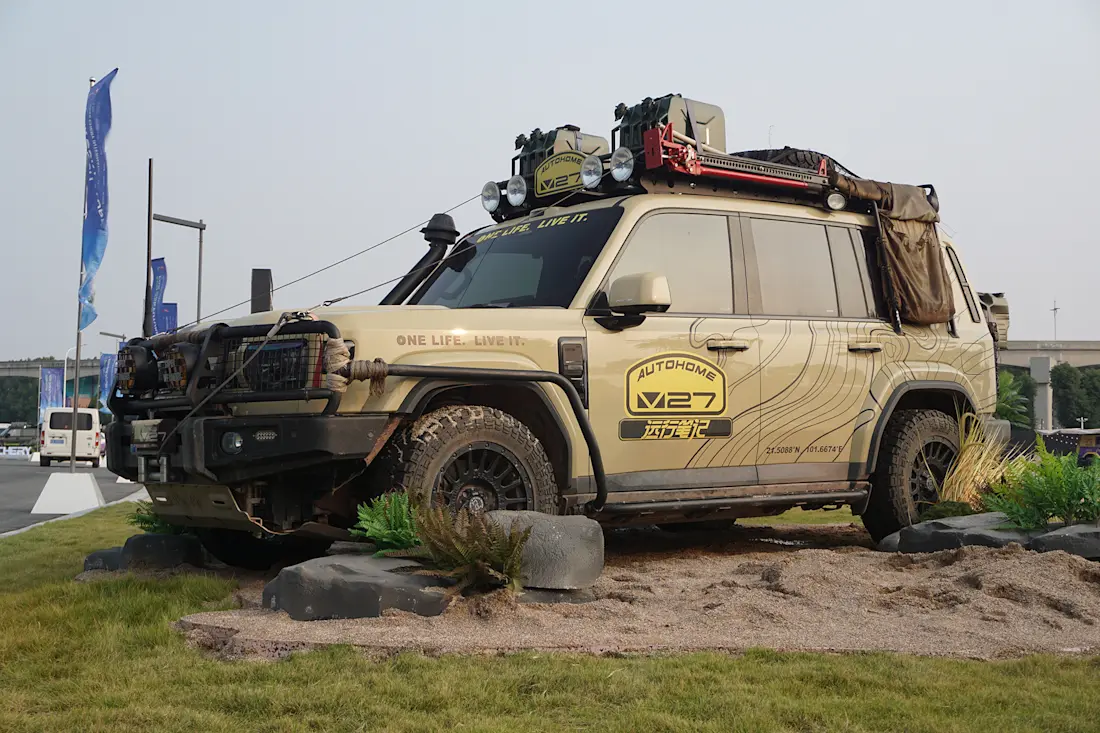
While the designs from Chery and other automakers in China are no longer the copies from before, it would be fair to describe many of them as derivative; you don’t have to squint very hard to see the inspiration behind plenty of the products being pumped out of plants around the country at a rapid pace, with countless companies and models to choose from.
It’s among what makes China’s auto industry so unique, with a sort of saturation that’s seen domestic brands turn the tables on foreign companies like Ford that once enjoyed downright dominance. A decade ago, the Dearborn, Mich.-based automaker sold almost a million vehicles a year in China. Last year, it couldn’t even crack 100,000 units.
Whether variety alone is helping Chery isn’t clear, but it doesn’t seem to be hurting, either. Under its umbrella brand are at least eight others including Jaecoo and Omoda, the two the company is launching in Canada to kick off its presence here. And while its first few models on the market will be entirely electric vehicles (EVs), the company is considering a variety of hybrids in the future, all of which fall under the federal government’s tariff reduction plan.
“(Canadians) deserve freedom of choice, particularly when it comes to new energy vehicles,” Zhang says, using the term Chery chooses to classify its collection of electrified options.
Among them are upcoming conventional hybrids that use enormous five-kilowatt-hour batteries — about four times the size of the ones in the likes of the Toyota RAV4 and Honda CR-V. The company is also planning to introduce vehicle-to-load (V2L) functionality with it, allowing that pack to function as a mobile power source that’s typically reserved for all-electric vehicles.
Other electrified powertrains developed by the company that are eligible for import under the 6.1 per cent tariff rate include plug-in hybrids (PHEVs) and extended-range electric vehicles (EREVs), the latter of which use gas engines that work as generators to feed energy into big battery packs; think the long-since discontinued Chevrolet Volt.
However, Chery chose to enter the Canadian market with EVs first for the simple reason of expedience. While any new vehicle needs to meet regulatory requirements before it can go on sale, a process known as homologation, one with an internal-combustion engine must also undergo emissions testing — a process that’s much simpler when the motors don’t burn gas.
Final Thoughts
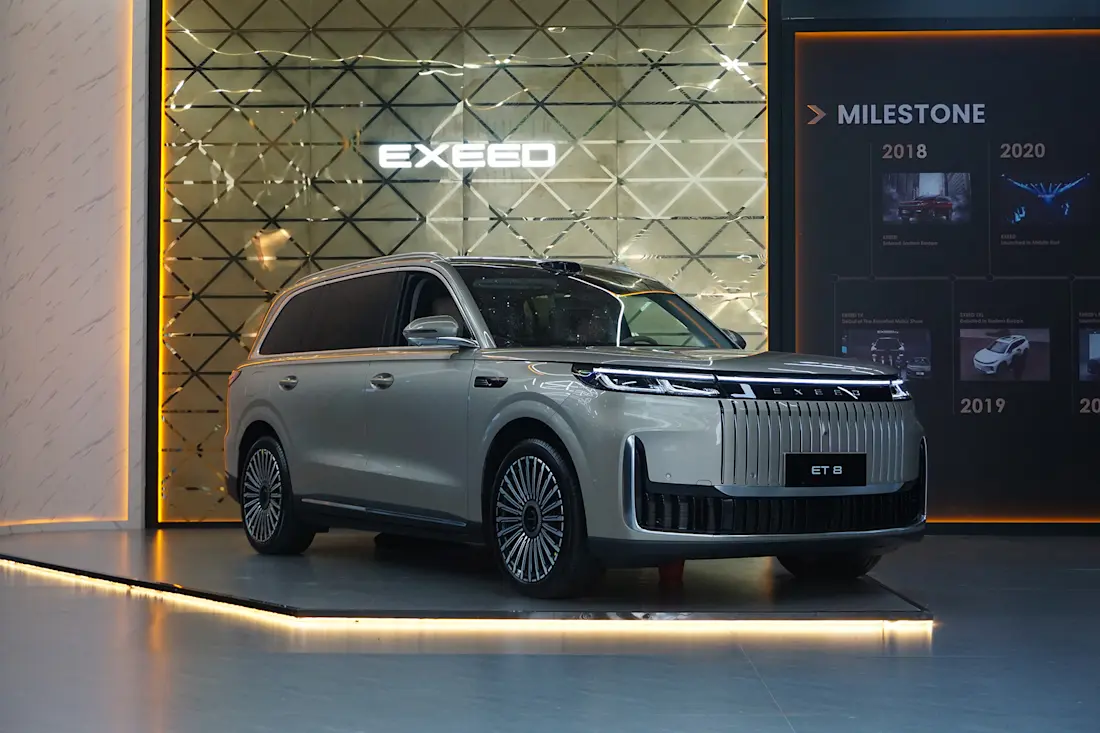
What remains to be seen — at least for now — is how much these new arrivals will cost. While hopes are high that they’ll be affordable, with the federal government carving out a percentage of the import quota for models priced at less than $35,000, Chery’s Zhang says there’s a misconception about Chinese-made products being “cheap,” stereotypes that stem from the country’s history as a source of inexpensive products like trinkets and toys.
That could lead to some sticker shock when the company’s first vehicles arrive in Canada, with Zhang and others making clear that they have no interest in taking steep losses to stimulate sales the way many Chinese brands have in their home market. As Zhang puts it, high value doesn’t always translate to low prices, and it’s the former his firm is focused on.
That sentiment comes into focus after some time spent wandering around one of Chery’s factories, as well as a few short stints driving an assortment of its products (including the first three models set to come to Canada). From the assembly line to the showroom, every door shuts with a solid, satisfying thud; the panel gaps are perfect inside and out; and, as Ford’s Farley noted with some alarm, the technology is impressive.
Indeed, the Chinese auto industry has come a long way from where it was in Chery’s earliest days, and the company itself is proof. Less than three decades ago it was building copies of small cars, and today it’s part of a powerhouse that has the head of at least one of North America’s largest automakers speaking with a sense of mortality. (Ford’s Farley described his company as not having a future if it can’t catch up.)
While the threat to legacy brands like Ford might not come purely through price, Zhang’s words about value are reminiscent of what happened to the action camera market in recent years. It used to be that GoPro was the first name in the business, cranking out new models at an iPhone-like pace on its way to near total dominance. Then along came China’s DJI — as well as Insta360 — to disrupt the established order and leave GoPro on the back foot.
And it’s not as if DJI’s offerings are cheaper than GoPro’s. But what they deliver for similar money is vastly superior technology and features that are leaving its California-based rival in the dust. And so it goes with a company like Chery, which seems to be on the same sort of trajectory as it plots its expansion into Canada and beyond.

All Articles
See all
What Are the Real-World Costs of Quick Charging an EV?
We investigate if quick 15-minute charges are effective and affordable for EV drivers.
 Michael Karant

Geely is Prepared to Fight the Uphill Battle of Winning Over Canadian Car Shoppers
As one of the first Chinese car brands confirmed for our market, Geely is ready to dazzle.
 Jodi Lai

Fiat 500e Range Guide: Winter Range, Charging Times and Battery Warranty
Explore the Fiat 500e Range, including its charging times, winter performance, battery warranty and ownership costs in Canada. Fiat 500e