
A Bad Adapter Caused My EV Charging Nightmare
 Benjamin Hunting


Electric vehicles (EVs) are currently undergoing a charge plug revolution in Canada — even if no one on this side of the border is asking for it. Because Tesla’s Supercharger network dominates the United States, every automaker serving North America is in the process of moving from the long-established Combined Charging System (CCS) plug found on most non-Tesla EVs before 2024 to the North American Charging Standard (NACS) plug used by Tesla.
This decision massively inconveniences Canadians because most of our country’s infrastructure is built around the CCS plug for fast charging and the J1772 plug for Level 2 charging. This is especially true in provinces that have led the EV charge, like Quebec, where CCS is everywhere, and Tesla Superchargers are few and far between. With 10 times as many potential customers in the United States, however, car companies have turned their backs on CCS to serve the market that they feel offers the highest potential profits.
How are car brands dealing with the mismatch between new EV NACS plugs and Canada’s CCS-heavy charging reality? So far, it’s been all about adapters, thick hunks of plastic and rubber that serve to bridge the gap between one plug type and the other so owners can still get their electron fix. It’s the latest annoyance — sorry, “accessory” — adding friction to the EV charging experience, and it’s a double-whammy because fast chargers and Level 2 home chargers each require their own unique NACS adapters, doubling the junk you must keep in your trunk.
While they might be a hassle to store and handle, I’ve used CCS-to-NACS adapters successfully for the past 18 months or so while charging at home and on the road in various electric vehicles. That all changed for me last month, when a long-distance road trip in the 2027 Chevrolet Bolt revealed just how much can go wrong when adapters refuse to play nice, leaving you stranded hundreds of kilometres from home.
One-Year Wonder
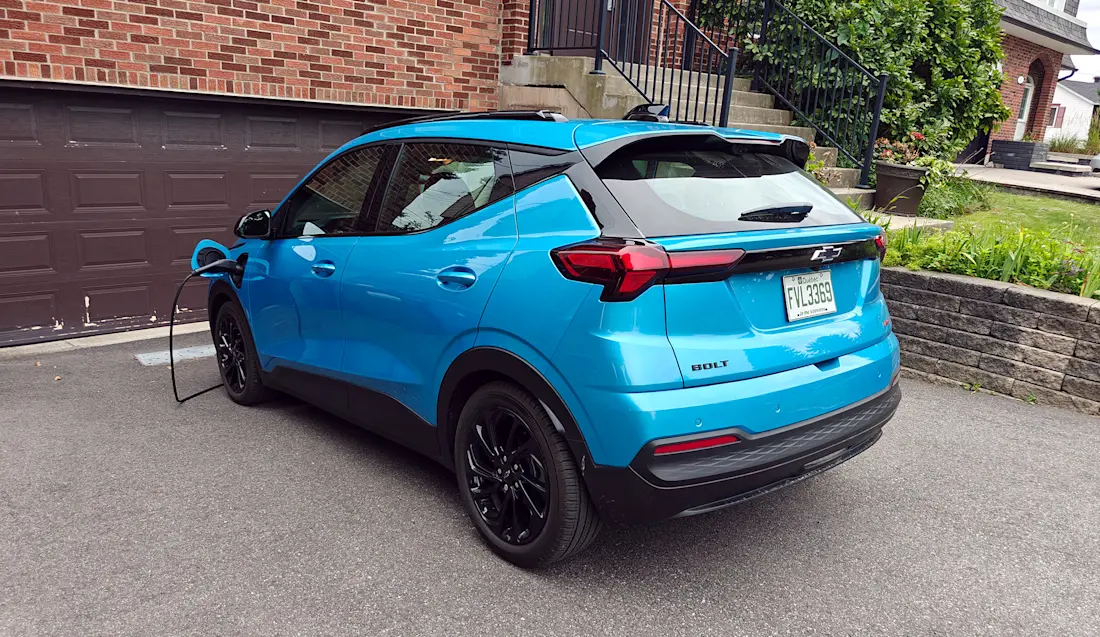
The Bolt is in a bit of a weird place, with the latest generation of the subcompact hatchback sliding into Chevrolet showrooms for just a single model year before disappearing from the lineup once again. It brings with it the new Ultium platform, replacing its bespoke battery setup from the previous model, which translates into 422 kilometres of advertised range from a 65-kWh power pack.
Power for the front-wheel-drive Bolt remains modest at 220 hp, but charging speeds have surged to 150 kW, which is average for an EV but a considerable boost over the original edition of the car.
In the real world, I saw about 370 km of range in mostly hot summer highway driving. Observed charging speeds, on the other hand? My experience was far more complicated.
Early Warning Signs
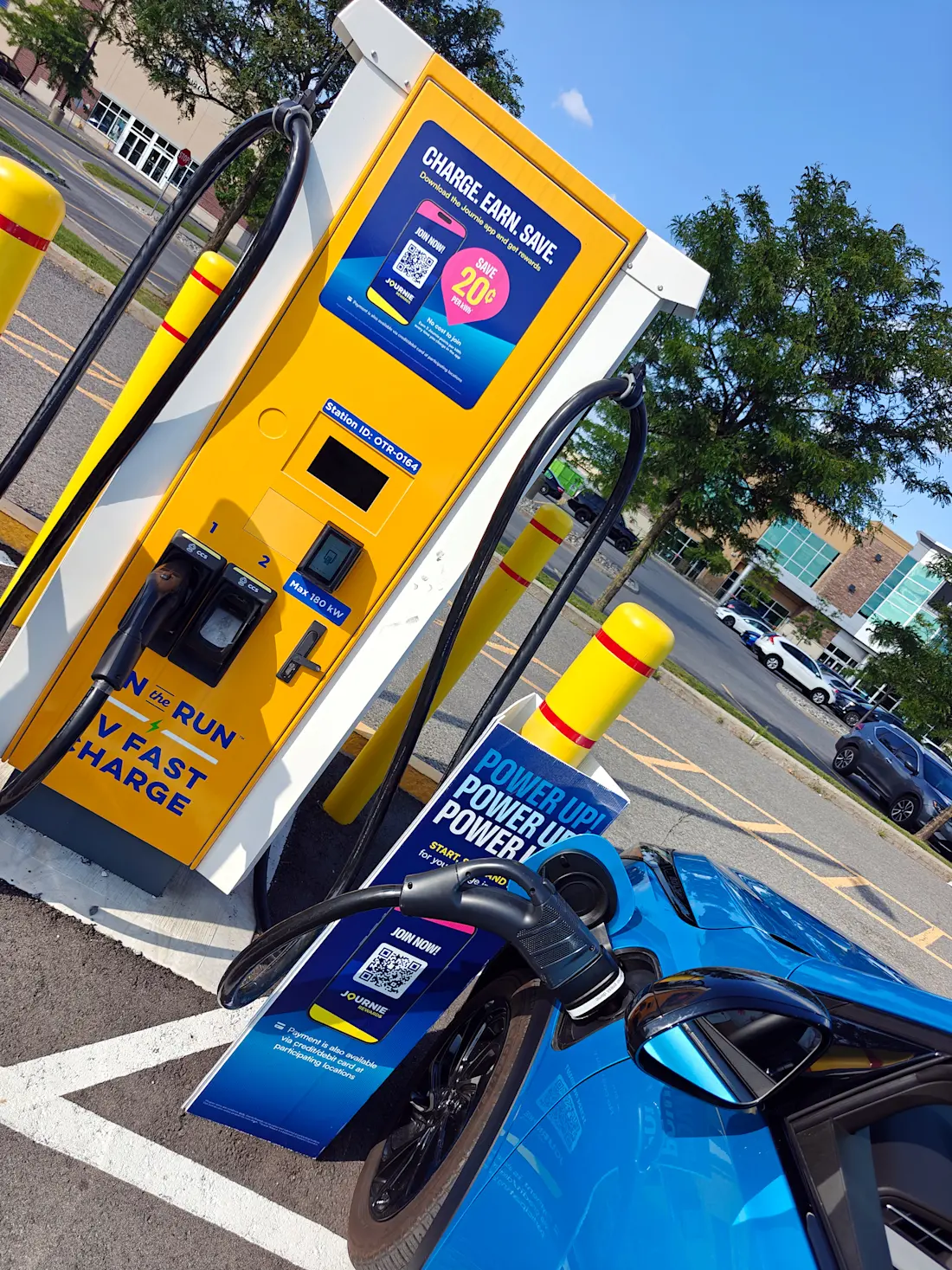
Chevrolet has made the Bolt its first NACS port vehicle, and while it offers adapters for plugging in to CCS chargers, you have to pay extra for them. That means if you’re coming from any EV other than a Tesla, you’ll need to fork over $115 to plug in to your existing Level 2 charger at home. If you want a DC fast-charging adapter, that’ll be another $250.
Charging customers for a component that’s vital for long-distance driving in Canada isn’t a good look. The bigger problem, however, is that neither of these factory adapters works reliably — or at least they didn’t when several of my colleagues and I tried to use them.
The problems started the day I picked up a 2027 Chevrolet Bolt RS to test drive and tried to charge it on my way home from Montreal. The first CCS fast-charging station I used seemed to work OK with the plug, but when I tried a second station further down the road, I immediately ran into problems. Despite using the same charging network (Electric Circuit), I plugged in to five different stations at the same location before the Bolt would even communicate with the charger. It was a 50-kW unit as well, which forced me to wait far longer than I would have if the Chevy had been able to connect with any of the 150-kW plugs.
At the time, I figured it was just a problem with that particular location, since it was well-visited and could, in theory, require more maintenance than a less-busy spot. When I got home, I used the Bolt’s second adapter to plug into my Level 2 charger, and I managed to top up the battery without any issues.
Wiggle, Waggle, Hold It In Place
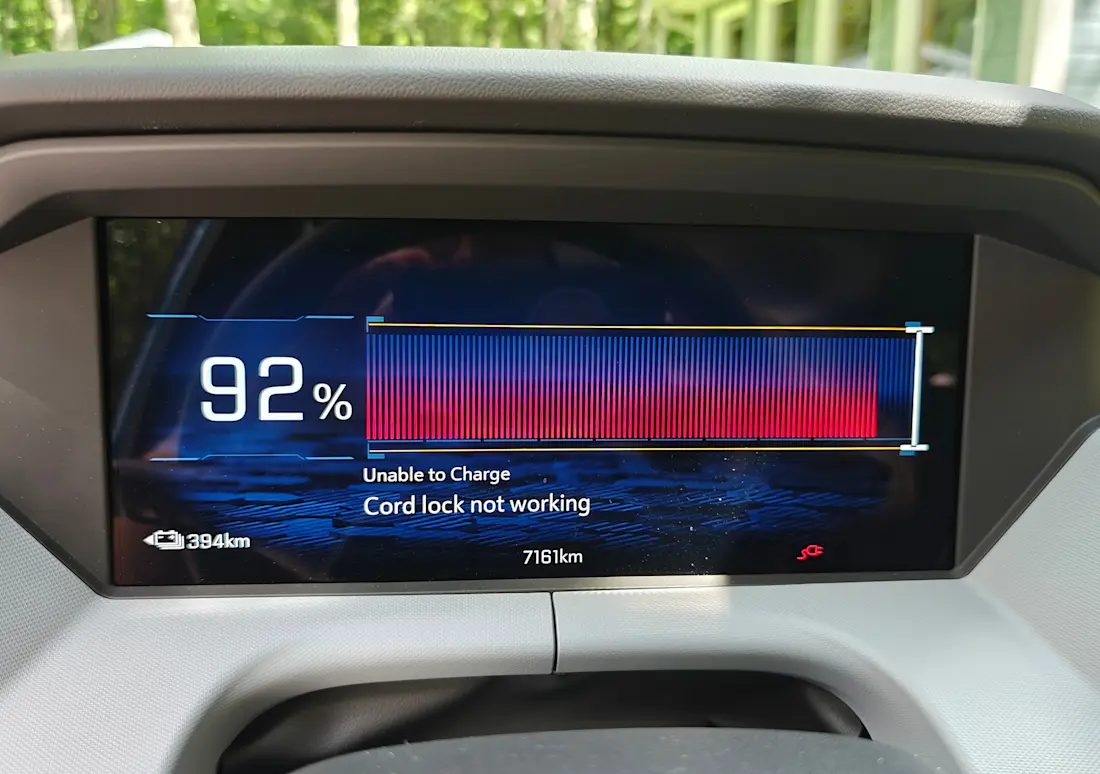
Unfortunately, the car’s adapter problem resurfaced several days later during a 400-km road trip from Quebec’s Eastern Townships to Ottawa, Ont. The morning we left, I noticed that the Bolt had stopped charging overnight. Puzzled, I unplugged and re-plugged the cable, only to receive a “Cord lock not working” error on the dashboard.
I searched online and found I wasn’t the only Bolt owner to have dealt with this particular problem. Solutions ranged from software updates to dealer visits to adapter replacements. Still, since I’d been able to successfully charge at home a few days before, and with the battery at a healthy 92 per cent, I decided to push ahead with our plans, especially since we’d be exclusively fast charging for the duration of our journey.
A couple of hours later, we rolled into the town of Rigaud, Que., to top up at an Electric Circuit station. Despite other vehicles charging successfully, I couldn't get the Bolt to connect to any of its plugs. I opened up the Plugshare app and discovered another station at a nearby IGA, and it was here red flags began to wave: I could only get the car to handshake with the station if I stood beside it and held the adapter at a precise angle, making contact with the various pins and mechanisms inside it at exactly the right points.
Tagging In Tesla
Frustrated by the adapter's flakiness, but heartened by the thought that I had figured out the problem, we arrived in Ottawa and sought out a charging station to bring the car to 80 per cent in preparation for the next day’s morning departure.
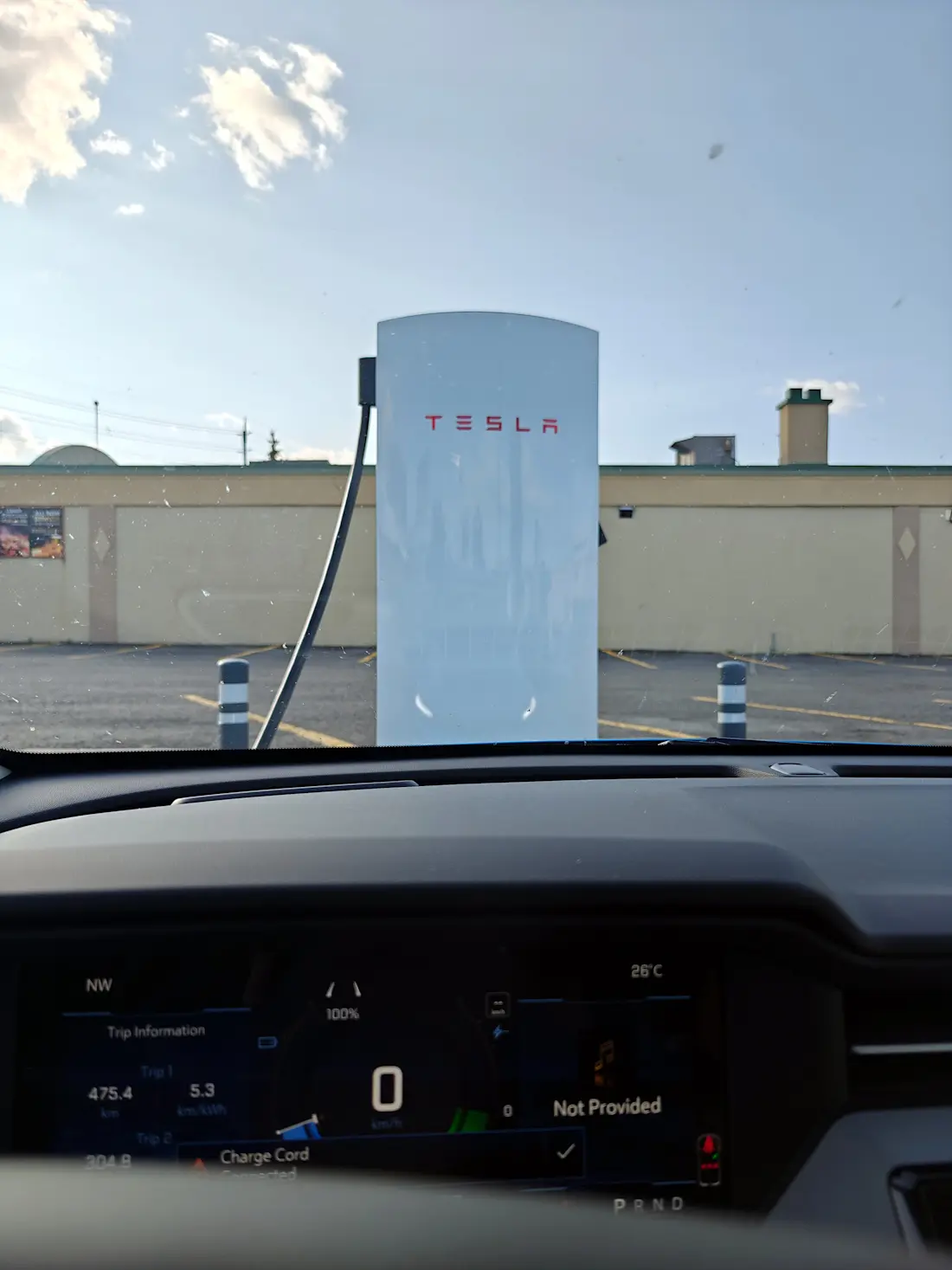
It quickly became clear that despite the success I’d had with the Bolt’s adapter earlier that day, it was now no longer willing to play ball. Multiple CCS charging stations and plugs refused to acknowledge the Chevy’s presence, and, running out of time and patience, I began to search for a Bolt-compatible Tesla station. Lucking out, there was one within easy driving distance, and after creating an account and plugging in with a native NACS plug, the Bolt charged with zero problems.
The conclusion seemed obvious. The Chevrolet adapter that came with the Bolt was defective, and I was going to have a hell of a time getting the car back to Quebec without using a flatbed tow truck.
Almost Stranded By Defective Adapters
The return trip was a litany of failure. Three separate fast-charging stations and nearly a dozen different plugs each failed in succession to communicate with the Bolt, including the very same station I’d successfully used the day I picked it up.
At this point, I was 100 km from home on the South Shore of Montreal, with about 11 per cent battery showing on the gauge cluster. I took another stab at finding a Tesla charger that would work with the Bolt (not all NACS stations in Canada are compatible with non-Tesla vehicles) and discovered they were all deep on the island of Montreal, well outside the vehicle's range.
Things began to feel ridiculous. Why should I be burning through a dozen plugs between two major cities in a brand new car? Why wouldn’t the adapter simply work as advertised? Desperate, I phoned a friend and fellow journalist who lived nearby to ask him if I could use his Level 2 charger, gambling that the slow-speed adapter might still have some life in it.
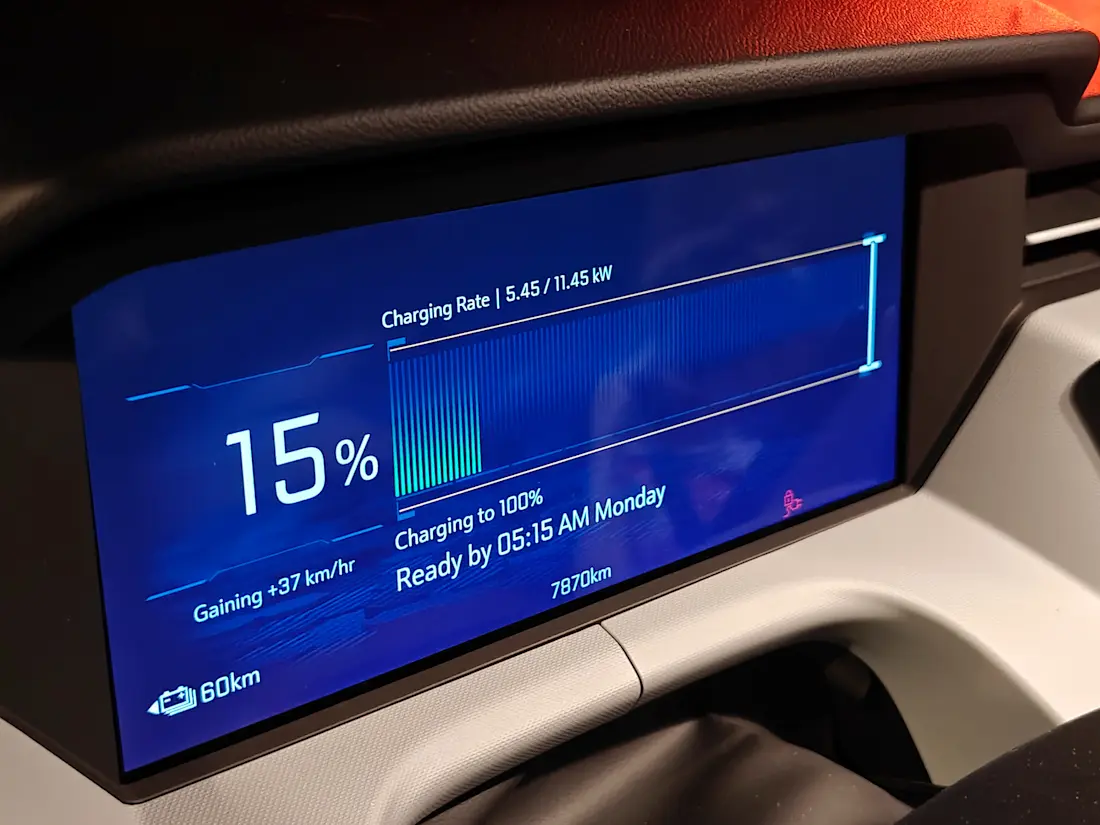
He wasn’t home, but he remotely activated his unit, and I limped into his driveway and plugged in with my fingers crossed. It worked. No cord lock error, no communications problem, and the Bolt was now charging at 9 kW or so, which gave us at least three hours to kill before we could resume our now 12-hour slog home. My wife and I walked 30 minutes to a restaurant and ate our feelings in ribs, then drove home with 15 per cent battery showing on arrival.
Also showing on arrival? That same charge lock error that had dogged me just a couple of days earlier. After resetting my charger, updating its software, and performing a software update on the Bolt (for its infotainment system, but hey, you never know), I was able to keep the car connected to my home charger long enough to hit 100 per cent battery several hours later.
Customers Deserve Charging Tech That Works

No EV owner should ever have to go through what I suffered with over the course of my weekend road trip. According to several colleagues I reached out to after my experience, I am far from alone in dealing with non-functioning CCS adapters for the Bolt, as I heard several stories about the same model simply refusing to charge in any situation. Compounding the frustration, these adapters are original equipment from the manufacturer (not some potentially sketchy aftermarket product), and Chevrolet asks owners to pay extra for them.
These problems aren’t just restricted to one manufacturer, either. Several weeks after my Chevrolet experience, I drove a Subaru Uncharted whose CCS-to-NACS adapter refused to communicate with any of the four fast chargers I connected it to. It’s worth noting that none of these plugs were the same ones I attempted to use with the Bolt.
It’s hard to see these problems as anything other than automakers rushing charging adapters to market without properly testing them, or at the very least working with reliable third-party manufacturers experienced in building these now-vital EV accessories. Canadian customers deserve better than to be afterthoughts in the wake of the American-led NACS switchover.

All Articles
See all
Could China’s Chery Actually Make Cars in Canada?
There’s plenty of buzz about Chinese automakers like Chery building cars in the country.
 Dan Ilika

Volkswagen ID.4 MPG and Range: Real-World Energy Use and Charging Costs
Compare Volkswagen ID.4 Efficiency and Range real-world fuel or energy use, official ratings and expected running costs for Canadian drivers.

Nissan Leaf Range and Charging Guide: What Canadian Buyers Should Know
You've spotted a used Nissan Leaf on AutoTrader for a fraction of a new EV's price, beside a brand-new one with about twice the range. Which one's yours?