
2026 Chevrolet Trax Review
 Jil McIntosh


Trader scores
This score is awarded by our team of expert reviewers after extensive testing of the car.
The 2026 Chevrolet Trax is the brand’s entry-level model, and it was completely redesigned in 2024.
This year, all that’s changed are some exterior colour options. The Trax comes in four trim choices starting with the 1RS at $29,199, including a non-negotiable delivery fee of $2,300. Next is the LT at $30,199. At the top end, the 2RS and the Activ tested here have similar features but have slightly different aesthetic aims. Both are $32,399 before options.
Styling: 8/10
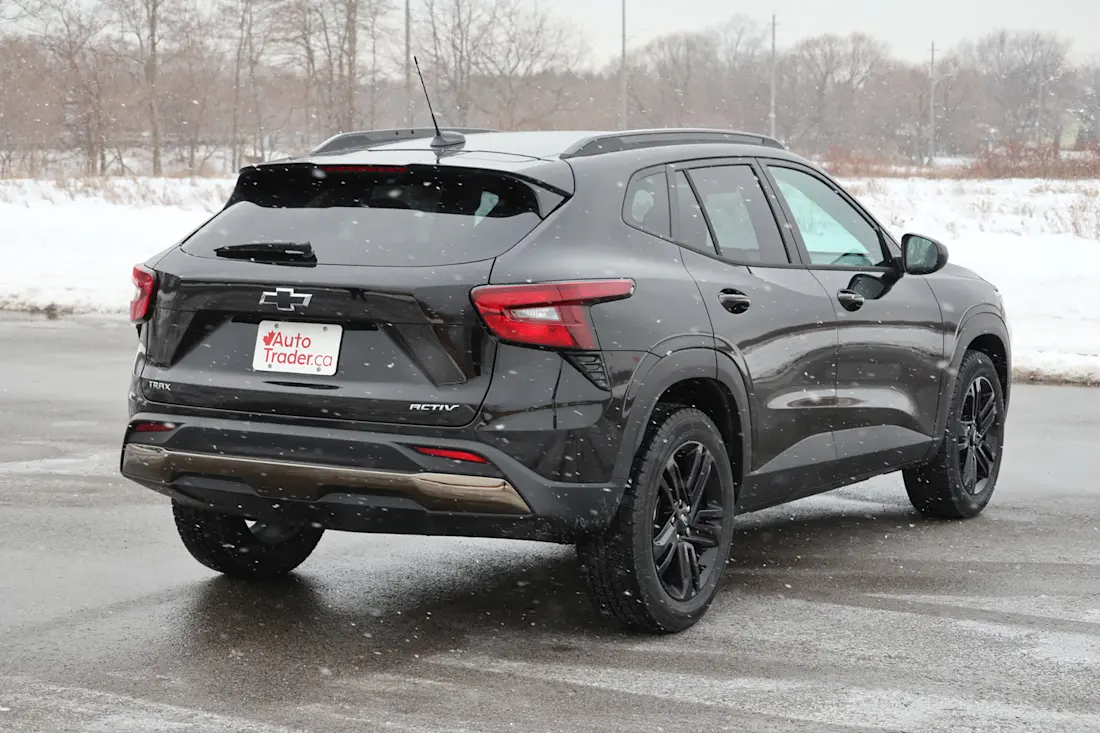
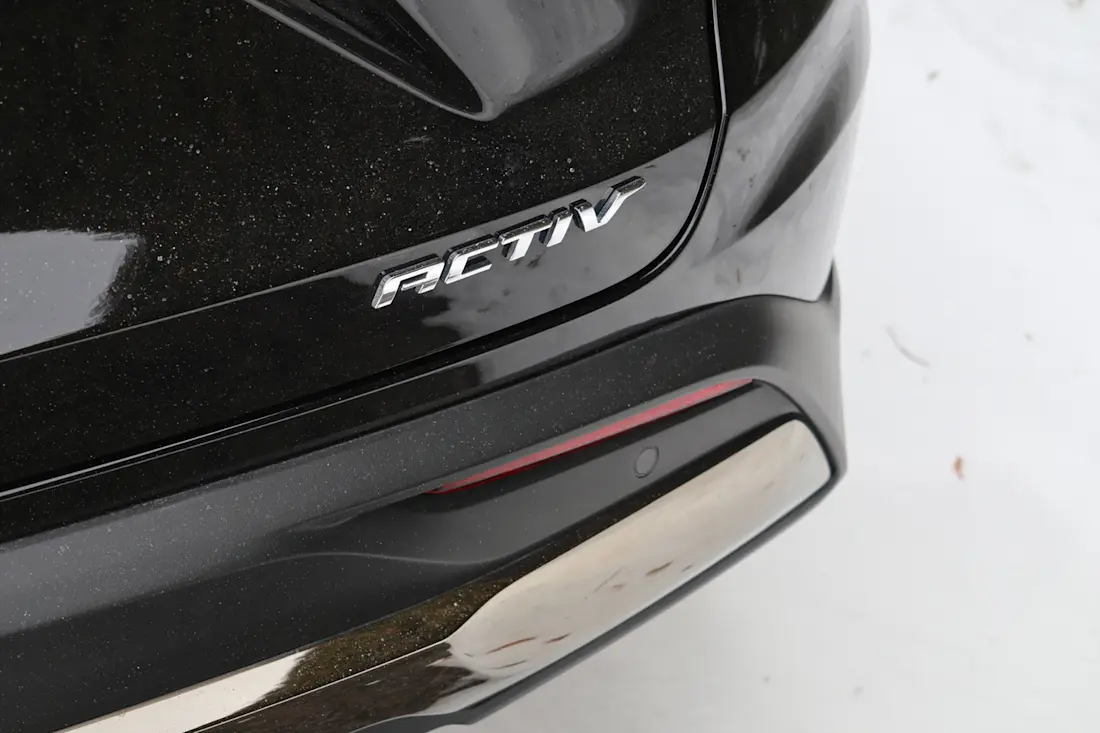
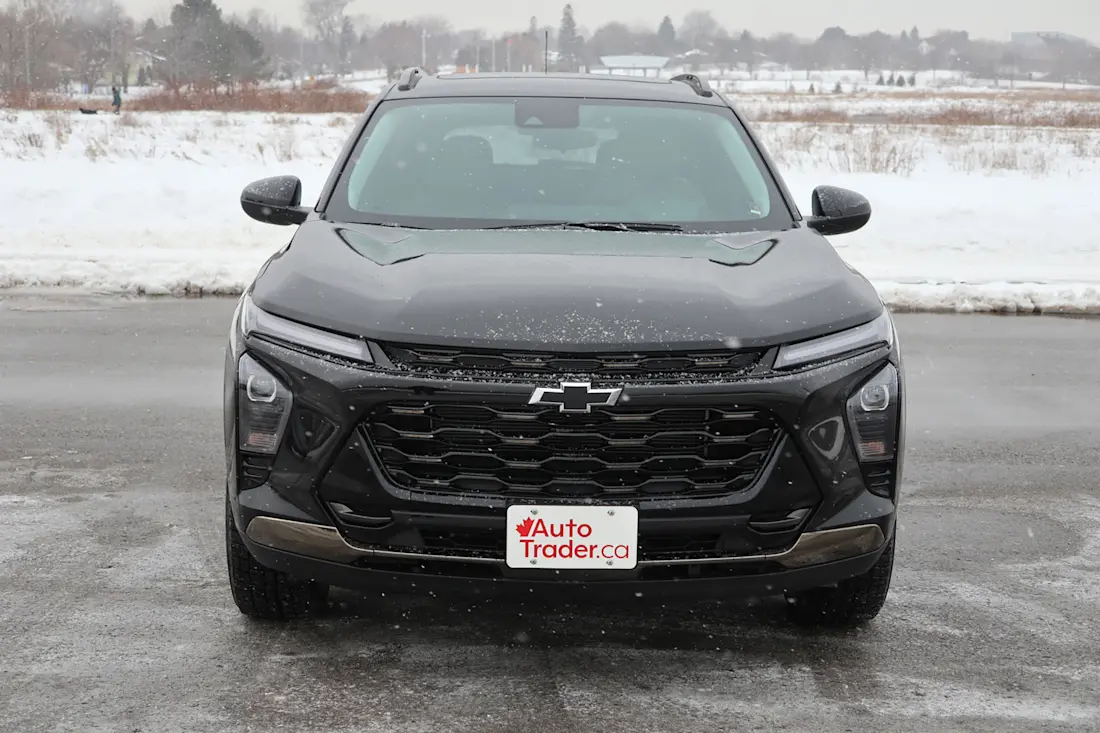
The Trax’s front-end styling suits it, giving it the look of a larger vehicle without overwhelming its small size; and the rear end has enough angles to be interesting but not cluttered. The Activ trim has 18-inch wheels to the identically-priced 2RS with its 19-inch rims. The larger wheels look better, but you’ll also pay more for winter or replacement tires. The cabin has a lot of hard plastic, but the attractive styling lessens the impact, and it’s all pretty impressive.
Safety: 7/10
The United States National Highway Traffic Safety Administration (NHTSA) hadn’t crash-tested the 2026 Trax at the time of this writing, but it did smack up an early release of the 2025 model, and gave it four out of five stars. That included five stars for side crash safety, but only four for front and rollover crashes.
The Insurance Institute for Highway Safety (IIHS) hadn’t yet done its side crash on the 2026 Trax, either; but while it got the top “Good” rating in the small front overlap crash results, it received “Poor” in the updated moderate front overlap, which now assesses potential injury to a rear-seat passenger as well as to those in front. It also got “Acceptable” for ease-of-use of its child seat tethers; “Marginal” for headlight performance and how its emergency front braking recognizes pedestrians; and “Poor” for recognizing vehicles.
Driver-assist features on all trims include emergency front braking, blind-spot monitoring with rear cross-traffic alert, lane-keep assist, automatic high-beam control, teen driver controls, and the back-up camera that’s mandatory on all new vehicles. The entry-level 1RS has conventional cruise control, while other trims have the adaptive version.
Equipment: 8/10
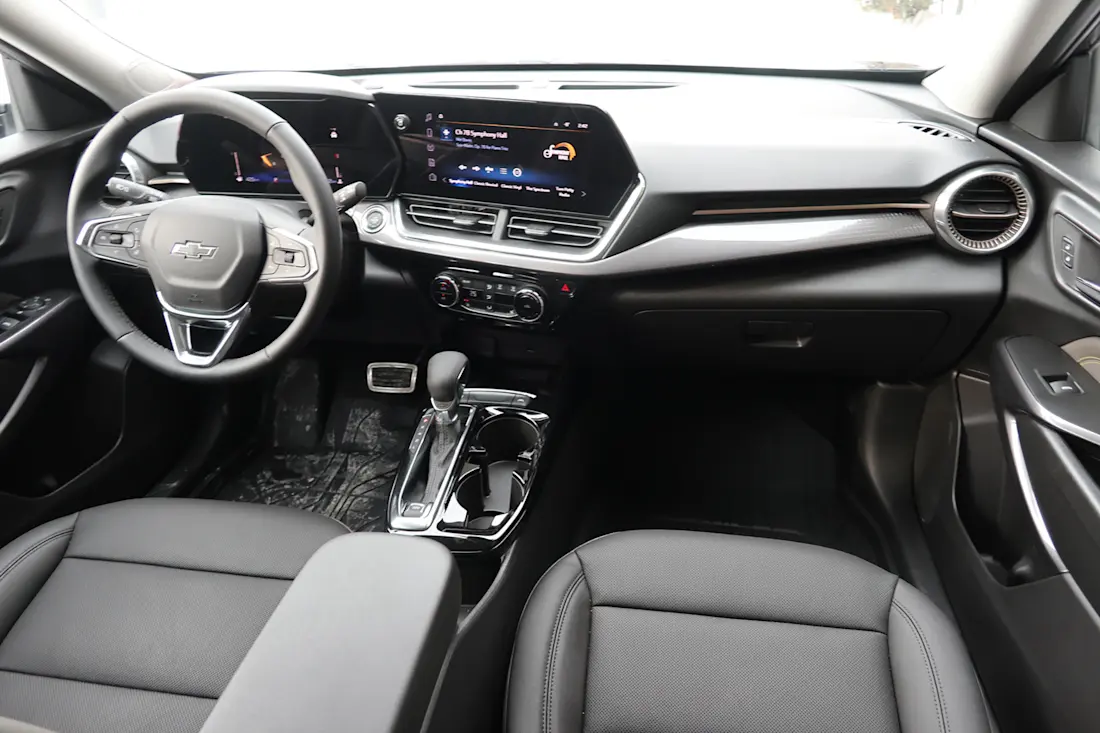
The 1RS is pretty basic in terms of content, although it has a heated steering wheel and front seats, manual air conditioning, heated mirrors, and an eight-inch touchscreen with wireless Apple CarPlay and Android Auto connectivity. The LT adds an 11-inch touchscreen, cargo privacy cover, keyless entry, and automatic single-zone climate control. On the 1RS, a sunroof is available for $995. On all other trims, it’s bundled in with a wireless charger that isn’t available separately, and the package is $1,095.
The 2RS and Activ both add faux-leather upholstery, while the 2RS adds those aforementioned 19-inch wheels. The Activ’s advantage used to be its exclusive power-adjustable driver’s seat, but the 2RS gained that last year. Instead, the Activ also has a power lumbar support that the 2RS does not.
User-Friendliness: 9/10
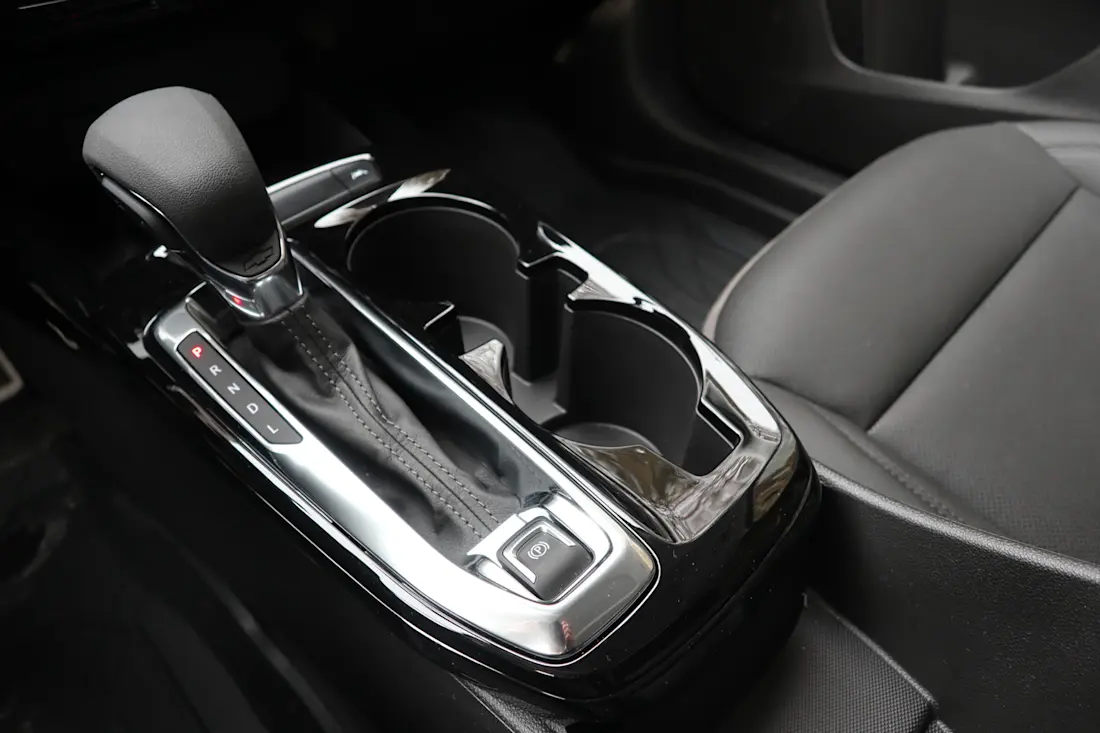
All the controls are refreshingly simple, with dials for the temperature and fan speed, and buttons for the vent modes and heated seats. While there isn’t a lot going on in the centre screen if you don’t connect your phone, the menus are intuitive. The gear selector is a conventional one, and the controls on the steering wheel are straightforward and easy to use.
Everyday Usability: 8/10
The Trax’s cargo opening is relatively wide, making it easy to load items inside, and the rear seats fold almost flat. Its 725 L of space slots between some rivals, where the Honda HR-V has 691 L but the Kia Seltos has 752, and the Nissan Kicks offers 849 L. Small-item storage includes a handy open cubby ahead of the covered console bin.
Comfort: 8/10
The Trax feels spacious, and outward visibility is good. I found the seats surprisingly supportive for an entry-level vehicle, which helps with spine comfort during long drives. The second-row seats are flatter, of course, but there’s generous legroom for the vehicle’s size. The cabin is quiet for an entry-level model as well.
Powertrain: 8/10
The Trax uses a turbocharged 1.2L three-cylinder engine that makes 137 hp and 162 lb-ft of torque. Chevrolet has wisely mated it to a six-speed automatic transmission rather than a continuously-variable transmission (CVT). There’s a minor fuel efficiency penalty, but the six-speed shifts nicely, while a CVT attached to a very small engine can drone and feel rubbery.
The three-cylinder is surprisingly energetic in city driving, with good performance from a stop and smooth operation at moderate speeds. It struggles more with highway passing or up steeper hills, where the engine is noisy and has to work hard. The Trax has more torque than many of its rivals, but like them, it has its limits.
Driving Dynamics: 9/10
The Trax comes only in front-wheel drive (FWD), and you have to move over to its Trailblazer sibling to get all-wheel drive (AWD). Even though its rear wheels aren’t powered, the Trax is far more fun to drive than you’d expect. The steering is quick and nicely weighted, and it’s well-balanced around curves and corners. You won’t be taking home the trophy at an autocross event, but the Trax is a decent driver that’s also well-behaved in traffic, and easy to spin around in tight parking lots.
Efficiency: 8/10
Natural Resources Canada (NRCan) rates the Trax at 8.5 L/100 km in the city, 7.6 on the highway, and 8.1 combined. In a week of bitterly cold weather, this tester finished with a higher indicated average of 9.1.
Among its competitors in their FWD configurations, the Honda HR-V rates at 8.3, while others burn less gas: the Nissan Kicks is good for 7.4, the Kia Seltos comes in at 7.6, and the Trax’s Trailblazer cousin has a projected average of 7.8.
Value: 8/10
The Trax’s four trims run from $29,199 to $32,399, which puts it mid-pack among some of its competitors. In FWD, the Kia Seltos undercuts it at $28,195, while the Nissan Kicks is slightly higher at $29,228, and the Honda HR-V starts at $32,300. The Chevrolet Trailblazer, which is a bit smaller than the Trax, starts at $30,999 in FWD and with the same engine as the Trax at that price. With AWD, the Trailblazer has a more powerful engine, and it ranges from $32,999 to $37,899 (all prices include freight.
The Verdict
I was sorry to give the 2026 Chevrolet Trax back after my week with it. It’s not a powerhouse, but it’s a good city runabout. It’s roomy and comfortable, and it’s fun to drive as well. All of that combines to make it a serious contender in the subcompact sport utility segment.

Specifications
Trim Tested
2026 Chevrolet Trax Activ
Base Price
$30,099
Options
$2,690 — Sunroof package, $1,095; Mosaic Black Metallic paint, $495; Interior Protection package, $485; Sport pedal kit, $325; Engine block heater, $195; Wheel locks, $95
A/C Tax
$100
Destination
$2,300
Price as Tested
$35,189
Displacement
1.2L
Cylinder Count/Configuration
Turbo I3
Horsepower
137 hp @ 5,000 rpm
Torque
162 lb-ft @ 2,500 rpm
Fuel Economy
8.5 / 7.6 / 8.1 L/100 km cty/hwy/cmb
Cargo Space
725 / 1,532 L seats up/down

All Articles
See all
2026 Chevrolet Silverado Trail Boss Review
With a redesigned Silverado on its way, is now the time to get into Chevy’s half-ton?
Jil McIntosh
2026 Chevrolet Equinox EV Review
A solid choice let down by some questionable tech.
 Sébastien Bell

2027 Chevrolet Bolt Review + Video
This practical and affordable EV is back, but not for long.
 Jodi Lai