
AWD, 4WD, 4x4: What's the Difference?
 Justin Pritchard

The reader emails arrive every autumn:
- “Do I need four-wheel drive or all-wheel drive?”
- “Is Subaru's system a 4x4?”
- “Are SUVs AWD or 4WD?”
The difference between AWD and 4WD matters more than the badge suggests. Canadians buy more AWD and 4WD vehicles than ever, partly because availability has widened and partly because modern drivetrain hardware is lighter and costs less fuel than it used to.
The nomenclature is still a mess. This guide sorts it out.
Overview
| All-wheel drive (AWD) | Four-wheel drive (4WD, 4x4) | |
|---|---|---|
| Hardware | Centre differential or clutch pack | Transfer case |
| Driver input | Usually none, always active | Often switched on manually |
| Low-range gearing | No | Yes on most systems |
| Typical vehicles | Cars, crossovers, some SUVs | Pickup trucks, body-on-frame SUVs |
| Best at | Snow, ice, rain, on-road traction | Off-road, towing, deep mud and sand |
| Fuel economy cost | Small | Larger |
If the vehicle has a differential between the axles, it is AWD. If it has a transfer case, it is 4WD.
All-wheel drive (AWD)

AWD uses one of several methods to drive all four wheels. You will find it mostly in cars and smaller crossover models, though it appears in larger SUVs and even some pickup trucks.
Subaru is the brand most associated with AWD, since virtually everything it builds has Symmetrical AWD as standard. Volkswagen, Honda, Ford, Chevrolet, Mitsubishi, Nissan and others all offer AWD systems too, often under marketing names.
For example:
- 4Motion (Volkswagen)
- xDrive (BMW)
- 4Matic (Mercedes-Benz)
- Real Time AWD (Honda)
- S-AWC (Mitsubishi)
- quattro (Audi)
- ALL4 (MINI)
Other brands, like Dodge and Ford, simply call their AWD systems “AWD”.
All-wheel drive is decision-free in the vast majority of vehicles. No button, no lever. The system is always on and always working. In slippery conditions where a two-wheel drive car sits spinning, an AWD vehicle usually just goes.
All-wheel drive is not front-wheel drive or rear-wheel drive. It is both at once.
Four-wheel drive (4WD, 4x4)

Four-wheel drive has the same goal and different priorities. You find 4x4 in bigger, heavier, more truck-like machines, such as the Jeep Wrangler, Ram 1500, Toyota Sequoia or Ford Bronco.
The key difference is driver decision-making. Many 4WD systems need switching on with a button, dial or lever. Engaged, all four wheels are powered. Disengaged, the vehicle runs in two-wheel drive, usually rear-wheel drive.
Exceptions exist. Some 4x4 systems have an on-demand auto mode that engages within milliseconds when the system detects slip, and full-time 4WD setups never disengage at all. Certain versions of the Jeep Grand Cherokee always power all four wheels and cannot be set to two-wheel drive, yet the underlying hardware still makes them 4WD.
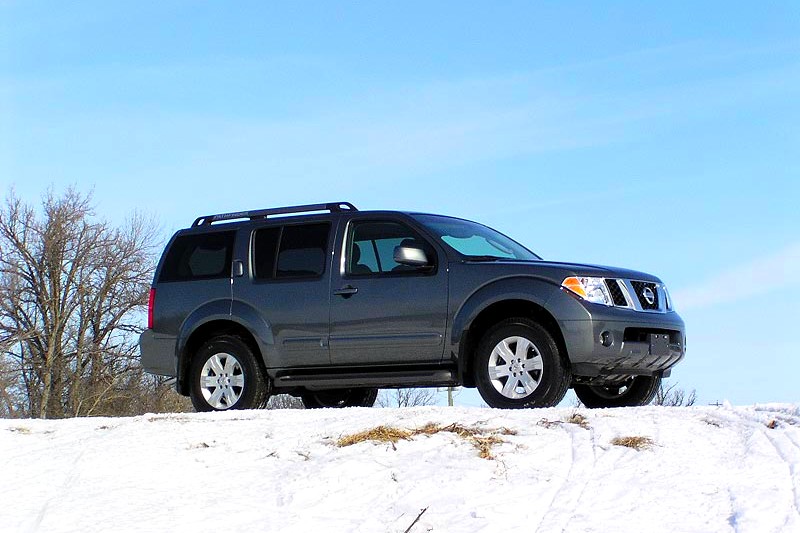
The naming is genuinely loose. The Nissan Pathfinder is a crossover running an Intelligent 4x4 system that can drop to two-wheel drive. The Ford Escape is marketed with Intelligent 4WD that cannot, which makes it behave more like AWD. The Honda Ridgeline uses VTM-4, an AWD system, in a pickup truck body.
To cut through the marketing, look at the hardware.
The guts of the system
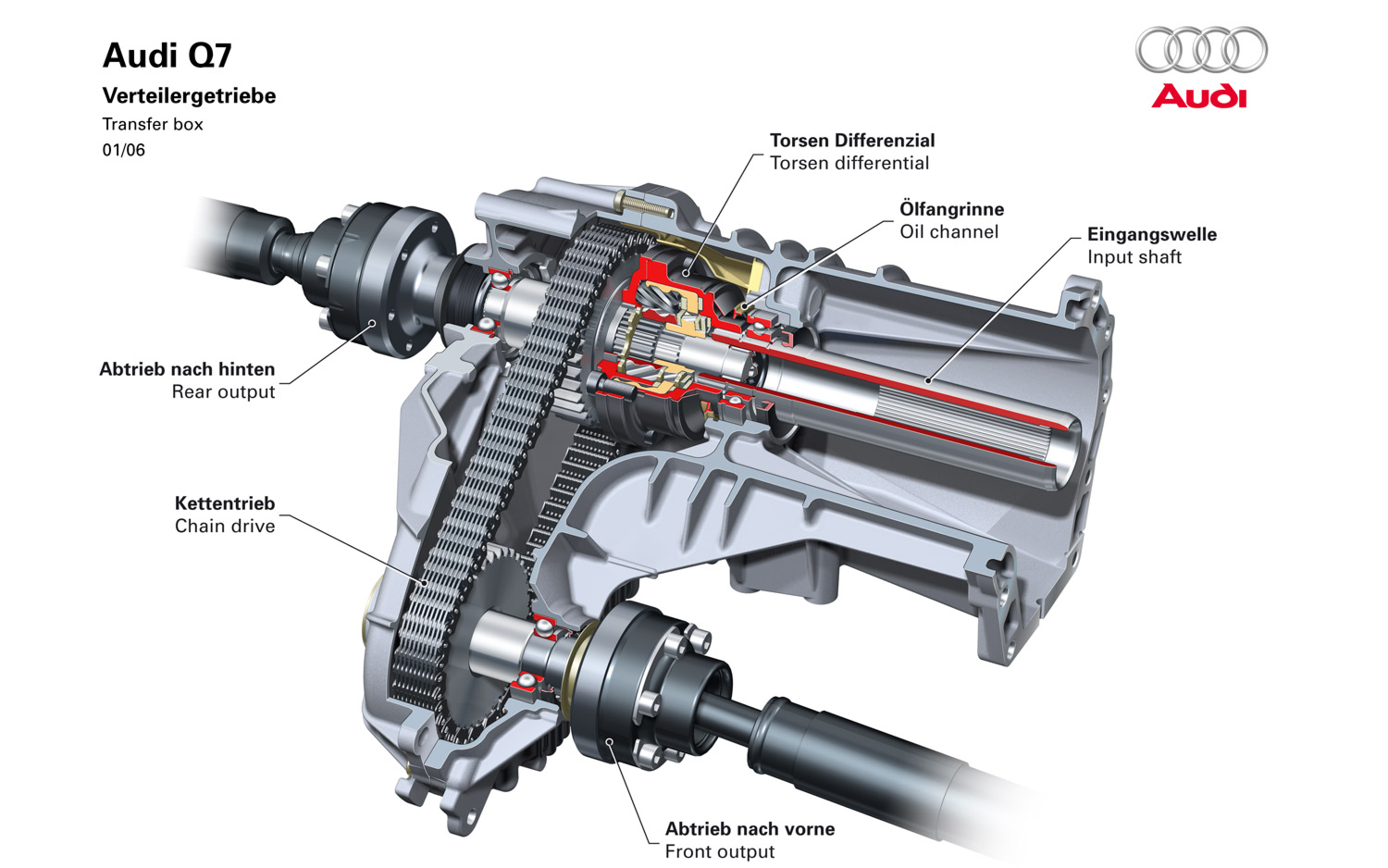
In an AWD system, there is typically an automated clutch or differential that can deliver or cut power to a given axle. The clutch engages in increments, so a little extra torque goes where it is needed rather than all or nothing. Fluid pressure or an electronic control drives it, usually under a computer monitoring traction control inputs, and it engages at blink-of-an-eye speeds.
Some AWD systems are far more primitive. Subaru's viscous coupling works with no computer control at all.
Why run in two-wheel drive? Fuel efficiency. Many AWD vehicles drive only the front or rear wheels when grip is abundant and send power rearward within milliseconds when slippage appears.
In most 4x4 systems, activating four-wheel drive means physically meshing gears inside the transfer case. Some transfer cases add low range, a set of shorter gears for low-speed work in gravel, mud or steep terrain. Low range is a 4WD feature. If your vehicle has AWD, it does not have it.
Benefits and trade-offs
- AWD improves acceleration and handling on wet, snowy or icy pavement, needs nothing from the driver and costs relatively little in fuel. It will not crawl a rocky trail or tow at the limit.
- 4WD delivers maximum grip at low speed, tolerates payload and towing loads better and pairs with the ground clearance that body-on-frame vehicles carry anyway. It adds weight, complexity, purchase price and running cost.
Both share one limitation worth stating plainly. Neither system shortens your stopping distance. Driving all four wheels helps you go. Braking and cornering grip come from tires, and ABS and stability control do the rest. A front-wheel-drive car on four winter tires out-stops an AWD vehicle on all-seasons, every time.
Performance and capability
Pick the system by the job, not the badge.
- Daily driving in snow and ice: AWD, on winter tires.
- Highway confidence in rain: AWD, or FWD with good tires.
- Gravel roads, cottage tracks, light trails: AWD with decent ground clearance handles more than most owners expect.
- Rock, deep sand, water crossings: 4WD with low-range.
- Towing a trailer up a wet launch ramp: 4WD low-range, comfortably.
Brake-based torque vectoring, which brakes an inside wheel to help rotate the car, sharpens handling in ways a transfer case never will. True torque-vectoring differentials go further, using clutches to push extra torque to the outside wheel. A locking differential does the opposite job, forcing both wheels on an axle to turn together when one is off the ground.
Costs and fuel economy
AWD is usually a paid option or a higher trim level, and the premium varies widely by model. On trucks and body-on-frame SUVs, 4WD generally costs more again.
The fuel consumption penalty is smaller than reputation suggests on modern AWD, because disconnecting hardware lets the system idle when grip is fine. Older and part-time 4WD setups give up more.
Maintenance is the line people forget:
- Transfer cases and differentials need scheduled fluid changes.
- On an AWD vehicle, check the owner's manual before replacing only one or two tires, since mismatched circumference stresses the centre differential.
- Repair costs run higher on both systems than on FWD.
Against that, resale value on AWD and 4WD holds up well across most of Canada, which recovers part of the premium.
How you use the system matters too, and our guide to driving with AWD and 4WD covers the habits that keep both healthy.
Canadian ownership considerations
Winter is the reason most Canadians shop for these systems, and the honest advice is that tires matter more than drivetrain. Four winter tires on a FWD car beat all-seasons on an AWD crossover in almost every measurable test. AWD plus winter tires beats both.
Regional use splits cleanly:
- Prairie and northern buyers tow, haul and drive unplowed roads, so pickup truck 4x4 dominates.
- Urban Ontario and Quebec buyers mostly want confidence pulling out of a snowed-in parking spot, which AWD covers. Quebec requires winter tires from Dec. 1 to March 15 on passenger vehicles registered in the province. No AWD system exempts you.
- British Columbia requires winter tires or chains on most highways from Oct. 1 to April 30, with select routes outside mountain passes ending March 31, and those rules specify tires, not drivetrain.
Alternatives
You may not need either one.
Front-wheel drive with proper winter tires covers most Canadian city driving. It is lighter, cheaper to buy, cheaper to run and simpler to fix. Rear-wheel drive, or RWD, is the weakest layout in snow, though modern stability control has narrowed the gap considerably.
Electric vehicles complicate the vocabulary again. A dual-motor EV drives all four wheels with no centre differential, clutch pack or transfer case. Each axle still has its own differential, but the front-to-rear split is handled electronically rather than mechanically. Manufacturers still badge it AWD, and functionally it behaves like the best AWD hardware, responding faster because motor torque arrives instantly.
Compare drivetrain options across trims on our model research pages before you commit, and read our guide to getting the most out of all-wheel drive once you own one.
Shop AWD and 4WD Vehicles
Filter Canadian listings by drivetrain, body type and budget. Compare AWD crossovers and 4x4 trucks side by side before you visit a dealer.
Frequently Asked Questions About AWD and 4WD

All Articles
See all
BF Goodrich Winter Tires Compared: Winter T/A KSI vs. All-Terrains
Yes. You need winter tires.
 Jacob Black

New Cars Are Getting Too Complicated — Buyers Are Pushing Back
From frustrating touchscreens to intrusive safety alerts, new car tech is overwhelming drivers. Here’s how automakers are responding.
 John LeBlanc

Subaru’s Uncharted Could Point to the Future of Enthusiast Hatchbacks
This electric Subaru is surprisingly fun, but is it more fun than a Golf R?
 Jeff Wilson