
Opinion: Stop Blaming China for Car Features You Hate
 Chris Tsui


For the past 15 years or so, every time a new car was unveiled with an excessively large front grille and an all-screen-no-buttons interior, there were almost always internet comments bemoaning these new trends and attributing them to the tastes of the Chinese market.
With privately owned cars only becoming mainstream everyday objects in China fairly recently, the implication was that Chinese consumers craved big, in-your-face branding with the latest cutting-edge tech, aesthetic subtlety and actual usability be damned. If those stereotypes were true, it’d be reasonable to expect Chinese-made cars to trend toward gigantic grilles and put all of their controls in a huge touchscreen. Just like how America loves a Texas-sized pickup, Germany is still the king of luxurious autobahn missiles, and Japan has its own whole genre of tiny kei cars that can fit in Tokyo alleyways, a country’s taste in cars is very much reflected in the automobiles it chooses to produce.
I recently went to China for the 2026 Beijing Auto Show to see what the car market and streets are actually like over there. And as it turns out, we may have been misled about why new cars are the way they are today.
No, The Grilles Aren’t All Huge
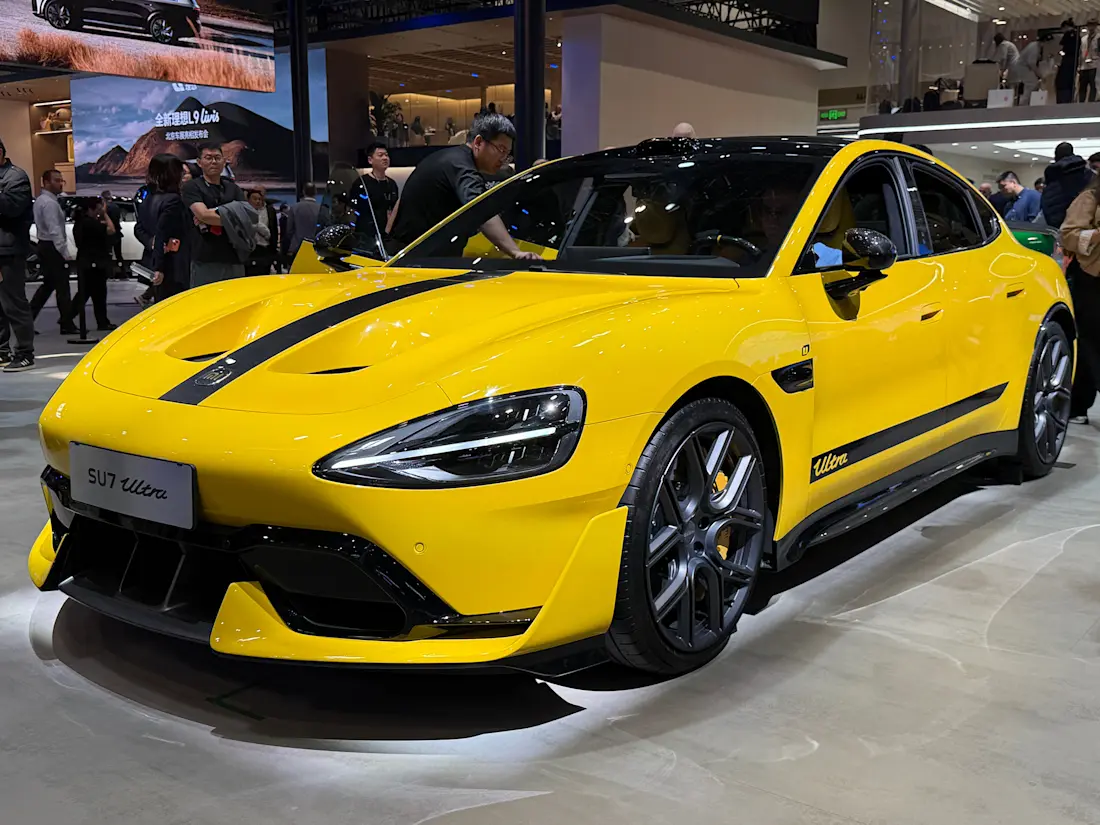
BMW’s former design boss once went on record as saying China was basically the reason for the brand’s recent huge-grille era. And while its two main domestic rivals, Mercedes-Benz and Audi, have also been putting out controversially large interpretations of their signature grilles, this practice isn’t really a thing with their Chinese contemporaries, at least not to the same degree.
Neither of Xiaomi’s vehicles has a big grille. Geely-built Zeekrs like the 001, X, and 7X all have fairly tame-looking front ends with barely styled air vents at the bottom, while BYD luxury arm Denza has managed to design electric cars that rock the no-grille look while sidestepping the horror movie aesthetic of a gas car that’s had its mouth removed by paranormal activity. This conspicuous lack of grille makes mechanical sense when you remember EVs (which don’t require as much cooling) are a firmly established, bread-and-butter part of China’s car industry rather than a still-small, emerging segment of the market like it is elsewhere.
Now, I’d be lying if I said there are zero Chinese cars with huge grilles. Higher-end Zeekrs like the 9X SUV and 009 van do sport fairly large front vent designs, as does Denza’s D9 van and the Hongqi H9, one of the country’s closest answers to the Mercedes-Maybach S-Class or Rolls-Royce Phantom. But these are big, expensive, flagship vehicles with big, expensive, flagship images to uphold. And in that context, big grilles have arguably been part of that recipe well before the average person in China even knew what a Bentley was.
Instead, the real target audience for large-intake cars may actually be staring right back at us in a mirror because the current-generation BMW M3 — the poster-child for the big grille — had its best global sales year in 2025 in the model’s history despite the brand’s overall sales dropping in China.
But the real kicker is that after a day of walking around the Beijing Auto Show, the average front grille on display wasn’t any bigger or more obnoxious than what you’d find on the floor at Detroit or Geneva. An unscientific method of observation, sure, and perhaps Chinese tastes were indeed different 12 years ago. But even if they were, tastes and public perception change fast. And as far as I can tell from actually being on the ground in China, grilles on Chinese cars in 2026 are, if anything, more restrained than the ones Germany, Japan, and America are putting out.
They Like Buttons Too, Actually
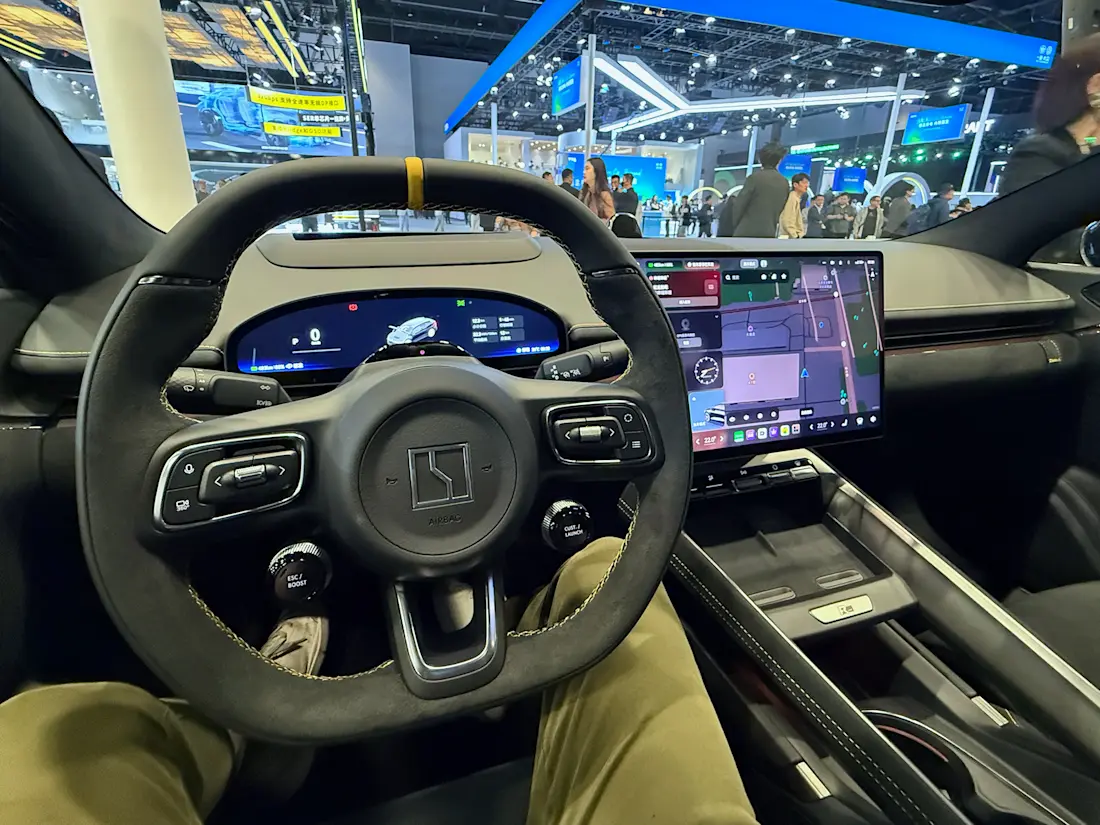
The other stereotype-bucking thing I discovered about modern Chinese vehicles has to do with their interiors. Despite the big trend of “tacked-on-iPad”-style touchscreens, haptic controls, and the removal of physical knobs and buttons arguably being popularized by Tesla, Chinese consumer preferences have been pointed to as the reason why some modern car interiors are the way they are.
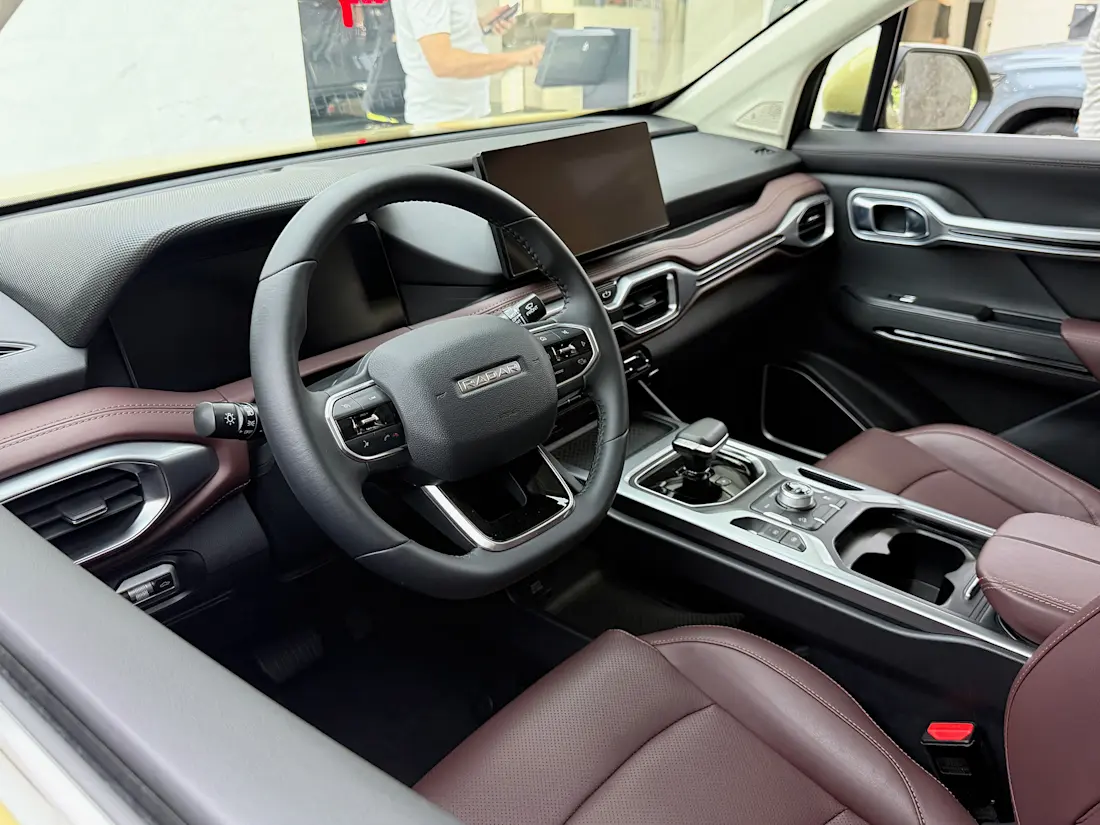
Landing in China with this knowledge, I expected the average Chinese car cabin to be a sea of screens without a single button in sight, but in reality, that’s only half true. There’s no doubt that Chinese cars’ obligatory big display is real, but more often than not, they’re accompanied by a very healthy amount of physical buttons and knobs. It doesn’t matter if it’s a luxury Voyah or Geely’s cheerfully cheap EX2; most major controls can still be done with real switches that feel solid to press and are clearly labelled and logically laid out.
The Chinese government, in fact, wants to legally require major, safety-related functions in cars to get their own physical, tangible controls (including, praise the heavens, gear selection) in addition to banning “innovations” such as pop-out door handles and yoke-style steering wheels — which is way more than Transport Canada or the National Highway Traffic Safety Administration (NHTSA) in the U.S. can claim to be doing.
And yet the screen-crazed Chinese consumer stereotype persists. Just last year, Volkswagen’s boss in China argued that big-screened, tech-forward, AI-capable, connected cars are all the rage in China, whereas it is the Europeans who are clamoring for “tactile controls.” These words came in the midst of Volkswagen pivoting hard from its widely panned, haptic control-filled cabins back to physical controls in all its future cars… because pandering to alleged Chinese tastes suddenly didn’t matter anymore, you see.
Unrelated but related: the longstanding industry suspicion that physical controls simply cost way more to design, tool, and manufacture than software was recently confirmed by Ferrari’s CEO, who said that relegating controls to a touchscreen cut associated costs by 50 per cent.
It’s About Money. It’s Always About Money
Look, it’s not a crime for brands like VW to try and cut costs, and maybe Chinese preferences really did sway front-end design trends when it became a major market a decade ago. But after seeing firsthand what China is building for itself today, it’s getting increasingly difficult to see it as the boogeyman behind every ugly new car without any volume knobs inside.
Sometimes the simplest explanations are the most correct ones: automakers made unpopular choices because they knew they’d be profitable, full stop. No scapegoaty half-truths or xenophobic undertones needed.

All Articles
See all
7 Cool Cars to Consider Importing Into Canada in 2026
It just became legal to import these cars.
 Michael Karant

8 Automotive Redesigns That Dramatically Improved on the Original Model
Automotive glow-ups that changed everything.
 Benjamin Hunting

Nissan Isn’t Going Anywhere — And the Automaker is Out to Prove It
Nissan-related news hasn’t been positive lately, but its execs have a plan to fix that.
 Dan Ilika