
Top 10 Electric Vehicles with the Shortest Range: 2026
 Michael Karant


The most significant factor in making electric vehicles (EVs) far more usable over the past 15 years has been the steady increase in driving range. Early mass-market EVs, including the Mitsubishi i-MiEV and Nissan Leaf launched in the early 2010s, suffered from severe range limitations. The i-MiEV offered only 100 km of range, while the first-generation Leaf provided 117 km.
Range is rarely a problem with modern electric cars, as most new models have more than 400 km of range, if not more. Improved battery technology and larger battery packs mean that some EVs can now drive longer than some gasoline models on a full tank of gas. However, a few new models still lag in range, with all electric cars on the list falling shy of the 400-km mark. But even with limited range, these electric cars can still be more than enough for most drivers, as the average Canadian drives just 42 km a day.
10. VinFast VF8 Plus: 373 km
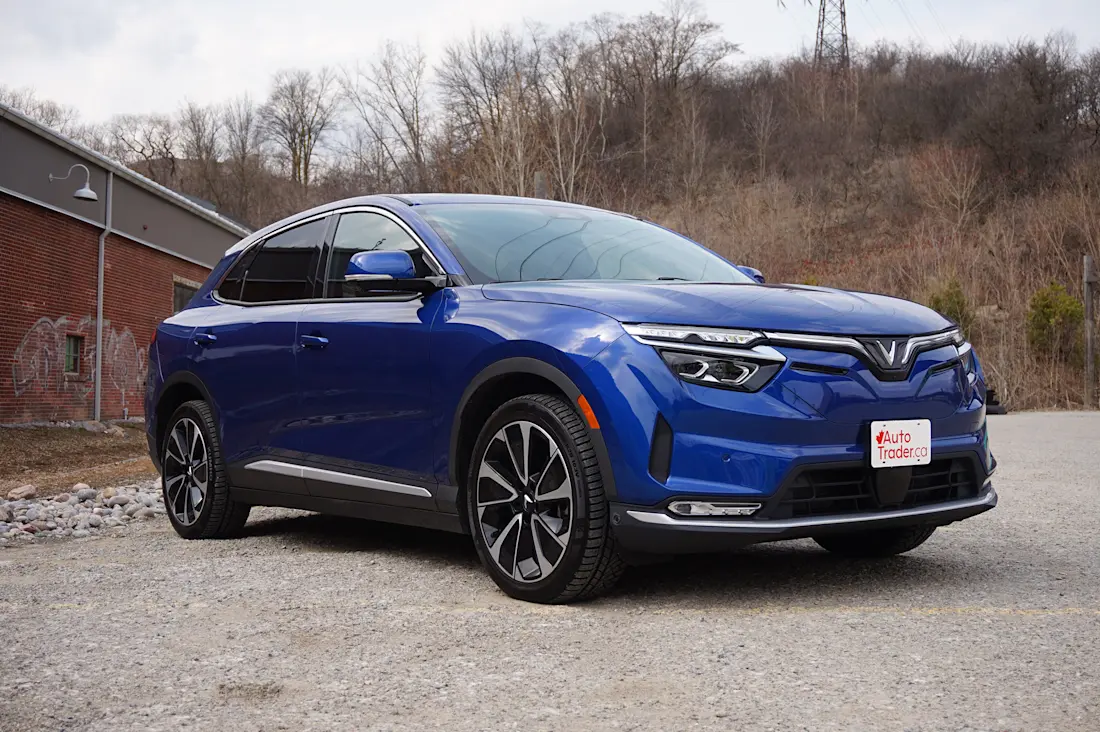
The VinFast VF8 is a midsize SUV with a relatively large 87.7-kWh battery, offering an estimated range of 373 km on its more expensive Plus trim. The VF8 is powered by a dual-motor configuration, with the non-performance model producing 349 hp and 369 lb-ft. Charging isn’t the VF8’s strong suit, as the battery can recharge from 10 to 70 per cent in 31 minutes, making it relatively slow. The VF8’s price is middle-of-the-road, with the Plus trim starting at $59,200.
9. BMW i4 M60 xDrive Gran Coupe: 373 km (20-inch wheels)
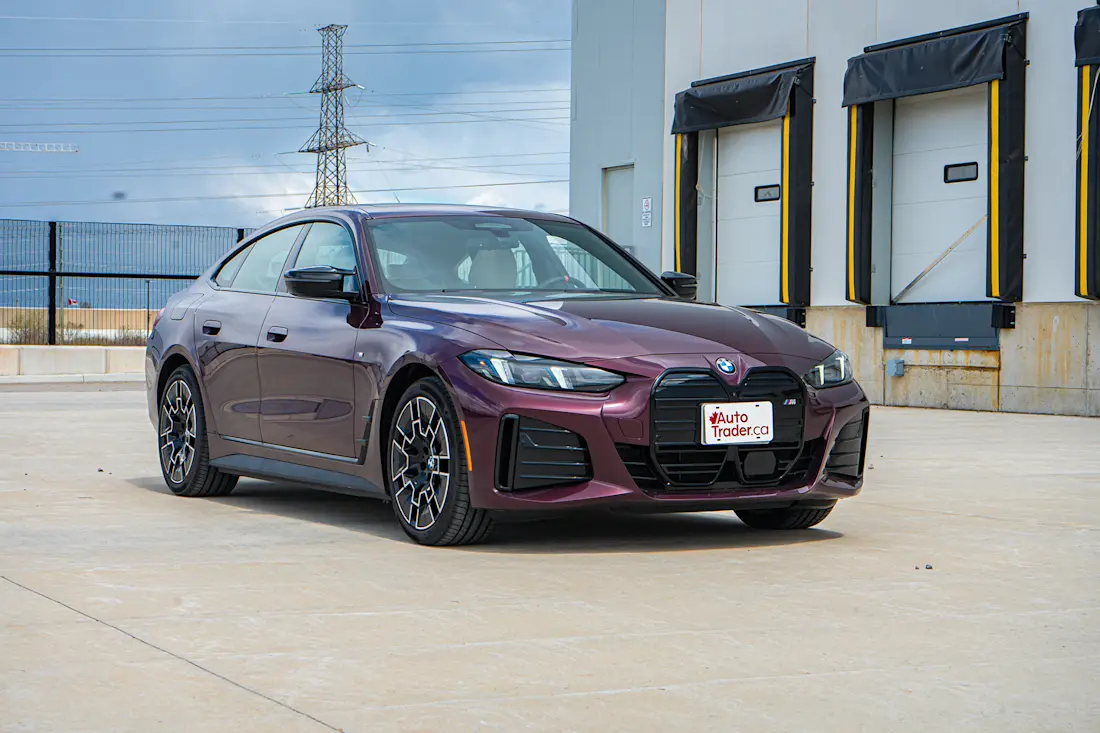
The BMW i4 M60 ties the VF8 for range with an estimated 373 km. Its range is significantly reduced by one particular option: 20-inch wheels that reduce the i4 M60’s range from 447 km to 373 km. The i4’s charging is decent, though, and it can charge from 10 to 80 per cent in just 30 minutes at a maximum charge rate of 205 kWh. The M60 is the i4’s most powerful powertrain, offering 593 hp and 586 lb-ft of torque, and can accelerate from zero to 100 km/h in under four seconds. This level of performance doesn’t come cheap, as the i4 M60 starts at $82,900 before the $2,955 destination fee, with the range-killing 20-inch wheels costing an additional $2,500.
8. Kia EV9 Light: 370 km
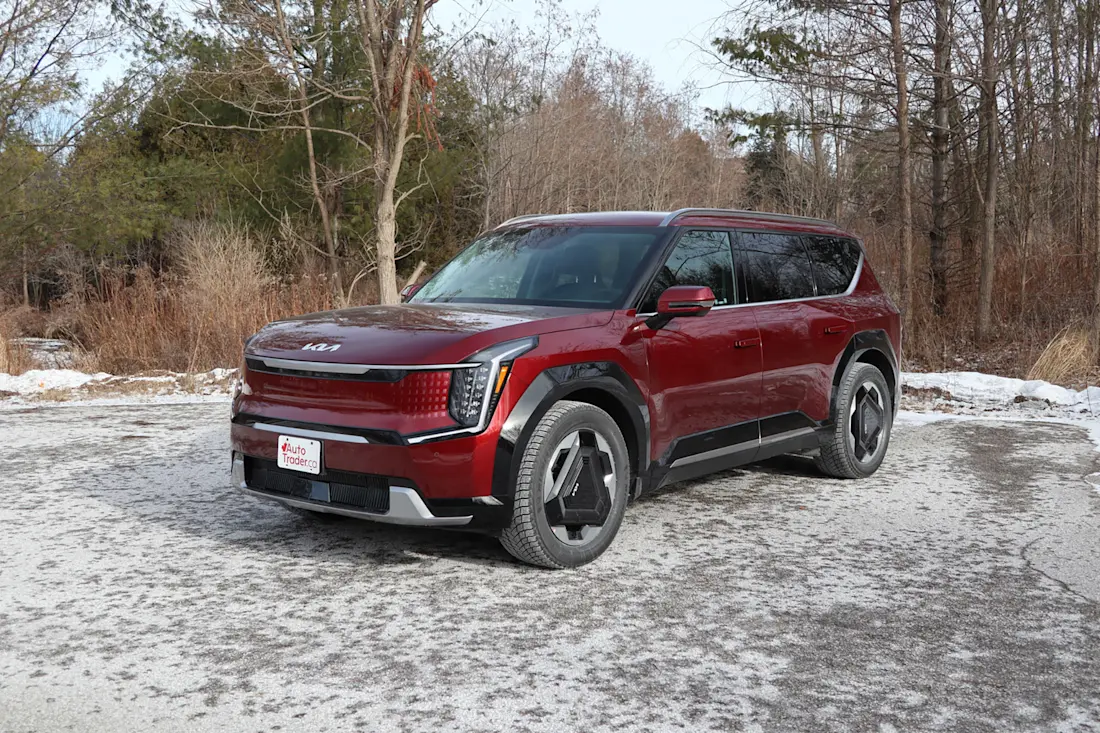
Kia typically does well when it comes to offering long-range EVs, especially with the three-row EV9, which features a sizable 99.8-kWh battery in most trims. However, Kia also offers a more affordable smaller battery version of the EV9 called the Light, which has a smaller 76.1-kWh battery, nearly a 25 per cent decrease in size. This gives the EV9 Light an estimated driving range of 370 km, while all other EV9 variants get over 450 km. For its size, the EV9 Light also has a low power output, producing 218 hp and 258 lb-ft. Charging is a strong suit of the EV9, however, and it can charge from 10 to 80 per cent in just 20 minutes at a maximum charging rate of 350 kW. Pricing for the entry-level Kia EV9 Light starts at $59,995 before destination.
7. Lexus RZ 550e AWD: 369 km
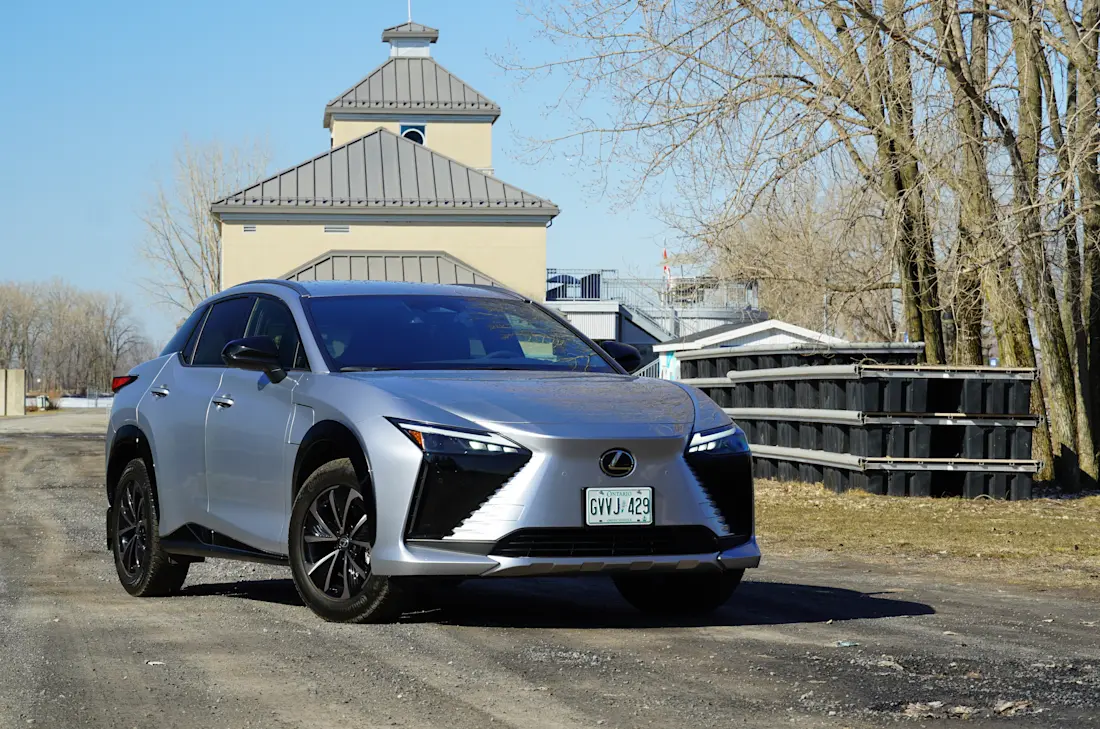
The Lexus RZ, the luxury brand’s first EV, has a relatively decent range figure at 478 km for the front-wheel-drive RZ 350e trim and 418 km for the RZ 450e AWD. However, the top-of-the-range RZ 550e AWD has only 369 km of range from its 77-kWh battery. The 550e is billed as a performance variant, so the focus is on performance and power, which affects range. It has 402 hp, while the 350e has 221 hp and the 350e has 308, so what it lacks in range it makes up for in power. Charging times are decent, and the crossover takes 28 minutes to charge from 10 to 80 per cent at a rate of 150 kW. Unsurprisingly, the RZ550e is not cheap, with a starting price of $77,990.
6. Volvo EX30 Cross Country: 365 km (327 km with winter wheels)

Volvo’s base EX30 has pretty decent range, with over 400 km. However, options can quickly hinder the EX30’s range, notably the Cross Country package, which brings the range down to 365 km. The range is further reduced to 327 km when riding on the 18-inch winter tires. The EX30 features a 69-kWh battery and takes 26 minutes to recharge from 10 to 80 per cent. The EX30 is decently powerful for a small crossover, with the dual-motor setup producing 422 hp and 400 lb-ft. Prices for the EX30 Cross Country start at $59,800, making it similarly priced to other models on the list.
5. Dodge Charger Daytona Scat Pack: 359 km
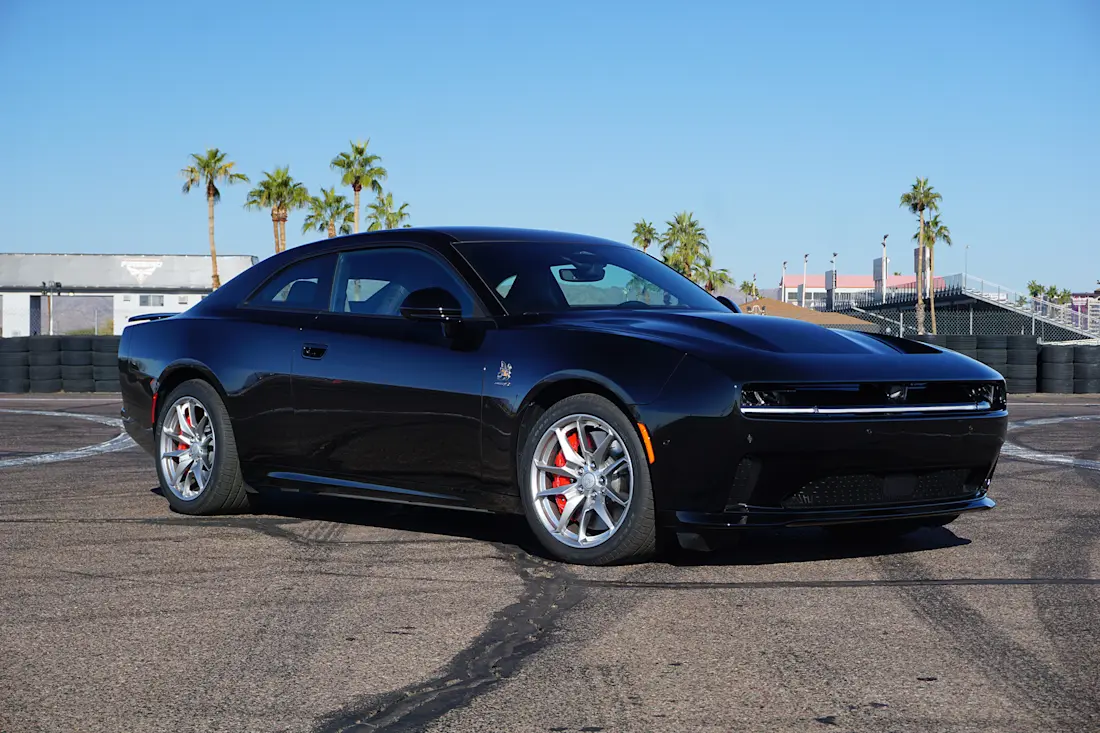
The primary goal of performance EVs is speed, rather than efficiency, which is the case with the Dodge Charger Daytona Scat Pack. It’s equipped with the three-season 325-mm tires, limiting the Daytona to an estimated range of just 359 km. This is a relatively low range figure for a car featuring a large 100-kWh battery. On the plus side, charging is relatively quick, with the Charger going from five to 80 per cent in just 30 minutes at 350 kW. Naturally, the Charger Daytona Scat Pack is a quick car, producing 670 hp and 627 lb-ft when using the PowerShot boost. At all other times, the Charger Daytona produces 630 hp and 627 lb-ft. Naturally, this level of performance isn’t cheap, and this EV will set buyers back $82,790.
4. Hyundai Ioniq 5 N: 356 km
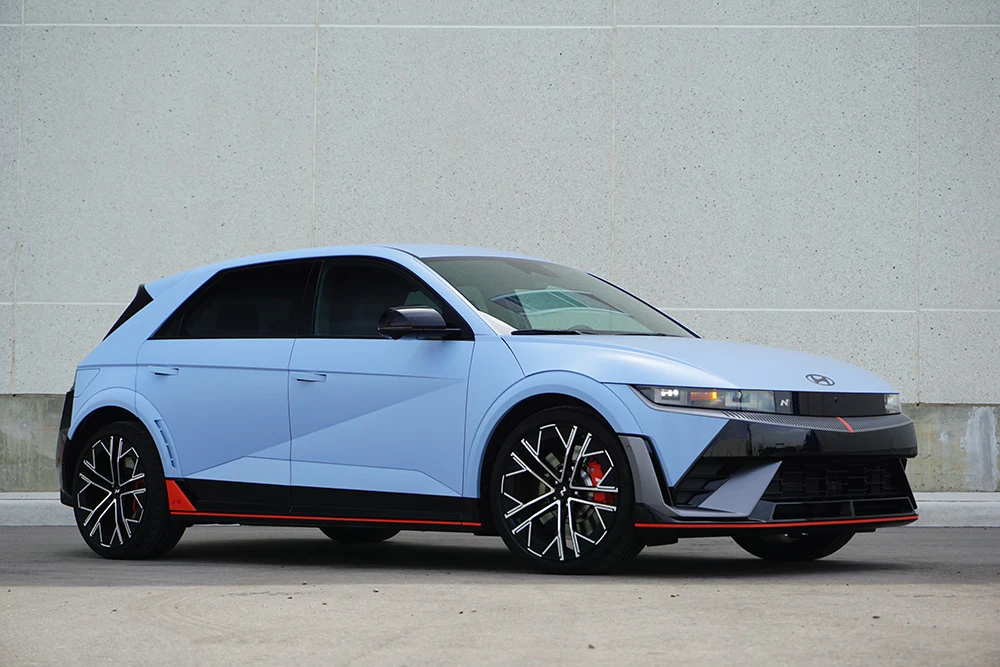
Not far behind the Charger Daytona is the other performance EV on the list, the Hyundai Ioniq 5 N. It produces 601 hp and 545 hp, which jumps to to 641 hp and 568 lb-ft with a temporary boost function. This focus on power and performance makes the Ioniq 5 a rather inefficient EV, as it has an estimated range of 356 km from its 84-kWh battery. Meanwhile, other Ioniq 5 trims can get up to 504 km of range. The good news is that charging stops won’t take that long, as the Ioniq 5 N can charge from 10 to 80 per cent in just 18 minutes at a 350 kW charge rate. Just like the Charger EV, the Ioniq 5 N comes at a premium, with a starting price of $78,199 before destination fees.
3. Nissan Ariya SL E-4orce: 330 km
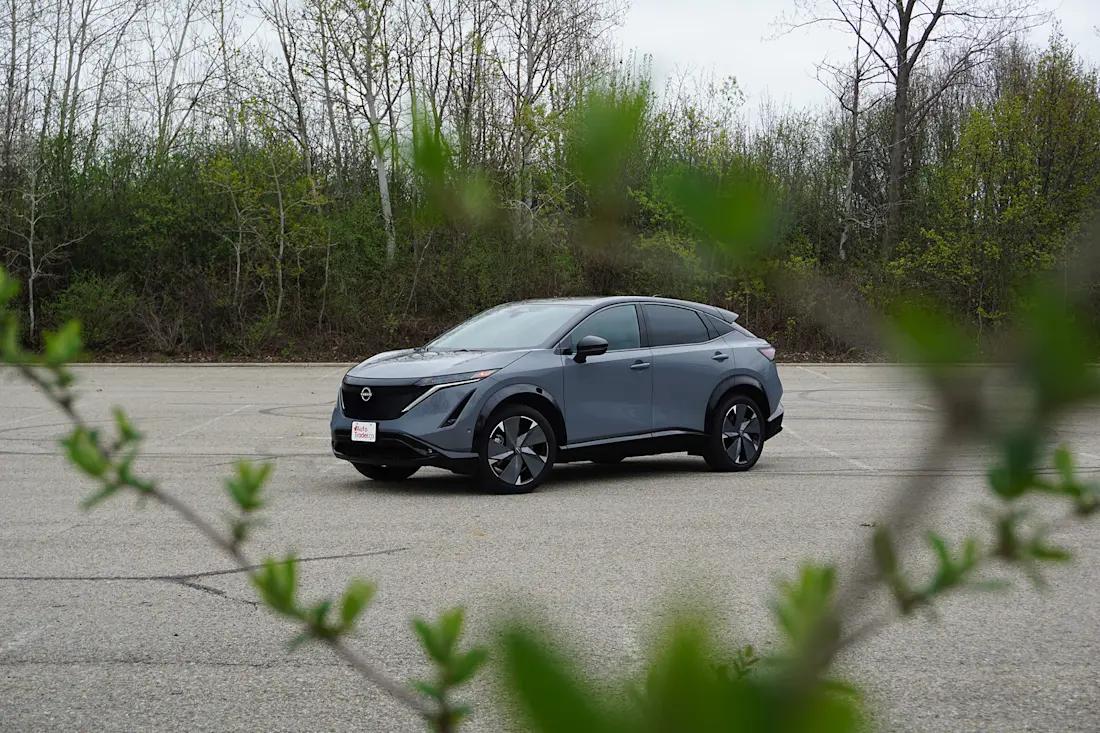
The Nissan Ariya has two battery size options: 91-kWh and a smaller 63-kWh battery, depending on trim. The latter option has a more limited range with just 330 km for the SL trim paired with the dual-motor AWD configuration, but the larger battery provides up to 465 km. Pricing for the Ariya starts at $53,998, with the dual-motor setup producing 335 hp and 413 lb-ft. Charging is on the slower end, with the Ariya recharging from 10 to 80 per cent in 35 minutes with a relatively slow maximum charge rate of 130 kW.
2. Mini Countryman SE: 328 km
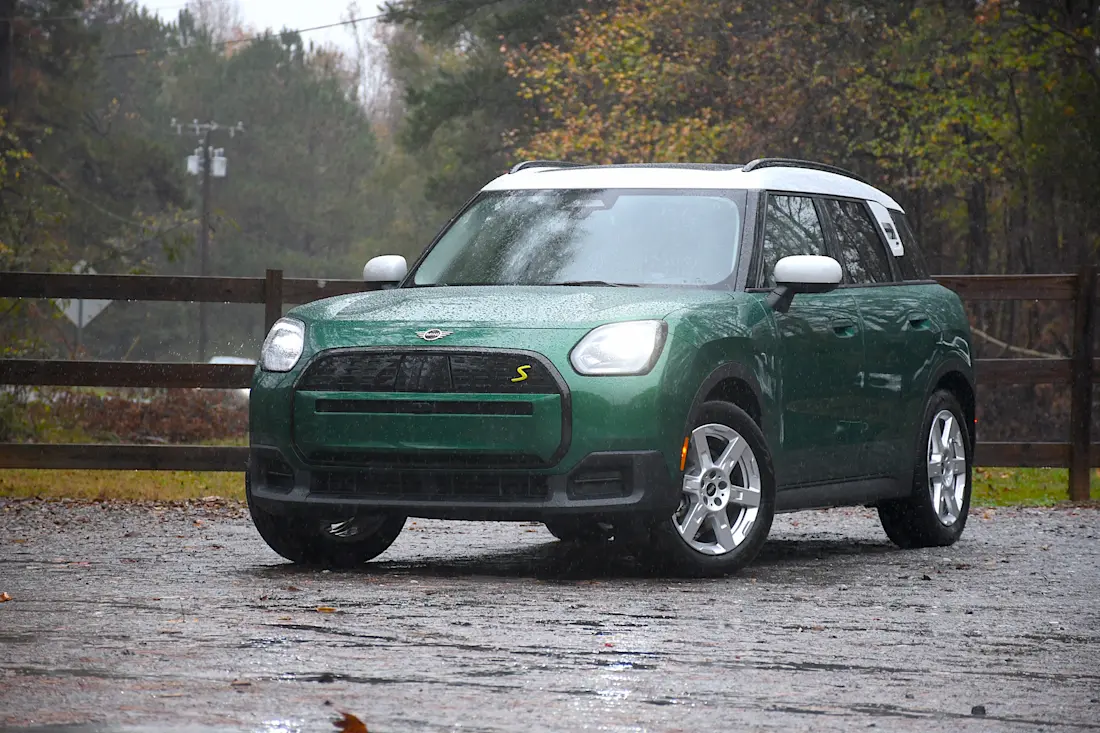
Mini makes an appearance with the Countryman SE, a stylish compact crossover. Much like other models on the list, the Countryman’s range suffers when equipped with larger 19-inch wheels. In this configuration, the Countryman SE has an estimated range of 328 km from its 64.7-kWh battery. It can recharge at a rate of up to 130 kW, allowing the battery to charge up from 10 to 80 per cent in 29 minutes. The Countryman is powered by a dual-motor configuration producing 308 hp and 364 lb-ft, with prices starting at $59,990.
1. Fiat 500e: 227 km
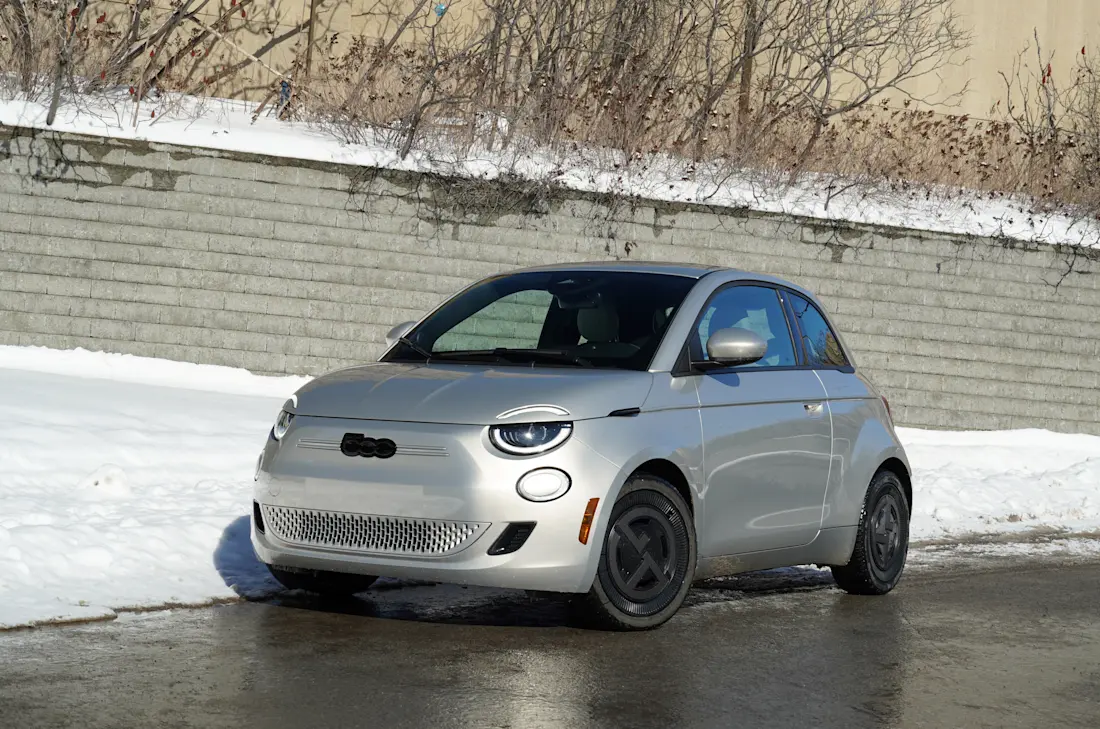
The electric car with the least range is the Fiat 500e, reclaiming its crown from the previous year. The 500e is the cheapest EV on sale, but it now has competition from the affordable Kia EV4 and the returning Chevrolet Bolt. Both of these models have around 400 km of driving range, which makes the 500e’s 227 km of range look quite underwhelming in comparison. This is due to the 500e’s tiny 42-kWh battery, which takes 35 minutes to charge up to 80 per cent. The 500e is also by far the slowest model on the list, featuring a single motor outputting 117 hp and 162 lb-ft. The 500e is the cheapest electric car in the country, with prices starting at $39,995.

All Articles
See all
Could China’s Chery Actually Make Cars in Canada?
There’s plenty of buzz about Chinese automakers like Chery building cars in the country.
 Dan Ilika

Volkswagen ID.4 MPG and Range: Real-World Energy Use and Charging Costs
Compare Volkswagen ID.4 Efficiency and Range real-world fuel or energy use, official ratings and expected running costs for Canadian drivers.

Nissan Leaf Range and Charging Guide: What Canadian Buyers Should Know
You've spotted a used Nissan Leaf on AutoTrader for a fraction of a new EV's price, beside a brand-new one with about twice the range. Which one's yours?