
6 Facts About Bricklin You Probably Didn’t Know
 Jil McIntosh


The Bricklin SV-1 was a short-lived gullwing sports car built in New Brunswick in the mid-1970s with support from the province’s government. Though widely considered a failure, it remains a quirky chapter in Canadian automotive history.
Here are six fascinating facts about the Bricklin SV-1 that you probably didn’t know.
It Had Ties to Subaru and Yugo
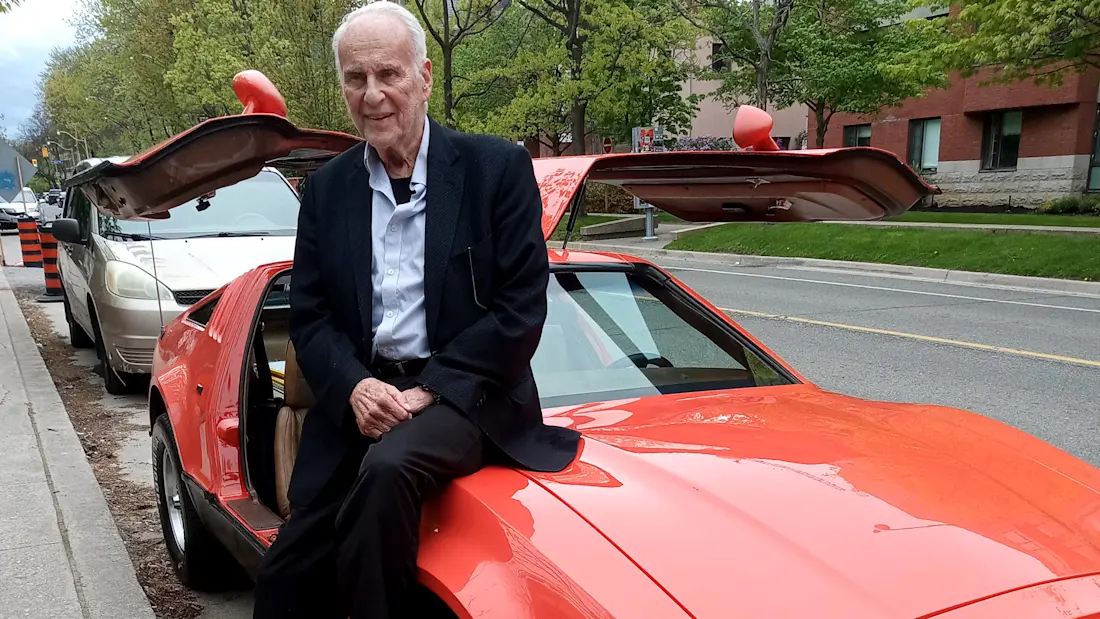
Indirect ties, mind you, through its founder, American entrepreneur Malcolm Bricklin. He had a business importing motor scooters into the U.S., including one made by Subaru’s parent company. It also made a microcar called the 360 for Japanese sales, which Bricklin wanted to import. But Subaru was largely unknown in the U.S., and it didn’t see a return on the cost of redesigning the car to meet American crash standards.
Instead, Bricklin found a loophole. The 360 weighed less than the minimum for crash requirements, so it wasn’t legally a car, and he could sell it without testing. He found some 5,590 buyers in 1970, until Consumer Reports called it the country’s most dangerous car and sales plummeted. He sold his stake in Subaru of America, the company he co-founded for the venture, but should have kept it — it’s the same one that imports or builds vehicles in the U.S. today. After his Bricklin sports car failed, he imported the Yugoslavian-made Yugo starting in 1985. But the problem-prone car was cheap for a reason, and his importing company went bankrupt in 1989.
It’s Not Related to the DeLorean
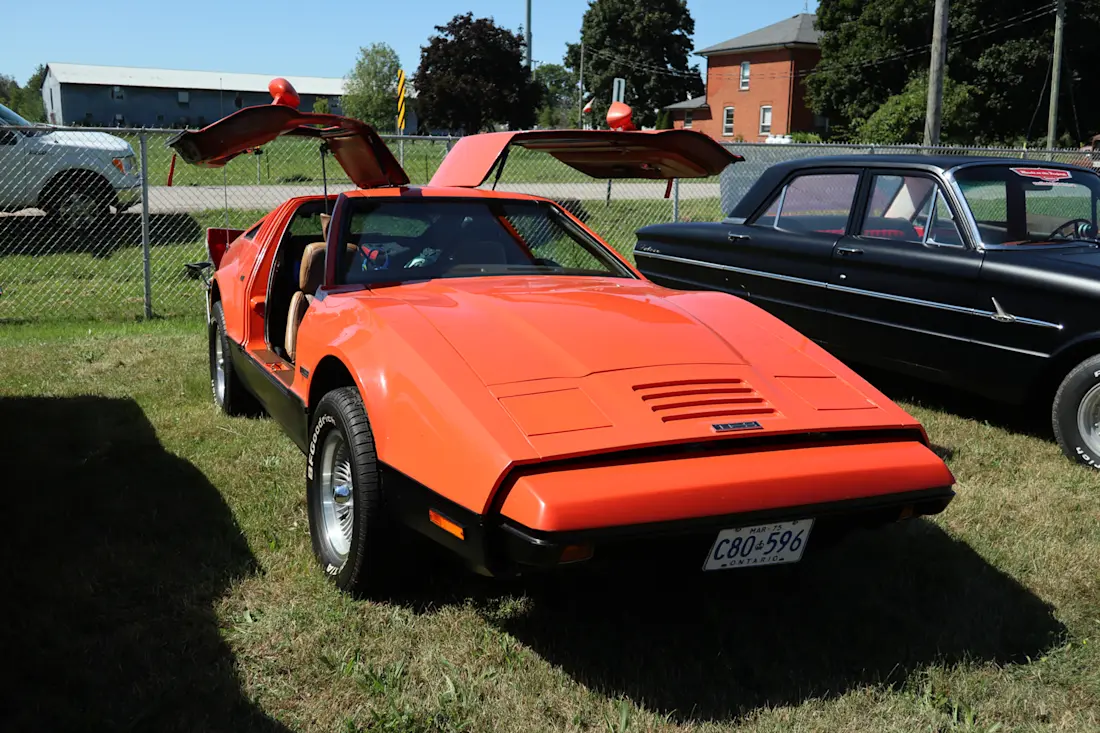
Thanks to their similar overall shape and gullwing doors, many people think the Bricklin was a copy of the stainless-steel DeLorean, the better-known of the two primarily due to its role in the movie Back to the Future. But that’s not possible, as the Bricklin was made from 1974 to 1976, while the equally unsuccessful DeLorean was built in 1981 and 1982.
But Malcolm Bricklin and John DeLorean both followed a similar formula of finding a place with high unemployment where the local government would provide funding in return for factory jobs. DeLorean found his in Northern Ireland, while Bricklin first approached Quebec, but ultimately ended up in New Brunswick. In addition to the jobs, Premier Richard Hatfield fashioned himself a bit of a playboy, as Bricklin did, and he liked the idea of this sexy new sports car being made in his province. The initial taxpayer funding was $9 million, the equivalent of about $57 million today. New Brunswick held 51 per cent of the company, and specified Bricklin couldn’t open factories anywhere else until he exceeded 12,000 cars per year.
The Brightly-Coloured Bricklin Wasn’t Painted
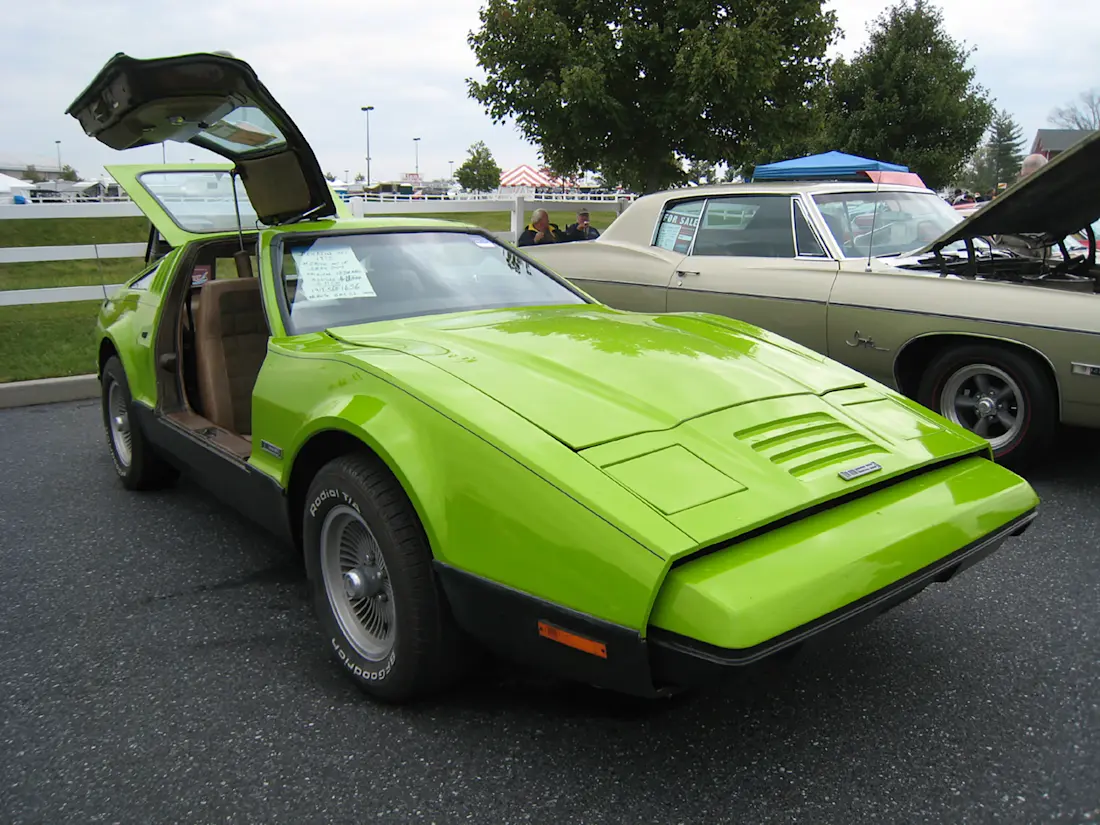
Bricklin wanted his car to stand out both in appearance and technology. Rather than painted steel, the body panels were made of acrylic resin, with the colour impregnated into the material. He called the car the SV-1, for Safety Vehicle, and it included a steel cage and impact-absorbing bumpers. The car also didn’t have a cigarette lighter or ashtray – standard equipment on virtually every car at the time – because he felt it was a distraction to smoke while driving.
It Was Difficult to Build
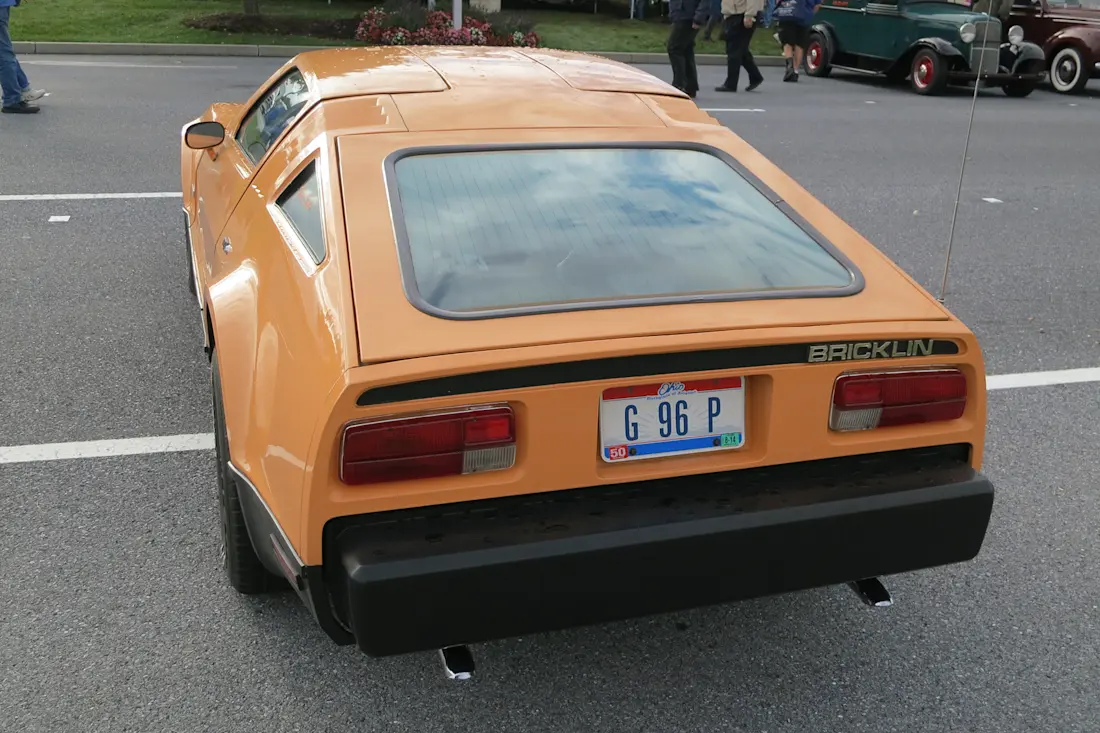
Some of the Bricklin’s features caused considerable headaches, including getting the gullwing doors to work – a problem DeLorean would later have as well. The cars didn’t have to be painted, which eliminated an entire process in the plant, but the body panels didn’t always bond properly and more than half were discarded. On top of that, distance was an issue. Bricklin used existing vacant factories rather than build a new one, but there wasn’t a single one large enough. Instead, the body panels were made in Minto and shipped 130 km to the assembly plant in St. John. Dealers complained about quality issues and how long it took to get spare parts or be reimbursed for warranty claims.
Different Engines Were Considered and Used
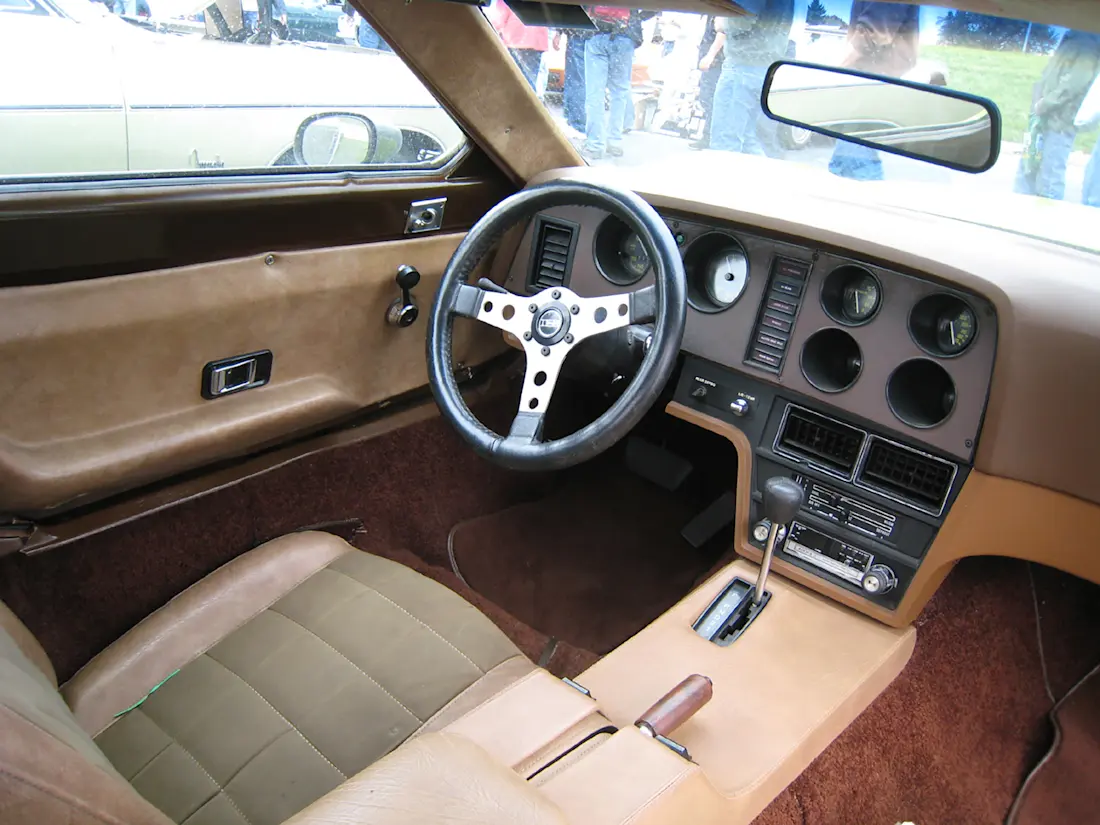
The original plan was for the Bricklin to be lightweight and powered by an Opel four-cylinder engine, until engineers realized the car would be much heavier than expected. Malcolm Bricklin then decided on a Chrysler six-cylinder engine, but that deal fell apart. The early production cars carried a 360-cubic-inch (5.9L) V8 making 225 horsepower and supplied by American Motors Corporation (AMC), but that automaker couldn’t guarantee enough. Bricklin then opted for a 351-cid (5.7L) V8 from Ford, good for just 175 hp. It could only pass U.S. emissions standards when mated to an automatic transmission, and between the lack of a stick shift and the car’s weight, it wasn’t a particularly sporty sports car.
Canadians Built the Bricklin, but Couldn’t Buy One
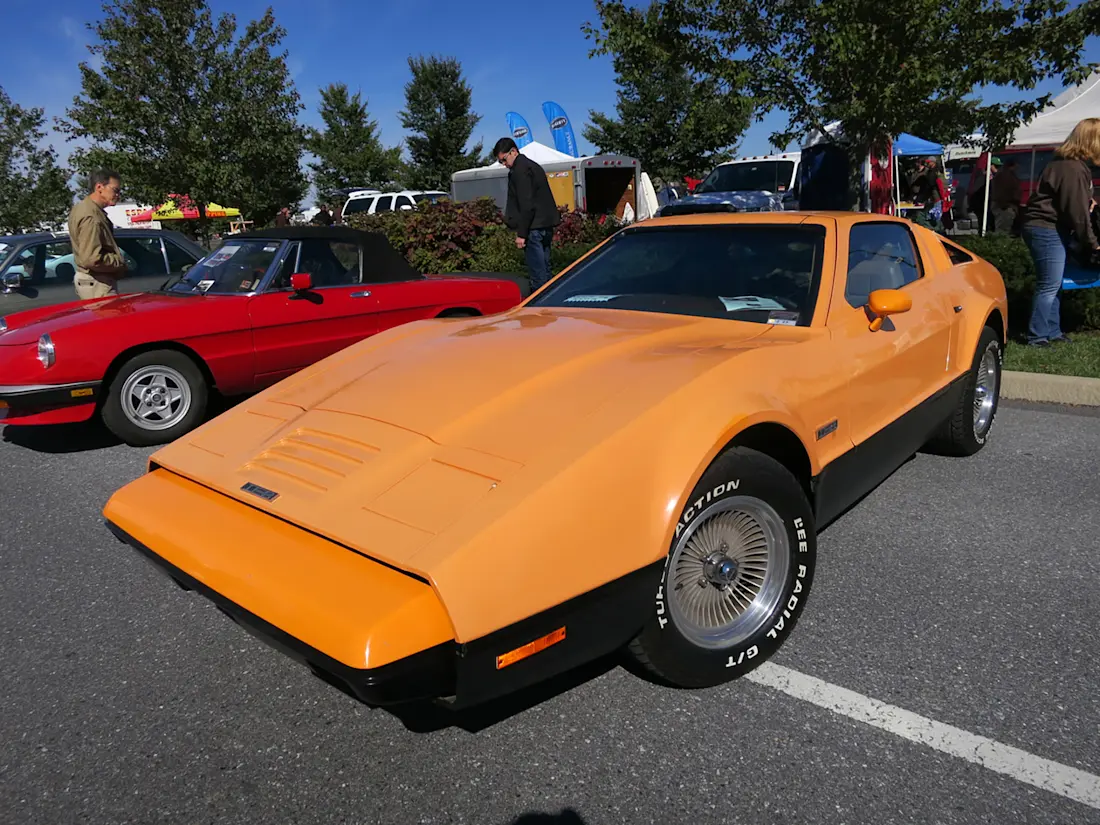
Although many have since made their way north as collector vehicles, the Bricklin was only sold new south of the border. Malcolm Bricklin set up an American import firm that bought the cars from the Canadian operation and sold them to his U.S. dealer network.
Making the cars burned through cash, and Hatfield topped the company up numerous times with public funds. Although the original plan was to keep the car’s price under $3,000, it hovered around $7,500 in 1974 and then rose to $9,775 in 1975, about $1,500 more than a Corvette.
Because the cars were still low-volume and company overhead was high, it’s estimated each one cost about $16,000 to make. Bricklin sold them to his American import company for $5,400, and the difference came not out of his pocket, but New Brunswick’s. Finally, after pouring $23 million into the venture, about $145 million today, the province called it quits and closed the factory doors. Bricklin Canada went into bankruptcy on September 25, 1975, and two months later, Malcolm Bricklin filed for personal bankruptcy in the U.S. Around 2,900 cars were built, and it’s estimated that around 1,500 still exist today.

All Articles
See all
AutoTrader Find of the Week: 1970 Plymouth ‘Cuda 426 Hemi is Rarer Than Rare
There’s nothing else in the world quite like this special muscle car.
 Chris D’Alessandro

How to Prepare a Car for a Vehicular Beauty Pageant
Here are the ins and outs of how to get into a Concours show and impress the judges.
 Jeff Wilson

AutoTrader Find of the Week: 1959 Mercedes-Benz 300 SL Has Transcended Being Just a Car
This classic is epically beautiful, exceptionally rare, and very, very expensive.
Chris D’Alessandro