
2026 Toyota 4Runner Review
 Jil McIntosh


Trader scores
This score is awarded by our team of expert reviewers after extensive testing of the car.
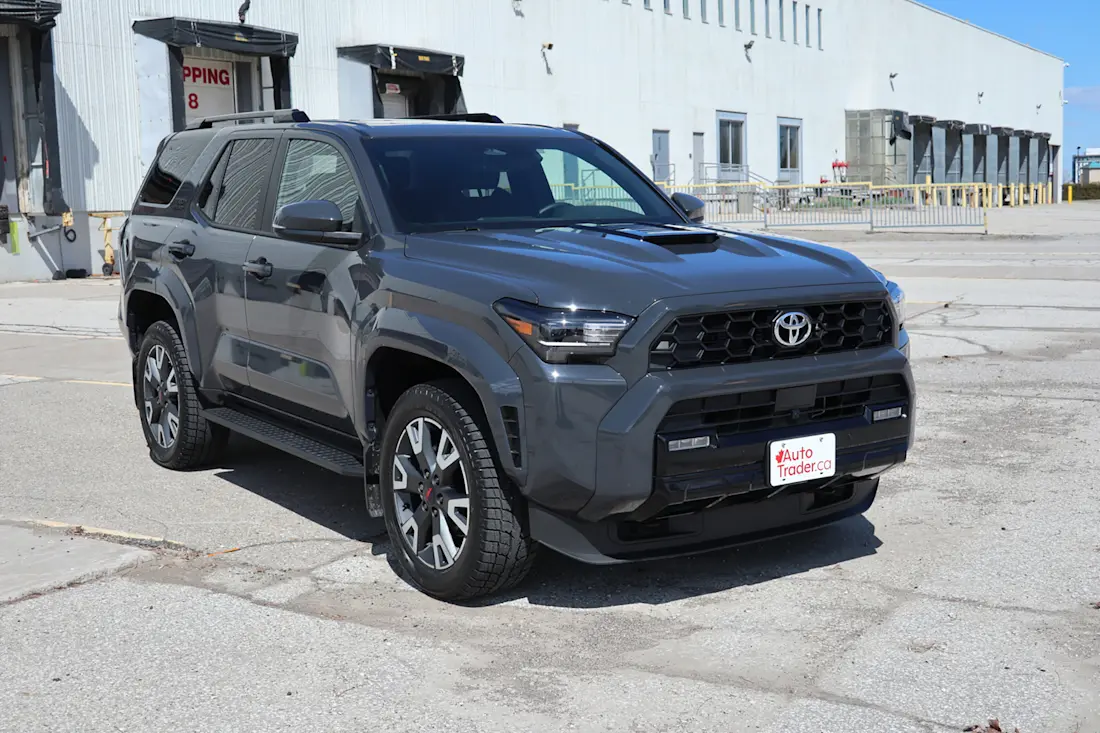
The 2026 Toyota 4Runner carries over from last year when it was completely made over into a new model, including a hybrid option, but it’s tested here in its gasoline-only version.
The gas models come in four trim levels, starting with the SR5 at $57,450, including a non-negotiable delivery fee of $1,930. Tested here is the next-step-up TRD Sport at $62,252. From there is the TRD Off-Road Premium at $67,392, and then the Limited, the only trim with three rows of seats, at $71,574. The hybrid trims range from $71,137 to $87,584.
Styling: 8/10
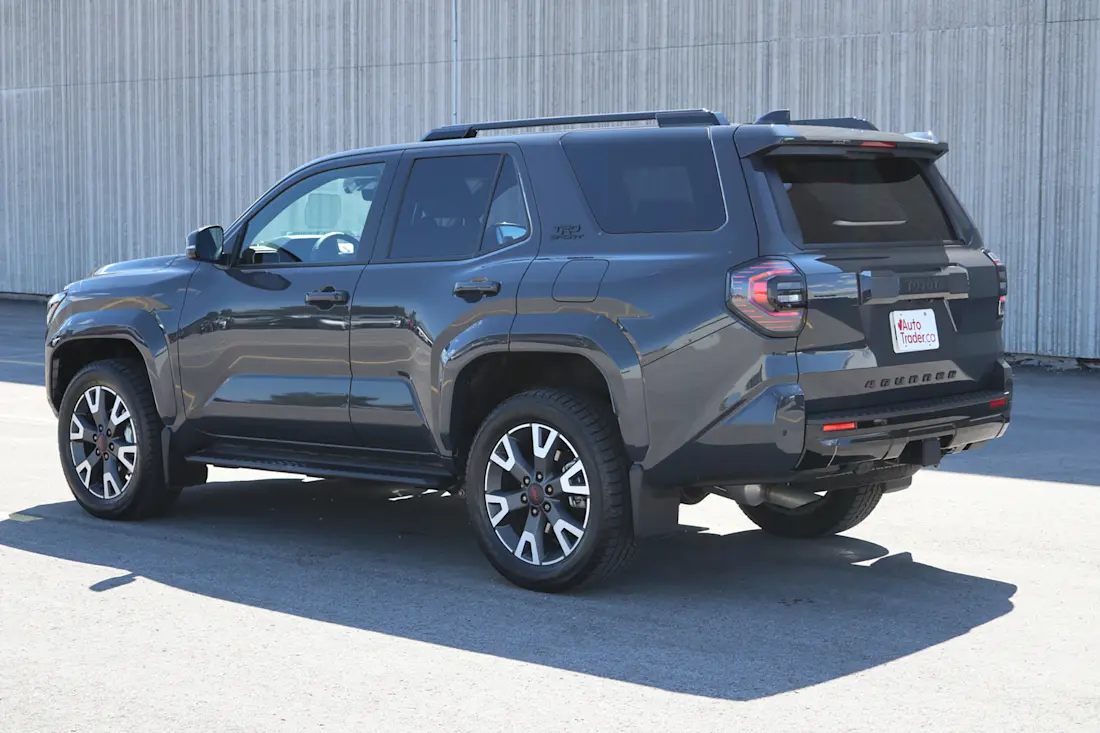
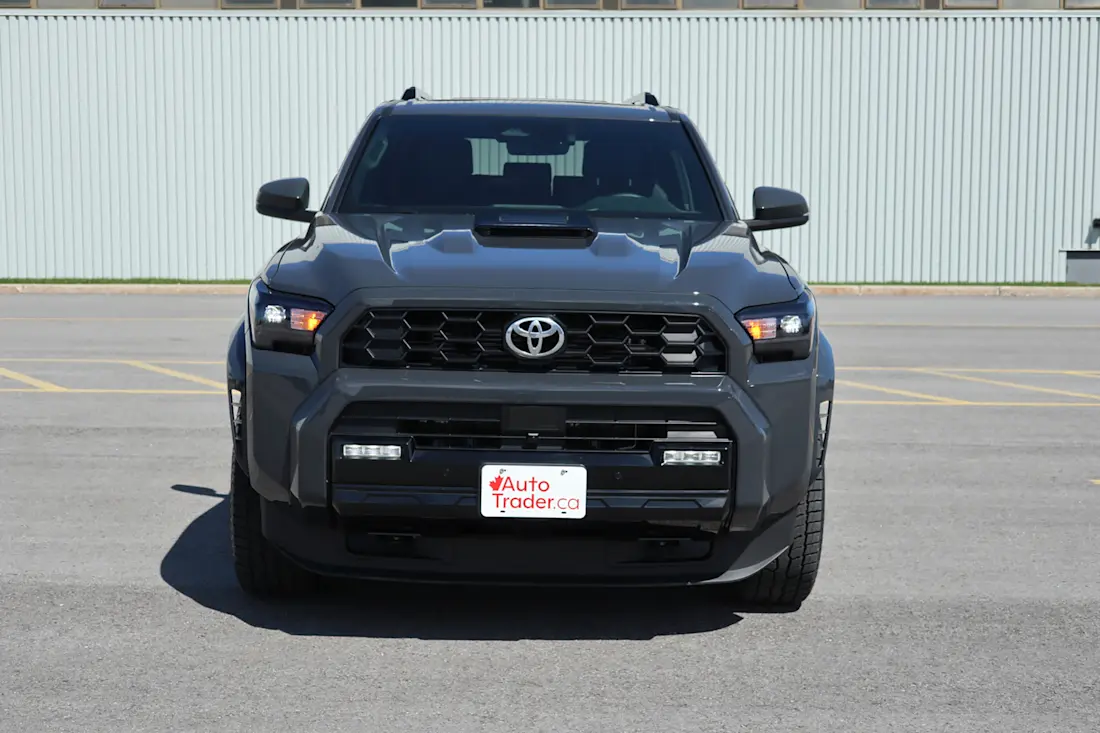
The 4Runner is built on a body-on-frame platform, sharing its underpinnings with the Tacoma pickup truck. The family resemblance is obvious, especially in the cabin, where it echoes the Tacoma’s pleasantly chunky styling and its tablet-style centre touchscreen, measuring eight inches in the base trim and 14 inches in this tester and up. The entry-level wheels are 17-inch alloys, upgraded to 20 inches on the TRD Sport tested here. It’s more of a on-pavement model, as the TRD Off-Road uses 18-inch wheels and bigger tires.
Safety: 7.5/10
The United States National Highway Traffic Safety Administration (NHTSA) gave the 2026 4Runner four out of five stars in its crash testing. The Insurance Institute for Highway Safety (IIHS) hadn’t finished all its tests at time of this writing, but while the 4Runner earned the top “Good” in side crash, it rated “Marginal” in the updated moderate front overlap, which now assesses potential injury to a rear-seat passenger, as well as to those in front. Its emergency front braking rated “Good,” but its headlights rated “Good,” “Acceptable,” or “Poor,” depending on trim.
Standard driver-assist technologies include adaptive cruise control, emergency braking, blind-spot monitoring with rear cross-traffic alert, lane departure alert, lane tracing, and the mandatory back-up camera, this one with a washer.
Features: 8/10
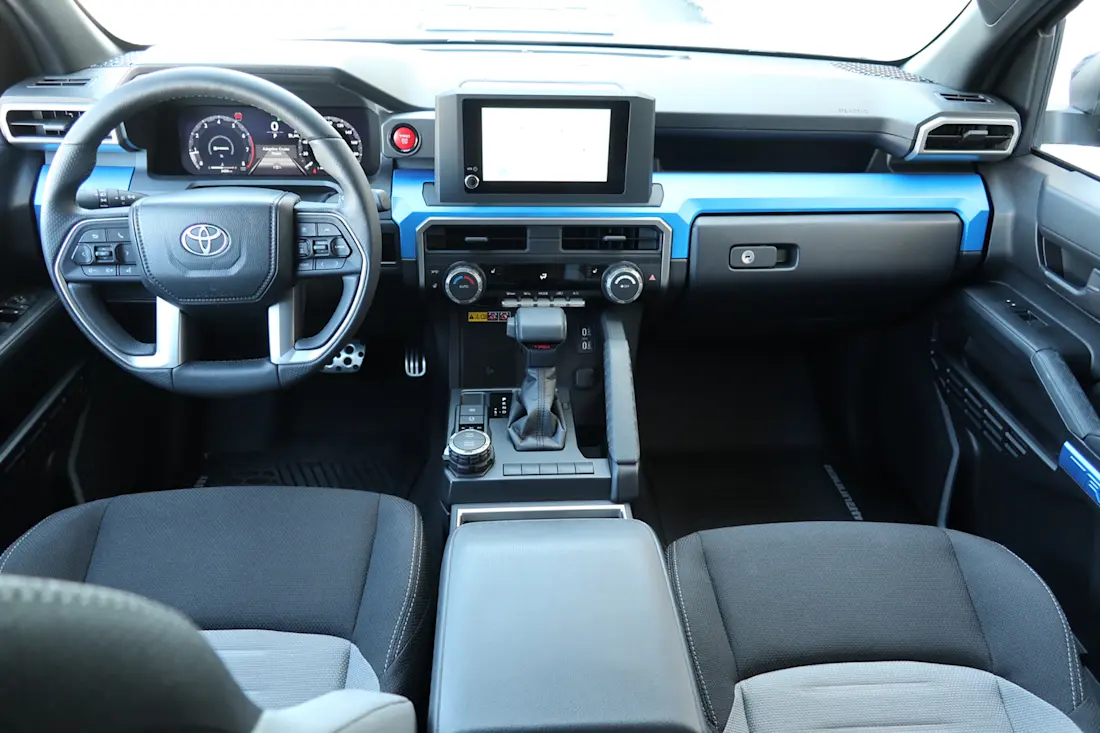
Standard items include a centre touchscreen with wireless connectivity, seven-inch instrument display, manual air conditioning, heated cloth seats, towing package, and a power rear window in the tailgate that opens completely. My TRD Sport tester added single-zone automatic climate control, a 12-inch digital instrument screen, auto-dimming mirror, power sunroof, heated steering wheel, wireless charger, sport-tuned suspension, parking assist, and a hood scoop that can steal a bit of forward visibility for shorter drivers. Power-adjustable seats don’t arrive until the next-step-up TRD Off-Road Premium.
Along with those, the upper trims can add such items as ventilated seats, faux-leather upholstery, a hands-free power tailgate, power-adjustable steering wheel, dual-zone climate, and premium audio.
User Friendliness: 9/10
The 4Runner is refreshingly simple, with large dials for temperature and fan speed, and toggle switches for climate mode, which helps to reduce distraction. There’s also a dial for volume, and the screen menus are intuitive. Switching between two- and four-wheel drive is a dial, and there’s a conventional gear selector. The controls on the steering wheel are also easy to use, with curved edges to help guide your thumbs to the functions.
Practicality: 8/10
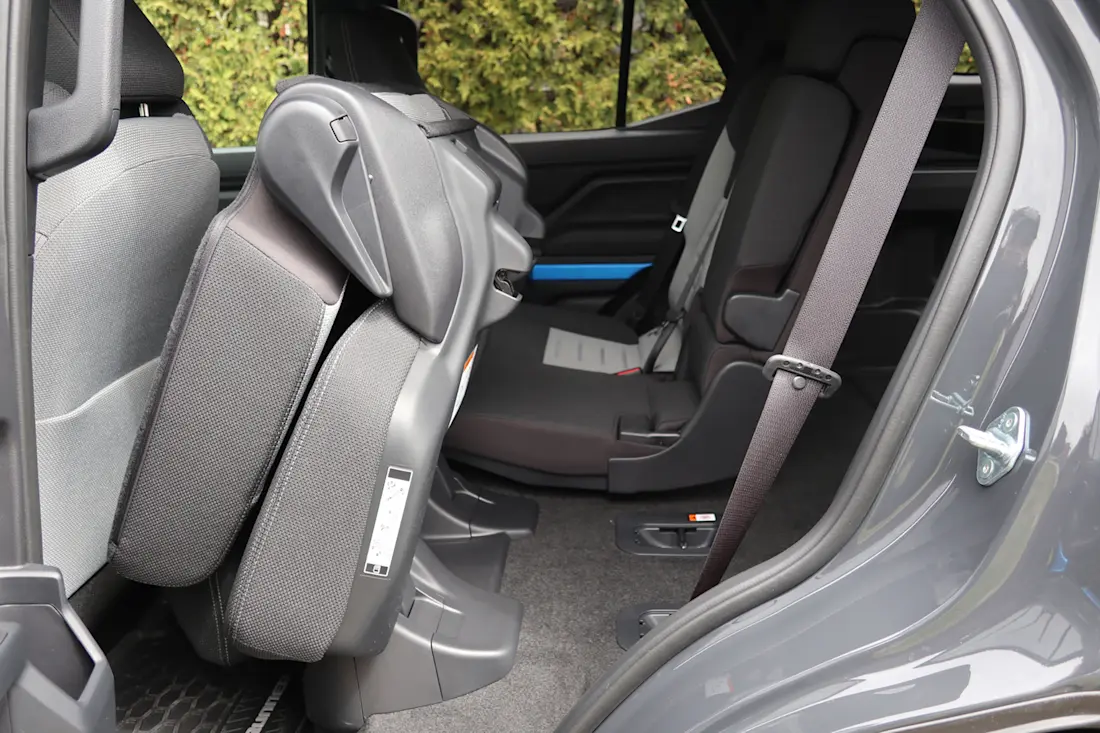
Only the top Limited has three rows of seats, and the lower trims turn over that space strictly for cargo; and at 1,371 L with the rear seats up, it’s the largest among its close competitors. The cup holders and cubbies that would otherwise service those seats are left in place, potentially adding a few more storage options. The rear seats fold down but not even with the cargo floor, and they retain their tumble-forward ability needed to access a third row when it's there. The rear bumper kicks up to improve the 4Runner’s off-road ability, and so it’s a bit of a reach to get items up and over it.
Comfort: 7/10
While the 4Runner’s cargo space is impressive, that comes at the expense of passenger room. The front seats are comfortable and with sculpting that provides support, but the second row is cramped and the seats are flat. Even with its pavement-friendly tires and suspension, the TRD Sport’s ride is skittish and jittery and the cabin doesn’t block a lot of road noise, something to keep in mind if you’re all about asphalt rather than tougher trails.
Power: 8/10

All gas-only 4Runner trims use a turbocharged 2.4L four-cylinder engine, making 278 hp and 317 lb-ft of torque, and mated to an eight-speed automatic transmission. The engine has a gruff grumble to it, and it feels strong rather than quick, but it has no trouble getting up to speed and passing on the highway. The transmission shifts firmly and does its best to move into its higher gears as soon as possible, which improves fuel efficiency. By comparison, the hybrid version makes 326 hp and 465 lb-ft of torque.
Towing capacity is an impressive 2,722 kg (6,000 lb). Among its close competitors, the Nissan Pathfinder matches it, but the Honda Passport and Ford Bronco fall short at 2,268 kg (5,000 lb) and 1,587 kg (3,500 lb), respectively.
Driving Feel: 7/10
The 4Runner is based on a truck platform and drives like one. It’s more fun on dirt, where it’s very capable even in the TRD Sport trim, despite lacking the off-road shocks and locking rear differential of the TRD Off-Road edition. But on pavement, it drives big despite its tight turning circle; and while the steering is smooth and responsive, that rougher ride can get tiresome. Four-wheel drive is standard, but it’s a part-time system on lower trims. This should only be driven in its high- or low-range gearing on loose surfaces, and on pavement, it should be in rear-wheel drive to prevent damaging the system. Only the top Limited has an automatic setting that can be driven on asphalt.
Of course, none of that will turn off those who love tackling the great outdoors, where the 4Runner shines; but test-drive it thoroughly if you’re looking at it as more of a commuter vehicle.
Fuel Economy: 8/10
Natural Resources Canada (NRCan) rates the 4Runner at 12.4 L/100 km in the city, 9.6 on the highway, and 11.2 combined. I got 12.9 L/100 km in my week with it, and it runs on regular-grade gasoline. Its rating is about mid-pack with competitors, where the Ford Bronco rates at 12.0 or 13.8, depending on its engine; while the Honda Passport and Nissan Pathfinder both rate at 10.8. They’re also unibody construction, while the 4Runner and Bronco sit on a heavier frame. And by comparison, the 4Runner’s hybrid system is good for 10.0 combined.
Value: 8/10
Ranging from $57,450 to $71,574, the gas-powered 4Runner starts out within range of close competitors, but gets pricier in its three-row top trim. The Nissan Pathfinder, with three rows in all trims, runs from $57,448 to $62,948; the Honda Passport is $58,990 to $63,740; and the Ford Bronco four-door runs $56,260 to $71,505, not counting its high-performance models that hover around $100,000.
The Verdict
The 2026 Toyota 4Runner needs the right type of buyer: someone who wants its truck-based SUV for weekends outdoors, and is fine with that suspension on the daily workday drive. There are some good contenders in this category, and for that shopper, the 4Runner overall is right there with them and should be a consideration.

Specifications
Trim Tested
2026 Toyota 4Runner TRD Sport
Base Price
$55,270
Options
$4,802 (TRD Sport Package)
A/C Tax
$100
Destination
$1,930
Price as Tested
$62,102
Displacement
2.4 L
Cylinder Count/Configuration
I4
Horsepower
278 hp @ 6,000 rpm
Torque
317 lb-ft @ 1,700 rpm
Fuel Economy
12.4 / 9.6 / 11.2 L/100 km city/highway/combined
Cargo Space
1,371 / 2,554 litres (seats up/down)

All Articles
See all
2027 Toyota Tundra and Sequoia First Drive Review
A new Trailhunter treatment highlights a more refined pickup and its sibling SUV.
 Kyle Patrick

2026 Toyota Crown Signia Review
Expensive though it may be, the Crown Signia is a superb vehicle all around.
 Chris Tsui

2026 Toyota RAV4 PHEV Review
More power, more range, and a lower starting price than last year.
Jil McIntosh