
2026 Porsche 911 Targa 4S Review
 Sébastien Bell


Trader scores
This score is awarded by our team of expert reviewers after extensive testing of the car.
Although it didn’t invent the targa top, Porsche is so closely connected with the concept that it holds the trademark on the name.
A relic of a time when it seemed like safety concerns might make convertibles a thing of the past, Porsche’s own example turns 60 this year. And with more power, more technology, and more standard features, the 2026 Porsche 911 Targa 4S is one helluva way to celebrate.
Design 9/10
Since its introduction at the 1965 Frankfurt auto show, the design of the 911 Targa has gone on a winding road. Initially marketed as the “safety cabriolet” thanks to the roll hoop behind the driver’s head that would theoretically protect occupants in a rollover, the feature was, somewhat ironically, named after the legendary Targa Florio road race, which was just 12 years away from being discontinued because it was so very unsafe.
All the same, the design helped protect the 911 from the waning interest in convertibles in North America. Concerns over their safety came as affordable air conditioning was making hardtops more bearable in the summer heat and leading more consumers to wonder why they were bothering with complicated soft tops that would inevitably leak.
The targa design was popular enough to remain a staple of the 911 lineup, and it has always been one of the more avant-garde models it offers. For example, in the 1990s, the 993-generation 911 Targa eschewed the roll hoop in favour of a stronger B-pillar (which provided the rollover protection), allowing for a fully glass roof with a large retractable centrepiece.
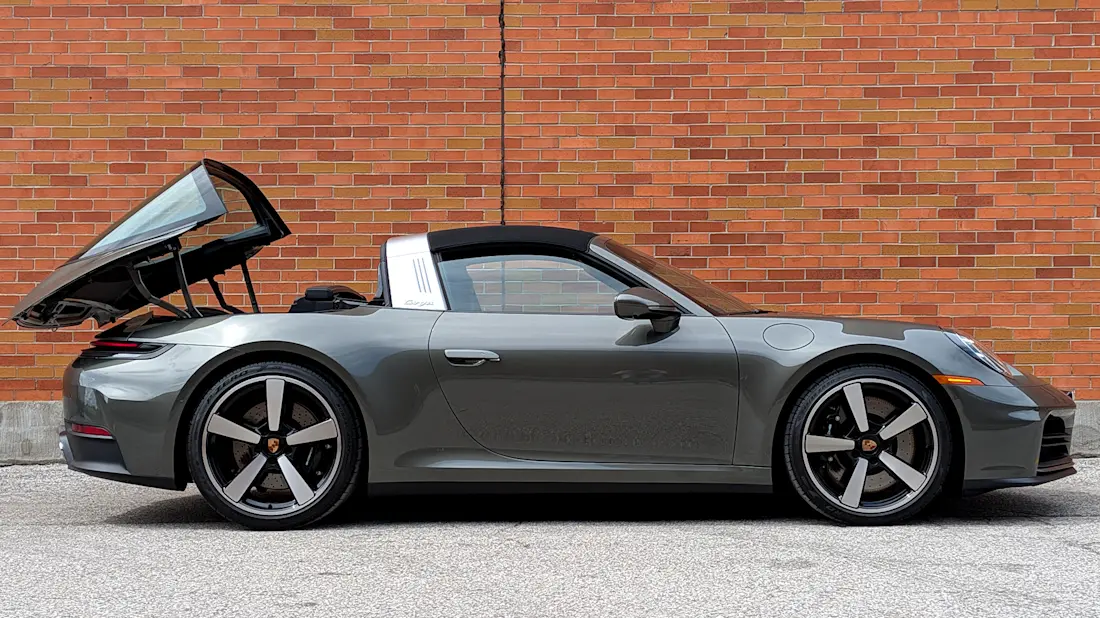
The design remained until, in the 2010s, mechanized roof technology progressed to the point that Porsche could bring back the transverse roll hoop design. No longer would owners have to stop, get out, and futz with their own fabric roof; now, the car could take care of it all in as little as 19 seconds.
That’s the design that remains. A perfect blend of modern technology and classic design that’s illustrative of the Porsche 911’s whole deal. Does it add weight and complication? Of course. Does it provide you with all the convertible top you need, a racing-inspired name, and a kind of elegance that sports cars often sorely lack? Indubitably!
Safety 7/10
The big roll hoop has one obvious disadvantage, that being the enormous blind spots it creates. A highly effective blind-spot monitor helps make manoeuvres easier, but lane changes remain a little worrying, which isn’t ideal.
Otherwise, Porsche offers a healthy number of standard safety features, including traffic sign recognition, lane-keeping assistance (which is particularly well calibrated), braking assistance in emergencies, and driver awareness detection. Features like the excellent surround-view camera system (which helps a lot, especially in this low-to-ground, behooped sports car) are part of the Premium package, a $6,020 add-on.
Equipment 8/10
The same package also adds adaptive cruise control, blind-spot collision avoidance, ventilated seats, and a pretty bumpin’ sound system. The targa roof allows some ambient noise in, meaning the upgraded sound system (or the even more premium option, which costs an eye-watering $4,530) is a welcome upgrade. On the other hand, the retractable top has the added benefit of making the engine even more audible.
Those who don’t opt for the Premium pack are still well taken care of, as there’s a reasonable amount of standard equipment in the Targa 4S trim, including two-zone climate control, heated seats, auto-dimming mirrors, a wireless charger for your phone, phone mirroring, and now-standard all-wheel drive. It’s a little insulting that the standard seats can only be adjusted in two directions in this $190,000 car, but the base car is a fairly complete one otherwise.
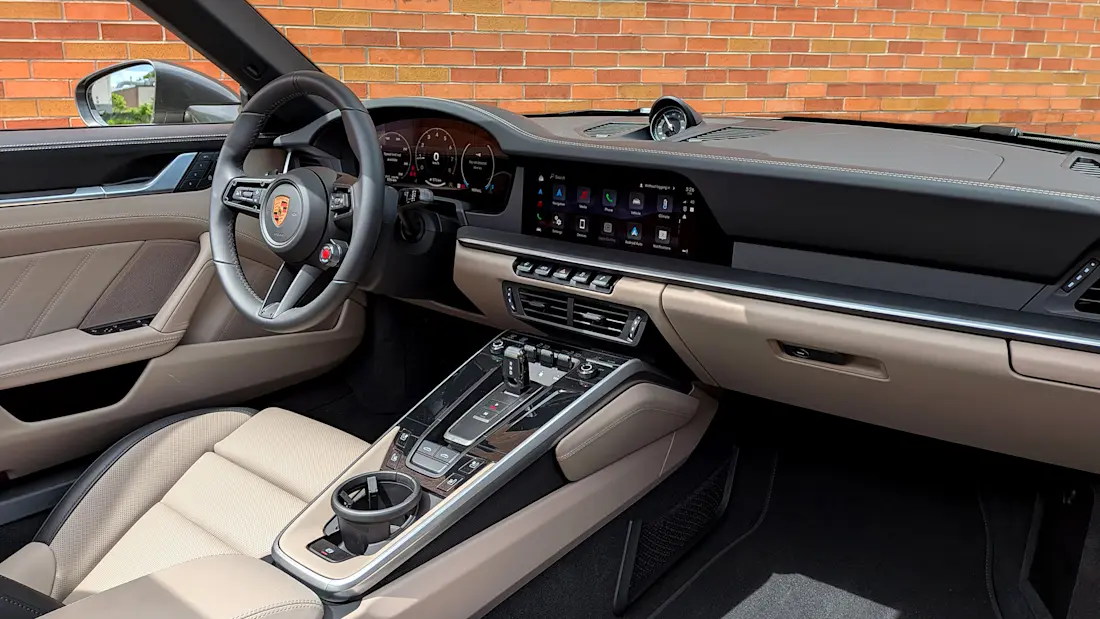
This being a German automaker, restraint is required around the build sheet, though, because a buyer could easily bankrupt themselves with options. Going for the wrong interior colourway can add more than $8,000 to the price of your 911, whereas the Leather Interior Exclusive Manufaktur package costs $17,540.
Meanwhile the Sport Chrono package costs as much as $4,000 (if you want the shiniest stopwatch available), and ceramic composite brakes are a five-figure add-on. This tester, with a handful of important upgrades (like the $3,000 front-end lift system) and some restrained aesthetic improvements, had more than $34,000 in options.
User Friendliness 8/10
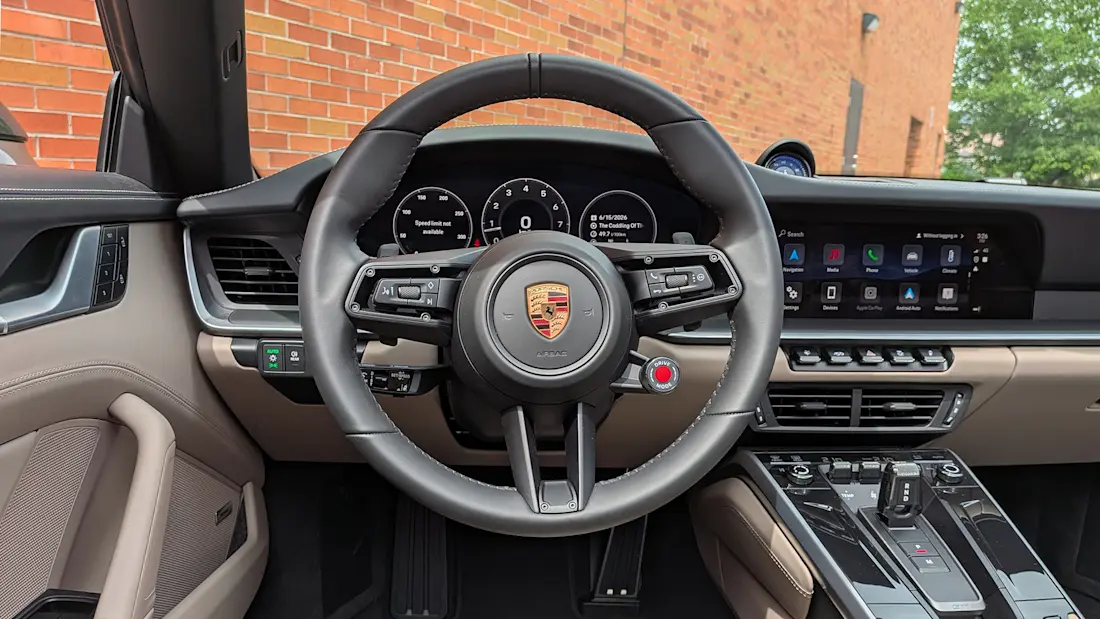
Regardless of what you opt for, you get an interior with plenty of physical controls that are easy to find and an infotainment system that, though starting to show its age a little, is still simple and easy to use. My one complaint is that there is significant lag between inputs on the steering wheel-mounted controls and the screen.
Powertrain 9/10
The most important feature of any 911 is the twin-turbocharged flat six-cylinder engine in the back. For 2026, the Targa 4S — and all 4S models, for that matter — benefit from an extra 30 hp compared to last year thanks to an optimized intercooler system from the 911 Turbo, among other changes.
With the Sport Chrono package (a $2,740 option, if you don’t mind a slightly less fancy stopwatch), which adds launch control, the model accelerates to 100 km/h from a standing start in just 3.5 seconds (0.2 seconds slower than the 4S coupe). Upgrading to the Targa 4 GTS ups the output to 532 hp, which brings acceleration times down to 3.1 seconds (also with the Sport Chrono pack) while adding about $22,000 to the price tag. Neither of those power figures is shocking these days, but I promise it feels like a lot from the driver’s seat.
Driving Feel 10/10
It won’t come as a surprise to read that a Porsche 911 drives well at high speeds, but what surprised me about the Targa 4S is just how joyful it is to drive at every speed. It’s not actually that hard to build a sports car that’s fun at a race track — race tracks are fun. What’s more impressive is that the 911, particularly in this somewhat laid back trim configuration, is fun when you’re just tooling around town.
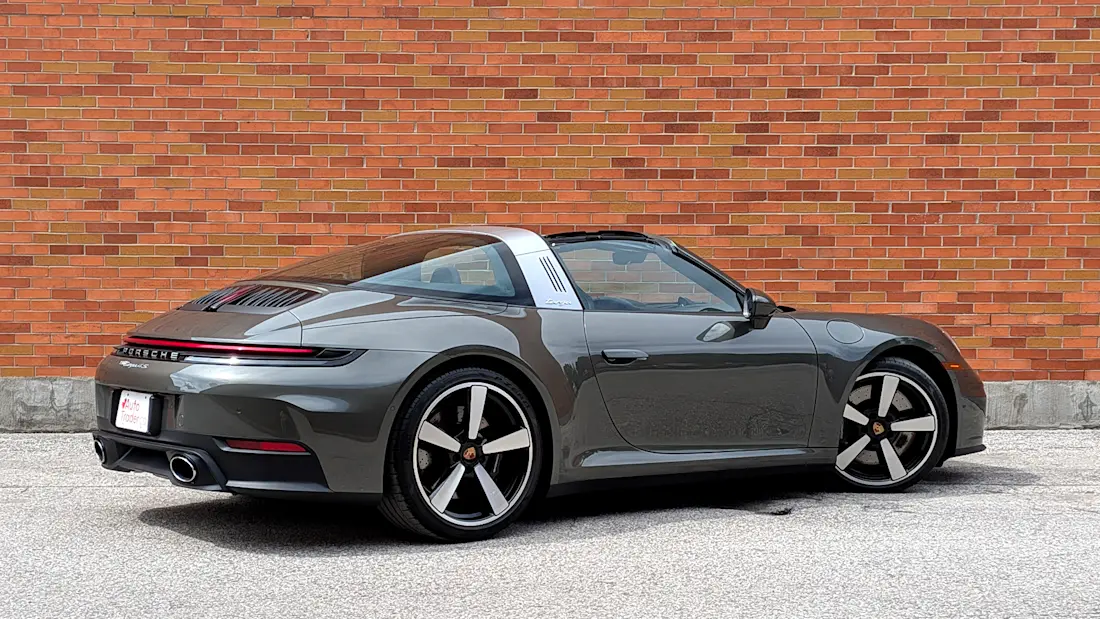
Some sporty vehicles feel constrained at those speeds, like they’re just rattling around waiting to be let off the leash. This Porsche, though, offers feedback through the brake pedal even when you’re rolling up to a stop sign in a residential neighbourhood. It also provides lovely and direct steering that communicates with you even at 40 km/h, and the seats provide a tingle in the spine to remind you of the legendary flat-six behind you even when you’re just waiting for it to warm up in your garage.
Comfort 9/10
And it does it all while providing a suspension that’s soft enough not to break your back over cratered spring roads, but which never leans through a corner. Meanwhile, standard rear axle steering in the Targa makes the 911 feel smaller than it has become and the double-clutch gearbox is perfectly calibrated — smooth in normal mode, snappy in sport mode, and wonderfully compliant to your whims. Yes, there are more comfortable cars on the road, but this 911 Targa 4S is as comfortable as I would ever want a 911 to be.
Everyday Usability 6/10
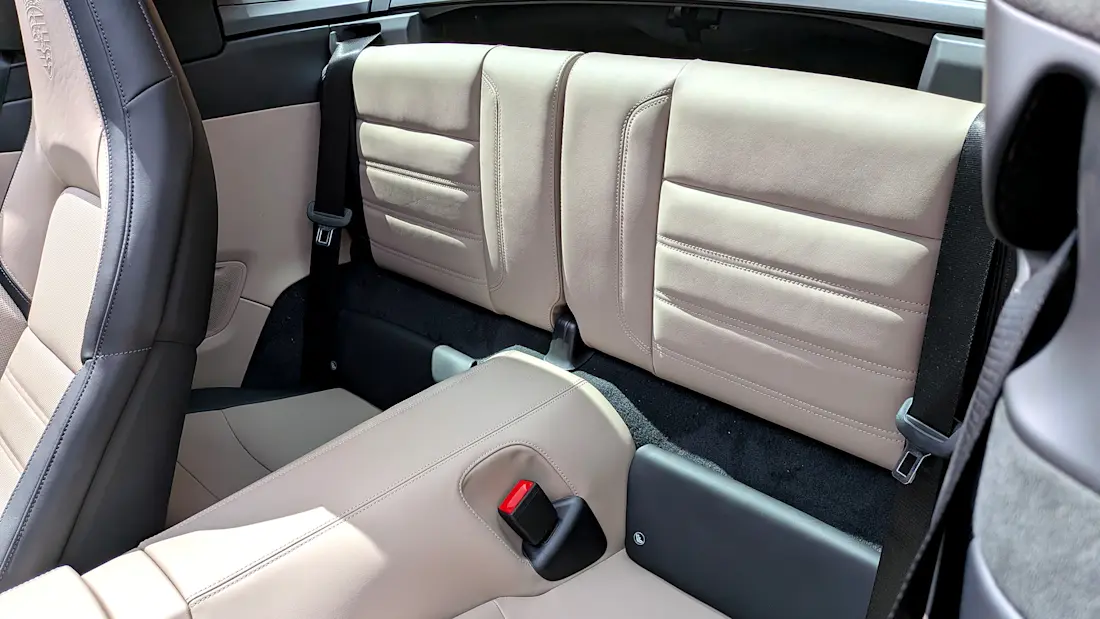
All of my above comments only apply to the front seats, not the back seats, which are a joke. Why Porsche decided to leave the rear seats in the 4S versions of the Targa and the full convertible, but make them a no-cost option in the coupe (where they might almost fit a human) may never be understood, but there you have it. The frunk, though, is surprisingly useful and will fit a carry-on bag or, as I discovered on my way to a softball game, a whole baseball bat. However, the 911 remains impractical by any honest metric.
Efficiency 6/10
It’s also not terribly efficient. Natural Resources Canada (NRCan) had not yet tested the updated, more powerful 911 Targa 4S as of this writing, but it estimates that the 911 Carrera Cabriolet will burn 11.4 L/100 km in combined driving. This tester did not achieve that in an admittedly city-heavy week of driving. With the requirement of ultra-premium fuel, too, your options bill is likely only to be rivalled by your fuel bill.
Value 6/10
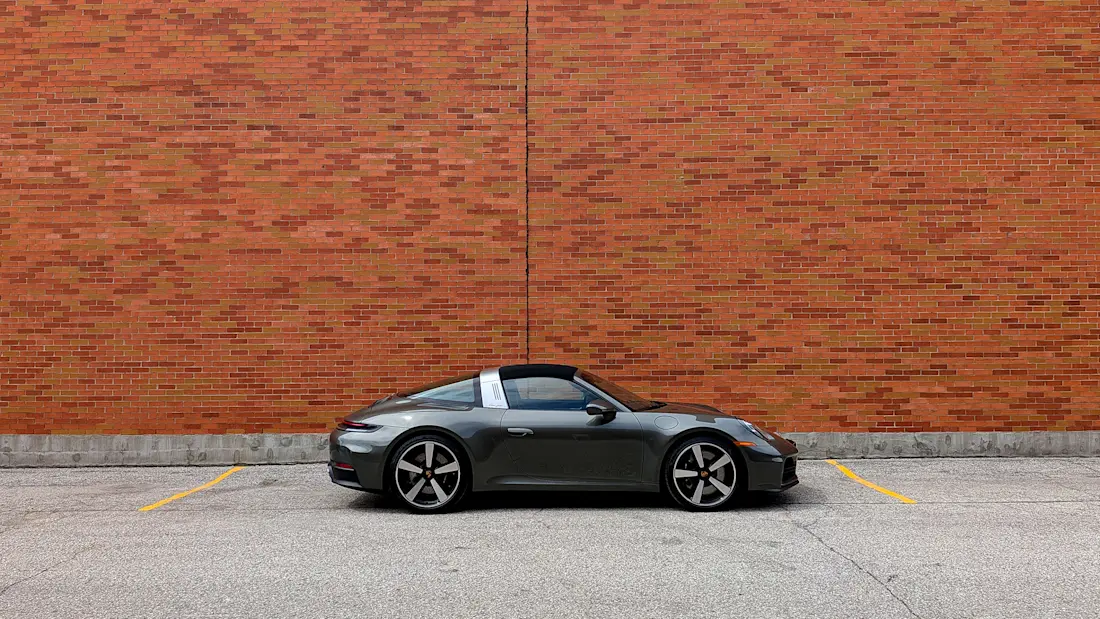
The 911 is always difficult to compare to other vehicles, and the targa models only more so, given their unique body style. You might argue that the near-perfection of the driving dynamics and racing pedigree give Porsche the privilege of charging whatever it likes for the car (which it appears to have). To be sure, the performance of the vehicle is matched by its fit and finish, making it as good of a luxury vehicle as it is a sports car. However, with an options sheet that costs as much as a Mazda MX-5 — a car that also reaches driving perfection and whose racing pedigree is beyond reproach — you could never call it a good deal.
The Verdict
You can’t really defend any car at this price point, apart from to say that this one is likely to hold its value over time. Putting that aside, the 2026 Porsche 911 Targa 4S is more than practical enough to be your only sports car, more than comfortable enough to put hundreds of thousands of kilometres on, and more than joyful enough to make you actually want to drive that far. Yes, the targa top adds weight but, ironically, that lifts some of the weight of expectation off the 911’s shoulders, allowing it to become fully and un-self-consciously a grand tourer — something it’s exceptionally good at being.

Specifications
Trim
2026 Porsche 911 Targa 4S
Base Price
$189,600
A/C Tax
$100
Destination Fee
$2,950
Price as tested
$226,780
Make
Porsche
Model
911
Year
2026
Optional Equipment
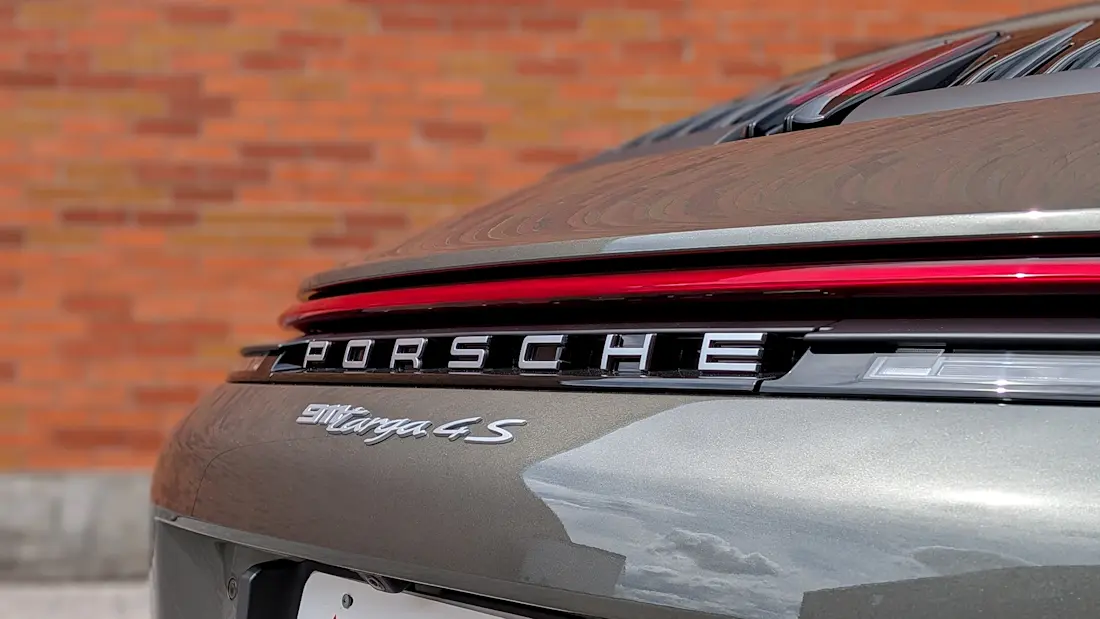
$34,130 — Premium Package, $6,020; Two-tone leather interior in Black/Chalk Beige, $4,040; Front axle lift system, $3,400; Aventurine Green Metallic paint, $3,400; HD-Matrix LED main headlights, $2,880; Sport Chrono Package incl. Porsche Track Precision App, $2,740; Sports seats (14-way) with Memory Package, $2,650; 930 Leather Package, $1,700; Interior Package Leather with accent in Light Silver, $1,440; 20/21-inch Carrera Classic wheels, $1,430; Brake calipers in Gloss Black, $1,030; Rear lid grille vertical slat inlays in exterior colour, $820; Exterior mirror in exterior colour, $750; Porsche crest on headrest (front), $410; Heated GT Sport steering wheel in leather, $370; Power steering plus, $350; Exclusive design fuel cap, $250; Under door puddle light projectors, $230; Wheel centre caps with full-colour Porsche crest, $220
Engine Displacement
3.0L
Engine cylinders
Turbo H6
Peak hp
473 hp @ 6,500 rpm
Peak torque
390lb-ft @ 2,300-5,000 rpm
Fuel economy
N/A
Cargo space
163 L

All Articles
See all
2026 Porsche Cayenne Coupe Electric First Drive Review
A swoopy sportback version joins the Cayenne Electric lineup for the stylistically inclined.
 Dan Ilika

2027 Porsche 911 GT3 S/C First Drive Review + Video
Naysayers be damned, this droptop GT3 provides a joyful sensory experience.
Dan Ilika
2026 Porsche Cayenne Electric First Drive Review + Video
The most powerful production Porsche to date is an automotive marvel.
Dan Ilika