
2026 Jeep Gladiator Review
 Jil McIntosh


Trader scores
This score is awarded by our team of expert reviewers after extensive testing of the car.
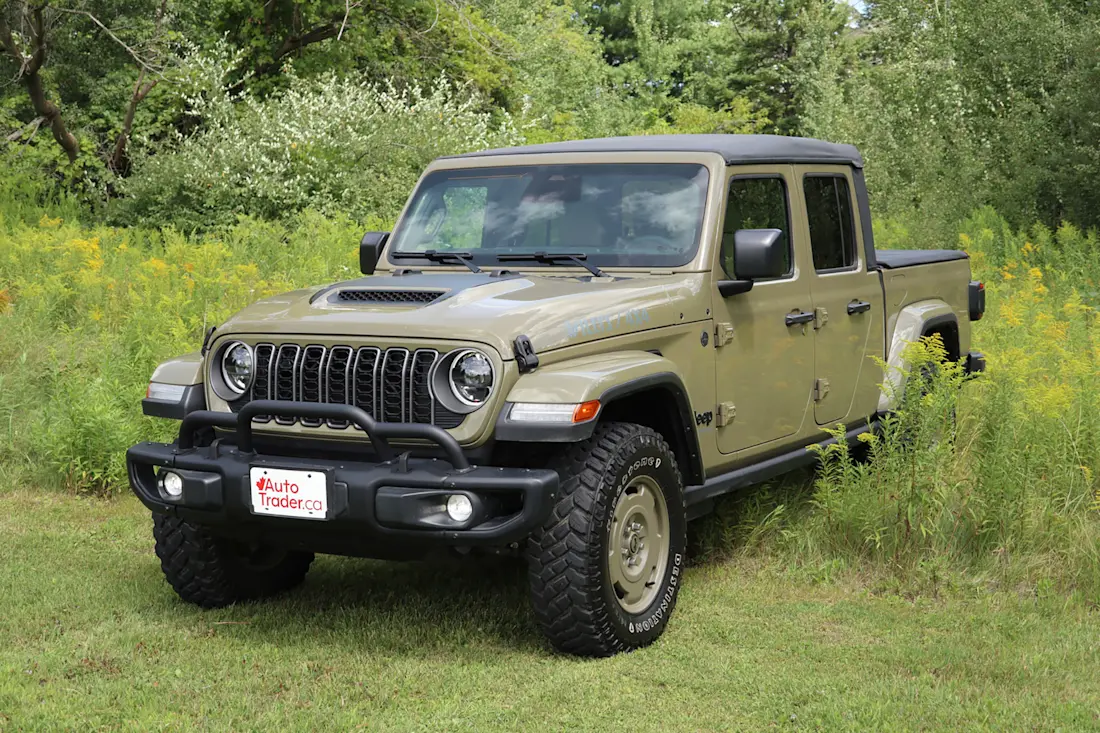
The iconic Jeep started out as a military vehicle, and the 2026 Jeep Gladiator Willys ’41 is a reminder of that.
The Willys ’41 package includes a number of upgrades along with its appearance items; but since the original 1941 Jeep was a utility vehicle rather than a pickup, this Gladiator is actually modelled on the Kaiser Jeep M715 truck built between 1967 and 1969, which served the United States military in Vietnam. (As with the original, it’s pronounced Will-iss, not Will-ees.)
This new trim is based on the entry Sport S, which starts at $52,790 including a non-negotiable delivery fee of $2,295. The ’41 package is $10,310, while the ’41 paint shade, which can be added to any Gladiator, is $495. From there, my tester also checked off numerous other options that brought it to a hefty $70,925 before taxes.
Design: 9/10
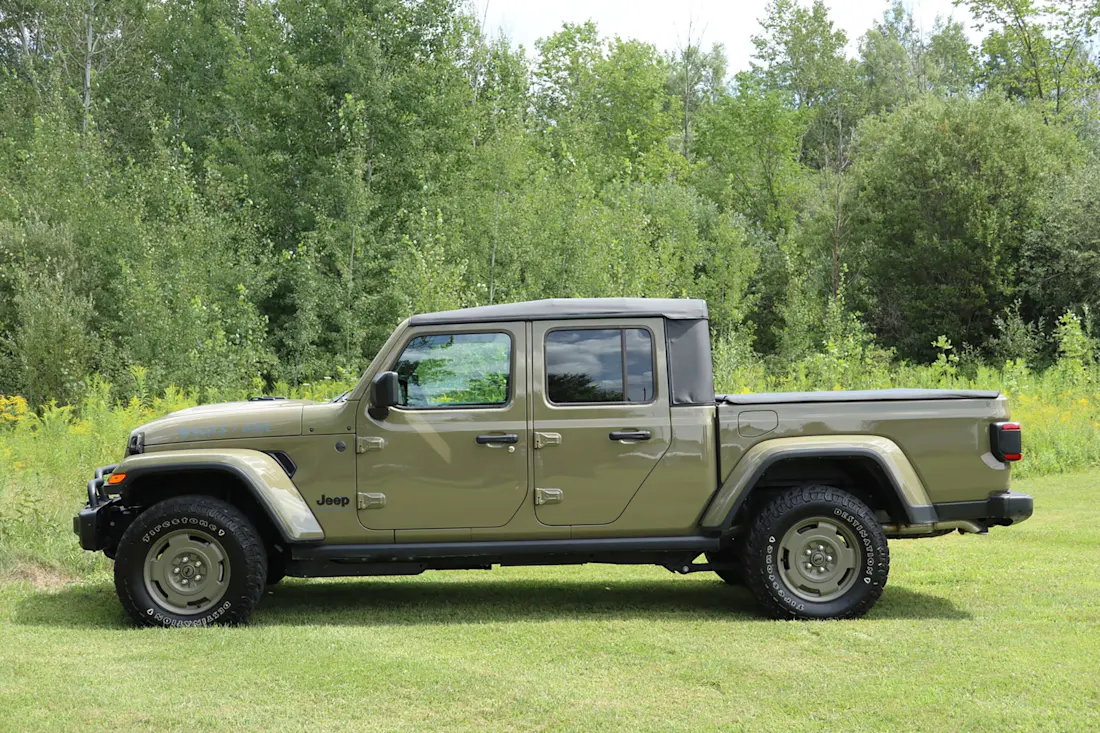
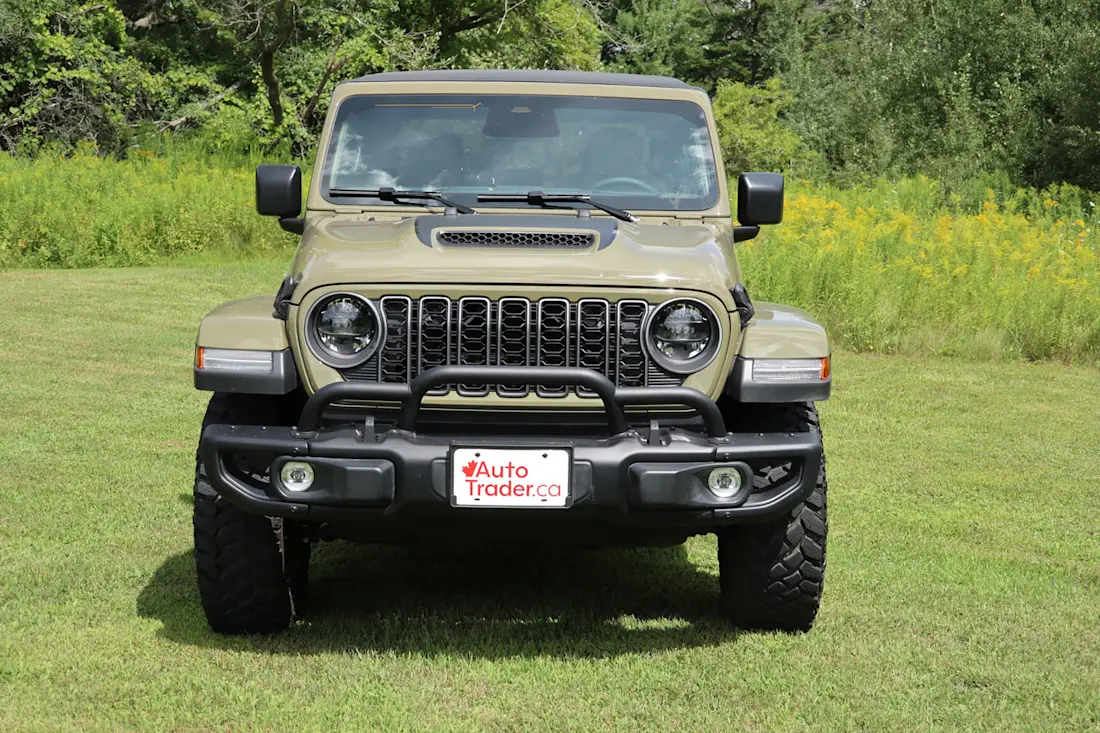
Although it rides on its own frame, the Gladiator is basically the Wrangler ahead of its rear doors — and since those narrow at the bottom to accommodate the Wrangler’s rear wheels, entry can be awkward for larger passengers in this pickup, too. Overall, the Gladiator is a good-looking, well-proportioned truck with off-pavement swagger. The roof and doors are removable, and for 2026, improved door hinges make it faster and easier to take them off.
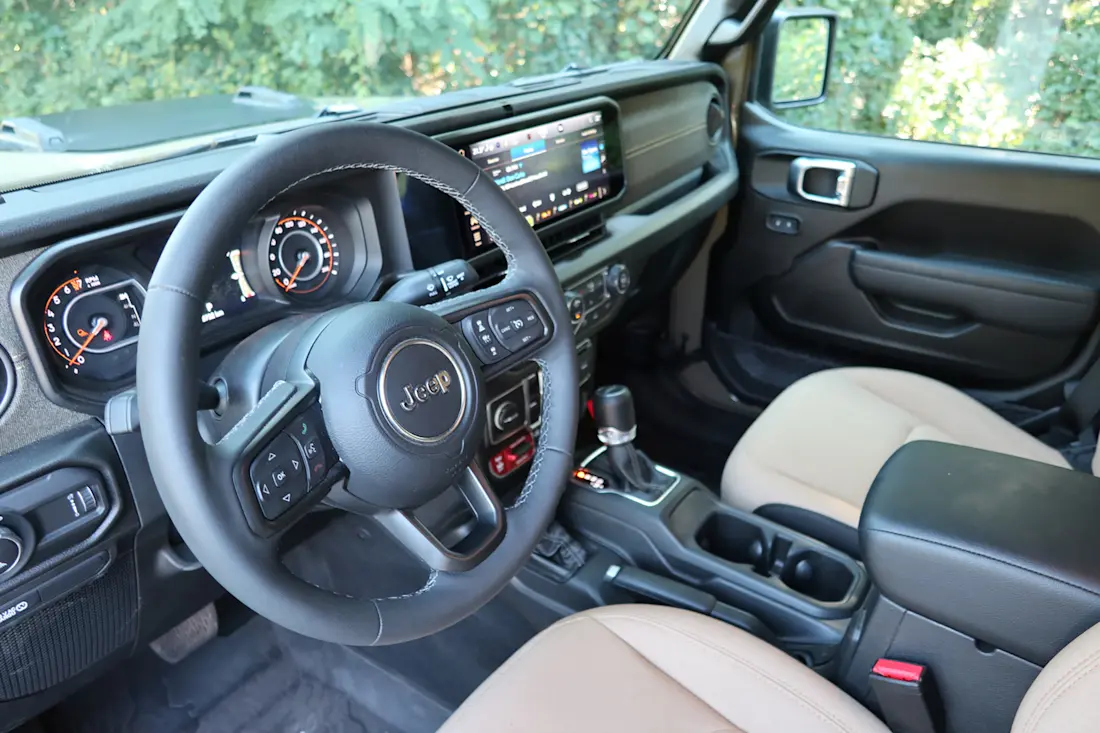
The cabin is more complicated than the original military models, but it’s handsomely laid out with stitching on the dash, a grab-handle for the passenger, and a 12.3-inch centre touchscreen. Oddities include the location of the window switches on the centre console to limit the wiring for the removable doors.
Safety: 8/10
The U.S. National Highway Traffic Safety Administration (NHTSA) hadn’t crash-tested the Gladiator at the time of this writing. The Insurance Institute for Highway Safety (IIHS) had and gave it the top “Good” in side- and moderate front overlap test, the latter now updated to assess potential injury to a rear-seat passenger, as well as to those in front; but the next-step-down “Acceptable” for small front overlap. It also got “Marginal” or “Poor” ratings for its headlight performance, depending on trim.
Standard driver-assist features include emergency front braking, adaptive cruise control and the mandatory back-up camera; but you must add a $1,195 Safety Group package to get blind-spot monitoring with rear cross-traffic alert, rear parking sensors, automatic high-beam control, and LED tail lights.
Equipment: 7/10
The Gladiator in its lower trims is sparingly-equipped, and most will increase the price, often substantially, with at least a few add-ons. Standard items include fog lights, a removable soft top, manual climate control, power locks and windows, manual mirrors, cloth seats, and that 12.3-inch touchscreen. Extra-charge items on my tester included a seven-inch instrument display (up from a 3.5-inch unit flanked by traditional gauges), proximity door locks, LED headlights, and automatic climate control as part of the Willys ’41 package; while other packages added heated seats and steering wheel, remote starter, auto-dimming mirror, and premium audio.
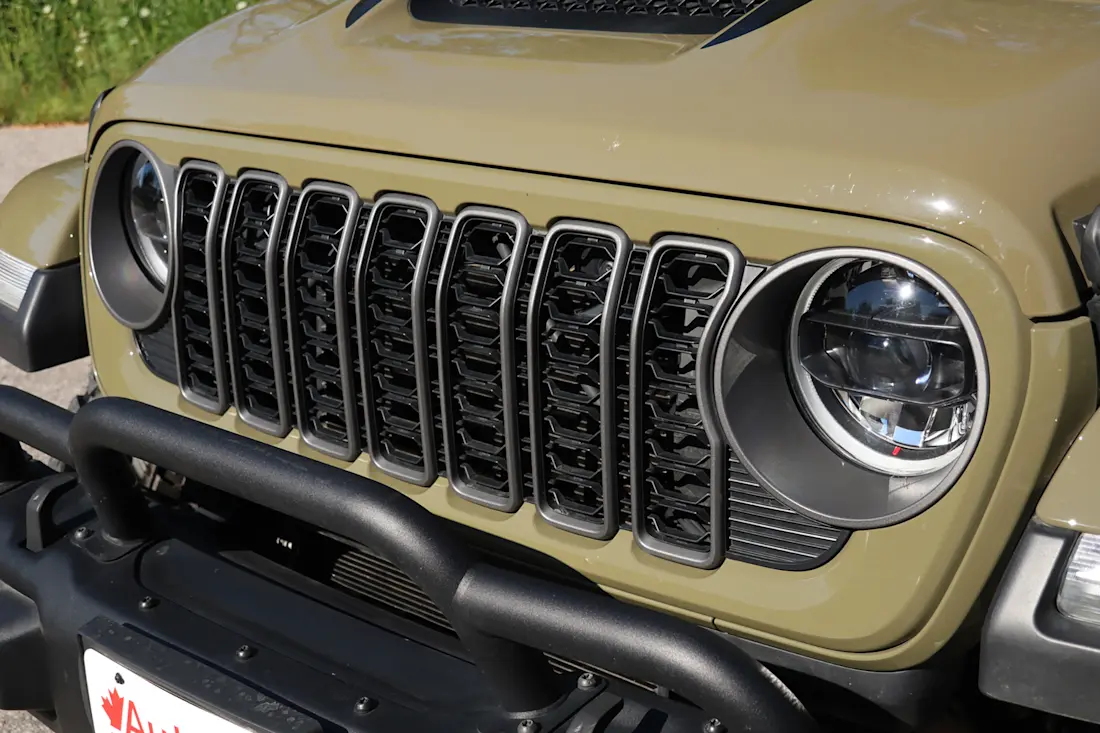
The Willys ’41 group also includes heavy-duty front and rear shocks, an electronic locking rear axle, way-cool 17-inch painted wheels, all-weather floor mats, a steel front bumper, heavy-duty cooling, a grille guard, scoop-equipped hood, and badges.
User-Friendliness: 8/10
Those narrow rear doors aside, and taking into account its high sill and cargo liftover because of its off-road ground clearance, the Gladiator is relatively user-friendly. Climate controls are buttons and dials; the gear selector is a conventional lever; and the touchscreen menus are intuitive. Switching between two- and four-wheel drive involves a stiff lever that takes some muscle, but that’s part of the package. Jeep leans on its rough-and-tumble off-road heritage, and that includes a bit of grunt rather than turning a dial to adjust the system’s high- and low-range gearing.
Everyday Usability: 8/10
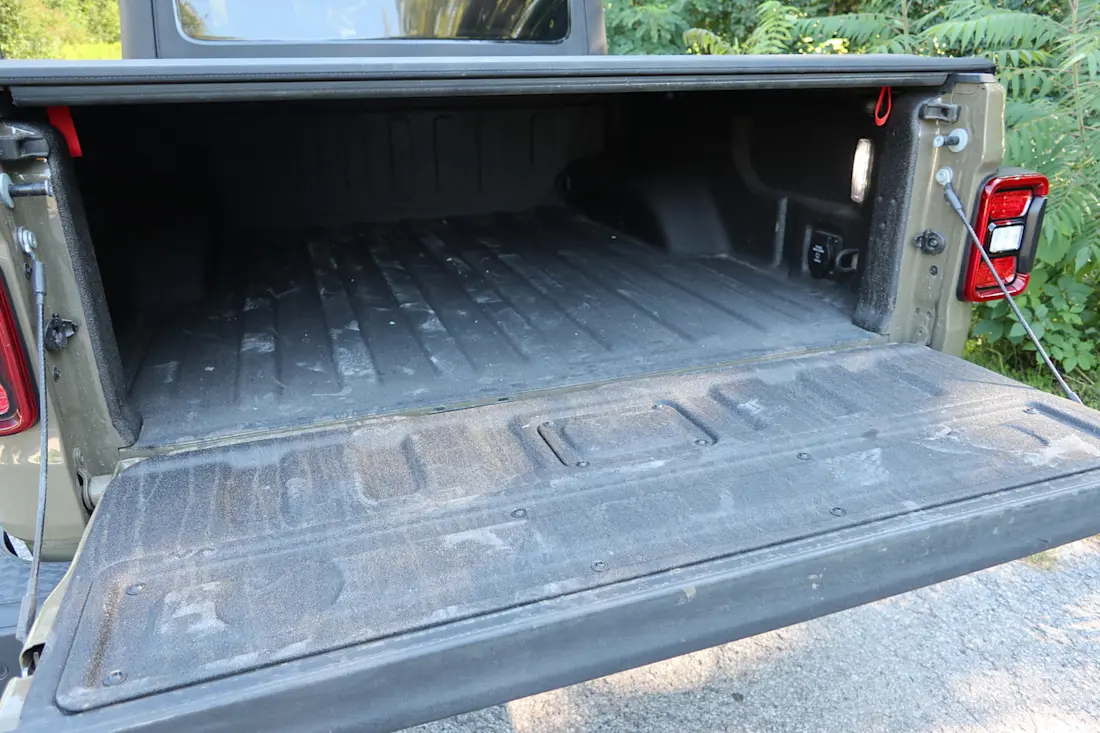
The midsize Gladiator includes a five-foot bed, and with payload of 782 kg (1,725 lb) and towing capacity of 3,492 kg (7,700 lb). That’s at the upper end of the segment, where only the Chevrolet Colorado matches it. In addition to getting a camper into the wilderness, the Gladiator also excels at going even farther out, but owners also have to accept the truck’s tougher-lifestyle abilities.
Comfort: 7/10
That go-anywhere attitude can come at the expense of comfort, and you won’t be happy if you don’t go into it realizing that. There is a lot of wind noise; a lot of aggressive-tire noise; and the rear seats are hard and cramped. All that is part of the package. Even so, this truck truly needs a left-side dead pedal, not just for driving comfort, but as a brace when going down steep inclines.
Power: 8/10
All trims use a naturally-aspirated 3.6L V6 engine that makes 285 hp and 260 lb-ft of torque, and with an eight-speed automatic transmission. It’s more than enough, with linear acceleration, sufficient passing power, and smooth shifts. The part-time transfer case includes rear-wheel drive and high- or low-range four-wheel-drive gearing. Without an automatic setting, four-wheel traction is restricted to soft or loose surfaces. Driving with the system engaged on pavement can damage it. (Other trims offer an automatic four-wheel-drive setting.)
Driving Feel: 7/10
This is where “It’s a Jeep thing, you don’t understand” comes in. The Gladiator has very firm steering; the tires follow every road imperfection; and you’re constantly correcting it on the highway to keep it pointed straight ahead. Quite simply, it excels at off-road and isn’t meant to be a highway hauler, and you either accept that or look at other trucks. Ford’s Bronco has considerably better driving manners while also being exceptional off-road, but so far, it hasn’t been turned into a pickup truck.
Efficiency: 8/10
Natural Resources Canada (NRCan) rates the Gladiator at 13.7 L/100 km in the city, 10.8 on the highway, and 12.4 combined. I made a few longer highway runs during my time with it and came in below with an average of 10.7 L/100 km overall; and it takes regular-grade gasoline. It’s in the ballpark with its midsize competitors, where the Ford Ranger officially rates as low as 11.2, and the Nissan Frontier as high as 12.9.
Value for Money: 7/10
The Gladiator’s starting price of $52,790 is about mid-pack when compared to the lowest-priced of its competitors’ off-road trims, and it’s more capable than most of them; but that gets you a relatively basic list of features, and many of the desirable add-ons, such as heated seats or automatic climate control, are bundled into pricier packages. Be prepared for sticker shock if you start checking boxes.
The Verdict
The 2026 Jeep Gladiator is a rough, noisy truck that can go almost anywhere, and that’s exactly what its fans love about it. You either get it or you don’t, and if you do, the Willys ’41 is a pricey but cool package. It’s not for everyone, but no truck is, and for off-road credibility, it’s hard to beat.

Specifications
Trim Tested
2026 Jeep Gladiator Willys ‘41
Base Price
$50,495
Options
$18,135 — Willys ’41 Package, $10,310; Convenience package, $2,495; Cargo package w/trail rail system, $1,995; Safety package, $1,195; Technology package, $995; Spray-in bedliner, $650; ’41 paint, $495
A/C Tax
$100
Destination
$2,295
Price as Tested
$71,025
Displacement
3.6L
Cylinder Count/Configuration
V6
Horsepower
285 hp @ 6,400 rpm
Torque
260 lb-ft @ 4,400 rpm
Fuel Economy
13.7 / 10.8 / 12.4 L/100 km cty/hwy/cmb
Cargo Space
5’ / 1,531 mm bed

All Articles
See all
2026 Jeep Cherokee First Drive Review + Video
Jeep is back where it belongs, but it’s an uphill battle in this seriously competitive segment.
 Dan Ilika

2025 Jeep Wagoneer S Review + Video
While promising, Jeep’s first-ever EV feels bogged down by unfulfilled potential.
Dan Ilika
2025 Jeep Wrangler 4xe Review
A Jeep that combines off-road ability with plug-in capability.
Jil McIntosh