
2026 Genesis GV60 Review
 Sébastien Bell


Trader scores
This score is awarded by our team of expert reviewers after extensive testing of the car.
An early entry in the compact electric crossover segment, the Genesis GV60 is still hanging in there, but just barely.
Lightly updated for the 2026 model year with a bit of new technology and a better battery, the littlest Genesis is doing enough to remain relevant, but as it scrambles to keep up, the competition is speeding away, leaving it in a bit of an awkward position.
Efficiency 6.5/10
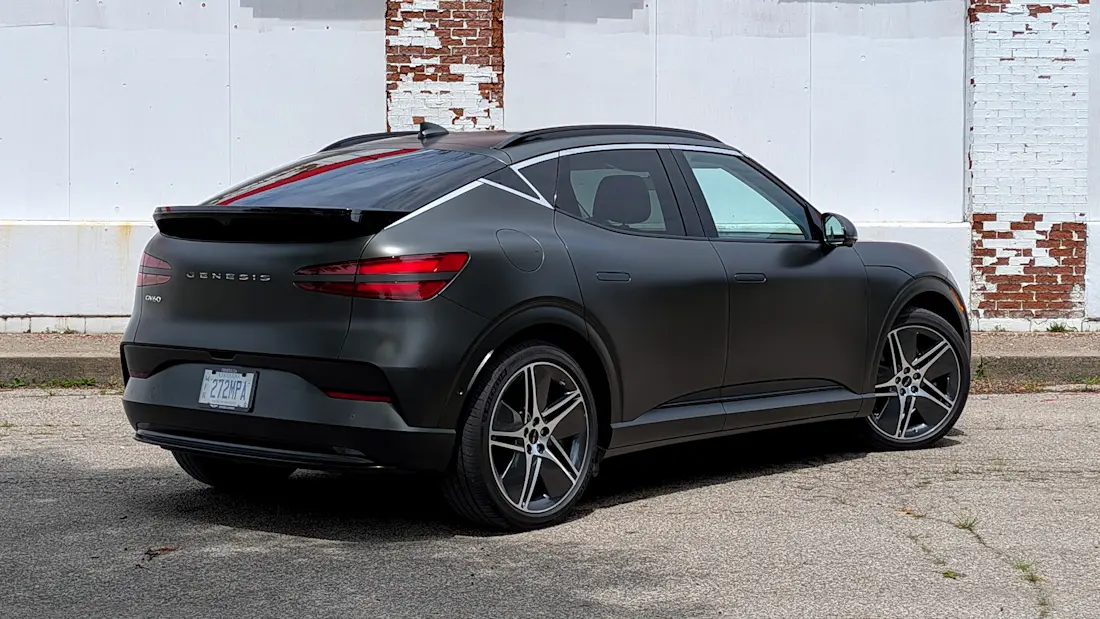
The marquee update for the 2026 model year is the larger 84-kWh battery pack, up from 77.4 before. Thanks to a decent efficiency rating of 23.3 kWh/100 km combined, the GV60 is now good for 406 km on a charge, per Natural Resources Canada (NRCan). That’s…enough, but it’s not very impressive, especially in a class where headlines are being made because of gigantic range figures.
The GV60’s closest competitor is the Audi Q4 E-Tron Sportback, which is almost identical in size, shape, and range; estimates suggest it will go two fewer km per charge than the Genesis. However, Cadillac’s exciting entry into the segment, the Optiq, offers as much as 488 km of range with all-wheel drive (the GV60 and Q4 eE-Tron are both only available with twin-motor setups for 2026), and as much as 510 km in single-motor guise, despite having a battery pack that offers only slightly more capacity.
It may seem unfair to compare the GV60 to the likes of the new BMW iX3 — admittedly, the German crossover is a half-size larger — but the price overlap is significant. (More on that later.) It, therefore, remains relevant that the BMW manages to go an estimated 200 km per charge farther than the Genesis (nearly 700 km in all).
Value for Money 6/10
Despite being sized to compete with the Audi Q4 E-Tron and Cadillac Optiq, the Genesis GV60 seems priced to compete with slightly larger electric vehicles (EVs) like the BMW iX3. Offered in just one trim, the Sport AWD, it starts at $84,000. Meanwhile, the Audi starts at around $76,000 and all-wheel drive versions of the Optiq can be had for as little as $65,000 (all prices include destination charges where they apply, but not taxes). Sure, the GV60 comes well equipped, but even the top-of-the-line Optiq V-Series costs less than the Genesis, with a starting price of just $82,000.
Even the larger and longer-range BMW iX3 has a starting price lower than the GV60’s. The BMW starts at just a little over $79,000 and adding a Premium package of options will only push its price to $85,000 or so. Considering how much more range and space it offers, it’s hard to begrudge the BMW the extra thousand dollars or so.
Equipment 8/10
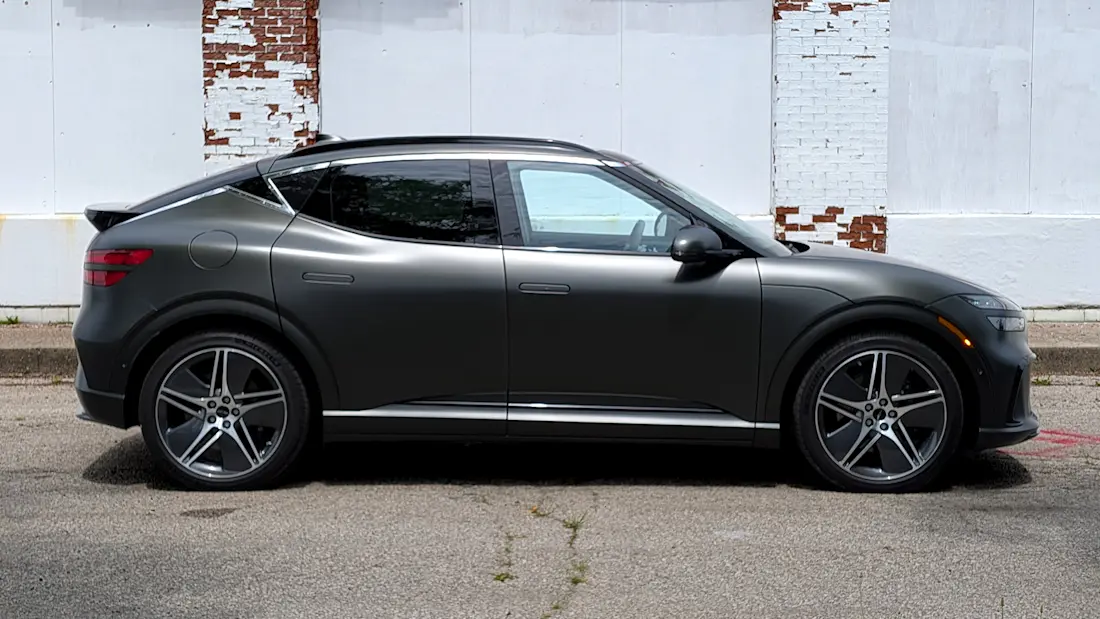
To be fair, opting for the wrong paint colour could add another $6,000 to the price of the BMW, something you simply can’t do with the GV60. Paint colour and accessories are the only way to add to your bill, and they aren’t particularly costly. Tromsø Green paint will run you $500, while our tester’s matte paint finish cost $1,700 (unfortunately, this lovely colour is no longer available to order).
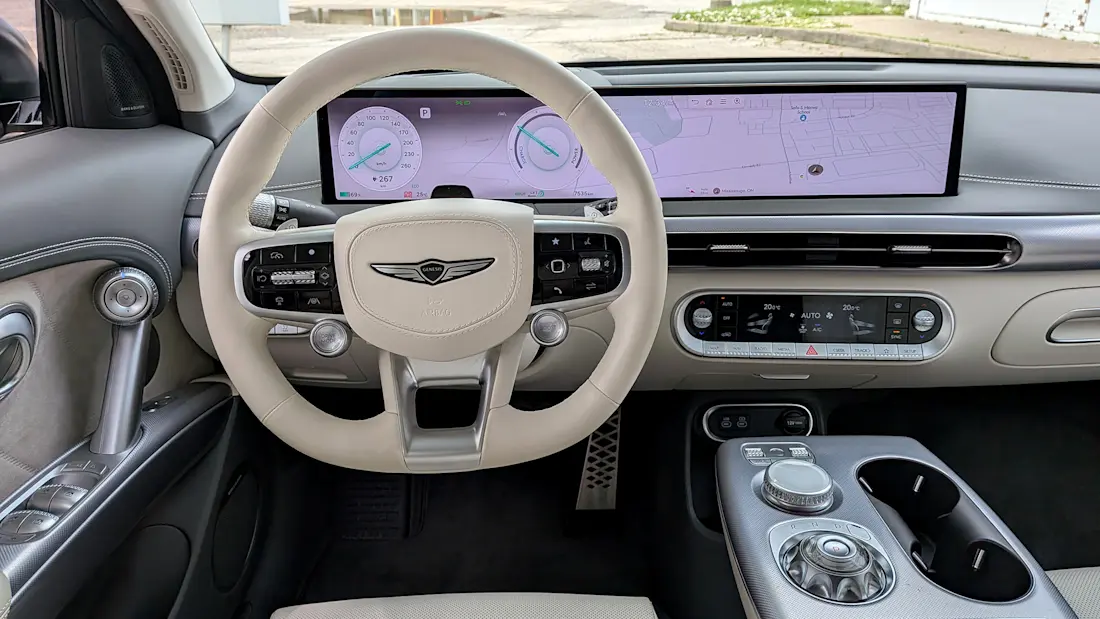
Other niceties, like acoustic laminated glass, a leather-wrapped heated steering wheel, heated and ventilated front seats that are endlessly adjustable, and an “ergo motion” driver’s seat that doesn’t quite massage you, but shifts you about in your seat to ease tension, are all standard. Remote parking assist, a surround-view monitor to make parking without curb-rashing your 21-inch wheels easier, and a Level 2 driver assistance system are all included in that base MSRP, too. Plus, for 2026, the GV60 comes with the brand’s 27-inch OLED display, which is easier to see.
While colour and wheel options are more limited than you might expect in this segment, you can rest assured that you’ll get pretty much every high-tech toy you could ask for, including a wireless phone charger and a high-end stereo, in the GV60.
User-Friendliness 7/10
Sadly, not all is well with this crossover’s technology. Although the OLED screen displays very well, it doesn’t react especially quickly to inputs. Swipes lag unusually behind your finger, and taps take moments to register on the screen, leading to frustration since this EV’s user experience is menu heavy.
Fortunately, a wide array of physical controls is available to the driver. As is becoming more common, there is a physical volume knob and there are HVAC controls that never move. Even better, you don’t need to fish through menus to heat or cool your seat, and there’s a row of nice-feeling buttons that take you directly to your navigation screen, your media screen, or your setup screen. Despite not having the most impressive infotainment system on the block anymore, the wealth of buttons makes this an easy vehicle to use day-to-day.
Design 8/10
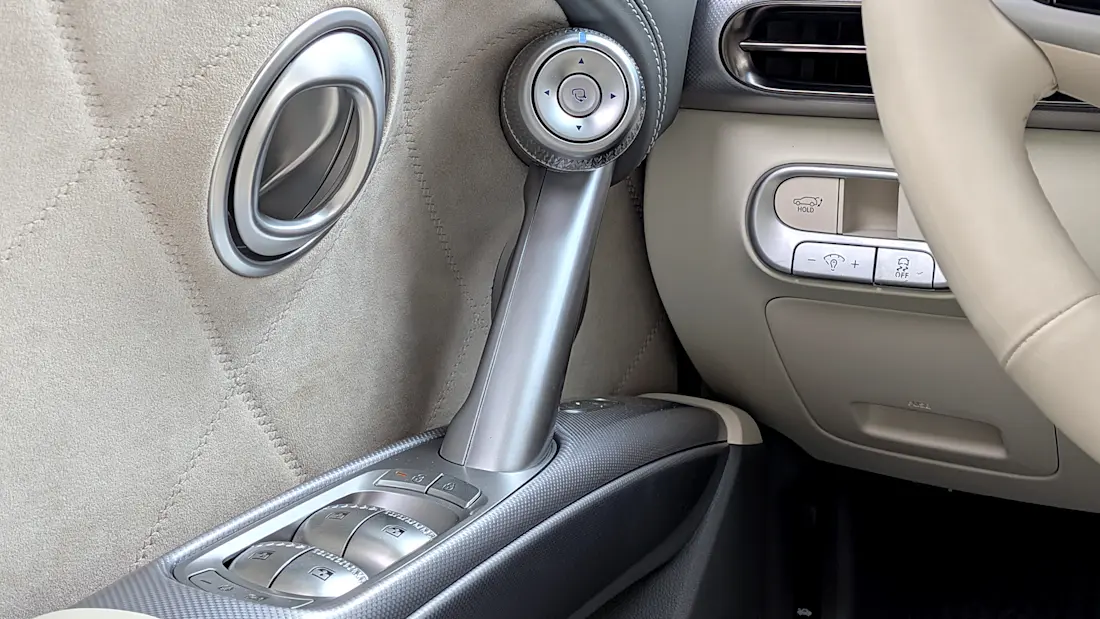
It only makes the experience of this vehicle better when you find a cool interior that has really come into its own. All steely silver and rounded edges, the GV60 owes much to the retrofuturistic Y2K aesthetic that’s so popular right now. More than simply being cool, the design lends itself to big controls that are easy to use.
Take, for example, mirror adjustment. The controls are built seamlessly into the inner door handle, which looks slick. To do that, though, the controls had to be quite large, which only makes them quicker to find and easier to use. Although there’s a little more plastic than I’d like to see in a vehicle that costs this much — and there are some fumbles, like the round gear selector that’s in close proximity to the similarly shaped rotary knob that controls the infotainment screen — it’s an impressively happy marriage of form and function overall.
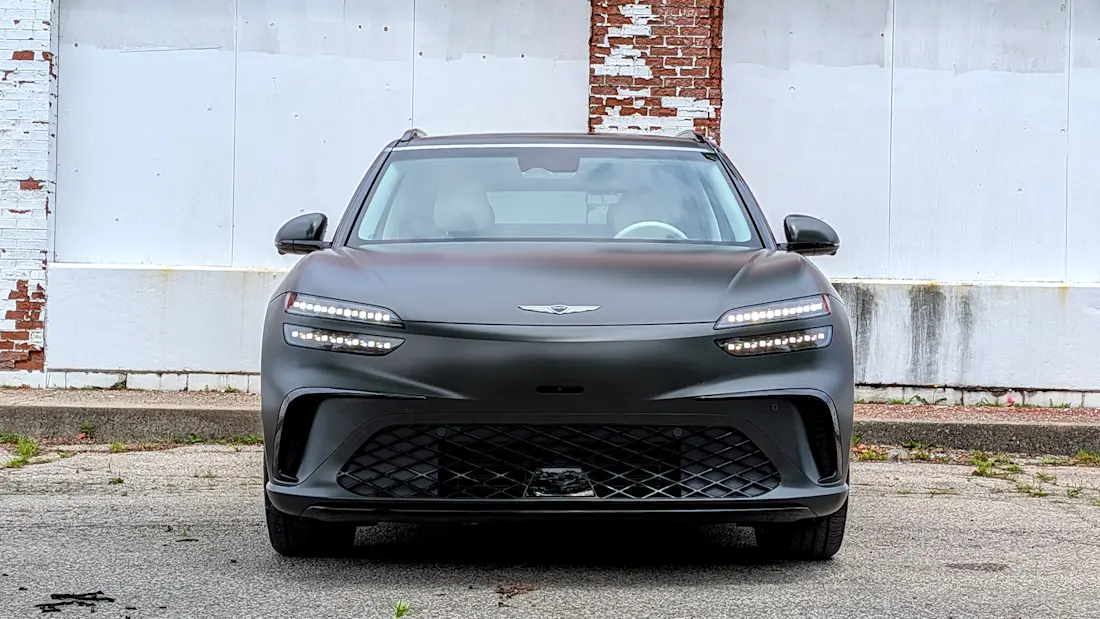
Outside, meanwhile, the design has matured into a reasonably (if not uncomplicatedly) attractive crossover coupe. Still not to everyone’s tastes, I suspect, the overall look is at least interesting without being as divisive as, say, a Kia K4.
Everyday Usability 8/10
One might think that the GV60’s sloping roofline would cut into its practicality, but it’s really not that bad. As noted above, the Audi Q4 E-Tron Sportback is the most closely matched vehicle on the market to this Genesis in terms of both footprint and shape. However, it’s significantly more limited than this Korean wonder.
Whereas the Audi can only fit 535 L of stuff behind the rear seats, the Genesis manages to squeeze 680 L back there. And that’s not just a trick of the numbers. Every time I thought I would be pushing the GV60’s ability to accommodate me to the limit, it just swallowed up everything I could throw at it thanks to a great big rear hatch and a well-judged use of floor space.
Shockingly, even the BMW iX3 — as noted a half-size bigger than this Genesis — can handle less stuff behind the rear seats, just 520 L, if the figures are to be believed. Admittedly, BMW’s electric crossover can accommodate a bunch more stuff with the rear seats folded (1,750 L to the Genesis’s 1,550 L), as can the Cadillac Optiq (736/1,614 L seats up/down), but this Genesis is hardly limited.
Comfort 9/10
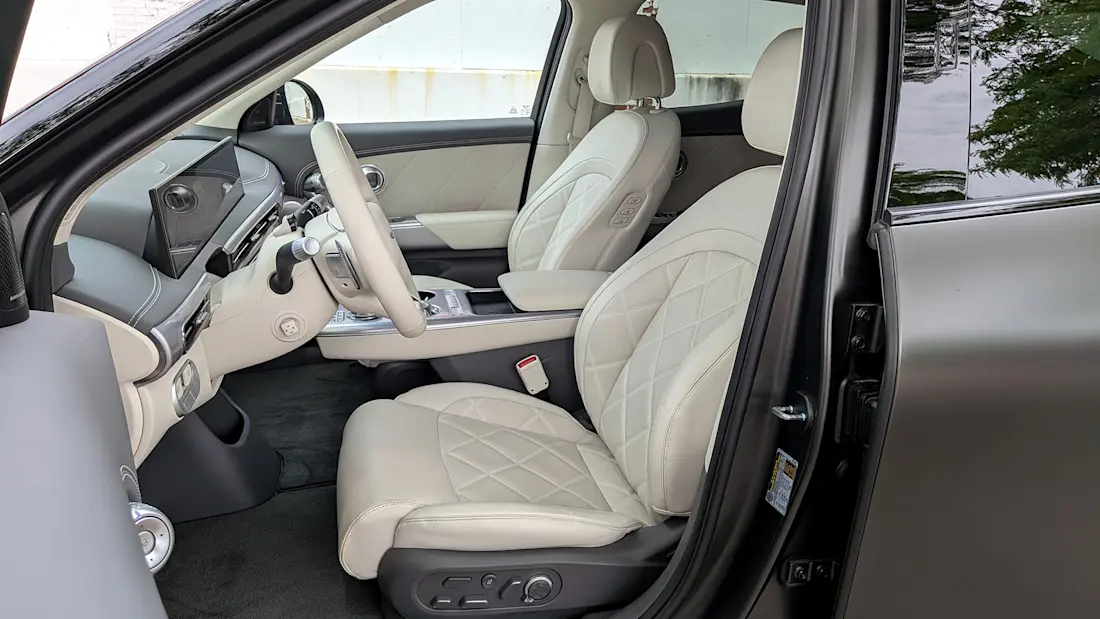
It’s not like the GV60 is sacrificing rear-seat comfort to inflate its cargo figures, either. The rear seats are perfectly comfortable for adults, offering acceptable levels of headroom and plenty of legroom. The front seats, too, are comfy, and the fact that they are invariably heated and cooled only adds to their appeal. Meanwhile, a smooth suspension soaks up bumps well without wallowing like some of this brand’s even more softly sprung vehicles.
Driving Feel 8/10
Indeed, the GV60 is more geared for comfort than performance, despite the only trim available being called “Sport.” And that, frankly, is fine. Comfortable around town and stable on the highway, this EV glides around smoothly and effortlessly. Its steering is well-weighted, its regenerative braking performs intuitively, and, like all EVs, it’s pretty quick when you want it to be.
Power 8/10
A pair of motors combine to deliver a total of 429 hp. That gives the GV60 a 50/50 power split, front to rear, meaning it should behave neutrally in snowy conditions. Meanwhile, in the dry, it can launch you into your seatback with surprising force.
More importantly, Genesis’s engineers (and the whole Hyundai Group’s engineers for that matter) have figured out how to calibrate an EV’s accelerator pedal to deliver torque gently and calmly. That helps keep things smooth when you’re taking off from a stop sign and also makes it easier to manage slowing down, too. A nicely progressive pedal means you’re never tempted to pull your foot off the pedal quickly, reducing the number of hard acceleration-deceleration events to the benefit of your passengers’ inner ears.
Safety 9/10
Passengers will also appreciate the wide array of safety equipment that comes standard in 2026. In addition to the traditional safety equipment, the GV60 also gets technology to help you park more safely and exit spots with greater peace of mind, as well as lane keep assist, forward collision avoidance, plus a warning to prevent you from opening a door when there is another vehicle (or bicycle) bearing towards you, among other features.
The GV60 has also performed very well in crash testing. The United States National Highway Traffic Safety Administration (NHTSA) awarded it five out of five stars, while the (if anything more stringent) Insurance Institute for Highway Safety (IIHS) ranks it as a Top Safety Pick+, its highest accolade.
The Verdict
In a vacuum, the 2026 Genesis GV60 remains a really good vehicle. Nice to drive, nice to look at, comfortable to sit in, and easy to fit into one’s life, this EV is really good at the “V” part of its equation. However, it’s the “E” that has started to let it down. As shy on range and expensive as the naysayers claim EVs to be, it’s hard not to feel like this is now a last-generation EV in a segment filling up with next-gen vehicles that happen to be electric.

Specifications
__Trim Tested __
2026 Genesis GV60 Sport AWD
Base Price
$84,000
A/C Tax
$100
__Destination Fee __
Incl.
Price as tested
$85,800
Make
Genesis
Model
GV60
Year
2026
Optional Equipment
$1,700 — Storr Green Matt paint, $1,700
Engine Displacement
320 kW
Engine cylinders
Twin electric motors
Peak hp
429 hp (483 hp w/ boost mode)
__Peak torque __
516 lb-ft
Fuel economy
2.4/2.8/2.6 Le/100 km (city/hwy/comb); 406 km range; 23.3 kWh/100 km combined
Cargo space
680/1,550 L (second row seats up/down)

All Articles
See all
2026 Genesis Electrified GV70 Review
Its range may not be impressive, but everything else is.
Sébastien Bell
2026 Genesis G90 Prestige Black Review
Genesis offers everything it’s got with this luxury sedan, but is it enough?
Sébastien Bell
2026 Genesis Electrified GV70 Review
As a luxury transportation device, the emissions-free GV70 is almost a home run.
 Chris Tsui