
Most E-Bikes Are Super Ugly, but One Canadian Company Is Changing That
 Jodi Lai


Style is subjective, but universally, most e-bikes are incredibly ugly.
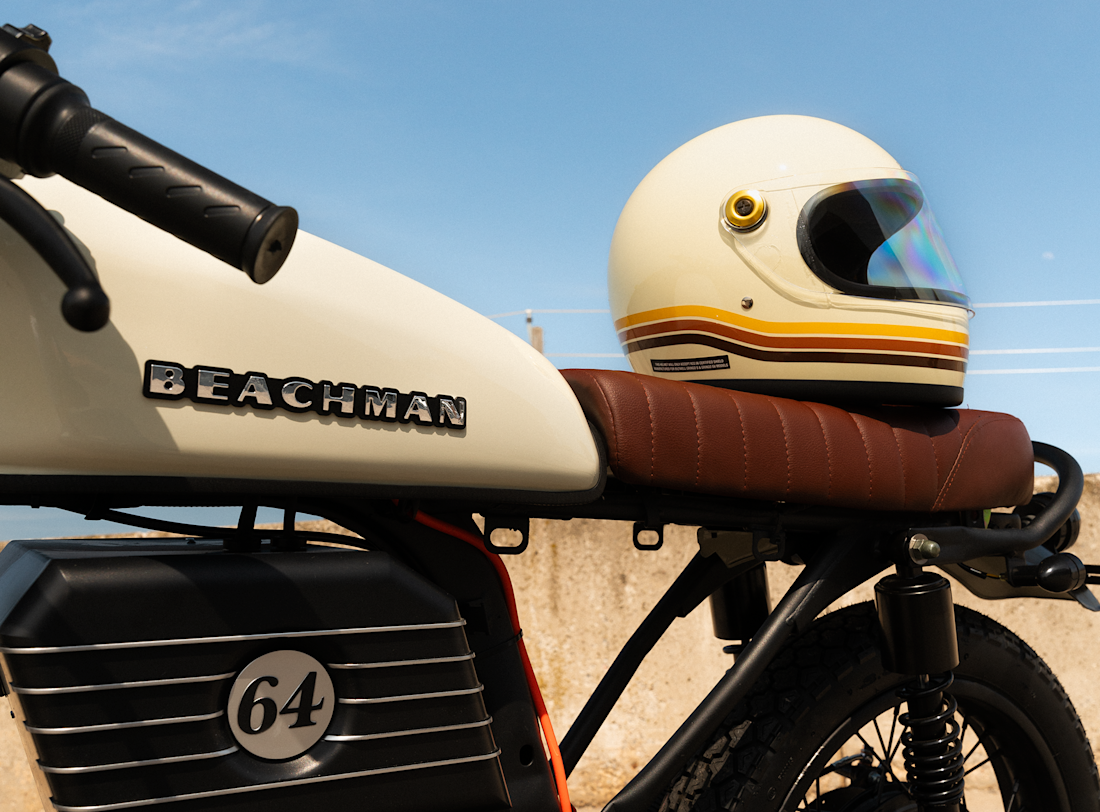
Canadian e-bike company Beachman is changing that. CEO and co-founder Ben Taylor, who has been featured in Forbes’ 30 Under 30, had this vision of a company centred around the 1960s California aesthetic brewing in his mind since he was a teenager. Today, the company sells retro-looking e-bikes assembled in Canada (with parts sourced from China) that resemble 1960s cafe racer motorcycles. The brand has also just launched its first electric motorcycle.
“I was growing the brand, and I knew I wanted to start a company called Beachman that made vintage products — basically, '60s design with modern engineering,” Taylor said. The idea came to him after he saw a moped on a forum designed to look like a cafe racer that someone had built for his son to ride around campus.
“That idea of a dad's love for his kid, and using it in school, it was so romantic,” Taylor said.
In 2019, Taylor was connected with Beachman’s other co-founder, Steve Payne, who had a side hustle buying up abandoned cafe racers, restoring them, and flipping them. He also dabbled in electric car conversions.
Before long, they took a risk and bought parts for 30 bikes. At the time, both co-founders were still working full-time jobs elsewhere. The pandemic hit, complicated matters significantly, and almost drove Beachman to bankruptcy.
After numerous complications, the company posted its first e-bikes on Facebook Marketplace in 2022. They sold out of their 30-bike run almost instantly, before the company was even fully off the ground. Just six months into selling bikes and two years into development, both Payne and Taylor quit their day jobs to focus on Beachman full-time. The brand expanded to the United States in 2023, and now that the company has its automaker certifications, Beachman is crossing the pond to sell its mopeds and motorcycles in Europe. Beachman is the first motorcycle manufacturer licensed in Canada in roughly 80 years, the last one being Bombardier.
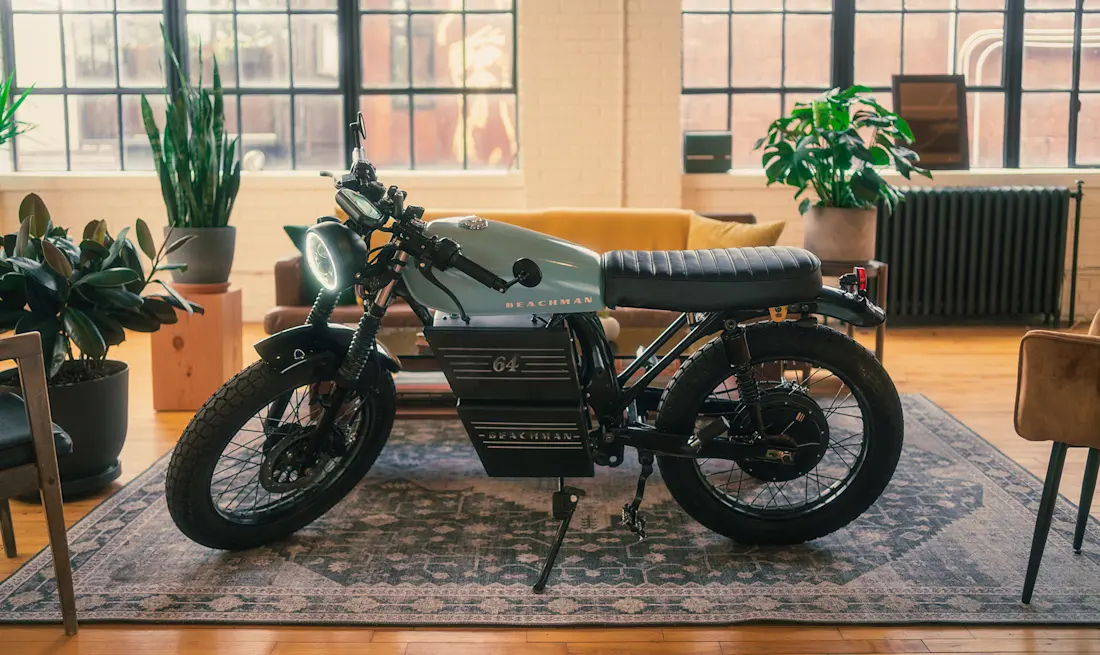
Its main product is the ‘64, a Class 2 e-bike that requires no licence, registration, or insurance to ride in Ontario, where its head office and manufacturing facility are located. Its removable battery charges in two to four hours using a laptop-sized charger, 120V outlet, and no special equipment. The bike has a 90-km range and a 32 km/h top speed.
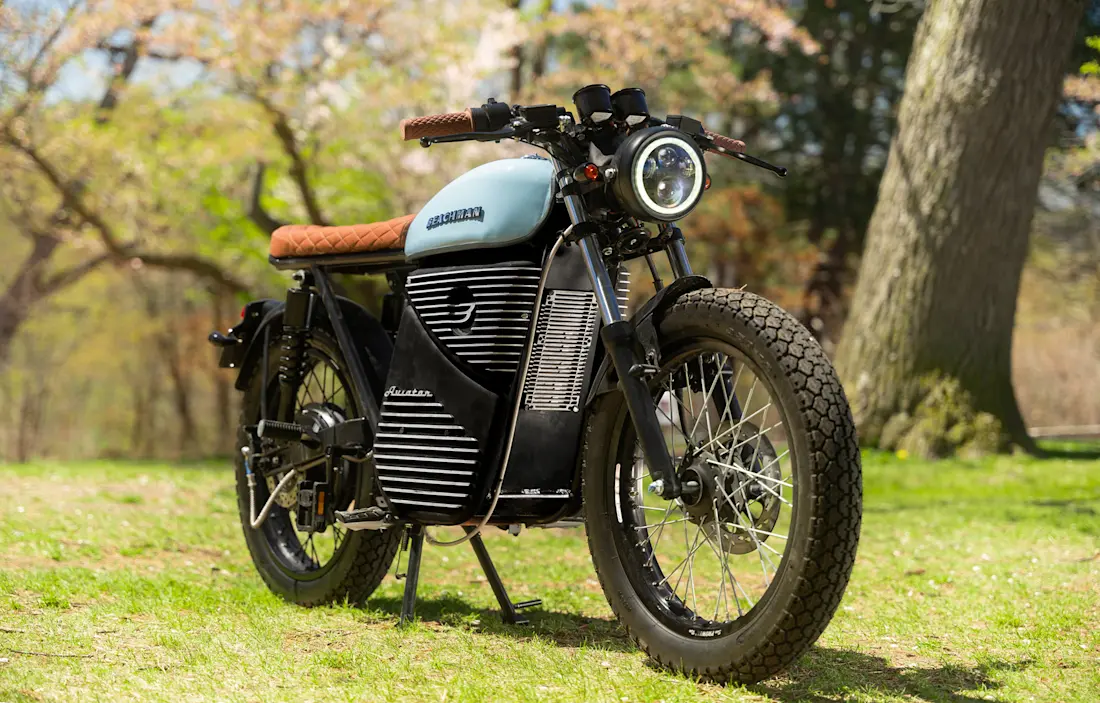
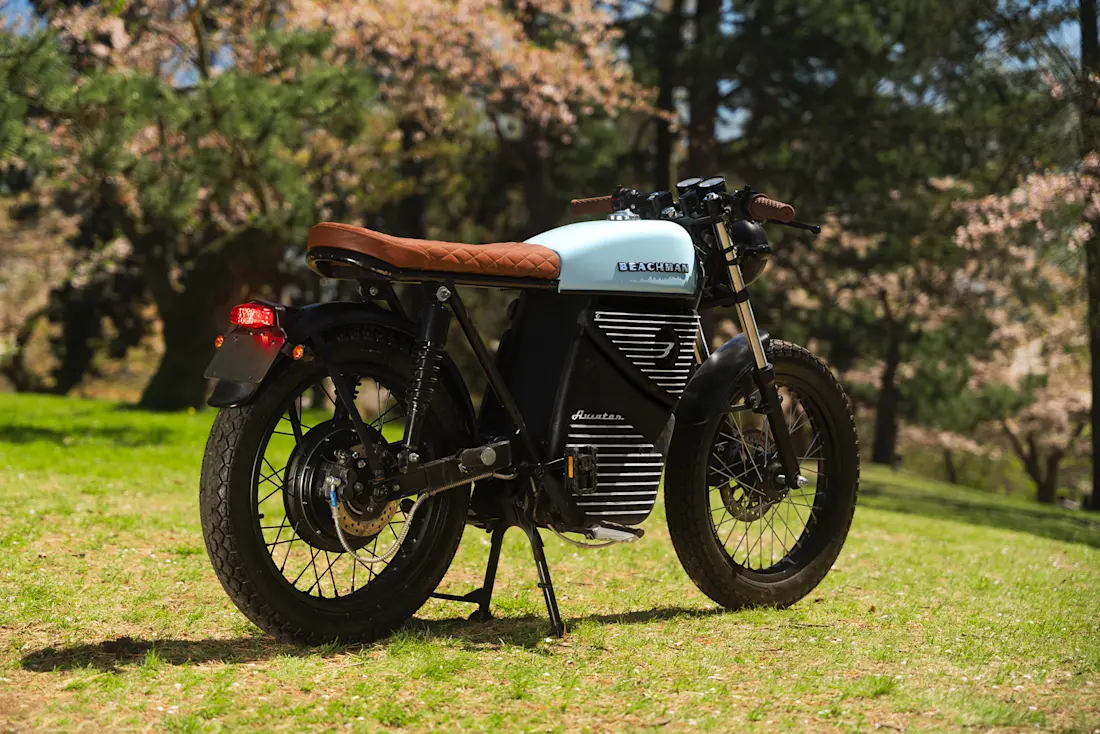
The newest addition to the Beachman lineup is the Aviator electric motorcycle (below), which launches soon and requires a motorcycle licence to ride. The Aviator is the brand’s first ground-up design. Everything before that was adapting an existing platform. Beachman is also building up its special vehicles division for electric conversions, which helps the company stay creative and keep older cars on the road.
The main selling factor for the bikes, however, is how they look. Both the e-bike and motorcycle have a nostalgic, timeless design that just looks badass.
“I'm more of a '60s design person than I am a car person,” Taylor said. “I love that era because it has a strong focus on design for design's sake.”
For a young CEO, Taylor is decidedly old-school.
“I'm really proud of the fact that there's no Bluetooth on these bikes. There's no app or anything,” he said, adding that the return to vintage stuff and analogue is pushback against AI. He said that people want craftsmanship, personality, and “objects that feel human.”
“The reason people love the original 1960s Corvettes is that there are so many parts of those cars that serve no purpose other than to look beautiful,” he said. “Something like this never goes out of style because it's just really good design. It's not just nostalgia for a specific era; it's design that continues to resonate.”
Taylor said his parents, who were big fans of mid-century design, inspired his love for this era. Growing up in the 2000s, he said there was no way he could have been inspired by his generation's aesthetic because it was so ugly.
“Growing up in the 2000s, I honestly think it was one of the worst eras of automotive design,” he said. Then he saw the Ford GT for the first time, and it sent him down a retro design rabbit hole.
Taylor said Beachman is a no-ego, utilitarian brand. “It's an aesthetic, but it's also a very specific set of values,” he said, adding that the product is simple because it looks good, but also because it’s easier to manufacture and build.
“I think people are tired of complexity,” Taylor said. “If you can create something that's affordable, attractive, easy to understand, and easy to repair, people respond to it.”
“There are plenty of industries in Canada where all of the value gets exported somewhere else. We want to keep more of it here,” Taylor said. “Manufacturing matters, building things matters, creating jobs matters. Even if we're not making every single component here, we're still creating something real here. But at the end of the day, we're builders. That's really what this company is. We build things.”
And it helps that they’re building things that look as cool as they do because in a world where design can be so boring or soulless, Beachman’s bikes are as refreshing as a dip in the ocean or feeling the sand between your toes.

All Articles
See all
10 EVs from China That Should Be Sold in Canada
Some of these Chinese EV models could be popular with buyers here.
 John LeBlanc

Lexus Looks to Push the Limits of What’s Possible for a Premium Brand
Design and space are emphasized as the brand explores what comes next.
 Dan Ilika

Celebrating a Century of Chryslers: 10 Significant Models from Its 100-Year History
10 of the most significant Chryslers since the brand's founding in 1925.
John LeBlanc