
Preview: 2027 Lexus TZ Arrives As a Flagship 3-Row EV
 Chris Tsui


If you’re looking for an SUV with the dependability of a Toyota but a luxury badge on the back, three rows of seats inside, and no reason to visit a gas station, there’s finally an option for you.
The 2027 Lexus TZ is the company’s first three-row electric vehicle (EV), and the start of a whole new model line akin to the TX that was introduced a few years ago. While facts and figures like horsepower, range and charging times, and pricing will come closer to the TZ’s on-sale date later this year, a chance to poke around a pre-production unit left us impressed by its potential.
Cyberpunk Breadvan
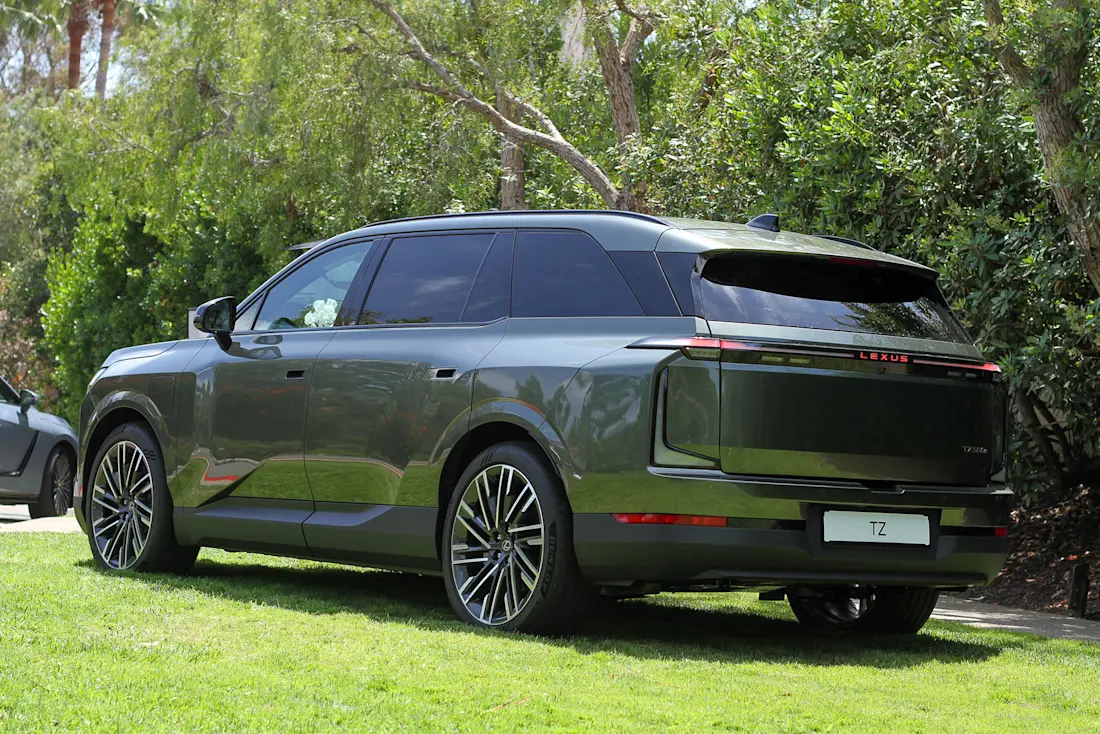
If there was one word to describe how the outside of the Lexus TZ looks, it’d probably be robotic. Up front is a very straight-edged interpretation of the brand’s spindle grille and C-shaped headlights that bring to mind those on the gas-powered GX. The side is made up of big, slabby, flat surfaces, and the rear gets a long, thin light bar with the Lexus wordmark lit up in the middle.
Proportionally, it sits rather low for a big SUV and resembles a breadvan, not unlike the Lucid Gravity. The TZ probably isn’t what most would consider classically beautiful. But it is definitely one of those SUVs that’s styled to look quietly expensive in traffic rather than capture hearts, attention, or social media likes with a wild design.
Based on the all-electric Toyota Highlander that’s on its way, the Lexus TZ has the same wheelbase and width, but is slightly shorter and longer overall.
Wheels come in either 20- or 22 inches, and optional rear-axle steering lets the back wheels turn up to four degrees, resulting in a tighter turning circle at low speeds (5.4 metres versus 5.8) and better stability when changing lanes at high speeds. It’ll tow as much as 1,587 kg (3,500 lb), and there are five driving modes, including one called “rear comfort” that minimizes nose pitch and dive and lateral motion for the benefit of, well, rear comfort.
Three Rows of Electric Luxury
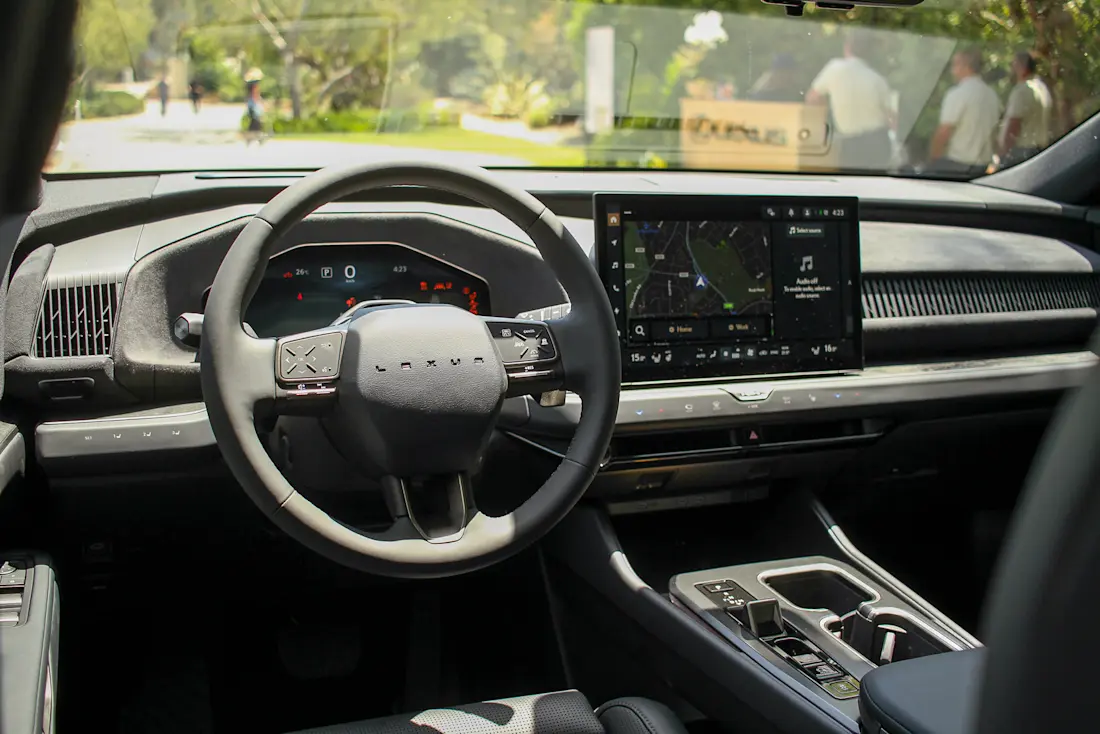
Climbing into the driver’s seat, the main screens and controls mirror those in the new ES sedan. That means a big touchscreen in the middle and a smaller, gauge-shaped display behind the steering wheel. Just like in ES, the climate buttons below the touchscreen and flanking the volume roller do a neat trick of looking like seamless capacitive touch buttons, but they’re actual, physical switches; they’re simply encased in the same rubber surface. Turn the vehicle off, and they all disappear completely.
The screen itself runs updated Lexus software that’s very much an improvement over the brand’s past systems. Onscreen icons are large and logically placed, the interface is cleanly designed, and it supports wireless Apple CarPlay and Android Auto. The steering wheel is new, too, and the buttons on it are easy to make sense of. The way it looks, however, particularly the horn section, may take some getting used to — but if it’s any consolation, it looks like less of a sore thumb in person than it does in pictures.
Something that sets it apart from the ES interior is a floating vented dash piece in front of the passenger that’s covered in plant-based suede and looks very concept car-ish. Stone-pattern trim on the door cards is lit up by ambient lighting and mixes well with the faux-suede sections, making the TZ feel like the more upscale product it is.
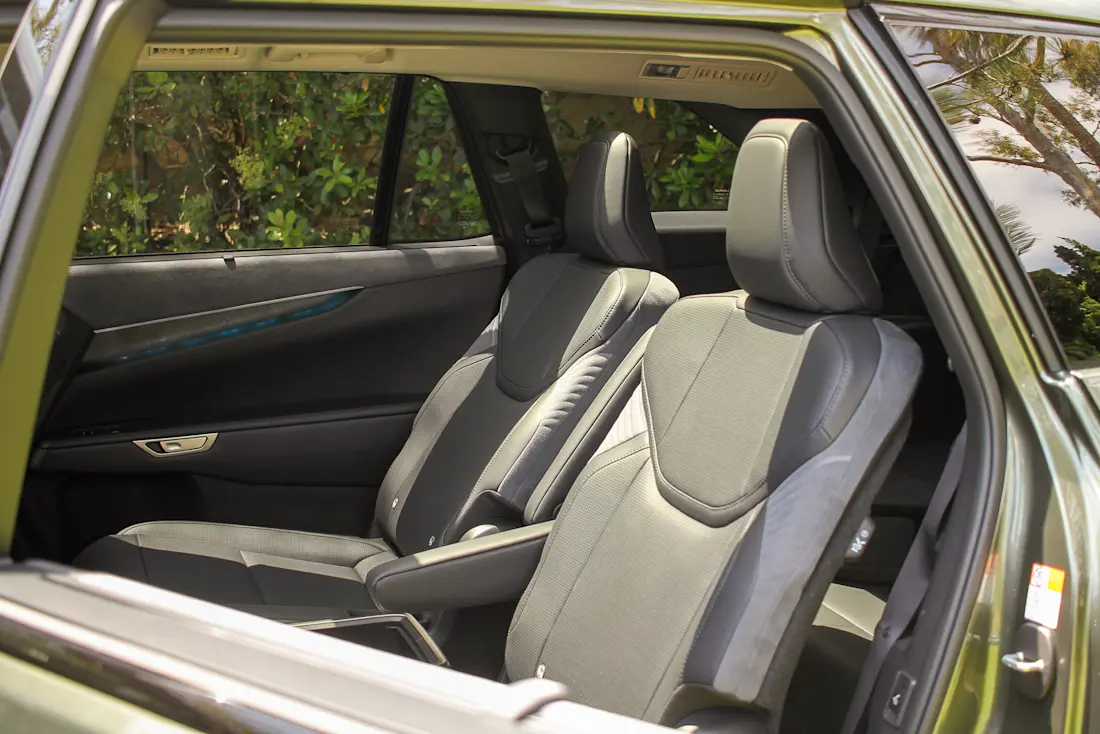
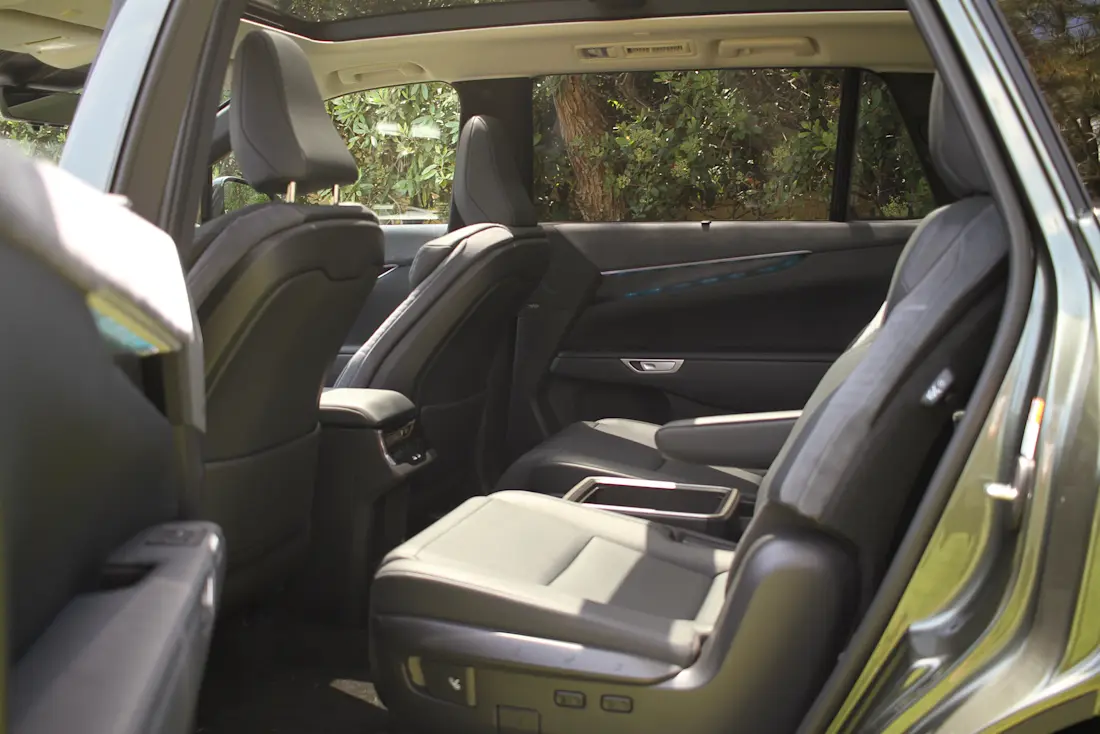
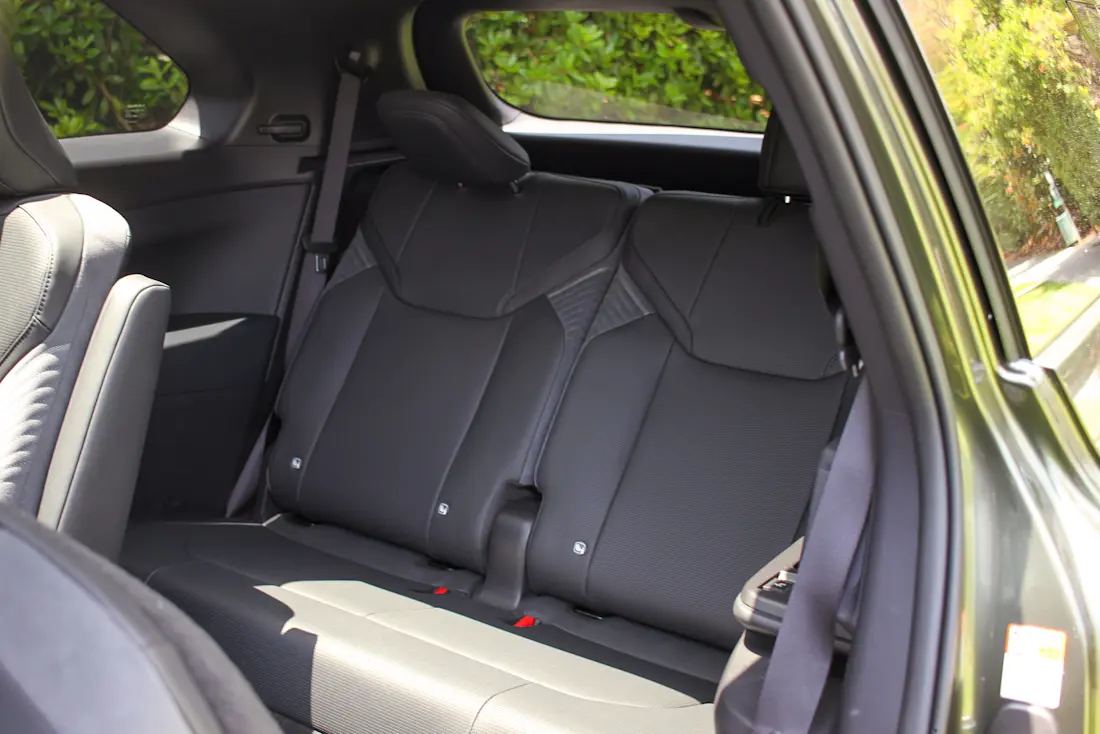
The TZ seats six, and the second-row captain’s chairs can be had with ventilation and, for the first time in a Lexus SUV, extendable ottomans. Plopping myself in the decked-out middle row, these seats are indeed comfortable and fairly spacious, but that third row is tight. Sitting up straight at five-foot-eight, it isn’t cramped, but both my knees and hair were touching the headliner and second-row seat, respectively. A huge panoramic sunroof above helps keep the claustrophobia at bay. A proper test of this will have to wait until later, but, for what it’s worth, Lexus is claiming “the quietest cabin among Lexus SUVs” with the TZ.
Final Thoughts
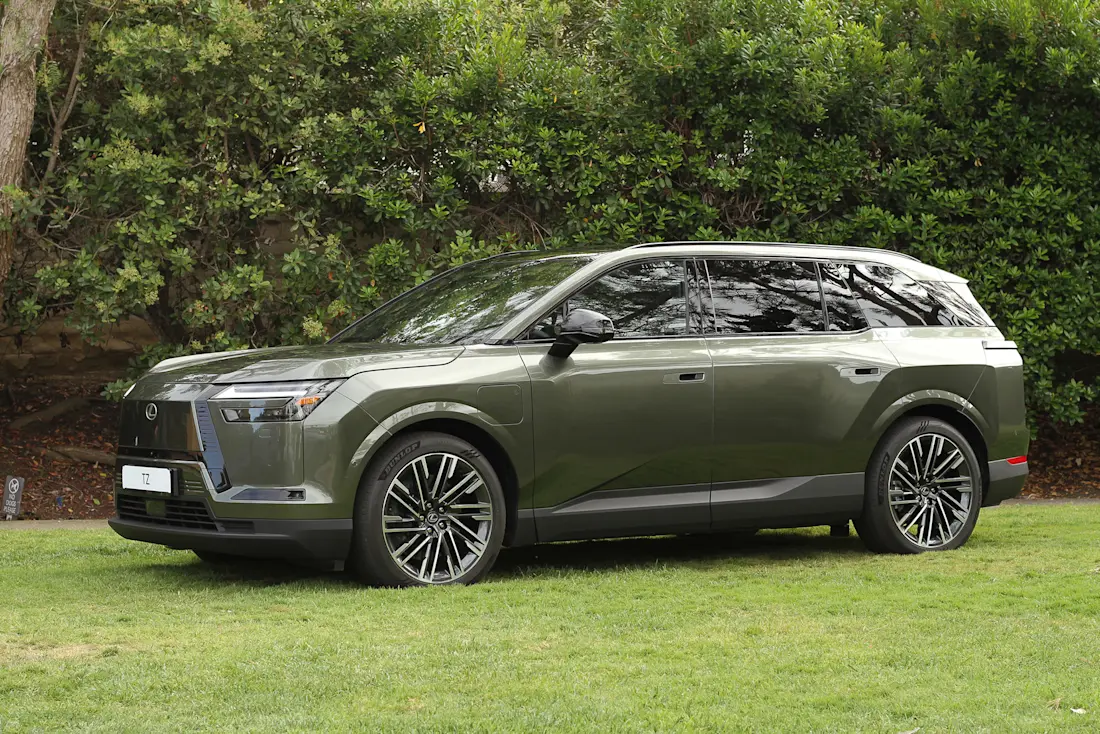
Even while stationary, the 2027 Lexus TZ has all the makings of a sanctuary. As we learned driving the reworked ES, the new Lexus user experience is good. I’m a fan of the TZ-specific interior flourishes afforded by all that extra space (and budget), and the exterior, while a little stoic, should be a hit among those who just want their luxury car to blend in with dignity.
Then there are the basics: it will come with two battery options — 77 or 95.8 kWh — and dual-motor all-wheel drive. Maximum expected range is 480 km, which practically matches that of the electric version of the new ES. For comparison’s sake, the Cadillac Vistiq is rated for 491 km on a full charge, while the award-winning Lucid Gravity trounces both with as much as 724 km.
Looking at Lexus’s lineup, there’s a fairly consistent level of competence across the board, and it would be shocking if the TZ breaks that streak. Still, its success hinges on consumer appetite for big, expensive EVs, which isn’t exactly guaranteed right now. But judged purely as an item, Lexus’s latest EV is on the right track.

All Articles
See all
Porsche’s Next Supercar Could Offer a Manual Transmission
The brand’s boss said whatever it is, it won’t be a successor to the 918 Spyder.
 Dan Ilika

Preview: 2028 BMW 3 Series Brings Gas Sedan Closer to M3
BMW is giving its core product its most dramatic reinvention since it arrived 50 years ago.
 Kyle Patrick

Preview: 2027 Nissan Rogue Hybrid e-Power Offers Fresh Take on Gas-Electric Tech
The upcoming Rogue features a series hybrid that differs from the North American norm.
 Kunal D’souza