
2026 Subaru Trailseeker Review
 Sami Haj-Assaad


Trader scores
This score is awarded by our team of expert reviewers after extensive testing of the car.
Subaru used to have a slim electric vehicle (EV) lineup consisting of just the Solterra, but the situation has changed rather quickly.
For starters, the automaker significantly updated the Solterra with more power and range. Next, Subaru introduced the smaller Uncharted and larger Trailseeker. In terms of size and price, the Trailseeker is a bit like the Outback — and indeed, it’s called the E-Outback in other parts of the world. Like Subaru’s other EVs to date, it also has a mechanical twin known as the Toyota bZ Woodland.
Design: 7.5/10
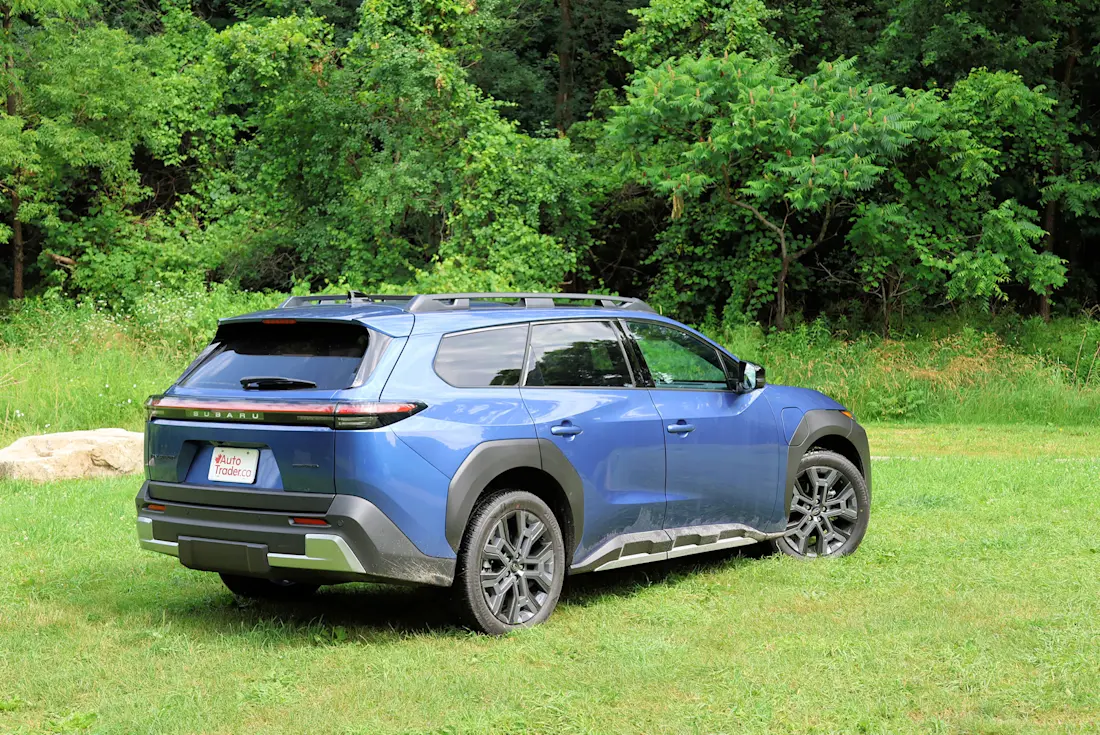
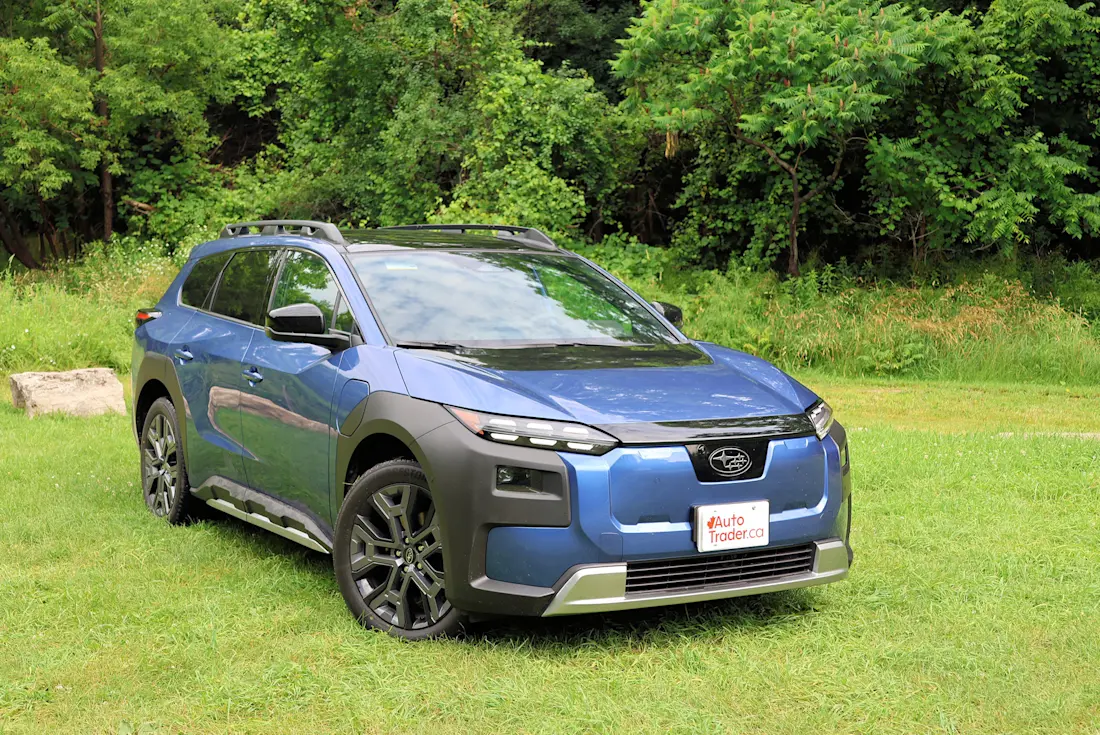
Despite its rugged design, this EV is smaller than it looks, with exterior dimensions that come up slightly short of the latest Outback. It also has a little less ground clearance, which makes it more of a wagon.
Compared to the Toyota bZ Woodland, the Trailseeker has a different front end and is identifiable by its headlight design and light-up emblem, which really stands out. The rear end has a lightbar with backlit Subaru lettering, which looks less tacky than the light-up logo in the front.
Inside, the cabin is conservatively laid out, with many controls clearly labelled and within reach. The squared-off steering wheel takes some getting used to, as does the distant digital instrument display, which is propped up on the dashboard. It does, however, negate the need for a separate head-up display since it puts drive-related information a short glance away from the road ahead.
Another shocker is the blue leather upholstery inside this tester, which looks great and mirrors the great-looking blue paint finish pictured here. This blue-on-black cabin is exclusive to the Premier trim, and really helps this EV look and feel less utilitarian.
Power: 8/10
With 375 hp on tap from a pair of electric motors, the Trailseeker is currently Subaru's most powerful model. The motors are situated at each axle, with the rear unit providing slightly more grunt than the front. Put your foot down from a standstill and the Trailseeker will rocket to highway speeds in less than five seconds, making it the quickest Subaru sold in North America.
It’s nice, and definitely helps imbue this wagon with some interesting credentials. While it can close most gaps without much effort and outperforms its utilitarian look, the acceleration isn’t a brutal feeling, but smooth and brisk instead.
Efficiency: 7/10
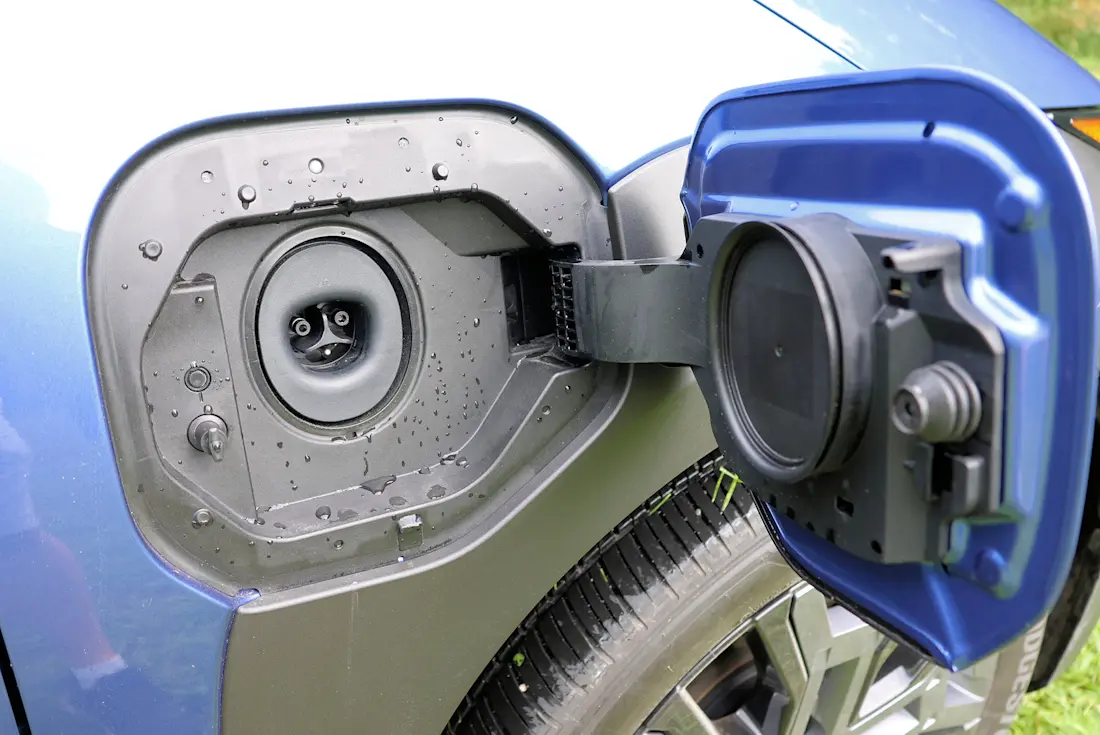
The Trailseeker uses a 74.7-kWh battery, which is surprisingly smaller than the 77-kWh unit found in the Solterra. It can be recharged via a Tesla-style port found on the passenger side, and charge rates peak at 150 kW — though only for a limited time and in ideal conditions. That will let the Trailseeker recharge from 10 to 80 per cent in about 30 minutes. For Level 2 charging, the input accepts 11-kW speeds, which will allow the Trailseeker to fully recharge in about eight hours.
The official range for the Trailseeker is listed at 444 km, which proved pretty optimistic during this test. Granted, it was driven during a serious heat wave, but range estimates never surpassed the 400-km mark. For reference, the indicated energy consumption was around 19.0 kWh/100 km, suggesting about 393 km on a full charge.
It also has a few tricks to maximize range. For starters, it defaults to an eco-mode for the climate control system, which disables the air conditioning. It offers several regenerative braking settings, though the most aggressive mode is still far from a one-pedal setting. There are also three driving modes: eco, normal, and power, with the former acting as the default.
Driving Feel: 7/10
The excellent acceleration is the highlight of the Trailseeker’s performance and driving experience. It’s on the heavy side at around 2,041 kg (4,500 lb), which can be felt when cornering and braking. It doesn’t feel particularly nimble, but it remains relatively flat even on a winding road.
Instead, the Trailseeker is an excellent commuter, assuming you can live with the somewhat limited range. The vehicle is smooth and soft on city roads and comfortable on longer routes as well. While its off-road prowess wasn’t put to the test, it worked fine on gravel roads, and the loose surface didn’t upset the drive.
Safety: 6/10
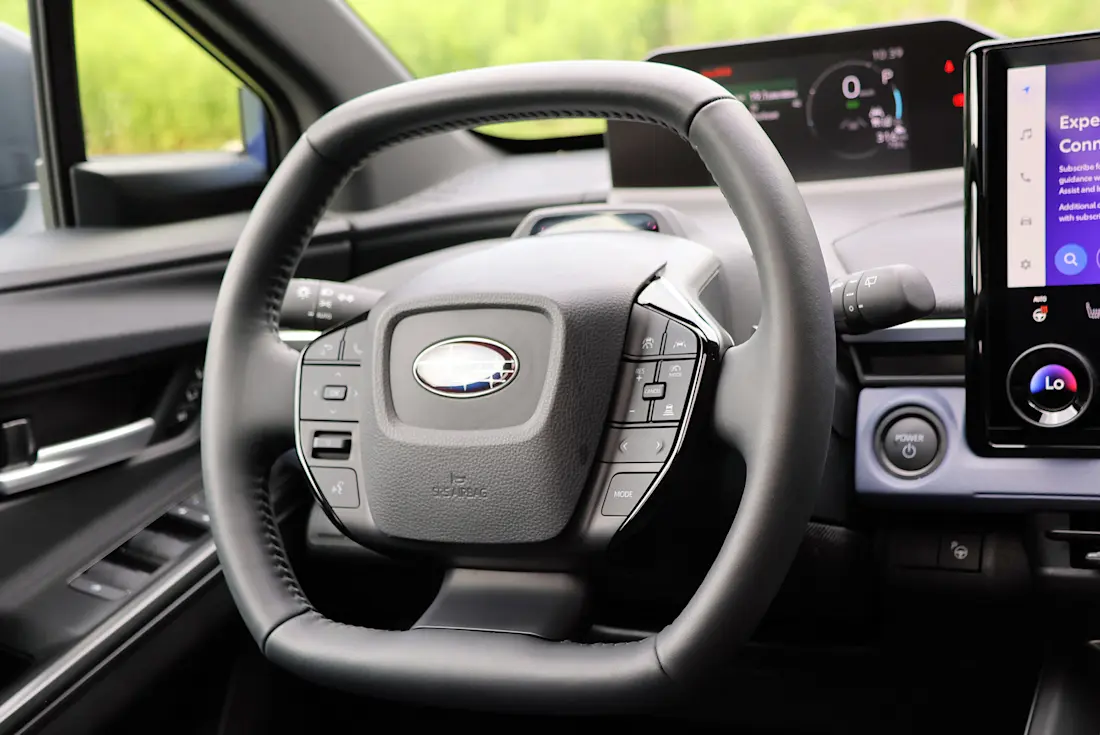
Safety is more than just sensors and features, and the Trailseeker is the ultimate argument for this thesis. Sure, it has all the goodies, like adaptive cruise control, lane-keeping, blind-spot monitoring with rear cross-traffic alert, road sign recognition, and plenty of parking cameras and sensors, but there’s a glaring issue here: the DriverFocus distraction mitigation system.
On the steering column is a driver-facing camera that can tell when you’re not looking ahead at the road, and will nag you if you’re distracted. This works well in theory, and isn’t the first time Subaru has implemented this kind of technology. But in the Trailseeker, it’s extremely sensitive and annoying. The number of times the car has scolded me while checking my mirrors or over my shoulder was extremely concerning. Just using the infotainment system to adjust HVAC or media settings can trigger a warning.
In terms of safety ratings, the Subaru Trailseeker has failed to earn an award from the Insurance Institute for Highway Safety (IIHS). The institute noted poor headlight performance and dinged the car for its performance in a few crash tests.
Equipment: 7.5/10
The Trailseeker offers all the pleasantries you should expect from a car that starts around the $60,000 mark and tops out at $65,000. The rear hatch features standard power, and all windows feature auto up/down functionality. The front seats are heated and are ventilated in the highest trim, while the rear seats come heated from the mid-tier Limited trim and up.
Otherwise, there’s standard dual-zone climate control and a radiant heater like the one in the Solterra. That means the front footwells have some extra warmth beyond what the climate control system can offer.
There are a few USB-C ports, and a pair of wireless phone chargers up front. The 14-inch infotainment system includes wireless support for Android Auto and Apple CarPlay, which is critical because the built-in navigation only works with a subscription (though there’s a substantial trial period that comes with it, including several remote and concierge functions). The top trim also includes an 11-speaker stereo, though entry-level models make do with just six speakers.
User Friendliness: 7/10
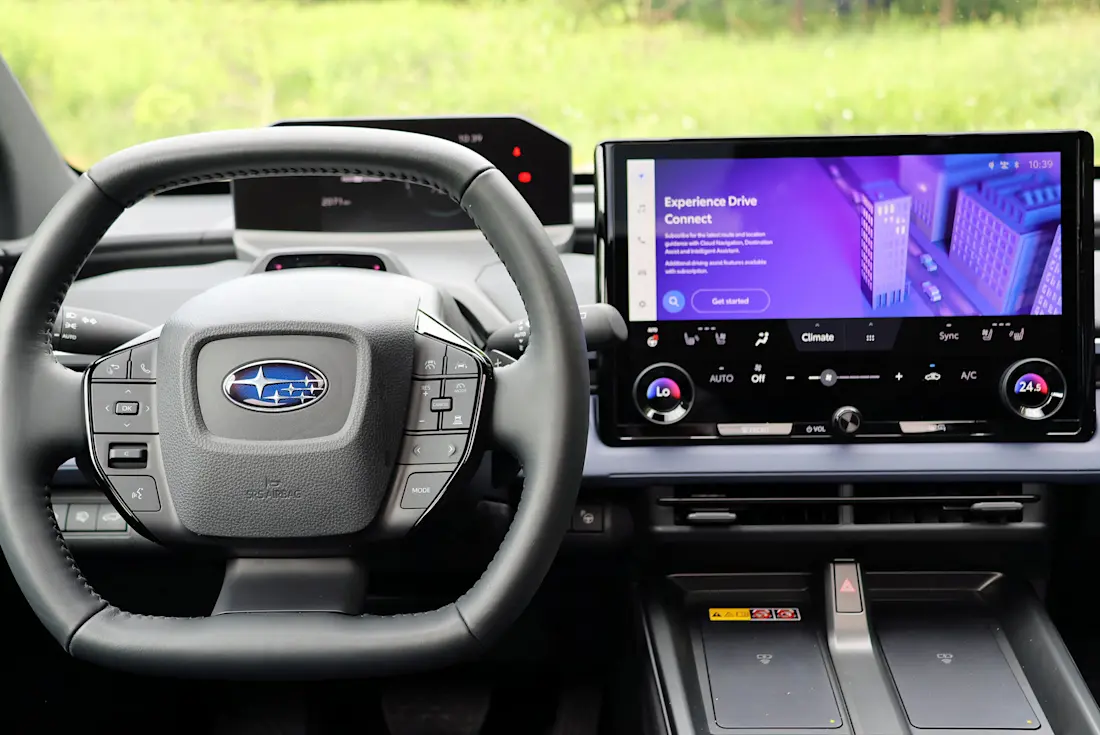
I appreciate the easy-to-use controls and knobs. Subaru doesn’t hide too many functions in the infotainment system, and the touchscreen is nice, bright, and responsive. I also have to commend Subaru for offering a way to stow the cargo cover under the storage area in the trunk. However, the steering wheel has a few too many buttons that take time to get used to, as does the high-mounted instrument screen.
Then there’s the Tesla-style charge port — an increasingly common inclusion, although many public chargers use a different interface. That means a different adapter for each, which can be cumbersome and clumsy to use.
Everyday Usability: 8/10
Behind the rear seats, the Trailseeker features 860 L of cargo room. This represents about 100 L less than the Outback, and is closer to the Subaru Forester in terms of cargo capacity, but it’s much more than the next EV in the Subaru stable, the Solterra (674 L).
Fold down the rear seats and the Trailseeker shines with a maximum of 2,095 L of space. It's extremely useful for hauling, and this Subaru offers a generous opening for easy loading and unloading. The roof rails can hold a load of 80 kg (176 lb) while on the go, and around 318 kg (700 lb) when static, providing plenty of capacity for rooftop camping. It can also tow a maximum of 1,588 kg (3,500 lb).
Comfort: 8/10
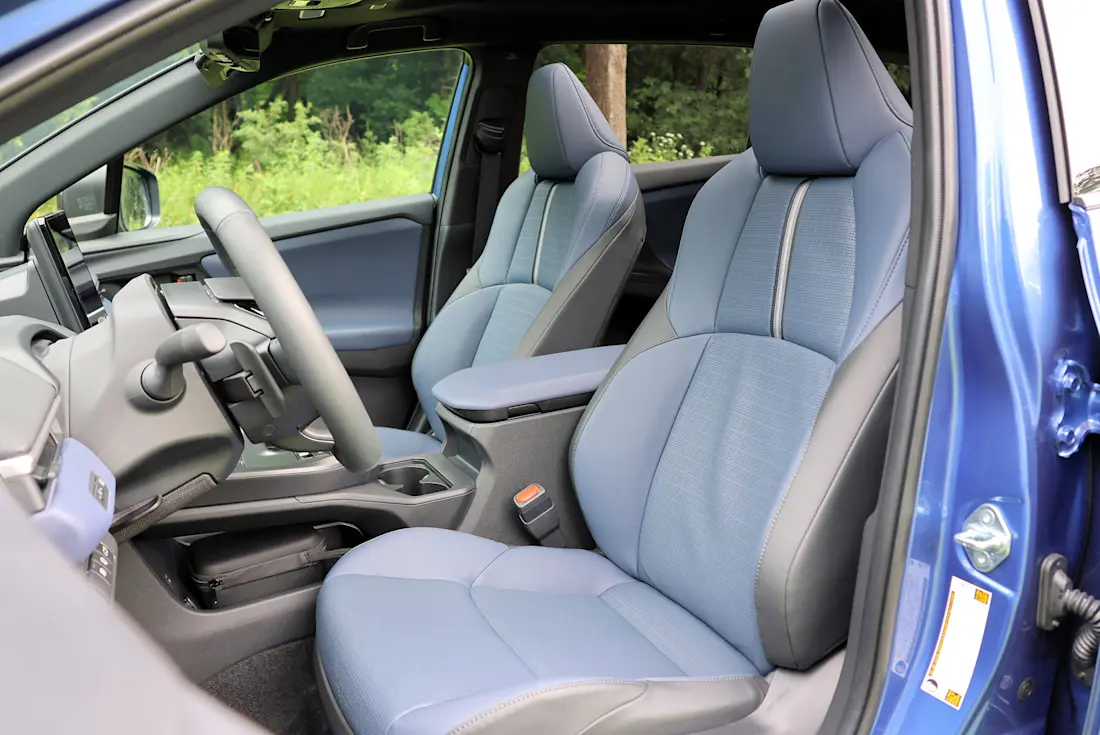
The seats are comfortable and supportive both in the front and back. I had to move the front passenger seat forward to accommodate a rear-facing child seat, but not to a degree that would make an occupant contort uncomfortably. Ride quality is also smooth, and even though the vehicle is heavy, it never crashed or thumped over hard pavement or potholes.
Value for Money: 7/10
The 2026 Subaru Trailseeker starts at $57,290 before tax but including freight ($2,295) for the entry-level Touring trim. The Limited is $60,290 and adds an advanced parking feature, surround-view cameras, a power-adjustable driver’s seat, and heated rear seats. The top Premier trim is $63,290 and adds ventilated front seats and an upgraded sound system.
This price range overlaps completely with the Outback, presenting it as an alternative for shoppers who value the size and shape of the iconic SUV, but not the powertrain. The similar Toyota bZ Woodland is also a bit more expensive, starting at around $63,000.
The Verdict
The electric wagon proportions of the 2026 Subaru Trailseeker suggest that it would be an ideal vehicle for families or empty-nesters with plenty of weekend projects that can make good use of the cargo capacity. It’s smaller and more affordable than a three-row EV like the Hyundai Ioniq 9 or Kia EV9, and boasts great performance. While the range was inconsistent, and I couldn’t stand the driver monitor, I still found this EV to be perfectly practical, easy to use, and comfortable, continuing Subaru’s momentum into the EV space.

Specifications
Trim Tested
2026 Subaru Trailseeker Premier
Base Price
$60,995
Options
None
A/C Tax
$100
Destination
$2,295
Price as Tested
$63,390
Displacement
280 kW
Cylinder Count/Configuration
Dual electric motors
Power
375 hp
Torque
N/A
Fuel Economy
444 km est. range
Cargo Space
886 / 2,095 L seats up/down

All Articles
See all
2026 Subaru WRX Kaminari Edition Review
A flashy special edition serves as a reminder of the WRX’s everyday sport compact appeal.
 Kyle Patrick

2026 Subaru Uncharted FWD LR Review
Subaru’s smallest EV embraces much of what buyers love about the brand.
Kyle Patrick
2026 Subaru Outback Review
It no longer looks like the lovable wagon it once was, but the Outback is as practical as ever.
 Jil McIntosh