
2026 Polestar 4 Review
 Jil McIntosh


Trader scores
This score is awarded by our team of expert reviewers after extensive testing of the car.
Polestar is Volvo’s all-electric division, and the 2026 Polestar 4 is its newest model. It has a sedan-style profile but the automaker calls it an SUV; and it’s larger than the Polestar 2 sedan, but smaller than the Polestar 3 sport utility.
The Polestar 4 comes in a single trim with available packages, and starts out in rear-wheel drive (RWD) at $67,700, including a non-negotiable delivery fee of $2,800. Tested here is the Dual Motor with all-wheel drive (AWD) at $72,700. Other options and packages brought my tester to $96,200 before taxes.
Styling: 7/10
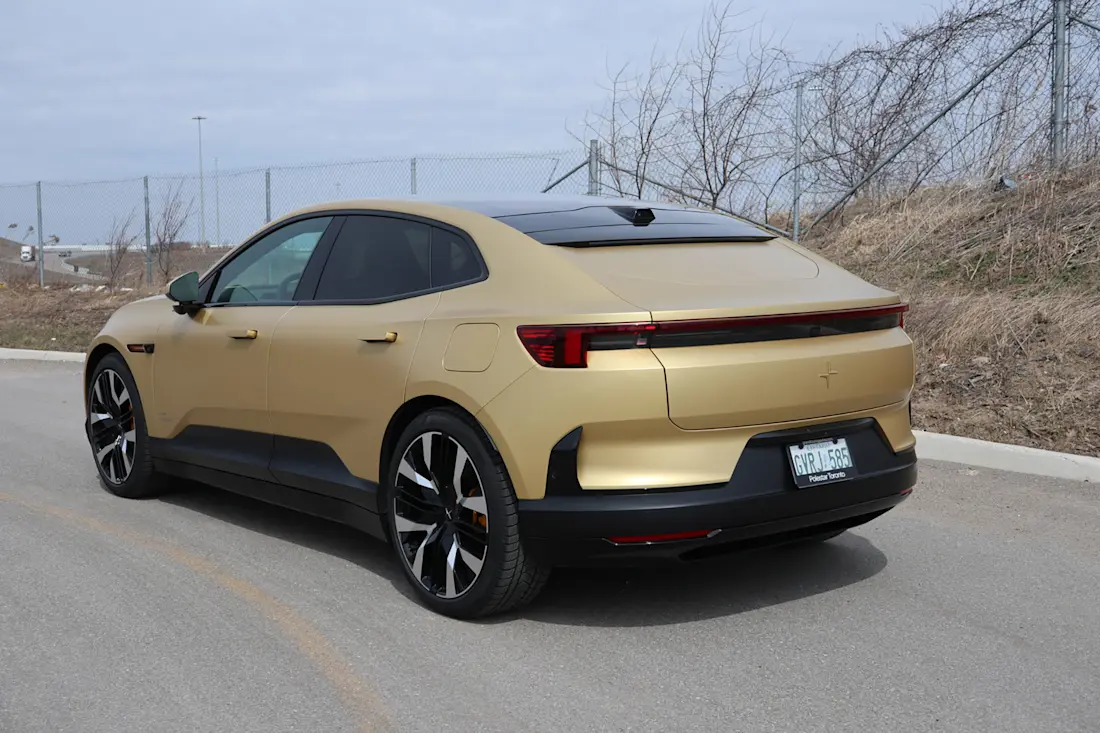
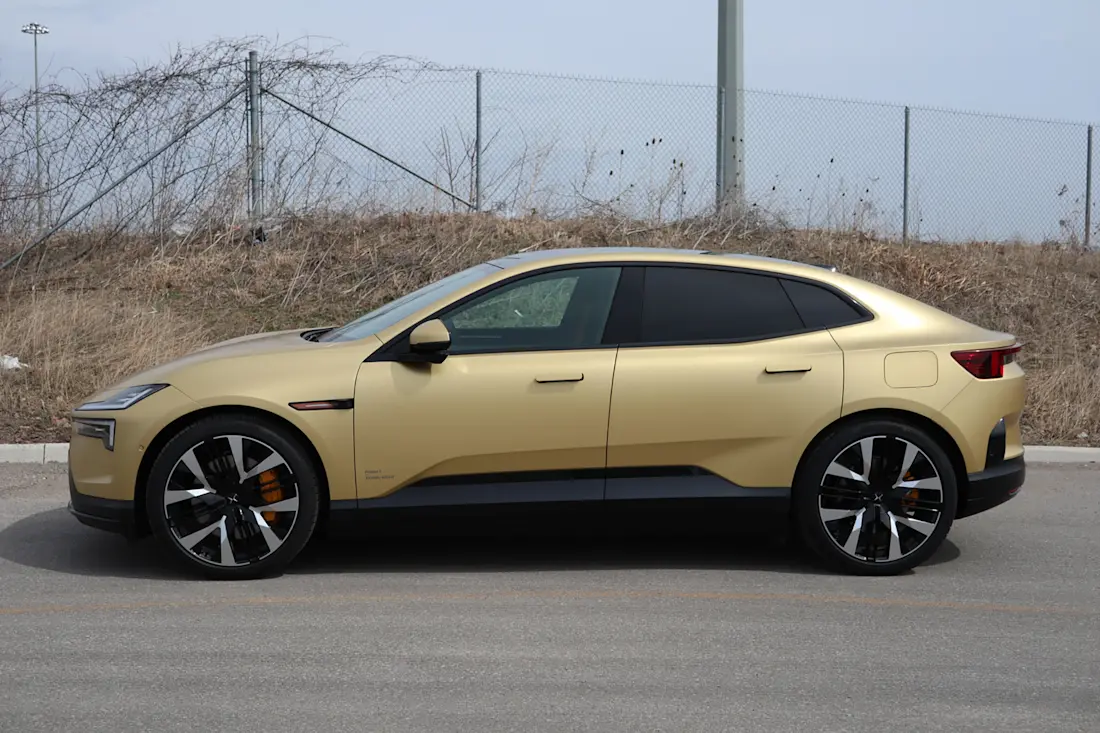
The Polestar 4 is sleek and handsome from the side and front, accentuated on this one with a $3,800 coat of Matte Gold paint, which requires hand-washing. Most notably, there’s no rear window, an ungainly gimmick that requires the standard digital camera mirror. (You can’t give a quick “thank-you” wave to another driver who lets you in; but it might also reduce road rage, since a single finger won’t be visible, either.) Inside, Polestar takes Scandinavian simplicity to austerity, and the cabin is plain and boring. It’s a shame that interesting front-end styling couldn’t have carried through the whole vehicle.
Safety: 8/10
Neither the United States National Highway Traffic Safety Administration (NHTSA) nor the Insurance Institute for Highway Safety (IIHS) had crash-tested the Polestar 4 at the time of this writing. Standard driver-assist features include emergency front and rear braking, adaptive cruise control, lane-keep assist, blind-spot steering assist, road sign recognition, driver alert monitoring, highway driving assist, and surround-view cameras. It also warns if you’re over the speed limit but the system wasn’t always accurate during this test, including a 60-km/h readout on a 100-km/h highway.
Features: 7/10
Standard features include a 15.4-inch centre touchscreen, 10.2-inch digital instrument display, panoramic sunroof, heated front seats, eight-way driver and six-way passenger power adjustment, dual-zone climate control, a wireless charger, power tailgate, and wireless Apple CarPlay, but no Android Auto connectivity. Some features you might expect as standard at this price are extra-charge, including a heated steering wheel, heated rear seats, three-zone climate control, hands-free tailgate operation, and a cargo net, all part of a $6,800 Plus package that also adds a premium stereo, 12-way adjustable seats, and auto-dimming mirrors. And while the panoramic sunroof is standard, it’s $1,900 to get an electrochromic layer that darkens to reduce glare, or $350 for a sunshade.
User Friendliness: 6/10
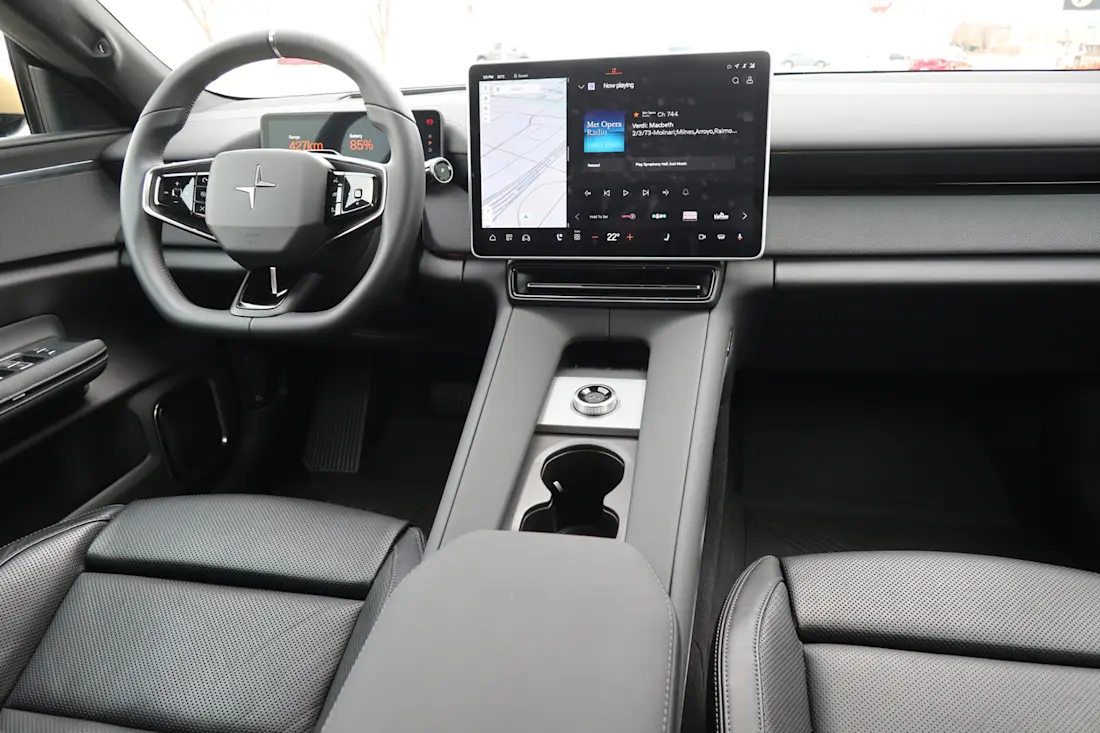
The Polestar 4 stuffs most functions into the touchscreen, which takes a relatively long time to start up. The digital assistant does a good job, including changing the cabin temperature or seat heating; but to adjust the vents or move the steering column, you need to go into the screen. You also start there to adjust the mirrors, tapping through steps to pick the left or right one and then using buttons on the steering wheel to actually move it. It’s all so unnecessarily complicated.
Practicality: 8/10
The Polestar 4’s interior is more sportback sedan than sport utility, but the cargo space handles luggage and groceries very well, and with a relatively low liftover and folding rear seats for long items. Front-seat storage is handled by large door pockets and an open cubby below the console. There’s a lidded bin under the hood, but at just 15 L, it’ll primarily just hold a washer bottle or charging cable.
Comfort: 8/10
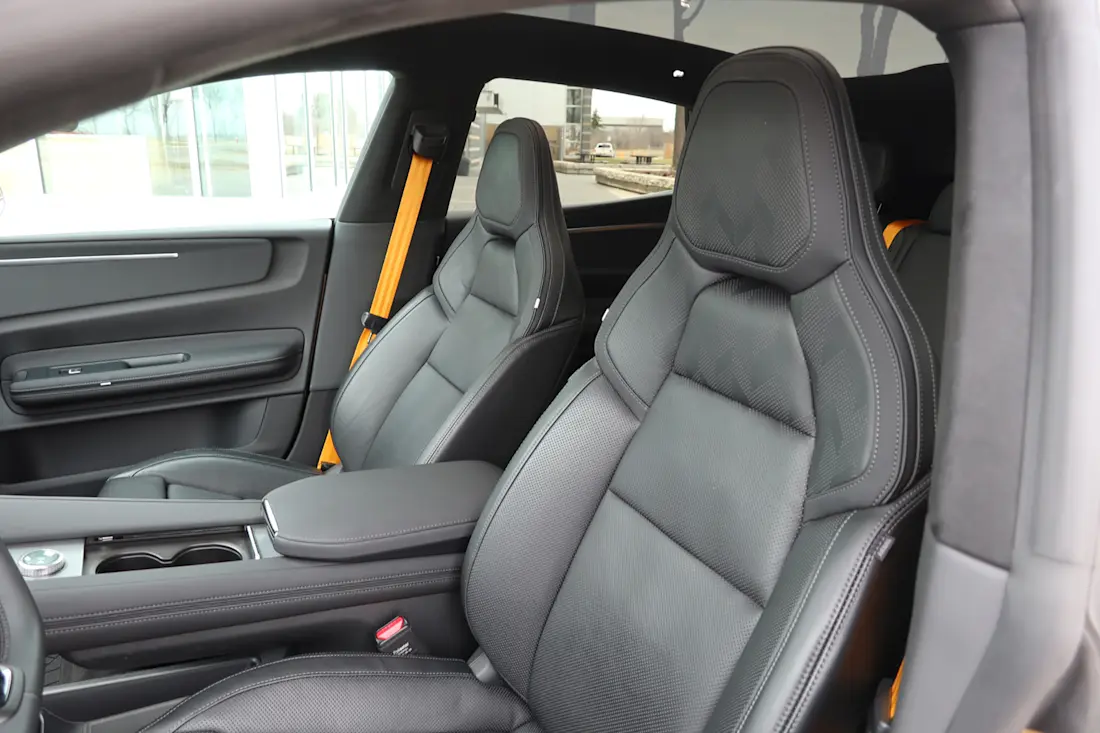
Upholstery choices include bio-based fabrics, while my tester was outfitted with premium leather at $5,200. The sculpted seats are as supportive as they look, with available massage; but oddly, ventilated seats aren’t available. The panoramic sunroof sweeps back over the rear seats, so passengers don’t miss that missing rear window. The ride is very firm, though, with considerable feedback from road imperfections.
Power: 9/10
The single-motor version makes 272 hp and 252 lb-ft of torque, while the dual-motor version ups that to 544 hp and 506 lb-ft of torque. It can put you into a ticket bracket very quickly — Polestar claims 3.8 seconds from a stop to 100 km/h — but it’s also well-balanced and linear. It doesn’t knock you around every time you press the throttle, which is fun in a sports car but a bit much in an everyday driver.
Driving Feel: 8/10
Satisfaction depends on what you’re expecting of the Polestar 4. It’s a decent daily driver, with low-centre-of-gravity stability, predictable handling, and a tight turning radius. The regenerative braking can be dialed right to so-called one-pedal, where you only need to use the throttle in most driving conditions to bring the car to a stop. But if you’re expecting sporty performance, the excitement isn’t there. The steering is dull, and in its selectable lightweight setting, it’s unsettlingly vague.
To its credit, the camera-based rearview mirror provides a wide-angle look at what’s behind and around you. But other vehicles appear much closer than they are; and at night, certain headlights can glare or appear hazy. I’d prefer a regular view, but turning off the camera function means you’re just looking into the back seat.
Fuel Economy: 8/10
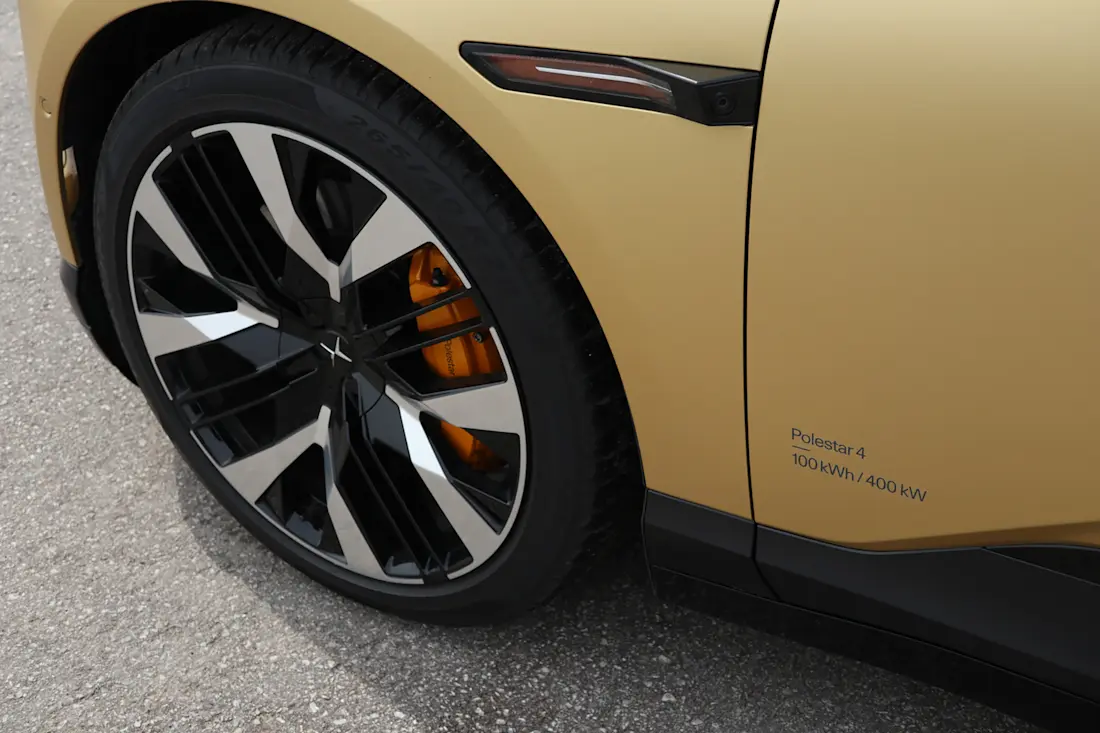
Natural Resources Canada (NRCan) officially rates the Polestar 4 at 499 km on a charge for the RWD model; at 451 km for the Dual Motor; and at 410 km for the Dual Motor with the Performance pack. All use a 110-kWh battery and 400-volt architecture. Charging speeds can reach a maximum of 200 kW, and with a suitable fast-charger, it’s half an hour from 10 to 80 per cent in ideal conditions. Some of its competitors include the Tesla Model Y, which ranges from 463 to 542 km, depending on the model; the Porsche Macan Electric at 495 to 506 km; and the Genesis GV60, at 406 to 430 km.
Value: 7/10
With a starting price of $67,700 for the single motor, and $72,700 for the dual motor, the Polestar 4 undercuts competitors such as the Genesis GV60 at $84,150, and the Porsche Macan Electric that starts at $100,750. The Tesla Model Y starts below it at $52,400 but tops out at $77,490 (all prices including delivery). But perceived value is relative, and despite its premium price, the Polestar 4 options out such items as a heated steering wheel, power tailgate and cargo net.
The Verdict
There’s no question the 2026 Polestar 4 is polarizing. Its lack of hard controls and a rear window will appeal to some and send others away; and while it’s powerful, it may fall short for those who want true sports performance. Be sure to test-drive it thoroughly to see which side you fall on.

Specifications
Trim Tested
2026 Polestar 4 Dual Motor
Base Price
$69,900
Options
$23,500 — Plus package, $6,800; Performance package, $5,800; Bridge of Weir leather, $5,200; Matte Gold paint, $3,800; Electrochromic glass roof layer, $1,900
A/C Tax
$100
Destination
$2,800
Price as Tested
$96,300
Engine Displacement
400 kW
Cylinder Count/Configuration
Dual electric motors
Horsepower
544 hp
Torque
506 lb-ft
Fuel Economy
2.9 / 3.2 / 3.1 Le/100 km cty/hwy/cmb, 26.1 / 28.6 / 27.3 kWh/100 km; 410 km est. range
Cargo Space
526 / 1,536 L seats up/down

All Articles
See all
2025 Polestar 3 First Drive Review
Polestar’s first crossover arrives with everything you’d expect. Well, almost.
 Peter Bleakney

2024 Polestar 2 First Drive Review
Polestar’s first all-electric model gets an update.
Jil McIntosh
2022 Polestar 2 Single Motor Review
The Polestar 2 Single Motor is the point of entry to the premium EV realm.
 Jeff Wilson