
Are New Cars Getting Worse?
 Matt St-Pierre

Climb into almost any new vehicle, and the technological progress is immediately apparent. Even mainstream models like the Honda Civic and Kia Sportage now routinely offer large displays, wireless smartphone connectivity, active safety systems, multiple cameras, and features once restricted to luxury vehicles.
Look beyond the technology, however, and another impression can emerge. Hard plastics appear in increasingly visible areas; we’ve noticed extra acres of it in new vehicles, including from luxury brands. Cargo compartments, doors, and lower interior panels may receive notably less attention than the surfaces directly surrounding the driver. Dashboards have mostly become boards with screens – there’s no “design” involved. Physical controls have disappeared, or nearly so, while components once separate and requiring individual controls are being consolidated into screens or electronic modules.
Much of this is being done in the name of progress, but it comes with clear costs to automakers and end users like you and me.
It raises a difficult but relevant question: Are new vehicles actually getting worse?
Buyers Are Paying More, Regardless

The question carries particular weight because Canadians are paying considerably more for new vehicles than they were before the pandemic.
According to the Q2 2026 AutoTrader Price Index, the average new vehicle listed in Canada cost just over $63,000 during the first quarter of 2026. That was 2.2 per cent lower than a year earlier, and the corresponding average monthly payment was $935, but the figure remains staggering.
At the same time, vehicles have become substantially more complicated over the past half-decade alone. Automakers have developed electrified powertrains, increasingly sophisticated safety systems, connected services and software platforms. Batteries, cameras, radar sensors, computing hardware, and displays all add substantial cost, even before conventional expenses such as steel, aluminum, plastics, and other materials, labour, transportation, and regulatory compliance are considered.
Inevitably and realistically, something has to give. Thus, another related question is whether consumers are trading material substance and long-term durability for technology.
Automakers Are Under Pressure to Find Savings
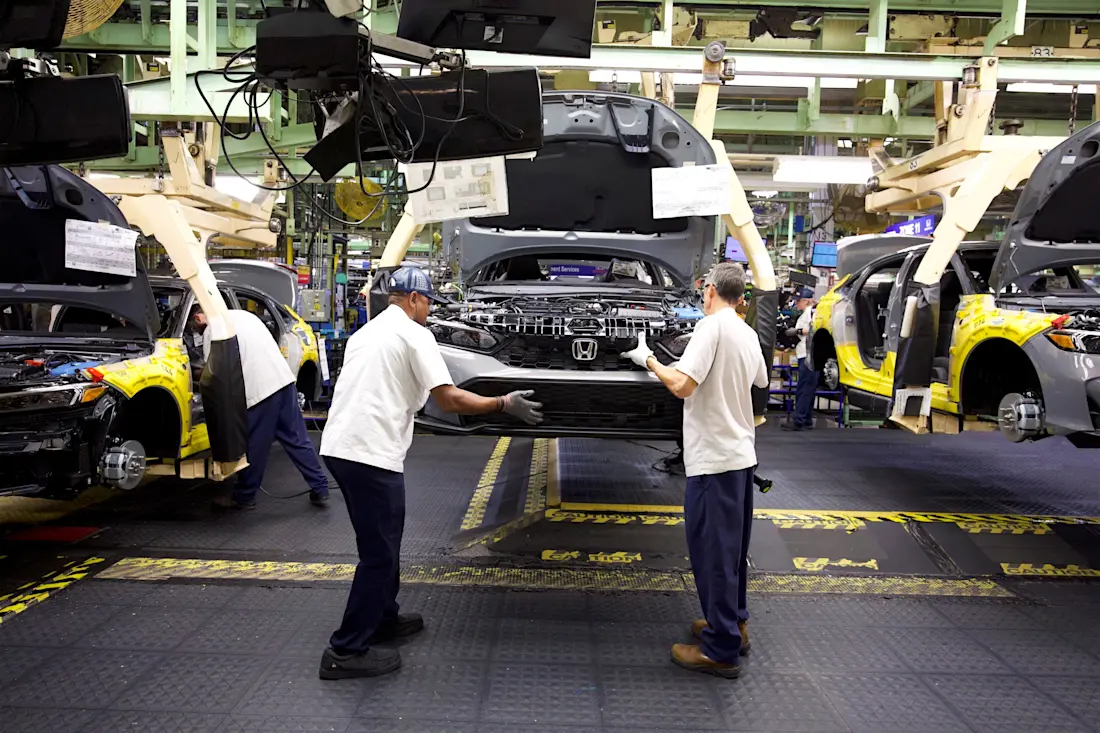
Thankfully, cost reduction is not hidden within the auto industry. Manufacturers discuss it openly with investors.
Ford reported $2.1 billion in cost reductions during 2025, partly through material-cost and warranty improvements, despite setting a recall record year with over 150 of them, or about three times more than the next most recall-laden automaker.
Nissan’s recovery plan, meanwhile, targets nearly $4.4 billion in fixed and variable savings. Its measures include engineering efficiencies, consolidating more purchasing volume among fewer suppliers, and reconsidering existing standards.
Recently, Honda announced it expects to cut $13.0 billion in costs by 2030. It wants suppliers to reduce expenses by 30 per cent across forged and pressed components, electrical parts, and software-defined vehicle systems, while increasing sourcing of standardized and Chinese-made parts.
These are only three examples of automakers making efforts to improve their bottom line. None of these situations prove that the companies are deliberately compromising vehicle quality, however. Material savings can come from better manufacturing processes, simplified designs, reduced waste, shared components or more favourable supplier contracts. A lighter or less expensive part is not necessarily inferior, at least not initially.
Still, the scale of these programs demonstrates how intensively every component is examined for potential savings.
The 2025 Global Automotive Supplier Study identified rising software costs and demand for advanced driver-assistance and connectivity features among the pressures facing suppliers. The study found that supplier operating margins remained two percentage points below pre-pandemic levels.
This pressure can and has influenced what goes into a vehicle. The effect may show up as fewer material variations, greater component sharing, or simplified assemblies and finishes concentrated in the areas buyers are most likely to look at and touch. Many of the new vehicles we review show this material disparity. Upper dashboards and sections in the user’s direct line of sight present far better than lower portions, which are visibly and tactilely cheaper. To be fair, these “nicer” plastics are of the “hard” variety, whereas they were once padded. But at least the screens look really good…
What Does “Quality” Actually Mean?

Part of the problem is that vehicle quality is not one measurable characteristic.
Initial quality considers defects, malfunctions, perceptions, and owner complaints during the first months of ownership. Dependability examines problems several months down the line or years later. Perceived quality covers materials, sounds, controls, and the general sense of solidity. Durability determines whether the vehicle withstands five, 10, or more Canadian winters. Repairability concerns the cost and difficulty of fixing an issue when something fails.
A vehicle can perform well in one category and poorly in another.
This contradiction appears in J.D. Power’s most recent studies. Its 2026 U.S. Initial Quality Study found a substantial industry-wide improvement. Reported problems during the first 90 days fell from 192 to 175 per 100 vehicles, representing the strongest annual improvement since 1997. Interior quality, road noise, and body-panel fit and finish were among the areas that improved.
Interestingly, infotainment was the only category that deteriorated.
The organization’s 2026 Vehicle Dependability Study presents a less favourable picture. It recorded 204 problems per 100 vehicles after three years of ownership, the highest level since that study was redesigned in 2022.
Infotainment was once again the most problematic category. Plug-in hybrids recorded 281 problems per 100 vehicles, followed by battery-electric vehicles at 237, hybrids at 213 and gasoline vehicles at 198.
These results indicate that vehicle complexity is affecting the ownership experience. However, a failed phone connection and a failed transmission both count as problems, even though their consequences are vastly different. Rising problem counts therefore do not necessarily mean engines, bodies, or suspensions are wearing out faster.
On the other hand, an EV that won’t charge for whatever reason is as dire as engine failure. The difference is that the EV may theoretically be fixed via an over-the-air update compared to an engine overhaul. For the user, the vehicle is inoperable either way.
Steven Elek, lead automotive data analyst for Consumer Reports, puts it this way:
“According to our data, it’s not necessarily the case that new car reliability has declined over time, but the nature of the problems has shifted. Breakdowns of major components, such as engine or transmission failures, have become less prevalent. However, […] the additional tech features have resulted in an increase in problem rates with infotainment systems, power equipment, and, in general, components that didn’t even exist 20 years ago."
Safer, but More Expensive to Repair
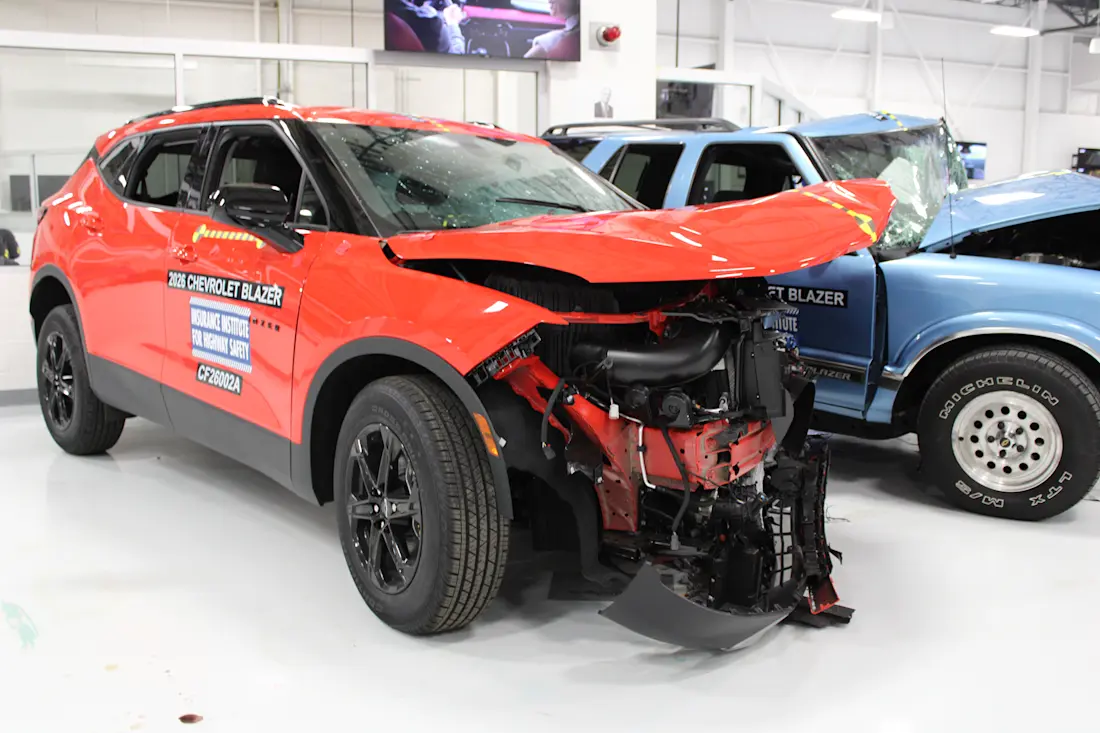
Modern technology also complicates repairs.
A 2023 AAA study found that advanced driver-assistance system (ADAS) components and calibration represented 37.6 per cent of the average cost across four repair scenarios involving three 2023-model-year vehicles.
The study found that ADAS components added US$1,540 (CAD$2,123), or 13.2 per cent, to minor front-collision repairs. A side-mirror camera accounted for US$1,067 (CAD$1,471), or 70.8 per cent, of replacement costs. ADAS equipment added US$684 (CAD$943), or 40.9 per cent, to minor rear-collision repairs, while windshield ADAS components and calibration averaged US$360 (CAD$496), or 25.4 per cent.
The technology can help prevent collisions, but when damage occurs, sensors and calibration can turn relatively ordinary repairs into very expensive procedures.
This does not make the technology unnecessary. Automatic emergency braking, blind-spot monitoring, and other collision-avoidance systems provide genuine safety benefits. However, their cost illustrates what buyers are now paying for. More of a vehicle’s value is concentrated in electronics, software and sensors, rather than in the materials occupants can see and touch. And perhaps other elements that these same occupants cannot see or touch.
Ever wonder why new vehicles are so expensive to insure? Costly ADAS components are part of the reason. Vehicles being written off after seemingly minor collisions because of high sensor and camera replacement costs are already fairly common, but this is a story for another time.
Better in Some Ways, Worse in Others
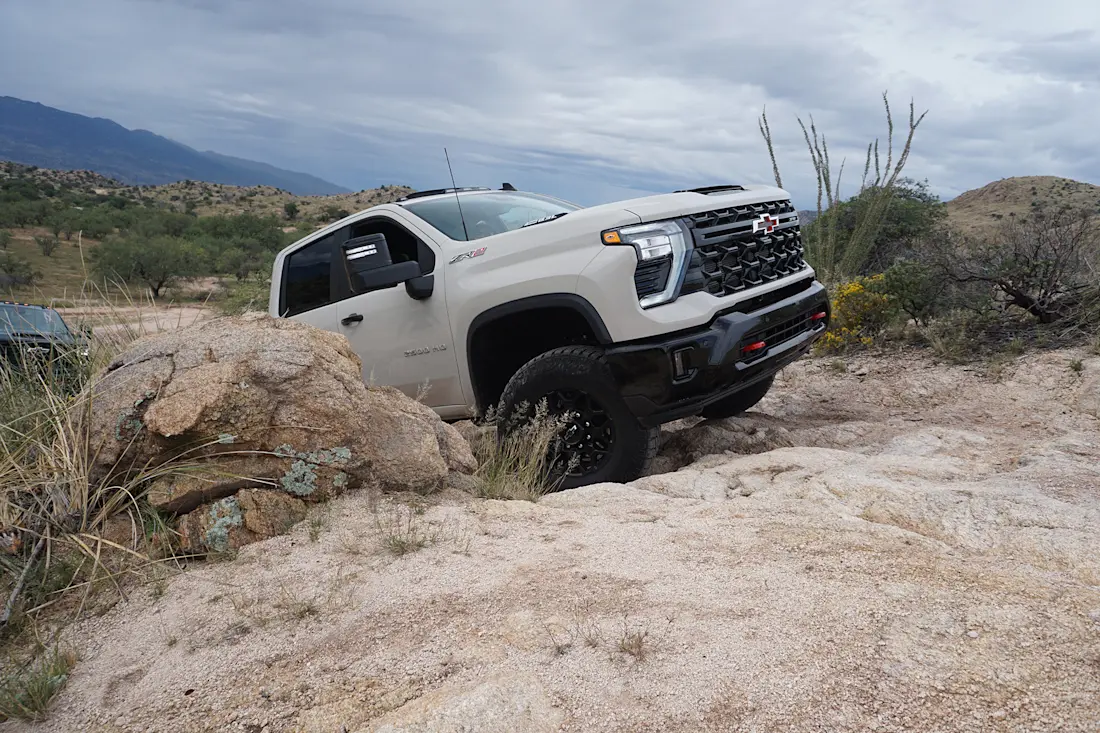
It would be inaccurate to conclude that modern vehicles are universally worse.
Crash protection, corrosion resistance, manufacturing tolerances, fuel efficiency, and emissions performance have advanced considerably. Engines commonly deliver more power while using less fuel, and even relatively affordable vehicles include features that can prevent a collision.
The average age of vehicles on North American roads reached a record 12.8 years in 2025, according to S&P Global Mobility. High replacement, acquisition, and insurance costs partly explain why owners are keeping vehicles longer, but the existing fleet has also demonstrated that many modern vehicles can remain operational well beyond their original warranty periods. Keep in mind these are vehicles typically from the mid-2010s. It will be interesting to see how the average age of a vehicle evolves over the next decade or so.
What appears to have changed is where manufacturers allocate their money and what consumers interpret as quality.
A new vehicle may be objectively safer, faster, quieter, and more efficient than the model it replaces. It may also have thinner carpeting, fewer physical controls, more shared components, and significantly greater dependence on software. It can be technologically superior while feeling less substantial, becoming more frustrating to operate, and more expensive to repair. And when technology we heavily depend on fails, as it inevitably does, annoyance sets in. Meanwhile, the “ancient” tech underpinning our decade-old vehicle is working fine.
So, are new cars getting worse? Available evidence does not provide a simple yes or no answer. Initial quality is improving, yet three-year dependability has declined. Mechanical durability may remain strong, while software problems and repair costs increase. Material decontenting may be visible in individual models, but broad industry data is difficult to obtain.
The more accurate conclusion may be that vehicle quality has changed. Buyers are getting more complexity for convenience’s sake; however, it’s difficult to say this represents progress, as it increasingly depends on whether the technology keeps working — and what may have been sacrificed to pay for it.

All Articles
See all
Cheapest Vehicles to Insure in Canada: Prices and Value Compared
The cheapest vehicles to insure in Canada right now are small and compact SUVs that rarely end up in claims.

Salvage Title Meaning: Rules, Costs and Steps for Canadian Drivers
Here's the short answer on what a salvage title means: the vehicle has been written off as a total loss, but it can still be repaired.

Say Goodbye: These 16 Vehicles Have Been Cancelled for 2027
Here are the discontinued vehicles that won’t be on sale in Canadian showrooms much longer.
 John LeBlanc