
I Drove 5 Chinese Cars for the First Time. Here’s the Honest Truth
 Chris Tsui


Chinese EVs are finally coming to Canada, and if all goes well, they could reset expectations about what an electric car should be like and how much it should cost.
After the federal government announced it would massively reduce tariffs on 49,000 electric cars made in China each year, the announcements have begun, and Chinese car sightings have been reported on home soil. The Lotus Eletre is landing this summer, Chery has confirmed that it will start selling cars this year, Tesla has listed the Chinese-made $39,490 Model 3 Premium on its website, and mildly camouflaged Jaecoo (a Chery sub-brand) vehicles with manufacturer plates have appeared in the Greater Toronto Area.
To get a taste of what Canadians can expect when EVs from China start appearing in Canadian showrooms, we went to Hangzhou to sample five cars made by Geely, one of the country’s largest automakers and parent company of Volvo, Polestar, and Lotus.
What are Geely cars like? Evaluated as driving machines, quality varies: three stood out as basically Canada-ready, while two turned out to be duds. But they all exhibited a focus on advanced technology, practicality, and ease of use that should, at the very least, make Canadian EV buyers take a serious look.
Geely EX2: They Solved Screens

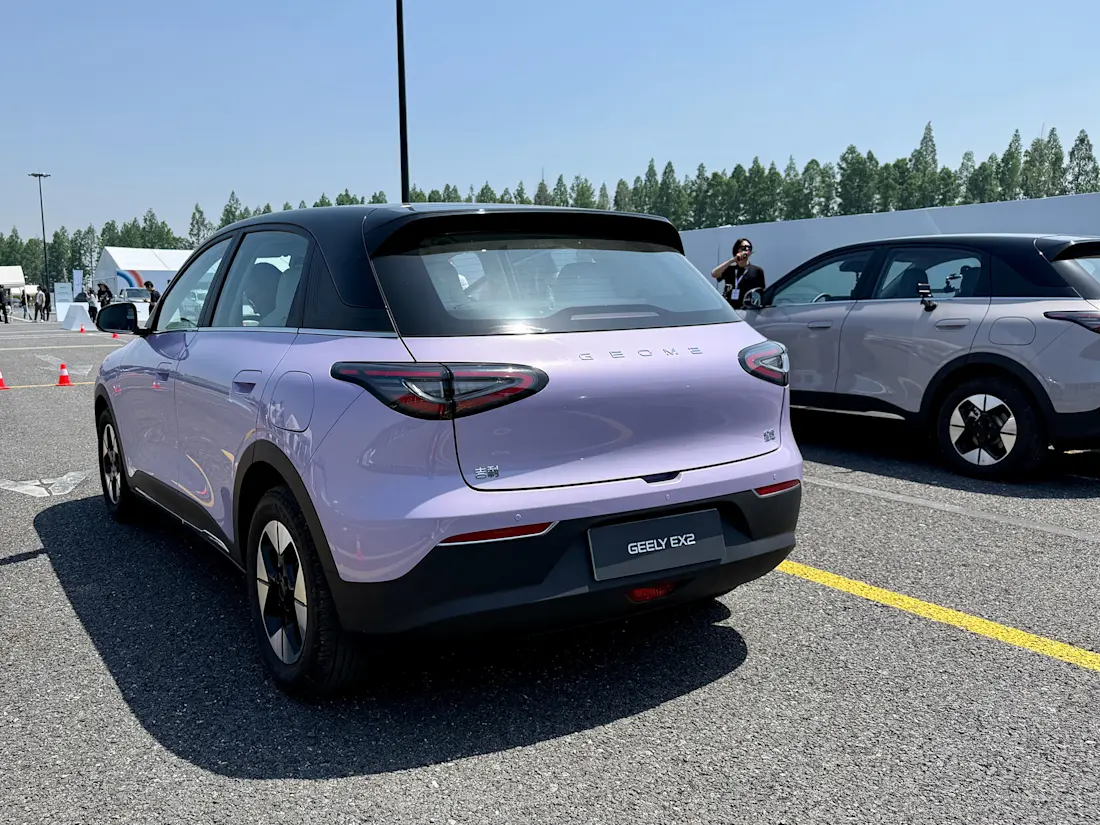
Realistic or not, the expectation is that when Chinese EVs enter the Canadian market, we’ll finally get genuinely affordable electric cars. In Geely’s portfolio, no car embodies affordability better than the $14,000 EX2, an electric subcompact hatchback that’s genuinely one of the most fun electric cars I’ve ever driven.
But even before you drive it, the EX2 is, like most new Chinese cars, quite a nice, tech-forward place to sit. A big 14.6-inch touchscreen runs Flyme Auto, a Chinese-made in-car operating system that looks and feels about a decade ahead of Apple CarPlay or Android Auto. With the whole thing in Chinese, a truly in-depth evaluation will have to wait, but just poking around semi-randomly, the graphics are sharp, and taps and swipes are met with new-flagship-smartphone levels of snap and response.
And for the record, having been in and out of dozens of Chinese cars at the 2026 Beijing Auto Show, this level of touchscreen competence isn’t exclusive to the EX2 or Geely products — they’re all pretty much like this. And while the systems in, say, Teslas and Rivians are more comparable, stepping back into a vehicle from a “legacy” carmaker like, for example, Ford, and trying to use the screen feels a bit like going back to an iPhone 7 (8 at best) after a weekend with a 17 Pro.
Don’t think it’s all screen and no buttons either because the EX2 (again, like most Chinese cars) has a healthy amount of physical buttons and switches. Stalks behind the steering wheel are trivial, and so are the shifters. As a Canadian of Chinese descent, we are a staunchly practical people, and this is very much reflected in how China has chosen to design its cars. Some, like the EX2, do relegate climate controls to the touchscreen, but Flyme is so good that you may not even mind it that much. Perhaps the Western backlash against screen overload isn’t so much “screens are bad,” but more “the screens we happen to get are bad.”
Interior build quality, by the way, felt just as good, if not better than the typical, comparable car sold in Canada. The EX2 is surprisingly big inside as well. Sitting in the back seat while another journalist took the wheel, I had loads of room to stretch out.
Geely EX2: Light Car, Lighter Price Tag
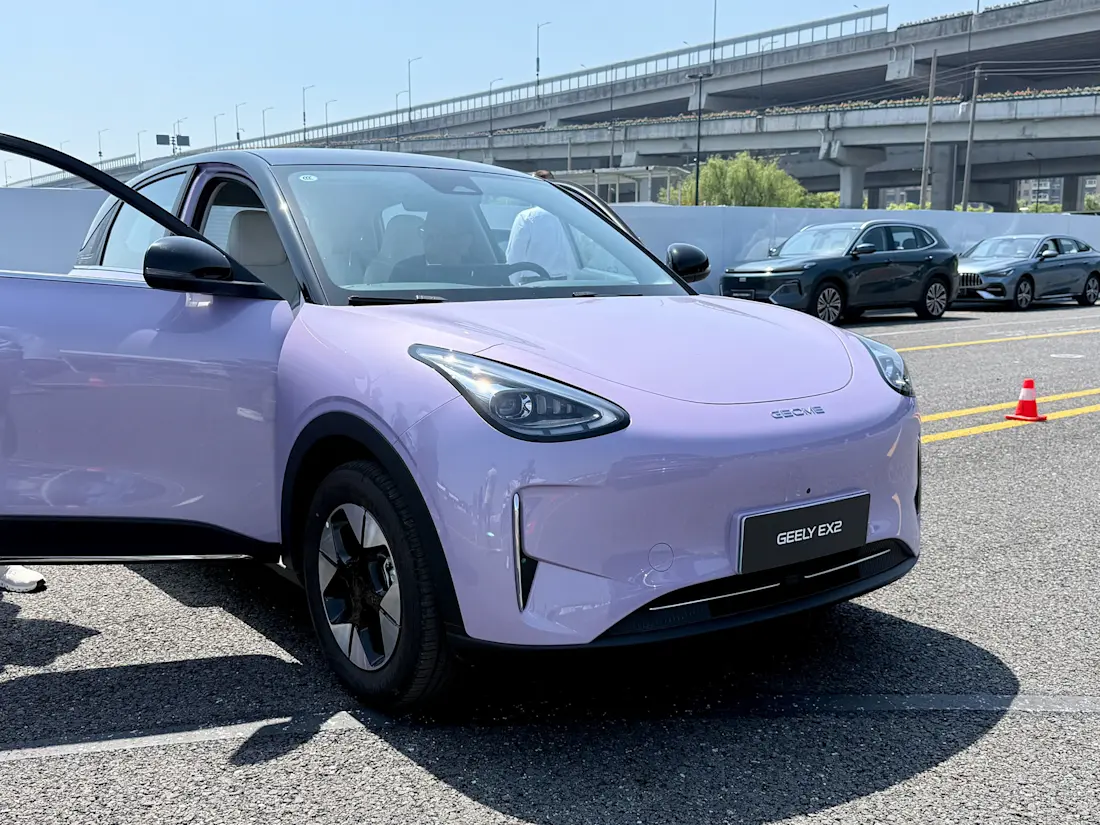
Time for some driving, then: Geely let us loose in an EX2 on a makeshift autocross course that involved quick, tight turns, sudden bursts of acceleration, and hard braking. And the EX2 was a hoot through it all. The steering was dartily responsive and very lightweight. The whole car, in fact, felt light on its feet and adequately powerful; this higher-spec example made just 114 horsepower, but for a tiny city car, it felt like more than enough.
On the admittedly less challenging China Light-Duty Vehicle Test Cycle (CLTC), the EX2 is rated for 310 km of range with the base 30-kWh battery or 410 km with the bigger 40-kWh unit.
For city use, the EX2 is a standout vehicle and happened to be China’s bestselling car in 2025. After having driven it, albeit briefly, it’s not hard to see why. It’s surprisingly spacious, surprisingly fun, extremely affordable, and, not for nothing, adorable to look at.
Even if Geely brought the EX2 to Canada and sold it in the low-to-mid $30,000 range (more than double what it goes for domestically), it’d still undercut comparable cars by a good margin. The Nissan Leaf, for comparison, starts in the high-$40,000s now, while the Chevrolet Bolt is a mid-$40,000 car. The Fiat 500e can be had in the low-$40,000s before incentives, but it’s one rung smaller than the EX2 and, like the Nissan and Chevy, uses tech that feels about two generations behind.
Zeekr 7X: Bentley Features, Honda Money
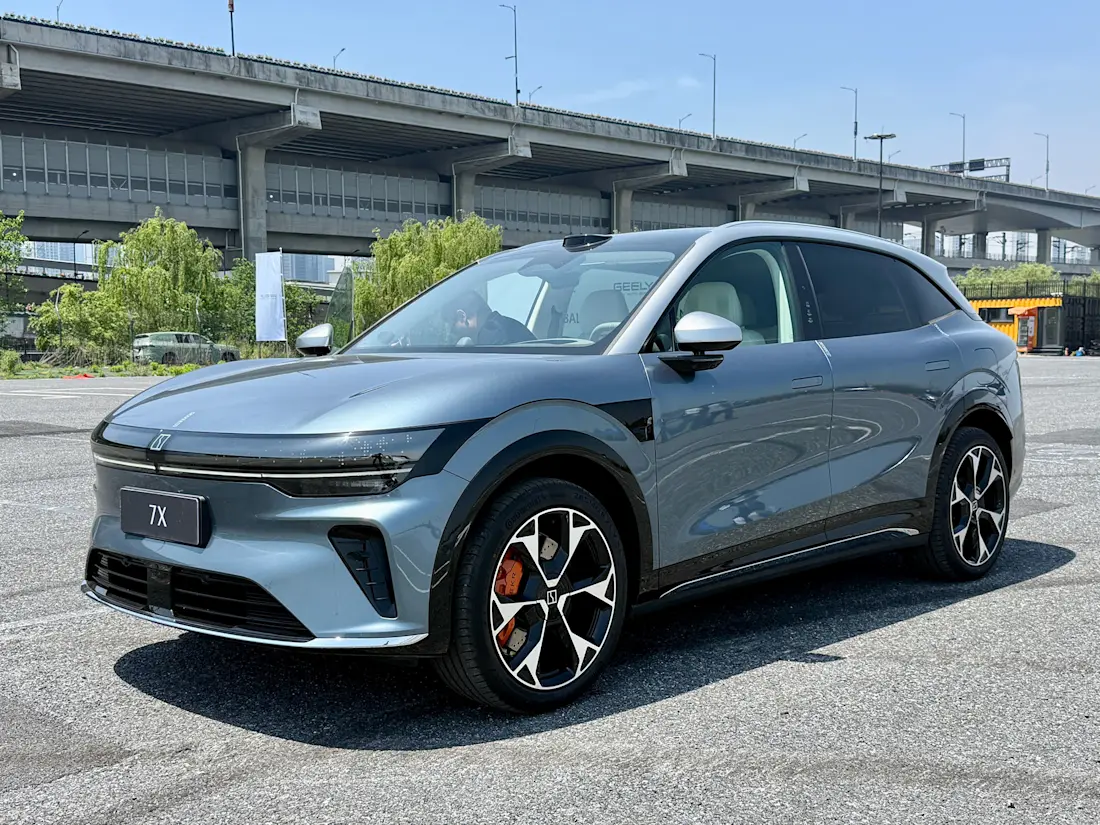
As delightful as the EX2 is, Geely doesn’t want to be seen as merely a “cheap” car brand. Because it’s not. Zeekr is its in-house luxury arm (think what Lexus is to Toyota) and the 7X is its five-seat electric compact crossover (think BMW iX3 or Genesis Electrified GV70).
As a piece of design, it doesn’t look as distinctive as the established luxury players from Germany, Japan, or South Korea. But the materials and build quality feel sufficiently premium, and, of course, the tech is in a league of its own.
It runs Flyme on a huge 16-inch screen, of course, but then you start poking around and realize that it has optional automatic doors that close by themselves at the press of a button on all four entrances, just like you’d get with a Bentley Bentayga or BMW 7 Series. Climb inside, and not only do the rear passengers get a good amount of space, but the right seat gets a power-operated, airline-style, flip-down table that reveals another huge touchscreen on the back of the front passenger seat.
Did I mention this car starts at about $40,000 in China? Double it to $80,000 to account for shipping, homologation, the 6.1 per cent tariff, distribution, and a little margin, sell it here in Canada, and it’d still be a bargain.
In dual-motor all-wheel-drive form, the 7X makes 646 horsepower and gets from zero to 100 km/h in 3.8 seconds. On the autocross, it felt like a solid luxury crossover: well-weighted, direct-feeling inputs, strong acceleration, and it carried itself in a way that feels as if it’s had serious thought put into it. We didn’t have the opportunity to test this, but the 7X can be had with active air suspension with an off-road mode and 70 mm of total vertical adjustment.
With the 100-kWh battery, the AWD 7X is good for 543 km of range on Europe’s more lenient testing cycle, but a rear-wheel-drive Long Range model gets up to 615 km. DC fast charging is said to get the battery from 10 to 80 per cent charge in as little as 16 minutes.
Zeekr 9X: Aspirational SUV
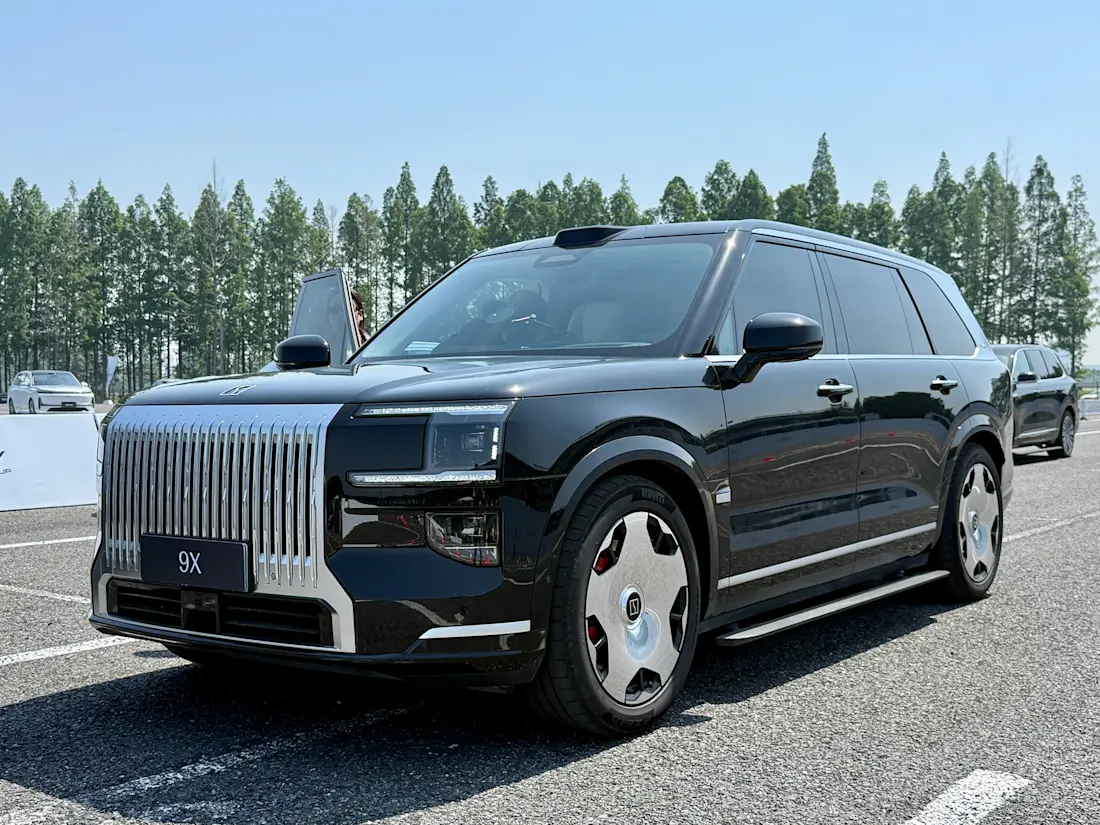
Then there’s the $90,000-in-China flagship 9X SUV. As a vehicle, it’s imposing, with the proportions of a Cadillac Escalade, the monoblock wheels off an old Mercedes, and a front end that shouts budget Rolls-Royce.
Only available as a plug-in hybrid, a 2.0L turbocharged gas engine pairs with three electric motors to make 1,381 horsepower. Zero to 100 km/h happens in 3.1 seconds, so it’s definitely a quick car, especially given its weight, but acceleration is tuned to feel a lot less aggressive than 1,381 hp would be in, say, an equivalent German vehicle.
It handles enjoyably enough, using 48-volt active anti-roll bars and feeling admirably well sorted around corners. Steering felt positively responsive, and the suspension quietly soaked up an array of speed bumps.
The best way to experience the three-row 9X, however, is from the second row, where two very soft, reclinable captain’s chairs are heated, ventilated, and massage you at the press of a button.
Geely PHEVs: Room for Improvement
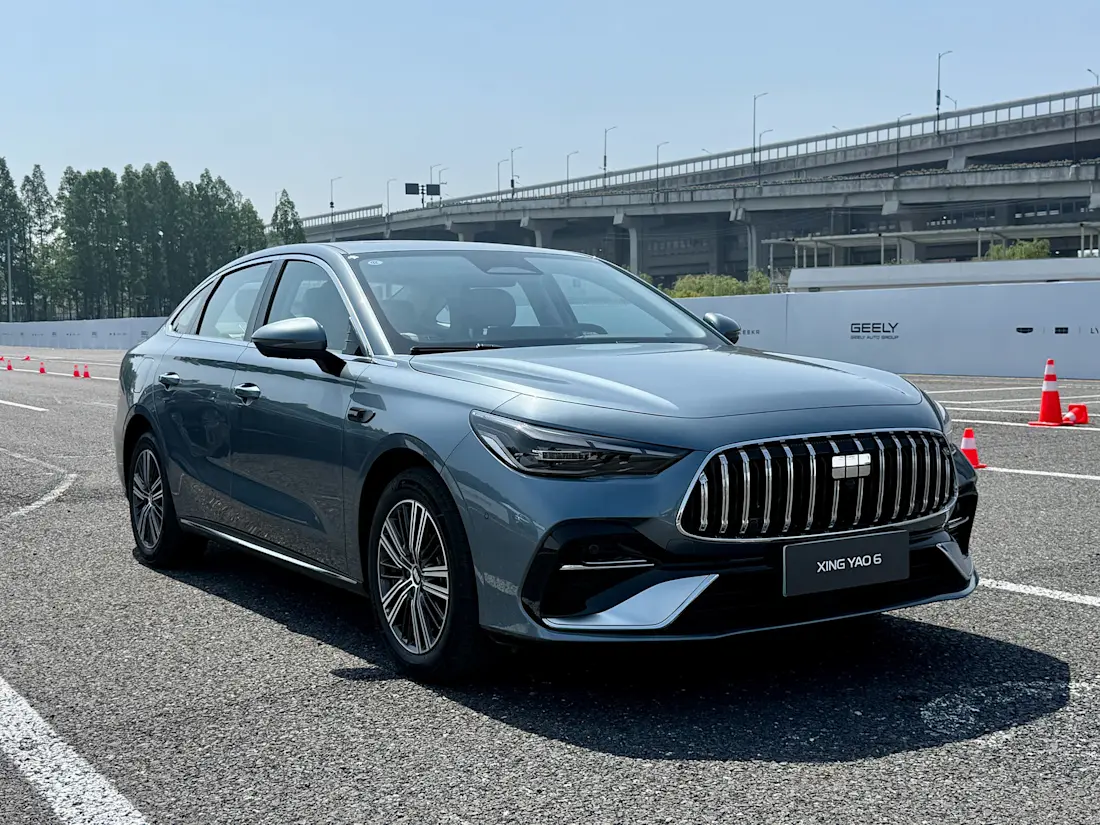
It’s not all good news, though, because the day also involved short stints in two Geely-branded plug-in hybrids (PHEVs): the Hyundai Palisade-sized M9 three-row SUV and the Camry-rivalling Xing Yao 6 sedan.
Tuned for comfort to a fault, the tech, ride, and build quality with these still held up, but their drives on a short test course showed that some preconceived notions about Chinese cars aren’t completely unfounded. Inputs felt vague and unintuitive, steering felt mushy and hesitant, and, by the seat of the pants, the Xing Yao 6 is one of the slowest new cars I’ve driven in recent memory.
A Great Start
A theme emerged across all five vehicles: the technology, features, and comfort you get for the Chinese-market price is borderline absurd. And if cars like the EX2 or 7X actually come to Canada anywhere near what they cost in China, established automakers, luxury and otherwise, are about to have a rude awakening.
Even ignoring the potential price deltas, the touchscreen software you get in Chinese cars is a world apart from what most Canadians are used to and may be the killer app (pun intended), especially among younger buyers.
When it comes to the core driving experience, it’s still hit or miss, and based on this admittedly small test sample, Geely seems to be much better at building EVs than at building PHEVs. Cars like the EX2 and 7X feel like genuine world-beaters, but the plug-in M9 and Xing Yao 6 could use a lot of work. For now, Canada’s new 49,000-car reduced tariff deal only applies to EVs and not PHEVs — perhaps Prime Minister Mark Carney secretly moonlights as an automotive journalist and came to a similar conclusion.
At the end of the day, a lot can change, and questions related to long-term reliability, winter weather performance, charging infrastructure, and data privacy are key hurdles Chinese cars must overcome if they’re to be a permanent presence on the Canadian automotive landscape. But judging by this brief, first introduction, they’re off to a pretty great start.

All Articles
See all
Chevrolet Trax AWD Guide: Winter Capability, Fuel Economy and Ownership Costs
Compare the Chevrolet Trax AWD real-world fuel and energy use, official ratings and expected running costs for Canadian drivers.

Road Trip: Driving Across Europe in a BMW M3 Competition
Overbuilt and immensely capable, I raced through Europe in an M3 as my teenage son slept.
 Jeff Wilson

Road Trip: 1812 or 2026? Summer Joy and Some Alarm in Quebec’s Eastern Townships
Warning: From politics to fresh peas, the following story flits like the attention of a relaxed city boy floating around a finger lake.
 Steven Bochenek